Massachusetts Institute of Technology (MIT)
Leveraged Freedom Chair (LFC)

- Title
- Leveraged Freedom Chair (LFC)
- Runtime
- 2:15
- Date posted
- 15 years ago
- Description
- Amos Winter discusses the Leveraged Freedom Chair (LFC) and results of recent trials in East Africa.
Video: Melanie Gonick

- Title
- MIT's Jeffrey Grossman - Solving energy problems, one molecule at a time
- Runtime
- 2:45
- Date posted
- 15 years ago
- Description
- Associate Professor of Materials Science and Engineering Jeffrey Grossman is profiled.
Video: Melanie Gonick
- Title
- MIT's Polina Golland - The quantifier
- Runtime
- 1:20
- Date posted
- 15 years ago
- Description
- Video: Melanie Gonick

- Title
- MIC visualization of datasets
- Runtime
- 4:46
- Date posted
- 15 years ago
- Description
- A short visualization of the usage of MIC for exploring the structure within a
data set from the World Health Organization and its partner organizations. Video: David Reshef
Read more at http://web.mit.edu/newsoffice/2011/large-data-sets-algorithm-1216.html
Learn about the work at http://www.exploredata.net/

- Title
- Visualizing video at the speed of light — one trillion frames per second
- Runtime
- 2:47
- Date posted
- 15 years ago
- Description
- MIT Media Lab researchers have created a new imaging system that can acquire visual data at a rate of one trillion frames per second. That's fast enough to produce a slow-motion video of light traveling through objects.
Video: Melanie Gonick/MIT
Read more: http://web.mit.edu/newsoffice/2011/trillion-fps-camera-1213.html
Project website: http://www.media.mit.edu/~raskar/trillionfps/
Follow us on Twitter: http://twitter.com/mitnews

- Title
- Doing double duty: MIT's Collin Stultz
- Runtime
- 2:38
- Date posted
- 15 years ago
- Description
- A computational biologist and physician, Collin Stultz takes a unique approach to studying diseases that could lead to new treatments.
Read more: http://web.mit.edu/newsoffice/2011/profile-stultz-1202.html
Video: Melanie Gonick, MIT News

- Title
- MIT's Mentor Advocate Partnership (MAP) Program
- Runtime
- 3:46
- Date posted
- 15 years ago
- Description
- Video: Melanie Gonick

- Title
- Caspar Hare - How we (should) decide
- Runtime
- 2:07
- Date posted
- 15 years ago
- Description
- Video: Melanie Gonick
http://web.mit.edu/newsoffice/2011/profile-hare-philosophy-1122.html
Associate professor in the Department of Linguistics and Philosophy Caspar Hare, aims to develop theories of practical rationality that may just help us make real-world decisions.

- Title
- MIT-Pfizer Groundbreaking
- Runtime
- 2:54
- Date posted
- 15 years ago
- Description
- Video: Melanie Gonick

- Title
- MIT Red Balloons social spread
- Runtime
- 1:02
- Date posted
- 15 years ago
- Description
- Credit: Wei Pan
This video illustrates how referral between participants of the MIT team spread on the continental U.S. before and during the DARPA challenge. Each white line represents a referral from an existing participant's location of the MIT team to the the location of a new team participant. ~36 hours before the competition, under the incentive described in the paper, people actively signed up with the MIT team and referred friends from all different areas, as the white lines expanded rapidly across the U.S. in the animation. The lines highlighted in yellow represents referrals leading to locations where the balloons were actually launched. The social diffusion process started by the MIT team naturally led us to all ten balloon locations in an efficient manner for this time-critical task.
- Title
- Seeing through walls - MIT's Lincoln Laboratory
- Runtime
- 3:46
- Date posted
- 15 years ago
- Description
- Video: Melanie Gonick
The ability to see through walls is no longer the stuff of science fiction. Thanks to new radar technology developed at MIT's Lincoln Laboratory a system has been built by researchers that can see through walls from some distance away, giving an instantaneous picture of the activity on the other side.
Read more about this research: http://web.mit.edu/newsoffice/2011/ll-seeing-through-walls-1018.html

- Title
- Ramesh Raskar: Super-human vision
- Runtime
- 2:27
- Date posted
- 15 years ago
- Description
- Associate professor in the MIT Media Lab Ramesh Raskar. Read more at http://web.mit.edu/newsoffice/2011/profile-raskar-0929.html
Video: Melanie Gonick
Other links:
http://www.media.mit.edu/~raskar
http://cameraculture.media.mit.edu
- Title
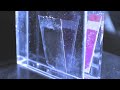
- The 'Artificial Leaf'
- Runtime
- 0:33
- Date posted
- 15 years ago
- Description
- An "artificial leaf" made by Daniel Nocera and his team, using a silicon solar cell with novel catalyst materials bonded to its two sides, is shown in a container of water with light (simulating sunlight) shining on it. The light generates a flow of electricity that causes the water molecules, with the help of the catalysts, to split into oxygen and hydrogen, which bubble up from the two surfaces.
Video and edit provided by: John McCarthy, Track Seventeen Films
Read more about this work at http://web.mit.edu/newsoffice/2011/artificial-leaf-0930.html

- Title
- Heather Paxson - The anthropologist and the person
- Runtime
- 2:42
- Date posted
- 15 years ago
- Description
- Video: Melanie Gonick
Associate professor of anthropology Heather Paxson, shares a little bit about herself in this short video.
- Title
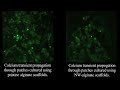
- Cardiac patches of gold
- Runtime
- 0:17
- Date posted
- 15 years ago
- Description
- New cardiac patch uses gold nanowires to enhance electrical signaling between cells, a promising step toward better treatment for heart-attack patients.
Courtesy of the Disease Biophysics Group, Harvard University

- Title
- MIT Media Lab: 3-D printing with variable densities
- Runtime
- 2:01
- Date posted
- 15 years ago
- Description
- MIT Media Lab researchers Steven Keating and Neri Oxman demonstrate some of their work into 3-D printing. Read more about MIT's work around 3-D printing: http://web.mit.edu/newsoffice/2011/3d-printing-0914.html
Video: Melanie Gonick, MIT News

- Title
- The Interphase Program at MIT
- Runtime
- 3:02
- Date posted
- 15 years ago
- Description
- Video: Melanie Gonick
Still Images: Quinnton J. Harris '11
Interphase is a rigorous seven-week summer residential, academic and community-building program for admitted MIT freshmen that instills subject mastery of calculus, physics and chemistry, and helps them explore their cultural identities through reading, writing and discussion. In addition, students take physical education classes, participate in laboratory research with faculty mentors, and engage in small-group learning activities and workshops designed to develop their analytical thinking and communication skills.

- Title
- MIT Edgerton Center - Summer Engineering Design Workshop
- Runtime
- 7:49
- Date posted
- 15 years ago
- Description
- Video: Melanie Gonick

- Title
- Mimicking vocal cord vibrations
- Runtime
- 0:14
- Date posted
- 15 years ago
- Description
- Researchers at MIT and MGH have developed a polymer gel that mimics the vibrations of human vocal cords. This video shows the polymer vocal cord model vibrating when air is blown from below, and a comparison with human vocal cords.

- Title
- Paper solar cell powers an LED clock
- Runtime
- 1:10
- Date posted
- 15 years ago
- Description
- A paper solar cell circuit is shown powering an LCD clock when illuminated. The entire integrated paper photovoltaic is then fed through a roll-to-roll office laser-jet printer. The resulting ink spells MIT on the device side of the paper array, which then continues to power the LCD clock. The clock circuitry is shown at the end of the video, which is powered by the photovoltaic alone and regulates a constant voltage to the display for variations in light intensity. The paper photovoltaic array is illuminated from below with simulated solar illumination.

- Title
- Dynamic folding of a paper solar cell circuit
- Runtime
- 0:40
- Date posted
- 15 years ago
- Description
- A paper solar cell circuit is dynamically folded and unfolded while the voltage is simultaneously measured on the meter. The paper photovoltaic is illuminated from below with simulated solar illumination.

- Title
- Rubik's Cube(s)
- Runtime
- 1:40
- Date posted
- 15 years ago
- Description
- MIT student and co-founder of the MIT Rubik's Cube Club Tim Reynolds solves four cubes in 1:10.
Video: Melanie Gonick

- Title
- Educational Collaboration Space (ECS) at MIT
- Runtime
- 2:26
- Date posted
- 15 years ago
- Description
- MIT math instructors have developed a tool to help educators get to 'best practices' and preserve them for posterity.
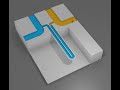
- Title
- Cell density
- Runtime
- 0:52
- Date posted
- 15 years ago
- Description
- Video: Manalis Lab

- Title
- MIT Commencement 2011
- Runtime
- 2:33
- Date posted
- 16 years ago
- Description
- June 3, 2011 MIT's 145th Commencement.
A look at graduation day from a different perspective.
Video: Melanie Gonick

- Title
- Robot demonstrates task planning and execution skills
- Runtime
- 0:45
- Date posted
- 16 years ago
- Description
- MIT computer scientists Leslie Kaelbling and Tomás Lozano-Pérez use a Willow Garage PR2 robot to demonstrate their new approach for integrating task and motion planning in robots. The researchers say their algorithm is very much still a work in progress, as can be seen in this video (sped up four times), which shows a robot picking up a can and a box and moving them to opposite ends of a tabletop. Sometimes, the robot does not reach perfectly for the target object and ends up knocking it slightly one way or the other. However, according to the researchers, it is the robot's ability to adapt to the new situation and make another attempt that is a crucial feature of their program. The robot sometimes performs extraneous movements — for example, when it waves an object back and forth a few times before setting it down in its target location. And yet, using the hierarchical "in the now" approach, the bot is still able to get the job done.
Video: Leslie Kaelbling/Tomás Loz...

- Title
- MIT DNA Robot
- Runtime
- 0:08
- Date posted
- 16 years ago
- Description
- MIT biological engineers design software that predicts the 3D solution shape and flexibility of a DNA-based robot.

- Title
- Self-oscillating gels at MIT
- Runtime
- 1:21
- Date posted
- 16 years ago
- Description
- Self-oscillating gels are materials that continuously change back and forth between different states — such as color or size — without provocation from external stimuli. These changes are caused by the Belousov-Zhabotinsky chemical reaction, which was discovered during the 1950s. Without stirring or other outside influence, wave patterns from this chemical reaction can develop within the material or cause the entire gel itself to pulsate.
Irene Chou Chen, a doctoral candidate in the lab of Krystyn J. Van Vliet, the Paul M. Cook Career Development Associate Professor of Materials Science and Engineering, has been studying exactly how adjusting the size and shape of these gels can affect their behavior.
Video: Melanie Gonick
Additional footage: Irene Chen

- Title
- The Green Grease Project at MIT
- Runtime
- 1:22
- Date posted
- 16 years ago
- Description
- Students from MIT's Biodiesel team organizes the project, called Green Grease, and they traveled to Sao Paulo, Brazil last summer to begin the implementation. Led by Libby McDonald, a fellow at the Community Innovators Lab in the Department of Urban Studies and Planning, the team converted two large trucks to run directly on filtered vegetable oil, rather than converting the oil itself into biodiesel fuel.
Video: Melanie Gonick
Additional footage/stills: The Green Grease Team

- Title
- Remembering Ron McNair - 25th Anniversary of Challenger disaster
- Runtime
- 3:47
- Date posted
- 16 years ago
- Description
- Friend and fellow astronaut Jeffrey Hoffman remembers Ron McNair and his crew members who died in the Challenger explosion 25 years ago.
Video: Melanie Gonick
Still images: NASA

- Title
- Holographic TV
- Runtime
- 0:56
- Date posted
- 16 years ago
- Description
- Using a single Kinect camera and standard graphics chips, MIT researchers demonstrate the highest frame rate yet for streaming holographic video.
Learn more about this work at: http://web.mit.edu/newsoffice/2011/video-holography-0124.html
Video: Melanie Gonick
Additional stills: James D. Barabas

- Title
- Water droplet impact
- Runtime
- 0:19
- Date posted
- 16 years ago
- Description
- This video from a high-speed camera shows a droplet being deposited on a superhydrophobic surface, just before it separates from the dropper. At the moment of separation, ripples move down through the droplet, showing the deceleration caused by impact with the surface, which causes a brief burst of high pressure.
Video courtesy of Kripa Varanasi
Read more about the research at http://web.mit.edu/newsoffice/2011/droplets-0120.html

- Title
- Experiment (100x slower)
- Runtime
- 0:18
- Date posted
- 16 years ago
- Description
- The researchers needed to be able to change a cat's lapping speed
in order to test their theory. So they developed a robotic version of a
cat's tongue — a mechanical column with a 1-inch glass disk at the tip.
This device allowed the researchers to study the liquid column for different
lapping speeds using a high-speed digital camera. The initial image was
taken at 1000 frames per second. The video above is slowed to 15 frames per
second.
Video: Pedro M. Reis, Sunghwan Jung, Jeffrey M. Aristoff and Roman Stocker

- Title
- Cutta Cutta (67x slower)
- Runtime
- 0:34
- Date posted
- 16 years ago
- Description
- Cutta Cutta drinking
Video: Pedro M. Reis, Sunghwan Jung, Jeffrey M. Aristoff and Roman Stocker

- Title
- Cutta Cutta (12x slower)
- Runtime
- 0:10
- Date posted
- 16 years ago
- Description
- Cutta Cutta drinking
Video: Pedro M. Reis, Sunghwan Jung, Jeffrey M. Aristoff and Roman Stocker

- Title
- Autonomous Parking - MIT AgeLab
- Runtime
- 2:15
- Date posted
- 16 years ago
- Description
- Research Scientist at MIT's AgeLab and Associate Director of New England University Transportation Center Bryan Reimer discusses and demos a car that can park itself.
Video: Melanie Gonick

- Title
- Greenhouse Gases - MIT Professor David Simchi-Levi
- Runtime
- 1:58
- Date posted
- 16 years ago
- Description
- David Simchi-Levi, a professor in MIT's Engineering Systems Division and Department of Civil Engineering, discusses lowering greenhouse emissions generated by humans.
Video: Melanie Gonick
- Title
- Forming habits
- Runtime
- 0:16
- Date posted
- 16 years ago
- Description
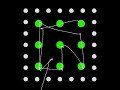
- This video demonstrates the sequential pathways that monkeys used to look at a grid of dots. They received a reward when their gaze landed on one of the dots.
Video: Theresa Desrochers/Daniel Gibson

- Title
- Solar fuel - MIT Professor Jeffrey Grossman
- Runtime
- 1:48
- Date posted
- 16 years ago
- Description
- Video: Jeffrey Grossman
Additional editing/audio capture: Melanie Gonick

- Title
- Birdsong
- Runtime
- 0:01
- Date posted
- 16 years ago
- Description
- The song of the zebra finch lasts about 1 second, and consists of multiple syllables whose timing is almost precisely the same from one performance to the next.
Video: Dan Rubin/MIT

- Title
- Folding a solar cell into an airplane
- Runtime
- 0:54
- Date posted
- 16 years ago
- Description
- MIT professor Karen K. Gleason explains how graduate student Miles Barr folds a solar cell into a paper airplane.
Video: Miles Barr/Jill Rowehl/Christopher Boyce/Dr. Sung Gap Im/ Vladimir Bulovic/Karen Gleason
- Title
- Claude Canizares Chandra X-ray Observatory
- Runtime
- 1:37
- Date posted
- 16 years ago
- Description
- Since its launch in 1999, the Chandra X-ray Observatory has been NASA's flagship mission for X-ray astronomy, taking its place in the fleet of "Great Observatories." Claude Canizares, MIT's Vice President for Research and Associate Provost and Bruno Rossi Professor of Physics, is associate director of the Observatory. Here he explains its work.
Video: Melanie Gonick
Still images: NASA

- Title
- Portable desalination
- Runtime
- 0:47
- Date posted
- 16 years ago
- Description
- This video is a sequence of time-lapse photos of the system operating on a partly cloudy day in Boston. The top left shows the entire system, and the top right shows a tank that is filled with water that has been desalinated. The bottom image plots the solar radiation that is being received by the panel over the course of the day.
Video: Steven Dubowsky, Amy Bilton, Leah Kelley

- Title
- MIT Professor James Wescoat
- Runtime
- 1:26
- Date posted
- 16 years ago
- Description
- MIT's Aga Khan Professor of Architecture James Wescoat, who specializes in the study of water, uses a decidedly interdisciplinary approach in his research.
Video: Melanie Gonick
Still images: James Wescoat/Aga Khan for Culture, India/Aga Khan Planning & Building Service, Pakistan

- Title
- Nobel Prize in Economics - MIT Professor Peter A. Diamond - Part 2
- Runtime
- 14:43
- Date posted
- 16 years ago
- Description
- Nobel Prize in Economics Press Conference, Massachusetts Institute of Technology.
October 11, 2010.
Video: AMPS MIT Video Productions
- Title
- Nobel Prize in Economics - MIT Professor Peter A. Diamond - Part 1
- Runtime
- 13:01
- Date posted
- 16 years ago
- Description
- October 11, 2010.
Nobel Prize in Economics Press Conference, Massachusetts Institute of Technology.
Video: AMPS MIT Video Productions

- Title
- MIT Media Lab Medical Mirror
- Runtime
- 1:09
- Date posted
- 16 years ago
- Description
- You can check a person's vital signs — pulse, respiration and blood pressure — manually or by attaching sensors to the body. But a student in the Harvard-MIT Health Sciences and Technology program is working on a system that could measure these health indicators just by putting a person in front of a low-cost camera such as a laptop computer's built-in webcam.
Video: Melanie Gonick
Read more at: http://web.mit.edu/newsoffice/2010/pulse-camera-1004.html

- Title
- A peek into MIT's new Media Lab complex
- Runtime
- 1:11
- Date posted
- 16 years ago
- Description
- Video: Melanie Gonick
Time-lapse photography: Guy Hoffman
Still images: Andy Ryan
Music: 'Flora' by Tod Machover

- Title
- MIT's Electric Vehicle Team
- Runtime
- 1:02
- Date posted
- 16 years ago
- Description
- A time-lapse video showing members of MIT's Electric Vehicle Team working on the conversion of a car and a motorcycle from conventional gasoline power to all-electric operation. The conversions used batteries donated by MIT spinoff company A123 Systems.
Video: Melanie Gonick

- Title
- Healing Haiti
- Runtime
- 1:35
- Date posted
- 16 years ago
- Description
- Danielle Zurovcik SM '07 shows how the negative pressure pump can help seal a wound.
Video: Melanie Gonick