Massachusetts Institute of Technology (MIT)
Magnetic Hair

- Title
- Magnetic Hair
- Runtime
- 1:29
- Date posted
- 12 years ago
- Description
- MIT engineers have fabricated a new elastic material coated with microscopic, hairlike structures that tilt in response to a magnetic field. (Learn more about these structures: http://bit.ly/1y2E8SX)
Depending on the field's orientation, the microhairs can tilt to form a path through which fluid can flow; the material can even direct water upward, against gravity.
Video produced and edited by Melanie Gonick/MIT News
Video clips courtesy of the researchers

- Title
- Surfaces can control what's on them
- Runtime
- 0:44
- Date posted
- 12 years ago
- Description
- Researchers at MIT and in Saudi Arabia have developed a new way of making surfaces that can actively control how fluids or particles move across them. (Learn more about these "active" surfaces: http://bit.ly/1nOQzAD)
The work might enable new kinds of biomedical or microfluidic devices, or solar panels that could automatically clean themselves of dust and grit.
Video produced and edited by Melanie Gonick
Footage courtesy of the researchers
Music sampled from: "Light Thought var 2" Kevin MacLeod (incompetech.com) Licensed under Creative Commons: By Attribution 3.0http://creativecommons.org/licenses/by/3.0/

- Title
- Vision Correcting Displays
- Runtime
- 2:29
- Date posted
- 12 years ago
- Description
- Researchers at the MIT Media Laboratory and the University of California at Berkeley have developed a new display technology that automatically corrects for vision defects — no glasses (or contact lenses) required. (Learn more about the display: http://bit.ly/1s6xeuR)
Video: Melanie Gonick, MIT News
Additional footage and artist renderings courtesy of Gordon Wetzstein
- Title
- Bamboo Engineering
- Runtime
- 2:41
- Date posted
- 12 years ago
- Description
- MIT scientists, along with architects and wood processors from England and Canada, are looking for ways to turn bamboo into a construction material more akin to wood composites, like plywood. (Learn more: http://bit.ly/WCNN7e)
Such bamboo products are currently being developed by several companies; the MIT project, lead by professor Lorna Gibson, intends to gain a better understanding of these materials, so that bamboo can be more effectively used.
Video: Melanie Gonick, MIT News
Additional footage courtesy of MyBoringChannel and Frank Ross
(http://myboringchannel.com/)
Music sampled from: Radio Silence
(http://freemusicarchive.org/music/Schemawound/TRANCOUNT/03_Radio_Silence)
Artist/Composer: Schemawound
http://freemusicarchive.org/music/Schemawound/
http://creativecommons.org/licenses/by-nc/3.0/legalcode
- Title
- Gold nanoparticles easily penetrate cells
- Runtime
- 1:21
- Date posted
- 12 years ago
- Description
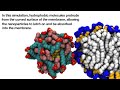
- A new study from MIT materials scientists reveals that a special class of tiny gold particles can easily slip through cell membranes, making them good candidates to deliver drugs directly to target cells.
Video produced and edited by Melanie Gonick, MIT News
Computer simulations courtesy of Reid Van Lehn

- Title
- 7 Finger Robot
- Runtime
- 2:44
- Date posted
- 12 years ago
- Description
- Researchers at MIT have developed a robot that enhances the grasping motion of the human hand. (Learn more: http://bit.ly/1tdPd2t)
The device, worn around one's wrist, works essentially like two extra fingers adjacent to the pinky and thumb. The robot, which the researchers have dubbed "supernumerary robotic fingers," or "SR fingers," consists of actuators linked together to exert forces as strong as those of human fingers during a grasping motion.
Video: Melanie Gonick, MIT News
Additional footage courtesy of Faye Wu

- Title
- Squishy Robots
- Runtime
- 2:39
- Date posted
- 12 years ago
- Description
- A new phase-changing material built from wax and foam developed by researchers at MIT is capable of switching between hard and soft states. (Learn more: http://mitne.ws/1wlz4bn)
Robots built from this material would be able to operate more like biological systems with applications ranging from difficult search and rescue operations, squeezing through rubble looking for survivors, to deformable surgical robots that could move through the body to reach a particular point without damaging any of the organs or vessels along the way.
Video: Melanie Gonick, MIT News
Additional video clips courtesy of Nadia Cheng

- Title
- Oil and water
- Runtime
- 0:26
- Date posted
- 12 years ago
- Description
- Tiny droplets of water, colored blue, are suspended in oil on top of a membrane developed by the MIT team. (Full description at: http://mitne.ws/1lvM4F6)
Thanks to the membrane's tiny pores, with a special coating that attracts water and repels oil, the droplets shrink as they pass through the membrane, ultimately leaving just pure oil behind. A similar membrane with a different coating can do the reverse, allowing oil droplets to pass while blocking water.
Video courtesy of the researchers.

- Title
- Mathematics at MIT
- Runtime
- 4:43
- Date posted
- 12 years ago
- Description
- Mathematics has played an important part at MIT since the founding of the Institute. Mathematics occupies a core intellectual position at MIT, an institution that is well known for its leadership in Science and Engineering. (Learn more about the MIT Mathematics: http://math.mit.edu/index.php)
Video: Melanie Gonick, MIT News
Music sampled from: Her breath (http://freemusicarchive.org/music/arizono_kazuhiro/EPV_070/)
Artist/Composer: Arizono Kazuhiro
http://soundcloud.com/arizono-kazuhiro
http://creativecommons.org/licenses/by-nc/3.0/legalcode
- Title
- Morphable surfaces at MIT
- Runtime
- 0:28
- Date posted
- 12 years ago
- Description
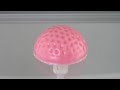
- In the lab, the morphable surface developed by the team can have its surface texture changed at will simply by changing the pressure inside, using a pump. When the inside reassure is reduced, the flexible material shrinks, but the outer layer, being stiffer, gets wrinkled as it shrinks, just like a plum drying in the sun to become a prune. Unlike a prune, the material can immediately bounce back to a smooth state when the pressure increases, providing a fully controllable surface texture.
Read more: http://newsoffice.mit.edu/2014/morphable-surfaces-could-cut-air-resistance
Video: Denis Terwagne and Pedro Reis, MIT

- Title
- All in the Family: One family, eight employees, 85+ years of service
- Runtime
- 4:05
- Date posted
- 12 years ago
- Description
- Beginning his career at MIT Lincoln Laboratory in 1959, Leon Belanger was the first of his family to work at MIT. Over years he has watched family member after family member after family member follow in his footsteps. Eight members of Leon's family have been employees by MIT in one capacity or another, totaling to almost a century of service between them.
Video: Melanie Gonick, MIT News
Still Images: Courtesy of MIT Lincoln Laboratory and Mark Belanger
Music: July.#4 (http://freemusicarchive.org/music/arizono_kazuhiro/EPV_070/)
Artist/Composer: Arizono Kazuhiro
http://soundcloud.com/arizono-kazuhiro
http://creativecommons.org/licenses/by-nc/3.0/legalcode

- Title
- African Darter Wing Feather Immersed in Water and Oil
- Runtime
- 0:27
- Date posted
- 12 years ago
- Description
- Wing feather of an African Darter (Anhinga ruff) is immersed in water (dyed blue) and oil (dyed red). As the feather is pushed down into the liquids, it repels the water (as shown by the downward curve of the water surface), while its surface is wetted by the oil (as shown by the upward curvature).
Video: Justin Kleingarter and Siddarth Srinivasan

- Title
- Thank you MIT: The Class of 2014 says goodbye
- Runtime
- 7:23
- Date posted
- 12 years ago
- Description
- Over the 2013-14 academic year, MIT News profiled several graduating seniors. Here, watch as six of them discuss their time at MIT and what they look forward to in the future.
Read the full profiles:
Justin Bullock: http://newsoffice.mit.edu/2014/student-profile-justin-bullock-0505
Aliya Dincer: http://newsoffice.mit.edu/2014/aliya-dincer-profile-0303
Kate Koch: http://newsoffice.mit.edu/2014/profile-koch-0207
Nathan Kipniss: http://newsoffice.mit.edu/2014/embracing-complexity
Priyanka Saha: http://newsoffice.mit.edu/2014/student-profile-priyanka-saha-0423
Suan Tuang: http://newsoffice.mit.edu/2014/across-an-ocean-finding-his-dream-0221
Video: Melanie Gonick, MIT News
Still image of the Great Dome: Francisco Diez

- Title
- Bake your own robot
- Runtime
- 0:59
- Date posted
- 13 years ago
- Description
- Printable robots — those that can be assembled from parts produced by 3-D printers — have long been a topic of research in the lab of Daniela Rus, the Andrew and Erna Viterbi Professor of Electrical Engineering and Computer Science at MIT.
At this year's IEEE International Conference on Robotics and Automation, Rus' group and its collaborators introduce a new wrinkle on the idea: bakable robots.
In two new papers, the researchers demonstrate the promise of printable robotic components that, when heated, automatically fold into prescribed three-dimensional configurations.
Read more: https://newsoffice.mit.edu/2014/bake-your-own-robot-0530
Video produced and edited by Melanie Gonick, MIT News
Footage courtesy of the researchers.
- Title
- Ballroom Dancing at MIT
- Runtime
- 3:32
- Date posted
- 13 years ago
- Description
- A prominent activity amongst MIT community members is ballroom dancing. At the Institute there are two organizations that comprise ballroom. The MIT Ballroom Dance Club is a recognized student group focused on social dancing. The MIT Ballroom Dance Team focuses more on competitive ballroom dancing with MIT students, alums, and other MIT affiliates. Although they are separate entities on paper, there are a lot of overlap between the two.
MIT Ballroom Dance Team: http://ballroom.mit.edu/
MIT Ballroom Dance Club: http://web.mit.edu/bdclub/
Video: Melanie Gonick, MIT News

- Title
- Neuron Activity in 3-D
- Runtime
- 2:34
- Date posted
- 13 years ago
- Description
- Researchers at MIT and the University of Vienna have created an imaging system that reveals neural activity throughout the brains of living animals. This technique, the first that can generate 3-D movies of entire brains at the millisecond timescale, could help scientists discover how neuronal networks process sensory information and generate behavior.
The team used the new system to simultaneously image the activity of every neuron in the worm Caenorhabditis elegans, as well as the entire brain of a zebrafish larva, offering a more complete picture of nervous system activity than has been previously possible.
The new approach, described May 18 in Nature Methods, could also help neuroscientists learn more about the biological basis of brain disorders. "We don't really know, for any brain disorder, the exact set of cells involved," Boyden says. "The ability to survey activity throughout a nervous system may help pinpoint the cells or networks that are involved ...
- Title
- Floating nuclear plants could withstand earthquakes and tsunamis
- Runtime
- 3:11
- Date posted
- 13 years ago
- Description
- When an earthquake and tsunami struck the Fukushima Daiichi nuclear plant complex in 2011, neither the quake nor the inundation caused most of the damage and contamination. Rather, it was the aftereffects — specifically, the lack of cooling for the reactor cores and spent fuel, due to a shutdown of outside power — that caused most of the harm.
A new design for nuclear plants built on floating platforms, modeled after those used for offshore oil drilling, could help avoid such consequences in the future. Such floating plants would be designed to be automatically flooded by the surrounding seawater in a worst-case scenario, providing sufficient cooling to indefinitely prevent any melting of fuel rods, or escape of radioactive material.
The concept is being presented this week at the Small Modular Reactors Symposium, hosted by the American Society of Mechanical Engineers, by MIT associate professor of nuclear science and engineering (NSE) Jacopo Buongiorno al...

- Title
- Smartphone-readable microparticles crack down on counterfeiting
- Runtime
- 3:46
- Date posted
- 13 years ago
- Description
- Some 2 to 5 percent of all international trade involves counterfeit goods, according to a 2013 United Nations report. These illicit products — which include electronics, automotive and aircraft parts, pharmaceuticals, and food — can pose safety risks and cost governments and private companies hundreds of billions of dollars annually.
Many strategies have been developed to try to label legitimate products and prevent illegal trade — but these tags are often too easy to fake, are unreliable, or cost too much to implement, according to MIT researchers who have developed a new alternative.
Led by MIT chemical engineering professor Patrick Doyle and Lincoln Laboratory technical staff member Albert Swiston, the researchers have invented a new type of tiny, smartphone-readable particle that they believe could be deployed to help authenticate currency, electronic parts, and luxury goods, among other products. The particles, which are invisible to the naked eye,...

- Title
- How the brain pays attention
- Runtime
- 0:09
- Date posted
- 13 years ago
- Description
- Picking out a face in the crowd is a complicated task: Your brain has to retrieve the memory of the face you're seeking, then hold it in place while scanning the crowd, paying special attention to finding a match.
A new study by MIT neuroscientists reveals how the brain achieves this type of focused attention on faces or other objects: A part of the prefrontal cortex known as the inferior frontal junction (IFJ) controls visual processing areas that are tuned to recognize a specific category of objects, the researchers report in the April 10 online edition of Science.
Scientists know much less about this type of attention, known as object-based attention, than spatial attention, which involves focusing on what's happening in a particular location. However, the new findings suggest that these two types of attention have similar mechanisms involving related brain regions, says Robert Desimone, the Doris and Don Berkey Professor of Neuroscience, director of MIT's...

- Title
- Coughs and sneezes travel farther than you think
- Runtime
- 0:04
- Date posted
- 13 years ago
- Description
- High-speed imaging has helped MIT researchers determine that some droplets from coughs and sneezes may carry much farther than previous studies had estimated. (Learn more: http://news.mit.edu/2014/coughs-and-sneezes-float-farther-you-think).
High speed footage courtesy of Lydia Bourouiba

- Title
- Autonomous, self-contained soft robotic fish at MIT
- Runtime
- 3:11
- Date posted
- 13 years ago
- Description
- Soft robots — which don't just have soft exteriors but are also powered by fluid flowing through flexible channels — have become a sufficiently popular research topic that they now have their own journal, Soft Robotics. In the first issue of that journal, out this month, MIT researchers report the first self-contained autonomous soft robot, a "fish" that can execute an escape maneuver, convulsing its body to change direction, in just 100 milliseconds, or as quickly as a real fish can.
"We're excited about soft robots for a variety of reasons," says Daniela Rus, a professor of computer science and engineering, director of MIT's Computer Science and Artificial Intelligence Laboratory, and one of the researchers who designed and built the fish. "As robots penetrate the physical world and start interacting with people more and more, it's much easier to make robots safe if their bodies are so wonderfully soft that there's no danger if they whack you."
The robo...

- Title
- Measuring the migration of river networks
- Runtime
- 1:48
- Date posted
- 13 years ago
- Description
- Large river networks — such as those that funnel into the Colorado and Mississippi rivers — may seem to be permanent features of a landscape. In fact, many rivers define political boundaries that have been in place for centuries.
But scientists have long suspected that river networks are not as static as they may appear, and have gathered geologic and biological evidence that suggest many rivers have been "rewired," shifting and moving across a landscape over millions of years.
Now researchers at MIT and the Swiss Federal Institute of Technology (ETH Zurich) have developed a mapping technique that measures how much a river network is changing, and in what direction it may be moving. Their results are published in this week's issue of Science.
Read more: http://web.mit.edu/newsoffice/2014/measuring-the-migration-of-a-river-0306.html
Video: Melanie Gonick, MIT News
Images and simulations courtesy of Chia-Yu Chen, Liran Gor...

- Title
- The Foundry at MIT
- Runtime
- 4:04
- Date posted
- 13 years ago
- Description
- Within the Department of Materials Science and Engineering lives a place where students can come and put their materials knowledge into practice. The Foundry at MIT provides a space for students, faculty and staff to come innovate, create and get their hands dirty in the process.
The Foundry and Forge: http://dmse.mit.edu/resources/foundry-and-forge
Video: Melanie Gonick, MIT News
Still images courtesy of Mert C. Flemings

- Title
- Transparent Displays at MIT
- Runtime
- 2:44
- Date posted
- 13 years ago
- Description
- Transparent displays have a variety of potential applications — such as the ability to see navigation or dashboard information while looking through the windshield of a car or plane, or to project video onto a window or a pair of eyeglasses. A number of technologies have been developed for such displays, but all have limitations.
Now, researchers at MIT have come up with a new approach that can have significant advantages over existing systems, at least for certain kinds of applications: a wide viewing angle, simplicity of manufacture, and potentially low cost and scalability.
The innovative system is described in a paper published this week in the journal Nature Communications, co-authored by MIT professors Marin Soljačić and John Joannopoulos, graduate student Chia Wei Hsu, and four others.
Read more: http://web.mit.edu/newsoffice/2014/seeing-things-a-new-transparent-display-system-could-provide-heads-up-data-0121.html
Video: Me...

- Title
- Internal waves
- Runtime
- 0:42
- Date posted
- 13 years ago
- Description
- This animation shows density layers in the South China Sea being perturbed by the regular back-and-forth tidal flow through the Luzon Strait. These leads to large amplitude internal waves (shown in red underwater, and in white when seen from above), being radiated west to the Chinese continental shelf.
Animation courtesy of the researchers.
- Title
- The FreeD: MIT 'smart tools' meld personal technique with computerized controls
- Runtime
- 2:10
- Date posted
- 13 years ago
- Description
- It's often easy to tell at a glance the difference between a mass-produced object and one that has been handcrafted: The handmade item is likely to have distinctive imperfections and clear signs of an individual's technique and style.
Now, some researchers at MIT are finding ways to blur those distinctions, making it possible, for example, to sculpt items with those distinctive signs of handicraft, while controlling the outcome so that the object doesn't stray too far from the desired form. They described their work at the recent Association for Computing Machinery Symposium on User Interface Software and Technology.
Read more:
Video: Melanie Gonick, MIT News
Additional footage courtesy of Amit Zoran

- Title
- Droplets break a theoretical time barrier on bouncing
- Runtime
- 2:35
- Date posted
- 13 years ago
- Description
- Those who study hydrophobic materials — water-shedding surfaces such as those found in nature and created in the laboratory — are familiar with a theoretical limit on the time it takes for a water droplet to bounce away from such a surface. But MIT researchers have now found a way to burst through that perceived barrier, reducing the contact time by at least 40 percent.
Their finding is reported in a paper in the journal Nature co-authored by Kripa Varanasi, the Doherty Associate Professor of Mechanical Engineering at MIT, along with James Bird, a former MIT postdoc who is now an assistant professor of mechanical engineering at Boston University, former MIT postdoc Rajeev Dhiman, and recent MIT PhD recipient Hyukmin Kwon.
Video clips courtesy of Kripa Varanasi

- Title
- MIT Community Service Fund
- Runtime
- 4:31
- Date posted
- 13 years ago
- Description
- The MIT Community Service Fund (CSF) was established in 1968 by a vote of the faculty to provide financial assistance to support MIT students, faculty, and staff volunteers in community service initiatives. Over 45 years later CSF continues to support existing service projects and allocate funding to new ones.
To make a donation: http://web.mit.edu/community-giving/index.html
For more information: http://csf.mit.edu/
Video: Melanie Gonick, MIT News

- Title
- Better batteries through biology
- Runtime
- 1:25
- Date posted
- 13 years ago
- Description
- Lithium-air batteries have become a hot research area in recent years: They hold the promise of drastically increasing power per battery weight, which could lead, for example, to electric cars with a much greater driving range. But bringing that promise to reality has faced a number of challenges, including the need to develop better, more durable materials for the batteries' electrodes and improving the number of charging-discharging cycles the batteries can withstand.
Now, MIT researchers have found that adding genetically modified viruses to the production of nanowires — wires that are about the width of a red blood cell, and which can serve as one of a battery's electrodes — could help solve some of these problems.
The new work is described in a paper published in the journal Nature Communications, co-authored by graduate student Dahyun Oh, professors Angela Belcher and Yang Shao-Horn, and three others. The key to their work was to increase the surface...

- Title
- Self-steering particles
- Runtime
- 0:43
- Date posted
- 13 years ago
- Description
- MIT chemical engineers have designed tiny particles that can "steer" themselves along preprogrammed trajectories and align themselves to flow through the center of a microchannel, making it possible to control the particles' flow through microfluidic devices without applying any external forces.
Such particles could make it more feasible to design lab-on-a-chip devices, which hold potential as portable diagnostic devices for cancer and other diseases. These devices consist of microfluidic channels engraved on tiny chips, but current versions usually require a great deal of extra instrumentation attached to the chip, limiting their portability.
Much of that extra instrumentation is needed to keep the particles flowing single file through the center of the channel, where they can be analyzed. This can be done by applying a magnetic or electric field, or by flowing two streams of liquid along the outer edges of the channel, forcing the particles to stay in the c...

- Title
- Moon's craters may overstate the intensity of early asteroid impacts
- Runtime
- 1:29
- Date posted
- 13 years ago
- Description
- Scientists have long thought that such lunar craters arose during a period called the Late Heavy Bombardment (LHB), about 4 billion years ago. During that time, a hailstorm of giant asteroids pummeled the solar system, slamming into the moon, along with young planets like Mercury, Venus, Earth, and Mars.
Evidence for this theoretical period comes mostly from the moon itself. While most traces of Earth's early history have been wiped away by erosion and tectonic activity, the moon remains as a nearby, relatively untouched, and easily observable relic of the early solar system. In particular, scientists have based most of their theories of that period on the impact basins found on the moon's near side — the side always facing the Earth — assuming, from the size of its craters and basins, that the moon and other planets endured impacts from massive asteroids.
But now scientists from MIT, the University of Paris, and elsewhere have found that craters on the n...

- Title
- Solving chromosomes' structure
- Runtime
- 1:10
- Date posted
- 13 years ago
- Description
- Scientists first discovered chromosomes in the late 1800s, after the light microscope was invented. Using these microscopes, biologist Walter Flemming observed many tightly wound, elongated structures in cell nuclei. Later, it was found that chromosomes are made from DNA, the cell's genetic material.
Since then, scientists have proposed many possible ways that DNA molecules might fold into 3-D condensed chromosomes. Now, researchers at MIT and the University of Massachusetts Medical School have obtained novel data on the 3-D organization of condensed human chromosomes and
built the first comprehensive model of such chromosomes.
In this model, DNA forms loops that emanate from a flexible scaffold; the loops are tightly compressed along the scaffold. "This is a very efficient way of packing DNA material," says Leonid Mirny, an associate professor of health sciences and technology and physics at MIT and a senior author of a paper describing the findings ...

- Title
- Explained: Quantum Computing
- Runtime
- 5:05
- Date posted
- 13 years ago
- Description
- Associate Professor of Electrical Engineering and Computer Science Scott Aaronson explains quantum computing.
Video: Emily Heusted

- Title
- Explained: Photovoltaics
- Runtime
- 4:28
- Date posted
- 13 years ago
- Description
- Associate Professor of Materials Science and Engineering Jeff Grossman explains photovoltaics/solar cells.
Video: Emily Heusted

- Title
- Explained: Optogenetics
- Runtime
- 3:52
- Date posted
- 13 years ago
- Description
- Associate Professor of Biological Engineering and Brain and Cognitive Sciences Ed Boyden explains optogenetics and how it is used in neurological research.
Video: Emily Heusted

- Title
- Self-healing metal
- Runtime
- 0:08
- Date posted
- 13 years ago
- Description
- A computer simulation of the molecular stucture of a metal alloy, showing the boundaries between microcystalline grains (white lines forming hexagons), shows a small crack (dark horizontal bar just right of bottom center) that mends itself as the metal is put under stress. This simulation was one of several the MIT researchers used to uncover this new self-healing phenomenon.
Read more: http://web.mit.edu/newsoffice/2013/tension-can-fuse-metal-1009.html
Simulation courtesy of Guoqiang Xu and Michael Demkowicz

- Title
- TIM the Beaver: MIT's mascot since 1914
- Runtime
- 5:26
- Date posted
- 13 years ago
- Description
- The beaver was chosen as the mascot of Technology because of its remarkable engineering and mechanical skill and its habits of industry. The proposal that the beaver be adapted as the mascot of the Institute was made at the annual dinner of the Technology Club of New York on January 17, 1914. The late President Richard Maclaurin formally accepted the proposal, and at this dinner a group of beavers shown in natural surroundings was presented to the Institute.
Since then TIM has affectionately been accepted as a pillar in the MIT community, showing up at all sorts of events.
Learn more about TIM: http://studentlife.mit.edu/cac/services/mascot-history
Video: Melanie Gonick, MIT News
Additional images courtesy of the MIT Museum

- Title
- Small cubes that self-assemble
- Runtime
- 4:12
- Date posted
- 13 years ago
- Description
- Known as M-Blocks, the robots are cubes with no external moving parts. Nonetheless, they're able to climb over and around one another, leap through the air, roll across the ground, and even move while suspended upside down from metallic surfaces.
Inside each M-Block is a flywheel that can reach speeds of 20,000 revolutions per minute; when the flywheel is braked, it imparts its angular momentum to the cube. On each edge of an M-Block, and on every face, are cleverly arranged permanent magnets that allow any two cubes to attach to each other.
Read more: http://web.mit.edu/newsoffice/2013/simple-scheme-for-self-assembling-robots-1004.html
Video: Melanie Gonick, MIT News
- Title
- Explained: Exoplanets
- Runtime
- 3:46
- Date posted
- 13 years ago
- Description
- Researchers at MIT explain what exactly an exoplanet or extrasolar planet is, why we study them and how you can detect them.
Video/animation: Emily Heusted

- Title
- Charged droplets
- Runtime
- 0:22
- Date posted
- 13 years ago
- Description
- Droplets falling from a superhydrophobic surface are drawn toward an electrically charged wire, bottom center, demonstrating that they carry an electric charge.
Read more: http://web.mit.edu/newsoffice/2013/droplets-get-a-charge-out-of-jumping-1002.html
Video courtesy of Nenad Miljkovic

- Title
- MIT students can fly (in reduced gravity)
- Runtime
- 6:29
- Date posted
- 13 years ago
- Description
- A team of four undergraduates from MIT were one of six teams who got to fly on NASA's Reduced Gravity Aircraft and test their model spacecraft in microgravity.
Please visit www.nasa.gov to explore other educational opportunities.
Video: Melanie Gonick
Additional footage courtesy of: NASA/JPL

- Title
- Watching tumors burst through a blood vessel
- Runtime
- 0:28
- Date posted
- 13 years ago
- Description
- Cancer cells metastasize in several stages — first by invading surrounding tissue, then by infiltrating and spreading via the circulatory system. Some circulating cells work their way out of the vascular network, eventually forming a secondary tumor.
While the initial process by which cancer cells enter the bloodstream — called intravasation — is well characterized, how cells escape blood vessels to permeate other tissues and organs is less clear. This process, called extravasation, is a crucial step in cancer metastasis.
Now researchers at MIT have developed a microfluidic device that mimics the flow of cancer cells through a system of blood vessels. Using high-resolution time-lapse imaging, the researchers captured the moments as a cancer cell squeezes its way through a blood vessel wall into the surrounding extracellular matrix. The process is "highly dynamic," as they write in a paper published in the journal Integrative Biology; a better understandi...

- Title
- New materials improve oxygen catalysis
- Runtime
- 0:16
- Date posted
- 13 years ago
- Description
- MIT researchers have found a new family of materials that provides the best-ever performance in a reaction called oxygen evolution, a key requirement for energy storage and delivery systems such as advanced fuel cells and lithium-air batteries.
The materials, called double perovskites, are a variant of a mineral that exists in abundance in the Earth's crust. Their remarkable ability to promote oxygen evolution in a water-splitting reaction — which breaks water molecules into oxygen and hydrogen — is detailed in a paper appearing in the journal Nature Communications.
This video shows the strong activity of the new catalyst material (dark circle at center) in promoting the oxygen evolution reaction when submerged in water, as revealed by the bubbles of oxygen forming on its surface.
Read more: http://web.mit.edu/newsoffice/2013/new-materials-improve-oxygen-catalysis-0917.html
Video courtesy of Alexis Grimaud
- Title
- Keeping Mars rovers rolling
- Runtime
- 2:13
- Date posted
- 13 years ago
- Description
- Mobility is a vital part of a rover's mission on the surface of Mars. The ability to travel across the terrain without becoming stuck is a problem researchers have been trying to solve for some time. Now, a team from MIT's Robotic Mobility Group, Washington University in St. Louis and the Jet Propulsion Laboratory in Pasadena, Calif., has developed a model called Artemis that accurately simulates rover mobility over various types of soil and terrain. (Learn more: http://bit.ly/1AOWBqa)
Video: Melanie Gonick, MIT News
Additional images courtesy: NASA/JPL-Caltech/MIT Robotics Mobility Group

- Title
- MIT-designed fog-harvesting mesh material
- Runtime
- 0:09
- Date posted
- 13 years ago
- Description
- Find out more: http://web.mit.edu/newsoffice/2013/how-to-get-fresh-water-out-of-thin-air-0830.html

- Title
- Current standard fog-harvesting mesh material
- Runtime
- 0:10
- Date posted
- 13 years ago
- Description
- Find out more: http://web.mit.edu/newsoffice/2013/how-to-get-fresh-water-out-of-thin-air-0830.html

- Title
- Public Art at MIT
- Runtime
- 5:07
- Date posted
- 13 years ago
- Description
- MIT's noted public art, which may be enjoyed by the MIT community and visitors alike, began to take shape in 1965 with the installation of Alexander Calder's "The Great Sail." This work inspired many subsequent gifts that have furnished MIT with numerous outstanding examples of work by major artists.
A map of the Public Art Collection: http://listart.mit.edu/map
MIT List Visual Arts Center: http://listart.mit.edu/about
Browse the Public Art Collection: http://listart.mit.edu/public_art
Video: Melanie Gonick, MIT News
Additional still images: George Bouret, Remy du Bois and the MIT List Visual Arts Center

- Title
- Blood separation
- Runtime
- 0:40
- Date posted
- 13 years ago
- Description
- Neutrophils, a type of white blood cell, follow patterns of weak adhesive molecules (dark lines) and are separated from a stream of blood flowing in a microfluidic channel.
Find out more about the research: http://web.mit.edu/newsoffice/2013/research-update-new-microchip-sorts-white-blood-cells-from-whole-blood-0806.html
Credit: Suman Bose, Rohit Karnik

- Title
- Be our guest: The tour guides of MIT
- Runtime
- 4:57
- Date posted
- 13 years ago
- Description
- Over 40,000 people visit MIT's campus each year. Ninety percent of which are prospective students and their Regularly scheduled student-led campus tours are conducted MOnday through Friday at 11AM and at 3PM. The tours depart from the Building 7 Lobby, located at 77 Massachusetts Avenue, and generally last 75-90 minutes. The tours are led by MIT students and cover some of the most popular areas of campus.
Video: Melanie Gonick

- Title
- Critical heat flux
- Runtime
- 0:18
- Date posted
- 13 years ago
- Description
- A team of MIT researchers has succeeded in carrying out the first systematic investigation of the factors that control boiling heat transfer from a surface to a liquid. This process is crucial to the efficiency of power plants and the cooling of high-power electronics, and could even lead to improvements in how vehicles travel through water.
The research deals with a key transition point known as the critical heat flux, or CHF, a value of heat transfer, per unit time and area, where a surface's heat-transfer characteristics suddenly change: For example, when the cooling panels of an electronics system become covered with a layer of vapor that blocks heat transfer, the resulting rise in temperature can damage or destroy the equipment. The new findings could raise the value of CHF, providing extra safety margins or operating ranges for such equipment.
Read more about the research: http://web.mit.edu/newsoffice/2013/finding-the-keys-to-boiling-heat-transfer-0716....