Massachusetts Institute of Technology (MIT)
Cleaning up oil spills with magnets at MIT
- Title
- Cleaning up oil spills with magnets at MIT
- Runtime
- 2:34
- Date posted
- 14 years ago
- Description
- MIT researchers have developed a new technique for magnetically separating oil and water that could be used to clean up oil spills. They believe that, with their technique, the oil could be recovered for use, offsetting much of the cost of cleanup.
The researchers will present their work at the International Conference on Magnetic Fluids in January. Shahriar Khushrushahi, a postdoc in MIT's Department of Electrical Engineering and Computer Science, is lead author on the paper, joined by Markus Zahn, the Thomas and Gerd Perkins Professor of Electrical Engineering, and T. Alan Hatton, the Ralph Landau Professor of Chemical Engineering. The team has also filed two patents on its work.
In the MIT researchers' scheme, water-repellent ferrous nanoparticles would be mixed with the oil, which could then be separated from the water using magnets. The researchers envision that the process would take place aboard an oil-recovery vessel, to prevent the nanoparticles from ...

- Title
- Keeping MIT running 24/7
- Runtime
- 2:52
- Date posted
- 14 years ago
- Description
- Thank you to everyone who works to keeps MIT running smoothly 24/7!
Read more about MIT's Department of Facilities on their website: http://web.mit.edu/facilities/
Special thanks to the MIT Facilities employees appearing in this video:
James O'Day
James McGarry
Brian Kienle
Jack Stark
Seth Kinderman
Maureen Richards
Robert McKenna
Michael Harrington
Estrela Correia
Elizabeth Oatman Ziobro
Tenzin Chodon
Robert DiPersio
Music by Arizono Kazuhiro - http://elementperspective.com/

- Title
- Light-activated skeletal muscles at MIT
- Runtime
- 0:40
- Date posted
- 14 years ago
- Description
- Video courtesy of: Harry Asada

- Title
- Robot building and barefoot running with MIT's Russ Tedrake
- Runtime
- 3:36
- Date posted
- 14 years ago
- Description
- Read the MIT News profile of Russ Tedrake, the X Consortium Associate Professor of Electrical Engineering and Computer Science and Aeronautics and Astronautics at MIT, and a member of the Computer Science and Artificial Intelligence Lab, on our website: http://web.mit.edu/newsoffice/2012/faculty-profile-russ-tedrake-robots-0829.html

- Title
- Microthrusters propel small satellites at MIT
- Runtime
- 2:14
- Date posted
- 14 years ago
- Description
- A penny-sized rocket thruster may soon power the smallest satellites in space. The device, designed by Paulo Lozano, associate professor of aeronautics and astronautics at MIT, bears little resemblance to today's bulky satellite engines, which are laden with valves, pipes and heavy propellant tanks. Instead, Lozano's design is a flat, compact square — much like a computer chip — covered with 500 microscopic tips that, when stimulated with voltage, emit tiny beams of ions. Together, the array of spiky tips creates a small puff of charged particles that can help propel a shoebox-sized satellite forward.
Read more: http://web.mit.edu/newsoffice/2012/microthrusters-could-propel-small-satellites-0817.html
Video: Melanie Gonick
Additional images: Fernando Mier Hicks/NASA

- Title
- Growing implant tissue on 3-D scaffolds
- Runtime
- 0:51
- Date posted
- 14 years ago
- Description
- Tissue implants made of cells grown on a sponge-like scaffold have been shown in clinical trials to help heal arteries scarred by atherosclerosis and other vascular diseases. However, it has been unclear why some implants work better than others.
MIT researchers led by Elazer Edelman, the Thomas D. and Virginia W. Cabot Professor of Health Sciences and Technology, have now shown that implanted cells' therapeutic properties depend on their shape, which is determined by the type of scaffold on which they are grown. The work could allow scientists to develop even more effective implants and also target many other diseases, including cancer.
"The goal is to design a material that can engineer the cells to release whatever we think is most appropriate to fight a specific disease. Then we can implant the cells and use them as an incubator," says Laura Indolfi, a postdoc in Edelman's lab and lead author of a paper on the research recently published online in the jour...

- Title
- Autonomous robotic plane flies indoors at MIT
- Runtime
- 2:48
- Date posted
- 14 years ago
- Description
- For decades, academic and industry researchers have been working on control algorithms for autonomous helicopters — robotic helicopters that pilot themselves, rather than requiring remote human guidance. Dozens of research teams have competed in a series of autonomous-helicopter challenges posed by the Association for Unmanned Vehicle Systems International (AUVSI); progress has been so rapid that the last two challenges have involved indoor navigation without the use of GPS.
But MIT's Robust Robotics Group — which fielded the team that won the last AUVSI contest — has set itself an even tougher challenge: developing autonomous-control algorithms for the indoor flight of GPS-denied airplanes. At the 2011 International Conference on Robotics and Automation (ICRA), a team of researchers from the group described an algorithm for calculating a plane's trajectory; in 2012, at the same conference, they presented an algorithm for determining its "state" — its location, phy...

- Title
- Soft autonomous earthworm robot at MIT
- Runtime
- 1:31
- Date posted
- 14 years ago
- Description
- Earthworms creep along the ground by alternately squeezing and stretching muscles along the length of their bodies, inching forward with each wave of contractions. Snails and sea cucumbers also use this mechanism, called peristalsis, to get around, and our own gastrointestinal tracts operate by a similar action, squeezing muscles along the esophagus to push food to the stomach.
Now researchers at MIT, Harvard University and Seoul National University have engineered a soft autonomous robot that moves via peristalsis, crawling across surfaces by contracting segments of its body, much like an earthworm. The robot, made almost entirely of soft materials, is remarkably resilient: Even when stepped upon or bludgeoned with a hammer, the robot is able to inch away, unscathed.
Sangbae Kim, the Esther and Harold E. Edgerton Assistant Professor of Mechanical Engineering at MIT, says such a soft robot may be useful for navigating rough terrain or squeezing through tight ...
- Title
- Cell division and growth rate at MIT
- Runtime
- 1:31
- Date posted
- 14 years ago
- Description
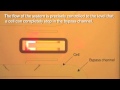
- It's a longstanding question in biology: How do cells know when to progress through the cell cycle?
In simple organisms such as yeast, cells divide once they reach a specific size. However, determining if this holds true for mammalian cells has been difficult, in part because there has been no good way to measure mammalian cell growth over time.
Now, a team of MIT and Harvard Medical School (HMS) researchers has precisely measured the growth rates of single cells, allowing them to answer that fundamental question. In the Aug. 5 online edition of Nature Methods, the researchers report that mammalian cells divide not when they reach a critical size, but when their growth rate hits a specific threshold.

- Title
- Making Wrinkles
- Runtime
- 1:02
- Date posted
- 14 years ago
- Description
- The wrinkles on a raisin result from a simple effect: As the pulp inside dries, the skin grows stiff and buckles to accommodate its shrinking size. Now, a team of researchers at MIT has discovered a way to harness that same principle in a controlled and orderly way, creating wrinkled surfaces with precise sizes and patterns.
This basic method, they say, could be harnessed for a wide variety of useful structures: microfluidic systems for biological research, sensing and diagnostics; new photonic devices that can control light waves; controllable adhesive surfaces; antireflective coatings; and antifouling surfaces that prevent microbial buildup.
A paper describing this new process, co-authored by MIT postdocs Jie Yin and Jose Luis Yagüe, former student Damien Eggenspieler SM '10, and professors Mary Boyce and Karen Gleason, is being published in the journal Advanced Materials.
Read more at MIT News: http://web.mit.edu/newsoffice/2012/wrinkled-surfa...

- Title
- The role of U.S. airports in disease epidemics
- Runtime
- 1:02
- Date posted
- 14 years ago
- Description
- Public health crises of the past decade — such as the 2003 SARS outbreak, which spread to 37 countries and caused about 1,000 deaths, and the 2009 H1N1 flu pandemic that killed about 300,000 people worldwide — have heightened awareness that new viruses or bacteria could spread quickly across the globe, aided by air travel.
While epidemiologists and scientists who study complex network systems — such as contagion patterns and information spread in social networks — are working to create mathematical models that describe the worldwide spread of disease, to date these models have focused on the final stages of epidemics, examining the locations that ultimately develop the highest infection rates.
But a new study by researchers in MIT's Department of Civil and Environmental Engineering (CEE) shifts the focus to the first few days of an epidemic, determining how likely the 40 largest U.S. airports are to influence the spread of a contagious disease origin...

- Title
- River networks on Titan
- Runtime
- 6:08
- Date posted
- 14 years ago
- Description
- For many years, Titan's thick, methane- and nitrogen-rich atmosphere kept astronomers from seeing what lies beneath. Saturn's largest moon appeared through telescopes as a hazy orange orb, in contrast to other heavily cratered moons in the solar system.
In 2004, the Cassini-Huygens spacecraft — a probe that flies by Titan as it orbits Saturn — penetrated Titan's haze, providing scientists with their first detailed images of the surface. Radar images revealed an icy terrain carved out over millions of years by rivers of liquid methane, similar to how rivers of water have etched into Earth's rocky continents.
While images of Titan have revealed its present landscape, very little is known about its geologic past. Now researchers at MIT and the University of Tennessee at Knoxville have analyzed images of Titan's river networks and determined that in some regions, rivers have created surprisingly little erosion. The researchers say there are two possible expl...

- Title
- Making the invisible visible in video
- Runtime
- 2:47
- Date posted
- 14 years ago
- Description
- MIT researchers — graduate student Michael Rubinstein, recent alumni Hao-Yu Wu '12, MNG '12 and Eugene Shih SM '01, PhD '10, and professors William Freeman, Fredo Durand and John Guttag — will present new software at this summer's Siggraph, the premier computer-graphics conference, that amplifies variations in successive frames of video that are imperceptible to the naked eye.
See the researchers' full video and learn more on the project's webpage: http://people.csail.mit.edu/mrub/vidmag/
And read more at MIT News: http://web.mit.edu/newsoffice/2012/amplifying-invisible-video-0622.html

- Title
- An "intelligent co-pilot" for cars
- Runtime
- 3:14
- Date posted
- 14 years ago
- Description
- Read more about this new semiautonomous safety system developed by Sterling Anderson, a PhD student in MIT's Department of Mechanical Engineering, and Karl Iagnemma, a principal research scientist in MIT's Robotic Mobility Group:
MIT News: http://web.mit.edu/newsoffice/2012/mechanical-engineers-develop-intelligent-car-co-pilot-0713.html
The team's paper: http://ieeexplore.ieee.org/xpl/articleDetails.jsp?reload=true&arnumber=6232153&contentType=Conference+Publications
A series of blog posts by Sterling Anderson on Design Impact: http://www.design-impact.org/blog/?s=sterling+anderson&x=12&y=12
Videos & animations courtesy MIT's Robotic Mobility Group and Quantum Signal, LLC (http://www.quantumsignal.com).

- Title
- Glasses-free 3-D TV at MIT
- Runtime
- 3:23
- Date posted
- 14 years ago
- Description
- As striking as it is, the illusion of depth now routinely offered by 3-D movies is a paltry facsimile of a true three-dimensional visual experience. In the real world, as you move around an object, your perspective on it changes. But in a movie theater showing a 3-D movie, everyone in the audience has the same, fixed perspective — and has to wear cumbersome glasses, to boot.
Despite impressive recent advances, holographic television, which would present images that vary with varying perspectives, probably remains some distance in the future. But in a new paper featured as a research highlight at this summer's Siggraph computer-graphics conference, the MIT Media Lab's Camera Culture group offers a new approach to multiple-perspective, glasses-free 3-D that could prove much more practical in the short term.
Instead of the complex hardware required to produce holograms, the Media Lab system uses several layers of liquid-crystal displays (LCDs), the technology ...

- Title
- A new approach to water desalination
- Runtime
- 1:49
- Date posted
- 14 years ago
- Description
- The availability of fresh water is dwindling in many parts of the world, a problem that is expected to grow with populations. One promising source of potable water is the world's virtually limitless supply of seawater, but so far desalination technology has been too expensive for widespread use.
Now, MIT researchers have come up with a new approach using a different kind of filtration material: sheets of graphene, a one-atom-thick form of the element carbon, which they say can be far more efficient and possibly less expensive than existing desalination systems.
Read more at MIT News: http://web.mit.edu/newsoffice/2012/graphene-water-desalination-0702.html
Images courtesy David Cohen-Tanugi; Brett Coulstock; NASA; Ryan Lackey; and James Grellier.

- Title
- Mapping the moon's Shackleton crater
- Runtime
- 1:21
- Date posted
- 14 years ago
- Description
- If humans are ever to inhabit the moon, the lunar poles may well be the location of choice: Because of the small tilt of the lunar spin axis, the poles contain regions of near-permanent sunlight, needed for power, and regions of near-permanent darkness containing ice — both of which would be essential resources for any lunar colony.
The area around the moon's Shackleton crater could be a prime site. Scientists have long thought that the crater — whose interior is a permanently sunless abyss — may contain reservoirs of frozen water. But inconsistent observations over the decades have cast doubt on whether ice might indeed exist in the shadowy depths of the crater, which sits at the moon's south pole.
Now scientists from MIT, Brown University, NASA's Goddard Space Flight Center and other institutions have mapped Shackleton crater with unprecedented detail, finding possible evidence for small amounts of ice on the crater's floor. Using a laser altimeter o...
- Title
- Sharper ultrasound images could improve diagnostics
- Runtime
- 1:42
- Date posted
- 14 years ago
- Description
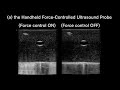
- A new system for ultrasound imaging developed at MIT allows precise measurements and tracking of disease progression.
Read more: http://web.mit.edu/newsoffice/2012/enhanced-ultrasound-0618.html
Music by Alastair Cameron.

- Title
- MIT's 146th Commencement - by the numbers
- Runtime
- 1:47
- Date posted
- 15 years ago
- Description
- MIT's 146th Commencement, June 8, 2012 -- by the numbers.
Read more at MIT News: http://web.mit.edu/newsoffice/2012/commencement-advance-0606.html
- Title
- Tinier Wires
- Runtime
- 1:40
- Date posted
- 15 years ago
- Description
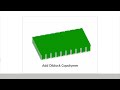
- Researchers at MIT have found a new way of making complex three-dimensional structures using self-assembling polymer materials that form tiny wires and junctions. The work has the potential to usher in a new generation of microchips and other devices made up of submicroscopic features.
Read more at MIT News: http://web.mit.edu/newsoffice/2012/three-dimensional-self-assembling-polymers-0607.html
Animation and narration: Kevin Gotrik, graduate student, Department of Electrical Engineering and Computer Science, MIT
Music: Alastair Cameron

- Title
- Public service projects from MIT's Class of 2012
- Runtime
- 4:48
- Date posted
- 15 years ago
- Description
- At MIT, students are encouraged to take on service-learning and public-service opportunities as part of their education. The projects they tackle take the form of building new companies in developing countries, creating technology to support those in rural areas, and helping underprivileged youths gain access to education — among many others.
With Commencement on the horizon, a few of the members of MIT's Class of 2012 discuss how took the Institute's motto — mind and hand — to heart over their MIT career.
Video: Melanie Gonick

- Title
- MIT's Brass Rat: A Vietnam War ring mystery
- Runtime
- 7:45
- Date posted
- 15 years ago
- Description
- What is known about the ring?
It was returned to the USA with the effects of a Marine killed in combat on March 16, 1968.
This soldier, Stephen Adams, had no connection to the Institute.
The ring is for a graduate student receiving a Master of Science degree.
The ring contains the initials J.T.M.
Research using the alumni database reveals no clear answer as to who owned this ring.
Help us solve the mystery: http://studentlife.mit.edu/vietnamring
Video: Melanie Gonick, MIT News

- Title
- Is that smile real or fake?
- Runtime
- 3:36
- Date posted
- 15 years ago
- Description
- Do you smile when you're frustrated? Most people think they don't — but they actually do, a new study from MIT has found. What's more, it turns out that computers programmed with the latest information from this research do a better job of differentiating smiles of delight and frustration than human observers do.
The research could pave the way for computers that better assess the emotional states of their users and respond accordingly. It could also help train those who have difficulty interpreting expressions, such as people with autism, to more accurately gauge the expressions they see.
Read more: http://web.mit.edu/newsoffice/2012/smile-detector-0525.html
Video: Melanie Gonick

- Title
- Jet-injected drugs may mean the end of needles
- Runtime
- 3:25
- Date posted
- 15 years ago
- Description
- Getting a shot at the doctor's office may become less painful in the not-too-distant future.
MIT researchers have engineered a device that delivers a tiny, high-pressure jet of medicine through the skin without the use of a hypodermic needle. The device can be programmed to deliver a range of doses to various depths — an improvement over similar jet-injection systems that are now commercially available.
Read more at MIT News: http://web.mit.edu/newsoffice/2012/needleless-injections-0524.html

- Title
- L. Rafael Reif selected as the 17th president of MIT
- Runtime
- 2:05
- Date posted
- 15 years ago
- Description
- L. Rafael Reif, a distinguished electrical engineer whose seven-year tenure as MIT's provost has helped MIT maintain its appetite for bold action as well as its firm financial footing, has been selected as the 17th president of the Institute.
Reif, 61, was elected to the post this morning by a vote of the MIT Corporation. He will assume the MIT presidency on July 2.
Read more at: http://web.mit.edu/newsoffice/2012/rafael-reif-elected-president-0516.html
Video: Melanie Gonick
Event footage: MIT Academic Media Production Services

- Title
- Making wrinkles - hydrogels that collapse into complex shapes may aid in drug delivery
- Runtime
- 2:26
- Date posted
- 15 years ago
- Description
- The flexible properties of hydrogels — highly absorbent, gelatinous polymers that shrink and expand depending on environmental conditions such as humidity, pH and temperature — have made them ideal for applications from contact lenses to baby diapers and adhesives.
In recent years, researchers have investigated hydrogels' potential in drug delivery, engineering them into drug-carrying vehicles that rupture when exposed to certain environmental stimuli. Such vesicles may slowly release their contents in a controlled fashion; they may even contain more than one type of drug, released at different times or under various conditions.
However, it's difficult to predict just how hydrogels will rupture, and up until now it's been difficult to control the shape into which a hydrogel morphs. Nick Fang, an associate professor of mechanical engineering at MIT, says predicting how hydrogels transform could help in the design of more complex and effective drug-deliver...

- Title
- the MIT Science Fiction Society
- Runtime
- 3:30
- Date posted
- 15 years ago
- Description
- Read more about the MIT Science Fiction Society at MIT News: http://web.mit.edu/newsoffice/2012/science-fiction-society-library-0507.html
Music by Broke for Free http://freemusicarchive.org/music/Broke_For_Free/

- Title
- Press conference: MIT, Harvard announce edX
- Runtime
- 37:18
- Date posted
- 15 years ago
- Description
- MIT President Susan Hockfield and Harvard University President Drew Faust, accompanied by top officials from both institutions, announced on Wednesday a new collaboration that will unite the Cambridge-based universities in an ambitious new partnership to deliver online education to learners anywhere in the world.
The new venture, called edX, will provide interactive classes from both Harvard and MIT — for free — to anyone in the world with an Internet connection. But a key goal of the project, Faust said, is "to enhance the educational experience of students who study in our classrooms and laboratories."
Read the initial announcement — http://web.mit.edu/newsoffice/2012/mit-harvard-edx-announcement-050212.html
FAQ: What is edX? — http://web.mit.edu/newsoffice/2012/edx-faq-050212.html
Read the event coverage — http://web.mit.edu/newsoffice/2012/edx-launched-0502.html

- Title
- Fog-free glass
- Runtime
- 0:35
- Date posted
- 15 years ago
- Description
- One of the most instantly recognizable features of glass is the way it reflects light. But a new way of creating surface textures on glass, developed by researchers at MIT, virtually eliminates reflections, producing glass that is almost unrecognizable because of its absence of glare — and whose surface causes water droplets to bounce right off, like tiny rubber balls.
The new "multifunctional" glass, based on surface nanotextures that produce an array of conical features, is self-cleaning and resists fogging and glare, the researchers say. Ultimately, they hope it can be made using an inexpensive manufacturing process that could be applied to optical devices, the screens of smartphones and televisions, solar panels, car windshields and even windows in buildings.
The technology is described in a paper published in the journal ACS Nano, co-authored by mechanical engineering graduate students Kyoo-Chul Park and Hyungryul Choi, former postdoc Chih-Hao Chang SM ...

- Title
- Professor Anant Agarwal on MITx
- Runtime
- 2:33
- Date posted
- 15 years ago
- Description
- A decade ago, MIT broke ground with its OpenCourseWare initiative, which made MIT course materials, such as syllabi and lecture notes, publicly accessible. But over the last five years, MIT Provost L. Rafael Reif has led an effort to move the complete MIT classroom experience online, with video lectures, homework assignments, lab work — and a grade at the end.
That project, called MITx, launched late last year. On March 16, Reif announced that MIT Professor Anant Agarwal would step down as director of the Computer Science and Artificial Intelligence Laboratory (CSAIL) in order to lead MIT's Open Learning Enterprise, which will oversee MITx's development.
Learn more about Agarwal and MITx at: http://web.mit.edu/newsoffice/2012/mitx-anant-agarwal-profile-0420.html
From MIT News - MIT launches online learning initiative: http://web.mit.edu/newsoffice/2011/mitx-education-initiative-1219.html
What is MITx?: http://web.mit.edu/newsoffice/2011/mi...
- Title
- Shifting sands
- Runtime
- 4:26
- Date posted
- 15 years ago
- Description
- MIT News - April 6, 2012
Sand in an hourglass might seem simple and straightforward, but such granular materials are actually tricky to model. From far away, flowing sand resembles a liquid, streaming down the center of an hourglass like water from a faucet. But up close, one can make out individual grains that slide against each other, forming a mound at the base that holds its shape, much like a solid.
Sand's curious behavior — part fluid, part solid — has made it difficult for researchers to predict how it and other granular materials flow under various conditions. A precise model for granular flow would be particularly useful in optimizing processes such as pharmaceutical manufacturing and grain production, where tiny pills and grains pour through industrial chutes and silos in mass quantities. When they aren't well-controlled, such large-scale flows can cause blockages that are costly and sometimes dangerous to clear.
Now Ken Kam...

- Title
- Smart sand & robot pebbles
- Runtime
- 1:36
- Date posted
- 15 years ago
- Description
- MIT News - April 2, 2012
Imagine that you have a big box of sand in which you bury a tiny model of a footstool. A few seconds later, you reach into the box and pull out a full-size footstool: The sand has assembled itself into a large-scale replica of the model.
That may sound like a scene from a Harry Potter novel, but it's the vision animating a research project at the Distributed Robotics Laboratory (DRL) at MIT's Computer Science and Artificial Intelligence Laboratory. At the IEEE International Conference on Robotics and Automation in May — the world's premier robotics conference — DRL researchers will present a paper describing algorithms that could enable such "smart sand." They also describe experiments in which they tested the algorithms on somewhat larger particles — cubes about 10 millimeters to an edge, with rudimentary microprocessors inside and very unusual magnets on four of their sides.
Unlike many other approaches to re...

- Title
- the Buckliball
- Runtime
- 0:34
- Date posted
- 15 years ago
- Description
- MIT News - March 26, 2012
Motivated by the desire to determine the simplest 3-D structure that could take advantage of mechanical instability to collapse reversibly, a group of engineers at MIT and Harvard University were stymied — until one of them happened across a collapsible, spherical toy that resembled the structures they'd been exploring, but with a complex layout of 26 solid moving elements and 48 rotating hinges.
The toy inspired the engineers to create the "buckliball," a hollow, spherical object made of soft rubber containing no moving parts, but fashioned with 24 carefully spaced dimples. When the air is sucked out of a buckliball with a syringe, the thin ligaments forming columns between lateral dimples collapse. This is the engineering equivalent of applying equal load on all beams in a structure simultaneously to induce buckling, a phenomenon first studied by mathematician Leonhard Euler in 1757.
When the buckliball's thin l...
- Title
- Daron Acemoglu on Why Nations Fail
- Runtime
- 4:56
- Date posted
- 15 years ago
- Description
- MIT News - March 23, 2012
It is among the grandest topics in scholarship: Why do some nations, such as the United States, become wealthy and powerful, while others remain stuck in poverty? And why do some of those powers, from ancient Rome to the modern Soviet Union, expand and then collapse?
From Adam Smith and Max Weber to the current day, scores of writers have grappled with these questions. Some scholars, like Weber, have argued that religious or cultural differences create vastly different economic outcomes among countries. Others have asserted that a lack of natural resources or technical expertise has prevented poor countries from creating self-sustaining economic growth.
Economists Daron Acemoglu of MIT and James Robinson of Harvard University have another answer: Politics makes the difference. Countries that have what they call "inclusive" political governments — those extending political and property rights as broadly as possib...

- Title
- The Paradiso Synthesizer
- Runtime
- 3:03
- Date posted
- 15 years ago
- Description
- MIT News - March 14, 2012
In 1973, Media Lab associate professor Joe Paradiso was an undergraduate at Tufts University, and didn't know anyone who had built an analog music synthesizer, or "synth," from scratch.
It was a time, he says, when information and parts for do-it-yourself projects were scarce, and digital synthesizer production was on the rise. But, he decided to tackle the project — without any formal training — and sought out advice from local college professors, including his now-colleague in the Media Lab, Barry Vercoe. Paradiso gathered information from manufacturers' data sheets and hobbyist magazines he found in public libraries. He taught himself basic electronics, scrounged for parts from surplus stores and spent a decade and a half building modules and hacking consumer keyboards to create the synth, which he completed in the 1980s.
That synthesizer, probably the world's largest with more than 125 modules (http://web....

- Title
- Weather in a tank
- Runtime
- 3:57
- Date posted
- 15 years ago
- Description
- March 21, 2012
Fluid dynamics plays a central role in determining Earth's climate. Ocean currents and eddies stir up contents from the deep, while atmospheric winds and weather systems steer temperature and moisture around the globe. As the planet spins on its axis, this rotation can significantly affect fluid motion. To fully understand how climate works, researchers at MIT say students must first understand how Earth's rotation affects winds and currents.
"Rotating fluids are not intuitive," says Lodovica Illari, a meteorologist and senior lecturer in the Department of Earth, Atmospheric and Planetary Sciences (EAPS).
Since 2001, Illari and her colleague John Marshall, the Cecil and Ida Green Professor of Oceanography, have worked to make rotating fluid dynamics more intuitive for undergraduate students studying weather and climate, using a demonstration aptly named "Weather in a Tank."
Read more at MIT News: http://web.mi...
- Title
- Greenhouse Gas Can Find a Home Underground
- Runtime
- 3:31
- Date posted
- 15 years ago
- Description
- MIT News - March 20, 2012
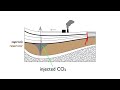
A new study by researchers at MIT shows that there is enough capacity in deep saline aquifers in the United States to store at least a century's worth of carbon dioxide emissions from the nation's coal-fired powerplants. Though questions remain about the economics of systems to capture and store such gases, this study addresses a major issue that has overshadowed such proposals.
The MIT team's analysis — led by Ruben Juanes, the ARCO Associate Professor in Energy Studies in the Department of Civil and Environmental Engineering, and part of the doctoral thesis work of graduate students Christopher MacMinn PhD '12 and Michael Szulczewski — is published this week in the Proceedings of the National Academy of Sciences.
Read more at MIT News: http://web.mit.edu/newsoffice/2012/greenhouse-gas-in-aquifers-0320.html
Music by johnny_ripper http://freemusicarchive.org/music/johnny_ripper/

- Title
- Guiding robot planes with hand gestures
- Runtime
- 3:29
- Date posted
- 15 years ago
- Description
- MIT News - March 14, 2012
Aircraft-carrier crew use a set of standard hand gestures to guide planes on the carrier deck. But as robot planes are increasingly used for routine air missions, researchers at MIT are working on a system that would enable them to follow the same types of gestures.
The problem of interpreting hand signals has two distinct parts. The first is simply inferring the body pose of the signaler from a digital image: Are the hands up or down, the elbows in or out? The second is determining which specific gesture is depicted in a series of images. The MIT researchers are chiefly concerned with the second problem; they present their solution in the March issue of the journal ACM Transactions on Interactive Intelligent Systems. But to test their approach, they also had to address the first problem, which they did in work presented at last year's IEEE International Conference on Automatic Face and Gesture Recognition.
Yale Son...

- Title
- Optimal paths for automated underwater vehicles (AUVs)
- Runtime
- 3:26
- Date posted
- 15 years ago
- Description
- MIT News - March 8, 2012
Sometimes the fastest pathway from point A to point B is not a straight line: for example, if you're underwater and contending with strong and shifting currents. But figuring out the best route in such settings is a monumentally complex problem — especially if you're trying to do it not just for one underwater vehicle, but for a swarm of them moving all at once toward separate destinations.
But that's just what a team of engineers at MIT has figured out how to do, in research results to be presented in May at the annual IEEE International Conference on Robotics and Automation. The team, led by Pierre Lermusiaux, the Doherty Associate Professor in Ocean Utilization, developed a mathematical procedure that can optimize path planning for automated underwater vehicles (AUVs), even in regions with complex shorelines and strong shifting currents. The system can provide paths optimized either for the shortest travel time or for the mini...

- Title
- Studying scientists with Pierre Azoulay
- Runtime
- 4:16
- Date posted
- 15 years ago
- Description
- MIT News - February 29, 2012
Pierre Azoulay, an economist at MIT Sloan, studies how life scientists work — or, more precisely, what makes them work well. Which kinds of grants lead to the most creative scientific research? When elite scientists die or switch jobs, what happens to the output of their former colleagues and co-authors?
Information about those questions is just not readily available. Except to Azoulay: The hard numbers supporting his findings come from a unique database charting the careers of 12,000 scientific stars, which he has painstakingly built up over nearly a decade in collaboration with Joshua Graff Zivin, an economist at the University of California at San Diego.
Read more at MIT News: http://web.mit.edu/newsoffice/2012/profile-azoulay-0229.html
Video: Melanie Gonick

- Title
- Mysterious electron acceleration explained
- Runtime
- 1:34
- Date posted
- 15 years ago
- Description
- MIT News - February 27, 2012
A mysterious phenomenon detected by space probes has finally been explained, thanks to a massive computer simulation that was able to precisely align with details of the spacecraft observations. The finding could not only solve an astrophysical puzzle, but might also lead to a better ability to predict high-energy electron streams in space that could damage satellites.
Jan Egedal, an associate professor of physics at MIT and a researcher at the Plasma Science and Fusion Center, working with MIT graduate student Ari Le and with William Daughton of the Los Alamos National Laboratory (LANL), report on this solution to the space conundrum in a paper published Feb. 26 in the journal Nature Physics.
Egedal had initially proposed a theory to explain this large-scale acceleration of electrons in Earth's magnetotail — a vast and intense magnetic field swept outward from Earth by the solar wind — but until the new dat...

- Title
- Unique languages, universal patterns
- Runtime
- 2:41
- Date posted
- 15 years ago
- Description
- MIT News - February 23, 2012
To the chagrin of anyone who knows one of these languages but not the other, English and Japanese appear to be frustratingly different tongues governed by drastically different rules. And yet, under the surface, English and Japanese have deep similarities, as MIT linguist Shigeru Miyagawa argues in his new book, Case, Argument Structure, and Word Order, published this month in Routledge's "Leading Linguists" series.
In turn, the similarities between English and Japanese underscore a larger point about human language, in Miyagawa's view: All its varieties exist within a relatively structured framework. Languages are different, but not radically different. Dating to the 1950s, in fact, much of MIT's linguistics program has aimed to identify the similar pathways that apparently unrelated languages take.
"There is this very interesting tension in language between diversity and uniformity," says Miyagawa, the Kochi P...

- Title
- Making Nanodroplets Drop Faster
- Runtime
- 1:36
- Date posted
- 15 years ago
- Description
- MIT News - February 23, 2012
MIT mechanical engineering graduate student Nenad Miljkovic discusses his team's work on condensation, nanodroplet formation, and new nanopatterned surfaces that could boost the efficiency of power plants and desalination systems.
Read more at MIT News: http://web.mit.edu/newsoffice/2012/droplets-nanopatterns-0223.html
Video: Nenad Miljkovic
Music: Alastair Cameron

- Title
- Moving past trial-and-error with Richard Braatz
- Runtime
- 2:51
- Date posted
- 15 years ago
- Description
- Richard Braatz, a professor of Chemical Engineering at MIT, believes mathematics can help streamline the road to discovery in pharmaceutical manufacturing as well as nanotechnology.
Video: Melanie Gonick

- Title
- Impurity-to-Efficiency (I2E) Simulation Tool
- Runtime
- 1:37
- Date posted
- 15 years ago
- Description
- An online tool called "Impurities to Efficiency" (known as I2E) allows companies or researchers exploring alternative manufacturing strategies to plug in descriptions of their planned materials and processing steps. After about one minute of simulation, I2E gives an indication of exactly how efficient the resulting solar cell would be in converting sunlight to electricity.
Read more: http://web.mit.edu/newsoffice/2012/impurities-to-efficiency-software-0207.html
Video: Ashley Morishige

- Title
- Harnessing nature's solar cells
- Runtime
- 2:50
- Date posted
- 15 years ago
- Description
- MIT researcher Andreas Mershin has a vision that within a few years, people in remote villages in the developing world may be able to make their own solar panels, at low cost, using otherwise worthless agricultural waste as their raw material.
Video: Melanie Gonick

- Title
- Michael Demkowicz - Extreme materials
- Runtime
- 1:19
- Date posted
- 15 years ago
- Description
- Assistant professor in MIT's Department of Materials Science and Engineering Michael Demkowicz designs materials for extreme environments such as high temperature, high stress and radiation damage.
Video: Melanie Gonick

- Title
- Bob Weinberg and cancer
- Runtime
- 1:29
- Date posted
- 15 years ago
- Description
- Bob Weinberg is a Founding Member of the Whitehead Institute for Biomedical Research and Professor of Biology at the Massachusetts Institute of Technology. The Weinberg lab is known for its discoveries of the first human oncogene -- the ras oncogene that causes normal cells to form tumors, and the isolation of the first known tumor suppressor gene - the Rb gene.
Video: Melanie Gonick

- Title
- Bill Gates - Bright minds and big problems
- Runtime
- 1:37
- Date posted
- 15 years ago
- Description
- Bill Gates, philanthropist and retired co-founder of Microsoft Corp., urged MIT students on April 21, 2010 to focus their talent and energy on tackling the world's biggest challenges, including global health, poverty and education.

- Title
- President Obama at MIT
- Runtime
- 3:52
- Date posted
- 15 years ago
- Description
- On Oct. 23, 2009, MIT proudly hosted a visit by President Barack Obama, which caused great excitement on campus and in the MIT community around the world. This short video produced by the MIT News Office captures the day's highlights.
Video: Melanie Gonick