NASA
Irma Tracked from Space on This Week @NASA – September 8, 2017
- Title
- Irma Tracked from Space on This Week @NASA – September 8, 2017
- Runtime
- 2:49
- Date posted
- 9 years ago
- Description
- During the week of Sept. 5, spacecraft captured imagery of hurricane Irma as the storm reached category 5 status in the Atlantic Ocean. Irma was seen from the International Space Station, Global Precipitation Measurement mission or GPM, and the Suomi National Polar-orbiting Partnership satellite. Imagery from space is used to help forecasters and officials track and characterize storms and other natural events. Also, Johnson Space Center Recovering from Harvey, Whitson and Fischer Return to Earth, 40 Years of Voyager, and Bridenstine Nominated for Administrator!
This video is available for download from NASA's Image and Video Library: https://images.nasa.gov/#/details-NHQ_2017_0908_Irma%20Tracked%20from%20Space%20on%20This%20Week%20@NASA%20%E2%80%93%20September%208,%202017.html

- Title
- Expedition 53-54 Crew Prepares for Launch in Kazakhstan
- Runtime
- 10:29
- Date posted
- 9 years ago
- Description
- After arriving at the Baikonur Cosmodrome in Kazakhstan Sept. 6, Expedition 53-54 Soyuz Commander Alexander Misurkin of Roscosmos and Flight Engineers Mark Vande Hei and Joe Acaba of NASA and their backups, Anton Shkaplerov of Roscosmos and Scott Tingle and Shannon Walker of NASA participated in a variety of activities as they prepared for the launch of Misurkin, Vande Hei and Acaba Sept. 13 from the Baikonur Cosmodrome in Kazakhstan in the Soyuz MS-06 spacecraft for a five-and-a-half-month mission aboard the International Space Station. The footage includes the crew’s arrival in Baikonur, their second Soyuz fit check in the Cosmodrome’s Integration Facility and the ceremonial Cosmonaut Hotel crew quarters flag-raising ceremony.

- Title
- Highlights from Voyager's 40th Anniversary
- Runtime
- 1:20
- Date posted
- 9 years ago
- Description
- On September 5th, NASA celebrated 40 years of the Voyager 1 & 2 spacecraft -- humanity's farthest and longest-lived mission.
This video is available for download from NASA's Image and Video Library: https://images.nasa.gov/#/details-NHQ_20170906_Voyager%2040th%20Social.html
- Title
- Expedition 53-54 Training and Prelaunch Activities Aug. 28 - Sept. 6
- Runtime
- 22:53
- Date posted
- 9 years ago
- Description
- Expedition 53-54 Soyuz Commander Alexander Misurkin of Roscosmos and Flight Engineers Mark Vande Hei and Joe Acaba of NASA and their backups, Anton Shkaplerov of Roscosmos and Scott Tingle and Shannon Walker of NASA conducted their first Soyuz vehicle fit check in the Integration Facility at the Baikonur Cosmodrome in Kazakhstan Aug. 28 and final qualification training at the Gagarin Cosmonaut Training Center in Star City, Russia Aug. 30 and 31. On September 1 both the prime and backup crews held a news conference and toured the Gagarin Museum at the Gagarin Cosmonaut Training Center in Star City, Russia. They viewed historic space artifacts, and visited Red Square in Moscow for traditional ceremonies, including the laying of flowers at the Kremlin Wall where Russian space icons are interred. The Expedition 53 crew participated in traditional ceremonies Sept. 6 at the Gagarin Cosmonaut Training Center in Star City, Russia, outside Moscow. Afterward, they departed for the Baikonur Cosmo...

- Title
- Expedition 52 Crew Receives Warm Welcome in Kazakhstan and Star City
- Runtime
- 1:50
- Date posted
- 9 years ago
- Description
- Expedition 52 Commander Fyodor Yurchikhin of Roscosmos and Flight Engineers Peggy Whitson and Jack Fischer of NASA were greeted in a traditional ceremony at the airport in Karaganda, Kazakhstan Sept. 3, a few hours after landing in their Soyuz MS-04 spacecraft in Kazakhstan near the town of Dzhezkazgan. After the ceremony, the crew split up, with Yurchikhin returning to his home in Star City, Russia, while Whitson and Fischer flew back to their homes in Houston on a NASA jet. Whitson, who has logged more days in space than any other U.S. astronaut, completed a 10-month mission, her third long duration flight, while Yurchikhin and Fischer completed 136 days in space. The landing marked the first time since Nov. 26, 2010, that two NASA astronauts returned to Earth in a Russian Soyuz spacecraft.

- Title
- 40th Anniversary of Voyager
- Runtime
- 1:15:06
- Date posted
- 9 years ago
- Description
- On September 5, 1977, Voyager 1 was launched on a mission to explore where nothing had flown before. First on its journey were Jupiter and Saturn and it is currently exploring interstellar space. Its twin spacecraft, Voyager 2, visited Uranus and Neptune and is now in the outermost layer of the heliosphere, called the heliosheath. Forty years later, both spacecraft continue to send back data and are searching for the heliopause, the region where the Sun’s influence wanes, which has never been reached by any spacecraft.
This video is available for download from NASA's Image and Video Library: https://images.nasa.gov/#/details-NHQ_2017_0905_40th%20Anniversary%20of%20Voyager.html
- Title
- Expedition 52 Crew Lands Safely in Kazakhstan
- Runtime
- 9:23
- Date posted
- 9 years ago
- Description
- Expedition 52 Commander Fyodor Yurchikhin of Roscosmos and Flight Engineers Peggy Whitson and Jack Fischer of NASA landed safely near the town of Dzhezkazgan, Kazakhstan Sept. 3 after bidding farewell to their colleagues on the complex and undocking their Soyuz MS-04 spacecraft from the Poisk Module on the International Space Station. The landing marked the first time since Nov. 26, 2010 that two NASA astronauts returned to Earth in a Russian Soyuz spacecraft. Whitson, who has logged more days in space than any other U.S. astronaut, completed a 10-month mission, her third long duration flight, while Yurchikhin and Fischer completed 136 days in space.
This video is available for download from NASA's Image and Video Library: https://images.nasa.gov/#/details-NHQ_2017_0902_Expedition%2052%20Crew%20Lands%20Safely%20in%20Kazakhstan.html

- Title
- Job Well Done aboard the Space Station
- Runtime
- 8:03
- Date posted
- 9 years ago
- Description
- Expedition 52 Commander Fyodor Yurchikhin of Roscosmos and Flight Engineers Peggy Whitson and Jack Fischer of NASA, bid farewell to the crew remaining on the orbital outpost, including NASA’s Randy Bresnik.
This video is available for download from NASA's Image and Video Library: https://images.nasa.gov/#/details-NHQ_201_0902_Job%20Well%20Done%20aboard%20the%20Space%20Station.html

- Title
- Change of Command aboard the Space Station
- Runtime
- 11:01
- Date posted
- 9 years ago
- Description
- The reins of the International Space Station were passed from Fyodor Yurchikhin of Roscosmos to Randy Bresnik of NASA during a ceremony on the orbital outpost Sept. 1. Yurchikhin is returning to Earth with his crewmates, Peggy Whitson and Jack Fischer of NASA in the Soyuz MS-04 spacecraft for a landing Sept. 3. Whitson, who has logged more days in space than any other U.S. astronaut, is completing a 10-month mission, her third long duration flight, while Yurchikhin and Fischer are completing 136 days in space.
This video is available for download from NASA's Image and Video Library: https://images.nasa.gov/#/details-NHQ_2017_0902_Change%20of%20Command%20aboard%20the%20Space%20Station.html

- Title
- Catastrophic Storm Seen from Space on This Week @NASA – September 1, 2017
- Runtime
- 2:25
- Date posted
- 9 years ago
- Description
- We worked with our partner agencies to use space-based assets to capture imagery of Hurricane Harvey that impacted the Texas-Louisiana Gulf Coast region. Imagery captured from the vantage point of space, provides data that weather forecasters, emergency responders and other officials can use to better inform the public. Views from the International Space Station, and NOAA’s GOES East satellite showed the massive size and movement of the storm. While our Global Precipitation Measurement (GPM) Mission analyzed the storm’s record-breaking rainfall – which led to catastrophic flooding in Texas and Louisiana. Due to the storm, our Johnson Space Center in Houston is closed through Labor Day, while the region recovers, but Mission Control remains operational in support of the crew aboard the International Space Station. Also, Final RS-25 Engine Test of the Summer, Key SLS Rocket Hardware Finished, and Researching Quiet Supersonic Flight!
This video is available for download...
- Title
- Voyager 1 Trajectory through the Solar System
- Runtime
- 2:11
- Date posted
- 9 years ago
- Description
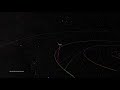
- This visualization tracks the trajectory of the Voyager 1 spacecraft through the solar system. Launched on September 5, 1977, it was one of two spacecraft sent to visit the giant planets of the outer solar system. Voyager 1 flew by Jupiter and Saturn before being directed out of the solar system.
To fit the 40 year history of the mission into a short visualization, the pacing of time accelerates through most of the movie, starting at about 5 days per second at the beginning and speeding up to about 11 months per second after the planet flybys are past.
The termination shock and heliopause are the 'boundaries' created when the plasma between the stars interacts with the plasma flowing outward from the Sun. They are represented with simple grid models and oriented so their 'nose' is pointed in the direction (Right Ascension = 17h 24m, declination = 17 degrees south) represented by more recent measurements from other missions.
https://svs.gsfc.nasa.gov/4139...

- Title
- Voyager 2 Trajectory through the Solar System
- Runtime
- 2:09
- Date posted
- 9 years ago
- Description
- This visualization tracks the trajectory of the Voyager 2 spacecraft through the solar system. Launched on August 20, 1977, it was one of two spacecraft sent to visit the giant planets of the outer solar system. Like Voyager 1, Voyager 2 flew by Jupiter and Saturn, but the Voyager 2 mission was extended to fly by Uranus and Neptune before being directed out of the solar system.
To fit the 40 year history of the mission into a short visualization, the pacing of time accelerates through most of the movie, starting at about 5 days per second at the beginning and speeding up to about 11 months per second after the planet flybys are past.
The termination shock and heliopause are the 'boundaries' created when the plasma between the stars interacts with the plasma flowing outward from the Sun. They are represented with simple grid models and oriented so their 'nose' is pointed in the direction (Right Ascension = 17h 24m, declination = 17 degrees south) represented by...

- Title
- Final RS-25 Engine Test of the Summer
- Runtime
- 8:35
- Date posted
- 9 years ago
- Description
- On Aug. 30, engineers at our Stennis Space Center wrapped up a summer of hot fire testing for flight controllers on RS-25 engines that will help power the new Space Launch System rocket being built to carry astronauts to deep-space destinations, including Mars. The 500-second hot fire of a flight controller or “brain” of the engine marked another step toward the nation’s return to human deep-space exploration missions. Four RS-25 engines, equipped with flight-worthy controllers will help power the first integrated flight of our Space Launch System rocket with our Orion spacecraft, known as Exploration Mission One.
This video is available for download from NASA's Image and Video Library: https://images.nasa.gov/#/details-NHQ_2017_0830_Final%20RS-25%20Engine%20Test%20of%20the%20Summer.html

- Title
- Space Station Cameras Peer down on Major Hurricane Harvey
- Runtime
- 5:58
- Date posted
- 9 years ago
- Description
- Cameras outside the International Space Station captured views of Hurricane Harvey during a flyover of the massive storm at 5:15 p.m. EDT Aug. 25.
This video is available for download from NASA's Image and Video Library: https://images.nasa.gov/#/details-NHQ_2017_0825_Space%20Station%20Cameras%20Peer%20down%20on%20Major%20Hurricane%20Harvey.html

- Title
- Eclipse Across America on This Week @NASA – August 25, 2017
- Runtime
- 2:17
- Date posted
- 9 years ago
- Description
- The Aug. 21 eclipse across America generated interest and excitement far and wide. Our coverage of the historic eclipse – the first coast-to-coast total solar eclipse for the U.S. in 99 years – was widespread … Anchored from the College of Charleston, in South Carolina – we showed you views of the eclipse that only NASA could. Views from space, from Earth’s atmosphere and from the ground – with expert observation and analysis provided from many of the 14 states around the country, situated along the path of totality. That’s where thousands of people flocked – for the ultimate eclipse experience – total darkness in the middle of the day!
This video is available for download from NASA's Image and Video Library: https://images.nasa.gov/#/details-NHQ_2017_0825_Eclipse%20Across%20America%20on%20This%20Week%20@NASA%20%E2%80%93%20August%2025,%202017.html

- Title
- Space Station Camera Captures New Views of Hurricane Harvey
- Runtime
- 2:27
- Date posted
- 9 years ago
- Description
- The National Hurricane Center (NHC) upgraded the remnants of tropical storm Harvey to a tropical depression on August 23, 2017 at 11 a.m. EDT (1500 UTC). Harvey became better organized and was revived after moving from Mexico's Yucatan Peninsula into the Bay of Campeche. The warm waters of the Gulf of Mexico and favorable vertical wind shear promoted the regeneration of the tropical cyclone. This video includes views from The International Space Station recorded on August 24, 2017 at 6:15 p.m. Eastern Time.
This video is available for download from NASA's Image and Video Library: https://images.nasa.gov/#/details-NHQ_2017_0824_Space%20Station%20Camera%20Captures%20New%20Views%20of%20Hurricane%20Harvey.html

- Title
- Eclipse 2017: Through the Eyes of NASA
- Runtime
- 3:44:25
- Date posted
- 9 years ago
- Description
- During the eclipse, 14 states across the U.S. were in the path of totality and experienced more than two minutes of darkness in the middle of the day – with a partial eclipse viewable all across North America. The broadcast – Eclipse Across America: Through the Eyes of NASA – covered locations along the path of totality, from Oregon to South Carolina including public reactions from all ages. The eclipse’s long path over land provided a unique opportunity to study the Sun, Earth, Moon and their interaction.
This video is available for download from NASA's Image and Video Library:
“Total Eclipse Preview Show”, Total Solar Eclipse: “Through The Eyes of NASA,” Part 1
https://images.nasa.gov/#/details-NHQ_2017_0821_Total%20Solar%20Eclipse%20Noon%20to%201%20pm%20ET.html
Total Solar Eclipse: “Through The Eyes of NASA,” Part 2
https://images.nasa.gov/#/details-NHQ_2017_0821_Total%20Solar%20Eclipse%201%20pm%20to%202%20pm%2...

- Title
- Space Station Crew Unveils "Space Suit" Designed by Cancer Patients on Earth
- Runtime
- 21:45
- Date posted
- 9 years ago
- Description
- Aboard the International Space Station, Expedition 52 Flight Engineers Peggy Whitson, Jack Fischer and Randy Bresnik of NASA discussed the latest “UNITY” space suit that arrived on the orbital laboratory aboard the SpaceX/Dragon cargo craft Aug. 16 during an in-flight conversation with former astronaut Nicole Stott at Mission Control in Houston Aug. 23. In Sept. 2016, an historic 14-day global art endeavor was mounted by Stott and the Space Suit Art Project team. As a result, the “UNITY” Space Suit was constructed from paintings by pediatric cancer patients and astronauts and cosmonauts from the five international space agencies that built the station.

- Title
- Space Station Crew Discusses Life in Space with NASA's Newest Astronauts
- Runtime
- 39:49
- Date posted
- 9 years ago
- Description
- Aboard the International Space Station, Expedition 52 Flight Engineers Peggy Whitson, Jack Fischer and Randy Bresnik of NASA conducted a question and answer session with the agency’s newest class of astronauts during an in-flight “orientation” session Aug. 22 with the new selectees. Twelve new astronauts were announced by NASA on June 7 and will begin extensive training this year for future flight assignments.

- Title
- Eclipse-Like Events on This Week @NASA – August 18, 2017
- Runtime
- 3:05
- Date posted
- 9 years ago
- Description
- Natural phenomena such as the Aug. 21, 2017 solar eclipse can inspire awe, but scientists can also use eclipse-like events to learn more about the universe. For instance, a total eclipse, or an occultation in scientific terms – happens when a celestial body completely blocks light from a star, like our sun. This type of event can help astronomers learn more about an object’s atmosphere, including whether it might be surrounded by rings or other planetary matter. During a similar event, called a transit, variations in light that result when a closer object passes in front of a star, but only blocks a small part of the star, have been used by missions such as our Kepler space telescope, to discover new planets outside our solar system. Also, SpaceX Launches Science, Supplies to Space Station, New Communications Satellite Launched, Cassini Begins Final Five Orbits around Saturn and Spacewalk aboard the Space Station!

- Title
- Third Generation Satellite Joins NASA's Communication Network
- Runtime
- 5:24
- Date posted
- 9 years ago
- Description
- On Friday, August 18, NASA launched the third in a series of three advanced, Tracking and Data Relay Satellites, known as TDRS-M, from Cape Canaveral Air Force Station, in Florida. This latest addition to the fleet will augment a space communications network that provides the critical path for high data-rate communication to a host of spacecraft including the International Space Station and its resupply vehicles, the Hubble Space Telescope and many of NASA’s Earth-observing fleet spacecraft.

- Title
- Space Station Cosmonauts take a Walk in Space
- Runtime
- 6:02
- Date posted
- 9 years ago
- Description
- Outside the International Space Station, Expedition 52 Commander Fyodor Yurchikhin and Flight Engineer Sergey Ryazanskiy conducted a spacewalk Aug. 17 to assess the condition of the exterior of the Russian segment of the complex and to install struts and handrails to facilitate future excursions. During the outing, Ryazanskiy manually deployed five small nanosatellites to collect data on a variety of scientific investigations. The spacewalk, which was the 202nd in support of space station assembly and maintenance, was the ninth in Yurchikhin’s career and the fourth for Ryazanskiy.

- Title
- NASA News Briefing Previews Launch of TDRS-M Communications Satellite
- Runtime
- 54:56
- Date posted
- 9 years ago
- Description
- On Aug. 17, NASA held a news conference to preview the launch and mission of its next Tracking and Data Relay Satellite, TDRS-M. TDRS-M, which is targeted for launch atop a United Launch Alliance Atlas V rocket from Cape Canaveral Air Force Station in Florida, no earlier than Aug. 18, is the third in a series of three advanced TDRS satellites. The fleet of TDRS satellites provides the critical path for high data-rate communication to a host of spacecraft including the International Space Station and its resupply vehicles, the Hubble Space Telescope and many of NASA’s Earth-observing fleet spacecraft.
- Title
- U.S. Commercial Cargo Craft Arrives at the International Space Station
- Runtime
- 11:05
- Date posted
- 9 years ago
- Description
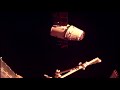
- The SpaceX Falcon 9 rocket launched from the Kennedy Space Center, Florida Aug. 14, sending an unpiloted Dragon cargo vehicle on a delivery run to the International Space Station. Loaded with more than three tons of supplies and scientific investigations, the Dragon is scheduled to arrive at the station on Aug. 16 where it will be captured by Expedition 52 crewmembers Jack Fischer of NASA and Paolo Nespoli of the European Space Agency operating the station’s Canadarm2 robotic arm. Dragon will spend about a month attached to the Earth-facing port of the Harmony module.

- Title
- Record-Breaking Station Crew Member Discusses Life in Space with the Media
- Runtime
- 19:49
- Date posted
- 9 years ago
- Description
- Aboard the International Space Station, Expedition 52 Flight Engineer Peggy Whitson of NASA discussed her record-breaking mission on the outpost during a pair of in-flight interviews Aug. 15 with Women’s Day Magazine and ABC “This Week” correspondent Martha Raddatz. Whitson, who is nearing the end of her third long-duration mission on the orbital laboratory, has spent more days in space than any other U.S. astronaut in history.

- Title
- Post-Launch Status of Next Space Station Supply Mission
- Runtime
- 18:27
- Date posted
- 9 years ago
- Description
- On August 14, a post-launch status briefing was held at Kennedy Space Center, following the launch of the twelfth SpaceX resupply mission to the International Space Station. SpaceX launched its Dragon spacecraft aboard the company's Falcon 9 rocket from Launch Complex 39A at KSC.

- Title
- SpaceX/Dragon CRS-12 Launches to the International Space Station
- Runtime
- 13:46
- Date posted
- 9 years ago
- Description
- A SpaceX Falcon 9 rocket launched from NASA’s Kennedy Space Center in Florida Aug. 14, sending an unpiloted Dragon cargo spacecraft on a delivery run to the International Space Station. Loaded with more than three tons of supplies and scientific investigations, the Dragon is scheduled to arrive at the station Aug. 16 where it will be captured by Expedition 52 crewmembers Jack Fischer of NASA and Paolo Nespoli of ESA (European Space Agency) operating the station’s Canadarm2 robotic arm. Dragon will spend about a month attached to the Earth-facing port of the Harmony module.

- Title
- SpaceX/Dragon CRS-12 What's on Board Science Briefing
- Runtime
- 1:17:01
- Date posted
- 9 years ago
- Description
- On Aug 13, NASA held a briefing at the agency’s Kennedy Space Center in Florida to discuss the science, research and technology payloads being transported to the International Space Station aboard the next SpaceX mission to the ISS. SpaceX is scheduled to launch its 11th Commercial Resupply Services mission to the International Space Station no earlier than 12:31 p.m. EST Monday, Aug 14. The launch will take place from Launch Complex 39A at NASA’s Kennedy Space Center in Florida. Live coverage of the launch will begin at 12:00 p.m. on NASA Television and the agency’s website.
This video is also available from NASA's Image and Video Library: https://images.nasa.gov/#/details-KSC-20170813-VP_CDC01-0001-CRS_12_Whats_on_Board-3166671.html

- Title
- SpaceX/Dragon CRS-12 Prelaunch News Conference
- Runtime
- 56:25
- Date posted
- 9 years ago
- Description
- On Aug. 13, NASA held a briefing at the agency’s Kennedy Space Center in Florida to provide an overview of the next SpaceX mission to the International Space Station. The SpaceX Dragon spacecraft will lift off on top of the company's Falcon 9 rocket, no earlier than 12:31 p.m. EST Monday, Aug. 14, from Launch Complex 39A at NASA’s Kennedy Space Center in Florida. The Dragon will carry science research, crew supplies and hardware to the orbiting laboratory in support of the Expedition 52 and 53 crew members.
This video is also available from NASA's Image and Video Library: https://images.nasa.gov/#/details-NHQ_2017_0813_SpaceXDragon%20CRS-12%20Prelaunch%20News%20Conference.html

- Title
- Preparing for Eclipse 2017 on This Week @NASA – August 11, 2017
- Runtime
- 3:26
- Date posted
- 9 years ago
- Description
- The Aug. 21 total solar eclipse across America is generating a lot of interest – and a lot of questions. You’ll find answers to many of your eclipse questions at NASA’s Eclipse 2017 website -- eclipse2017.nasa.gov. The site is full of information to help you prepare for this rare celestial event – including eclipse-related activities, events, viewing safety tips, and other resources. Then, on the day of the eclipse, you can see the event “Through the Eyes of NASA” – during a special NASA TV broadcast that includes coast-to-coast coverage from the ground, from the air and from space. Coverage begins with a special pre-show at noon eastern – followed by in-depth coverage at 1pm. You can also watch on Aug. 21 at www.nasa.gov/eclipselive. Also, TDRS-M Update, Webb’s Sunshield Layers Installed, RS-25 Engine Testing Rolls On, and Chief Technologist Visits Industry Partner!
This video is also available from NASA's Image and Video Library: https://images.nasa.gov...

- Title
- 2017 Total Solar Eclipse Across America Promo
- Runtime
- 0:30
- Date posted
- 9 years ago
- Description
- On Monday, August 21, 2017, all of North America will be treated to an eclipse of the sun. Anyone within the path of totality can see one of nature’s most awe inspiring sights - a total solar eclipse.
This video is also available in NASA's Image and Video Library: https://goo.gl/WYxX38

- Title
- Space Station Crew Member Discusses Life in Space on a NASA Podcast
- Runtime
- 34:12
- Date posted
- 9 years ago
- Description
- Aboard the International Space Station, Expedition 52 Flight Engineer Jack Fischer of NASA discussed life and research on the complex during a NASA Johnson Space Center podcast in-flight interview Aug. 10. Fischer is in the final weeks of a four and a half month mission on the outpost, headed for a landing Sept. 3 in Kazakhstan in a Russian Soyuz spacecraft.

- Title
- RS-25 Rocket Engine Test
- Runtime
- 8:53
- Date posted
- 9 years ago
- Description
- The 8.5-minute test conducted at NASA’s Stennis Space Center is part of a series of tests designed to put the upgraded former space shuttle engines through the rigorous temperature and pressure conditions they will experience during a launch. The tests also support the development of a new controller, or “brain,” for the engine, which monitors engine status and communicates between the rocket and the engine, relaying commands to the engine and transmitting data back to the rocket.
This video is available for download from NASA's Image and Video Library: https://goo.gl/1mNM3c

- Title
- 2017 Total Solar Eclipse Viewing Tips - Narrated by George Takei
- Runtime
- 1:00
- Date posted
- 9 years ago
- Description
- On Monday, August 21, 2017, all of North America will be treated to an eclipse of the sun. Anyone within the path of totality can see one of nature’s most awe inspiring sights - a total solar eclipse. This video, narrated by actor George Takei, provides a few viewing tips for the public.

- Title
- Space Station Crew Member Discusses Record-Breaking Mission with the Media
- Runtime
- 20:47
- Date posted
- 9 years ago
- Description
- Aboard the International Space Station, Expedition 52 Flight Engineer Peggy Whitson of NASA discussed her record-breaking mission on the outpost during a pair of in-flight interviews Aug. 9 with KMA Radio in Shenandoah, Iowa and Space.com. Whitson, who set the record for most days in space by a U.S. astronaut back in April, is headed for the completion of a 289-day flight on this, her third long duration flight on the station. She is scheduled to return to Earth on Sept. 3 in Kazakhstan on a Russian Soyuz spacecraft.

- Title
- Space Station Crew Member Discusses Life in Space with California Scouts
- Runtime
- 24:05
- Date posted
- 9 years ago
- Description
- Aboard the International Space Station, Expedition 52 Flight Engineer Jack Fischer of NASA discussed his mission and life aboard the orbital complex during an in-flight educational event Aug. 7 with the Boy Scouts of the Bay Area in Pleasant Hill, California. Fischer is in the final weeks of a four and a half month mission on the outpost, headed for a landing Sept. 3 in Kazakhstan in a Russian Soyuz spacecraft.

- Title
- Earth like Atmosphere Unlikely to Survive Exoplanet’s Orbit on This Week @NASA – August 4, 2017
- Runtime
- 3:02
- Date posted
- 9 years ago
- Description
- Scientists are studying our closest Earth-size exoplanet neighbor – Proxima b – to determine if it’s habitable. A recent computer simulation has provided good data on the question. Using Earth as a model – the simulation placed a planet with an Earth-like atmosphere into Proxima b’s orbit around its host star, Proxima Centauri. The simulation determined that the planet would likely lose its atmosphere from the effects of Proxima Centauri’s intense radiation and frequent flaring. Observations from our Chandra X-ray Observatory and other data were used for the simulation. Also, Getting a Feel for Eclipses, SOHO Reveals Rapidly Rotating Solar Core, Curiosity’s Five-Year Anniversary on Mars, and Putting NASA Earth Science to Work!

- Title
- Italian Space Station Veteran Discusses Life in Space with Italian Media
- Runtime
- 20:53
- Date posted
- 9 years ago
- Description
- Aboard the International Space Station, Expedition 52 Flight Engineer Paolo Nespoli of the European Space Agency discussed his first days in orbit since returning to the outpost during an in-flight interview Aug. 2 with members of the Italian media. The 60-year old Nespoli, who hails from Milan, is making his third flight into space and second long duration mission on the orbital complex.

- Title
- Expedition 52-53 Crew Welcomed Aboard the Space Station
- Runtime
- 19:12
- Date posted
- 9 years ago
- Description
- On July 28, A few hours after docking their Soyuz MS-05 spacecraft to the International Space Station, Expedition 52-53 Soyuz Commander Sergey Ryazanskiy of Roscosmos, Paolo Nespoli of the European Space Agency and Flight Engineer Randy Bresnik of NASA opened hatches and were greeted by station Commander Fyodor Yurchikhin of Roscosmos and Flight Engineers Jack Fischer and Peggy Whitson of NASA. Ryazanskiy, Nespoli and Bresnik will spend four months on the station.

- Title
- Expedition 52-53 Crew Docks to the Space Station
- Runtime
- 6:24
- Date posted
- 9 years ago
- Description
- After launching earlier in the day in their Soyuz MS-05 spacecraft from the Baikonur Cosmodrome in Kazakhstan, Expedition 52-53 Soyuz Commander Sergey Ryazanskiy of Roscosmos and Flight Engineers Randy Bresnik of NASA and Paolo Nespoli of the European Space Agency arrived at the International Space Station on July 28.

- Title
- New Crew Launches to the Space Station on This Week @NASA – July 28, 2017
- Runtime
- 2:31
- Date posted
- 9 years ago
- Description
- Acting Administrator Robert Lightfoot was in Kazakhstan on July 28 to observe the launch to the International Space Station of our astronaut Randy Bresnik with his crewmates – Sergey Ryazanskiy of Roscosmos, and Paolo Nespoli of the European Space Agency. The trio is scheduled to spend more than four months on the station working on hundreds of science and technology experiments. Also, New 4K Footage of Spacewalk, NASA Technologies Showcased at AirVenture Event, Preparing to Chase the Total Solar Eclipse from the Sky, and Another Successful RS-25 Engine Test!

- Title
- Crew Launches to International Space Station
- Runtime
- 5:14
- Date posted
- 9 years ago
- Description
- Expedition 52-53 Soyuz Commander Sergey Ryazanskiy of Roscosmos and Flight Engineers Randy Bresnik of NASA and Paolo Nespoli of ESA (European Space Agency) launched on the Russian Soyuz MS-05 spacecraft July 28 from the Baikonur Cosmodrome in Kazakhstan. The trio began a six-hour journey to the International Space Station and the start of a four-and-a-half month mission on the outpost.

- Title
- Russian State Commission Meeting and Final ISS Expedition 52-53 Pre-Launch Crew News Conference
- Runtime
- 52:51
- Date posted
- 9 years ago
- Description
- In preparation for launch, the final meeting between the Russian State Commission and the crew of International Space Expedition 52/53 meets in Baikonur Kazakhstan.

- Title
- Expedition 52-53 Soyuz Vehicle is Prepared for Launch in Kazakhstan
- Runtime
- 13:49
- Date posted
- 9 years ago
- Description
- At the Baikonur Cosmodrome in Kazakhstan, the Soyuz MS-05 spacecraft and its Soyuz booster are transported from the Integration Facility to the launch pad on a railcar July 26 for final preparations before launch July 28 to the International Space Station. The Soyuz MS-05 will carry Expedition 52-53 Soyuz Commander Sergey Ryazanskiy of Roscosmos and Flight Engineers Randy Bresnik of NASA and Paolo Nespoli of ESA (European Space Agency) to the orbital complex for a four-and-a-half month mission.

- Title
- NASA’s RS-25 Rocket Engine Fires Up Again
- Runtime
- 8:47
- Date posted
- 9 years ago
- Description
- Engineers conduct the third in a series of RS-25 flight controller tests on July 25, 2017, for NASA’s Space Launch System (SLS) rocket. The more than 8 1/2 minute test on the A-1 Test Stand at NASA’s Stennis Space Center in Mississippi signaled another step toward launch of NASA’s new Space Launch System (SLS). The SLS rocket, powered by four RS-25 engines, along with the Orion spacecraft will take astronauts on a new era of exploration beyond Earth’s orbit into deep space.

- Title
- Space Station Crew Member Discusses Life in Space with Media Outlets
- Runtime
- 17:46
- Date posted
- 9 years ago
- Description
- Aboard the International Space Station, Expedition 52 Flight Engineer Jack Fischer of NASA discussed life and research on the complex during a pair of in-flight interviews July 25 with KOA Radio, Denver and KFI Radio, Los Angeles. Fischer is in the final weeks of a four and a half month mission on the outpost, headed for a return to Earth Sept. 3 aboard a Russian Soyuz spacecraft.

- Title
- Happy 100th Anniversary, Langley on This Week @NASA – July 21, 2017
- Runtime
- 2:56
- Date posted
- 9 years ago
- Description
- Our Langley Research Center officially celebrated its 100th anniversary on July 17. Groundbreaking took place on that date in 1917, for what is now known as Building 587 – the first aeronautical research laboratory erected in 1918 for NASA’s predecessor, the National Advisory Committee for Aeronautics (NACA). The establishment of Langley – NASA’s first field center – marked the start of our quest to achieve aerospace excellence through the scientific study of flight. Also, ISS Research & Development Conference, Next Station Crew Heads to Launch Site, Electrons Whistle in Space, and Mars Day!

- Title
- NASA Participates in Mars Day Activities at National Air and Space Museum
- Runtime
- 28:13
- Date posted
- 9 years ago
- Description
- NASA participated in the July 21 Mars Day event at the Smithsonian National Air and Space Museum (NASM) in Washington, D.C. The museum hosts this annual event, which includes exhibits, speakers and educational activities, to celebrate the Red Planet.
Jim Green, director of NASA’s Planetary Science Division, along with other NASA scientists and engineers, was on hand to talk with visitors about the agency’s Mars exploration missions. There was also a Mars concept rover on display, developed by vehicle designers the Parker Brothers with advice from NASA. The vehicle is currently on an East Coast tour from its home base at the Kennedy Space Center Visitor’s Complex in Florida. The concept rover is designed to engage and educate the public by demonstrating the types of features and equipment a future human exploration vehicle may need.

- Title
- Expedition 52-53 Crew Departs for Kazakh Launch Site
- Runtime
- 11:03
- Date posted
- 9 years ago
- Description
- Expedition 52-53 Soyuz Commander Sergey Ryazanskiy of Roscosmos and Flight Engineers Randy Bresnik of NASA and Paolo Nespoli of ESA (European Space Agency), and their backups, Alexander Misurkin of Roscosmos, Mark Vande Hei of NASA and Norishige Kanai of the Japan Aerospace Exploration Agency participated in traditional ceremonies July 16 at the Gagarin Cosmonaut Training Center in Star City, Russia, outside Moscow. Afterward, they departed for the Baikonur Cosmodrome in Kazakhstan to complete training for launch of Ryazanskiy, Bresnik and Nespoli July 28 from the Baikonur Cosmodrome in Kazakhstan in the Soyuz MS-05 spacecraft.

- Title
- Celebrating 100 Years of NASA Langley: A Storied Legacy, A Soaring Future
- Runtime
- 44:55
- Date posted
- 9 years ago
- Description
- NASA Langley – 100 Years: Something happened 100 years ago that changed forever the way we fly, the way we explore space and how we study our home planet. That something was the establishment of what is now NASA’s Langley Research Center in Hampton, Virginia, which commemorates its 100th anniversary on July 17, 2017.
Astronaut Neil Armstrong, the first human to step foot on the moon and who learned how to do so by training at Langley said, "If a competition were held to determine the organization that had accomplished the largest number of advancements to aeronautic and aerospace progress, my nomination would be this place."
This 45-minute documentary looks back across the 100 years, updates us on work being done at Langley today, and takes a peek into the future.
Find out more about NASA Langley’s centennial at: https://www.nasa.gov/langley/100