NASA
Sunset, Nighttime and Sunrise from the International Space Station

- Title
- Sunset, Nighttime and Sunrise from the International Space Station
- Runtime
- 1:00
- Date posted
- 8 years ago
- Description
- Astronaut Ricky Arnold, a member of the Expedition 56 crew on the space station, shared this video of Earth through one recent night and into sunrise and the dawn of a new orbit. Each day, the station travels through 16 sunrises and sunsets. More station facts: https://go.nasa.gov/2ORXpGv

- Title
- How Do We Prepare a Spacecraft for Launch? Countdown to T-Zero for NASA's TESS Mission
- Runtime
- 10:05
- Date posted
- 8 years ago
- Description
- Revisit the April 18, 2018, launch of NASA's Transiting Exoplanet Survey Satellite (TESS) aboard a SpaceX Falcon 9 rocket. TESS is already scanning the skies, identifying planet candidates that may be orbiting distant stars. https://go.nasa.gov/2Q3J9ei
TESS is NASA's next step in the search for planets outside of our solar system, including those that could support life. The mission will find exoplanets that periodically block part of the light from their host stars, events called transits. TESS will survey 200,000 of the brightest stars near the sun to search for transiting exoplanets.

- Title
- Citizen Scientists: Help Make a Better World Land Map
- Runtime
- 0:49
- Date posted
- 8 years ago
- Description
- Want to be a citizen scientist, virtually adopting pixels of land? Get the GLOBE Observer app at https://go.nasa.gov/2swTzKV. Help us map as much land as possible between Sept. 22, Public Lands Day, and Oct. 1, NASA's 60th anniversary. More: https://go.nasa.gov/2NdWgwt
Music credit: "Feet on the Ground," from Killer Tracks
Video credit: NASA's Goddard Space Flight Center
This video is public domain and along with other supporting visualizations can be downloaded from the Scientific Visualization Studio at: https://svs.gsfc.nasa.gov/13053

- Title
- A Festival of “First Lights” on This Week @NASA – September 21, 2018
- Runtime
- 3:20
- Date posted
- 8 years ago
- Description
- Several NASA instruments see their first light, another active week for our administrator, and discover just how much space is in our daily lives … a few of the stories to tell you about – This Week at NASA!
This video is available for download from NASA's Image and Video Library: https://images.nasa.gov/details-A%20Festival%20of%20%E2%80%9CFirst%20Lights%E2%80%9D%20on%20This%20Week%20@NASA%20%E2%80%93%20September%2021,%202018.html
- Title
- NASA Balloon Observes Rare Electric Blue Clouds
- Runtime
- 1:58
- Date posted
- 8 years ago
- Description
- On the cusp of our atmosphere live a thin group of seasonal electric blue clouds. Read the story: https://go.nasa.gov/2QPcrOD
Forming fifty miles above the poles in summer, these clouds are known as noctilucent clouds or polar mesospheric clouds — PMCs. A recent NASA long-duration balloon mission observed these clouds over the course of five days at their home in the mesosphere. The resulting photos, which scientists have just begun to analyze, will help us better understand turbulence in the atmosphere, as well as in oceans, lakes, and other planetary atmospheres, and may even improve weather forecasting.
Music credit: “In The End” By Andrew John Skeet [PRS], Andrew Michael Britton [PRS], David Stephen Goldsmith [PRS] from Killer Tracks
Credits: David Fritts (GATS): Scientist
Joy Ng (USRA): Producer
Mara Johnson-Groh (Wyle Information Systems): Writer Tom Bridgman (GST): Data Visualizer
William Putman (NASA/GSFC): Data Visualizer ...

- Title
- NASA Technology We Use Everyday: Introducing Home & City
- Runtime
- 0:57
- Date posted
- 8 years ago
- Description
- Visit the site: https://go.nasa.gov/2NQHhba
There's more space in your life than you think! NASA studies our planet, Sun, solar system & beyond, but you can find thousands of NASA-influenced technologies right in your backyard.

- Title
- NASA 60th: Home, Sweet Home
- Runtime
- 3:40
- Date posted
- 8 years ago
- Description
- Earth is a complex, dynamic system. For 60 years, we have studied our changing planet, and our understanding continues to expand with the use of new technologies. With data from satellites, instruments on the International Space Station, airborne missions, balloons, and observations from ships and on land, we track changes to land, water, ice, and the atmosphere. Application of our Earth observations help improve life now and for future generations.
Congress passed the National Aeronautics and Space Act, on July 16 and President Eisenhower signed it into law on July 29, 1958. NASA opened for business on Oct. 1, 1958. Our history tells a story of exploration, innovation and discoveries. The next 60 years, that story continues. Learn more: https://www.nasa.gov/60
This video is available for download from NASA's Image and Video Library: https://images.nasa.gov/details-NHQ_2018_0914_NASA%2060th%20Home%20Sweet%20Home.html
- Title
- Watching Hurricane Florence from Space on This Week @NASA – September 15, 2018
- Runtime
- 3:25
- Date posted
- 8 years ago
- Description
- Major hurricane Florence, seen from space, our mission to size up land and sea ice on Earth, and “catching big air” … another successful test for our Orion spacecraft … a few of the stories to tell you about – This Week at NASA!
This video is available for download from NASA's image and Video Library: https://images.nasa.gov/details-Watching Hurricane Florence from Space on This Week @NASA – September 15, 2018.html

- Title
- Landfall of Hurricane Florence From Space
- Runtime
- 4:50
- Date posted
- 8 years ago
- Description
- Cameras outside the International Space Station captured views of Hurricane Florence on Sept. 14 at 7:41 a.m. EDT minutes after the storm made landfall. NASA satellites track the storm: https://go.nasa.gov/2CEmDGQ
Florence made landfall near Wrightsville Beach, North Carolina packing winds of 90 miles an hour. The National Hurricane Center said Florence is moving very slowly to the west at only 6 miles an hour, then is expected to turn to the southwest, increasing the threat for historic storm surge and catastrophic flooding to coastline areas and inland cities in North Carolina and South Carolina.

- Title
- Hurricane Florence From Space on September 13
- Runtime
- 3:40
- Date posted
- 8 years ago
- Description
- High definition cameras outside the International Space Station captured new views of a somewhat weakened Hurricane Florence at 6:56 a.m. EDT Sept. 13 as it neared the U.S. Eastern seaboard. NASA satellites track the storm: https://go.nasa.gov/2CEmDGQ |
According to the National Hurricane Center, Florence is moving northwest with winds of 110 miles an hour. On the forecast track, the center of Florence will approach the coasts of North and South Carolina later today, then move near or over the coast of southern North Carolina and eastern South Carolina in the hurricane warning area tonight and Friday. A slow motion over eastern South Carolina is forecast Friday night through Saturday night. The region is facing potential catastrophic flooding from Florence with some rainfall totals predicted to reach 40 inches.

- Title
- Hurricane Florence From Space on September 12
- Runtime
- 3:20
- Date posted
- 8 years ago
- Description
- A high definition camera outside the International Space Station captured a stark and sobering view of Hurricane Florence at 7:50 a.m. EDT on Sept. 12. NASA satellites track the storm: https://go.nasa.gov/2CEmDGQ
This video was taken as Florence churned across the Atlantic in a west-northwesterly direction with winds of 130 miles an hour. The National Hurricane Center forecasts additional strengthening for Florence before it reaches the coastline of North Carolina and South Carolina early Friday, Sept. 14.
- Title
- International Space Station Benefits for Humanity, 3rd Edition
- Runtime
- 5:03
- Date posted
- 8 years ago
- Description
- How does research on the International Space Station benefit life on Earth? Read the stories of innovative science in low-Earth orbit in a new book. More: https://www.nasa.gov/stationbenefits
The International Space Station Program Science Forum (PSF) third edition of “International Space Station Benefits for Humanity” compiles the benefits of research on an orbiting microgravity laboratory. The book provides examples of research accomplishments in areas of economic development of space, innovative technology, human health, Earth observations and disaster response, and global education. This latest edition includes new assessments of the economic value as well as greater detail than the previous version on the scientific value of research on the International Space Station.
Follow updates on the science conducted aboard the space station on Twitter: https://twitter.com/iss_research
For more information on how you can conduct your research ...
- Title
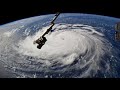
- Hurricane Florence From Space on September 10
- Runtime
- 3:01
- Date posted
- 8 years ago
- Description
- At 8:10 a.m. Eastern time, Sept. 10, cameras on the International Space Station captured views of Hurricane Florence. NASA satellites track the storm: https://go.nasa.gov/2CEmDGQ | Download video: https://go.nasa.gov/2Ql555y
Florence is moving in a westerly direction across the Atlantic, headed for a likely landfall along the eastern seaboard of the U.S. late Thursday or early Friday. Now a major hurricane with winds of 115 miles an hour and increasing, the National Hurricane Center says Florence’s forecast track will take the system over the southwestern Atlantic Ocean between Bermuda and the Bahamas Tuesday and Wednesday, and Florence will approach the coast of South Carolina or North Carolina on Thursday. The station was flying 255 miles over the storm at the time this video was captured.
- Title
- NASA 60th: Trailblazing Technology
- Runtime
- 3:22
- Date posted
- 8 years ago
- Description
- Technology drives exploration. For 60 years, we have advanced technology to meet the rigorous needs of our missions. From GPS navigation to water filtration systems, our technologies developed for space improve your daily life on Earth. We continue to innovate and explore.
Congress passed the National Aeronautics and Space Act, on July 16 and President Eisenhower signed it into law on July 29, 1958. NASA opened for business on Oct. 1, 1958. Our history tells a story of exploration, innovation and discoveries. The next 60 years, that story continues. Learn more: https://www.nasa.gov/60
This video is available for download from NASA's Image and Video Library: https://images.nasa.gov/details-NHQ_2018_0907_NASA%2060_Technology_YT%20FINAL.html

- Title
- Clearing Skies for our Rovers on Mars on This Week @NASA – September 7, 2018
- Runtime
- 3:36
- Date posted
- 8 years ago
- Description
- An update on our Mars rovers, continued progress for our Moon to Mars effort, and a look back at Dawn – in its twilight … a few of the stories to tell you about – This Week at NASA!
This video is available for download from NASA's Image and Video Library: https://images.nasa.gov/details-NHQ_2018_0907_Clearing%20Skies%20for%20our%20Rovers%20on%20Mars%20on%20This%20Week%20@NASA%20%E2%80%93%20September%207,%202018.html

- Title
- NASA | 360 Video of Parker Solar Probe Mission to "Touch" the Sun
- Runtime
- 3:28
- Date posted
- 8 years ago
- Description
- Watch in 360 degrees as an United Launch Alliance Delta IV Heavy rocket lifts off from Space Launch Complex-37 at Cape Canaveral Air Force Station in Florida carrying NASA's Parker Solar Probe spacecraft. Roughly the size of a small car, the spacecraft lifted off at 3:31 a.m. EDT on Aug. 12, 2018, starting its historic mission to "touch" the Sun.
Learn more about the mission at https://www.nasa.gov/parkersolarprobe.

- Title
- NASA Administrator Jim Bridenstine talks to Commercial Crew Astronauts
- Runtime
- 29:08
- Date posted
- 8 years ago
- Description
- During a recent visit to Johnson Space Center, NASA Administrator Jim Bridenstine sat down with astronauts Chris Ferguson and Sunita “Suni” Williams for an informal Q&A session about the Commercial Crew Program.
NASA's Commercial Crew Program has worked with several American aerospace industry companies to facilitate the development of U.S. human spaceflight systems since 2010. Both Ferguson and Williams were selected to fly on the Boeing CST-100 Starliner for the Commercial Crew Program – marking the first time that American astronauts will launch to the International Space Station from American soil on American-made spacecraft since the Space Shuttle Program ended in 2011.
To watch specific portions of the Q&A about the future of human space exploration, click a timestamp:
2:30 – Astronaut Chris Ferguson talks about what he has been doing since it was announced that he is a member of the Commercial Crew Program
3:30 – Astronaut Chri...

- Title
- New Horizons Detects Next Flyby Target on This Week @NASA – August 31, 2018
- Runtime
- 3:38
- Date posted
- 8 years ago
- Description
- New Horizons spots its next flyby target, Administrator Bridenstine visits our west coast facilities, and using data from space to fight a life-threatening disease … a few of the stories to tell you about – This Week at NASA!
This video is available for download from NASA's Image and Video Library: https://images.nasa.gov/details-NHQ_2018_0831_New%20Horizons%20Detects%20Next%20Flyby%20Target%20on%20This%20Week%20@NASA%20%E2%80%93%20August%2031,%202018.html

- Title
- NASA | Guy Bluford Reflects on the 35th Anniversary of His First Space Flight
- Runtime
- 1:17
- Date posted
- 8 years ago
- Description
- On August 30, 1983, mission specialist Guion "Guy" Bluford became the first African-American astronaut to fly in space. The dramatic night launch of space shuttle Challenger on the STS-8 mission (https://go.nasa.gov/2N8y4e8), 35 years ago today, marked an important milestone in American history. Bluford, who flew on three more shuttle missions during his NASA career, reflects on the significance of his first space flight.

- Title
- Bridenstine Speaks at NASA Advisory Council Meeting
- Runtime
- 1:09:57
- Date posted
- 8 years ago
- Description
- NASA Administrator Jim Bridenstine spoke the agency’s exploration goals, during a meeting of the NASA Advisory Council (NAC) on Aug. 29 at the agency’s Ames Research Center in Moffett Field, California. The Council meets several times a year for fact finding and deliberative sessions. Meetings are held at NASA Headquarters in Washington, DC, as well as at NASA Centers across the country.
This video is available for download from NASA's Image and Video Library: https://images.nasa.gov/details-NHQ_2018_0829_Bridenstine%20Speaks%20at%20NASA%20Advisory%20Council%20Meeting.html

- Title
- Parker Solar Probe Countdown to T-Zero for a Journey to “Touch” the Sun
- Runtime
- 14:42
- Date posted
- 8 years ago
- Description
- NASA's historic Parker Solar Probe mission that launched Aug. 12, 2018 from Space Launch Complex 37 on Cape Canaveral Air Force Station in Florida will revolutionize our understanding of the Sun. The Parker Solar Probe spacecraft will travel through the Sun’s atmosphere, closer to the surface than any spacecraft before it, facing brutal heat and radiation conditions — and ultimately providing humanity with the closest-ever observations of a star. This is a look at the moments leading up to T-Zero for NASA’s mission to "touch" the Sun.
Learn more about the mission at: https://www.nasa.gov/parkersolarprobe
- Title
- NASA 60th: The Leading Edge of Flight
- Runtime
- 5:01
- Date posted
- 8 years ago
- Description
- Aeronautics is our tradition. For 60 years, we have advanced aeronautics, developed new technologies and researched aerodynamics. Our advancements have transformed the way you fly. We will continue to revolutionize flight.
Congress passed the National Aeronautics and Space Act, on July 16 and President Eisenhower signed it into law on July 29, 1958. NASA opened for business on Oct. 1, 1958. Our history tells a story of exploration, innovation and discoveries. The next 60 years, that story continues. Learn more: https://www.nasa.gov/60
This video is available for download from NASA's Image and Video Library: https://images.nasa.gov/details-NHQ_2018_0828_NASA%2060_Leading%20Edge%20of%20Flight.html

- Title
- NASA Administrator Kicks Off a Celebration of Katherine Johnson’s 100th Birthday
- Runtime
- 1:12
- Date posted
- 8 years ago
- Description
- On Aug. 26, as part of NASA’s celebration of Katherine Johnson’s 100th birthday, agency employees received a special message from administrator Jim Bridenstine to mark the occasion. With slide rules and pencils, Katherine, a legendary NASA mathematician – and the other human computers who worked at the agency – helped our nation’s space program get off the ground, but it was their confidence, bravery and commitment to excellence that broke down racial and social barriers that continue to inspire to this day. To learn more about Katherine and other trailblazing ‘human computers,’ visit: https://www.nasa.gov/modernfigures
- Title
- NASA wishes Katherine Johnson a Happy 100th Birthday
- Runtime
- 0:20
- Date posted
- 8 years ago
- Description
- In 1962, as NASA prepared for the orbital mission of John Glenn, Katherine Johnson was called upon to hand check the computer’s orbital equations that would control the trajectory of the capsule in John Glenn’s Friendship 7 mission, from blast off to splashdown.
“If she says they’re good,’” Katherine Johnson remembers the astronaut saying, “then I’m ready to go.” Glenn’s flight was a success, and marked a turning point in the competition between the United States and the Soviet Union in space.
NASA wishes Katherine Johnson a very Happy 100th Birthday.
To learn more about Katherine and other trailblazing ‘human computers,’ visit: https://www.nasa.gov/modernfigures

- Title
- Vice President Pence Talks Future Human Space Exploration on This Week @NASA – August 24, 2018
- Runtime
- 3:35
- Date posted
- 8 years ago
- Description
- Discussing the future of human space exploration, a vital resource is confirmed on the surface of the Moon, and a first glimpse at asteroid Bennu … a few of the stories to tell you about – This Week at NASA!
This video is available for download from NASA's Image and Video Library: https://images.nasa.gov/details-NHQ_2018_0824_Vice%20President%20Pence%20Talks%20Future%20Human%20Space%20Exploration%20on%20This%20Week%20@NASA%20%E2%80%93%20August%2024,%202018.html

- Title
- Vice President Pence Visits the Johnson Space Center to Discuss Future Exploration
- Runtime
- 38:06
- Date posted
- 8 years ago
- Description
- Vice President Mike Pence visited NASA’s Johnson Space Center in Houston on Aug. 23, 2018, to discuss the future of space exploration and other elements of human spaceflight. During his trip to the Johnson Space Center, the Vice President also toured the laboratory housing the moon rocks retrieved during the Apollo program’s lunar missions and extraterrestrial samples from other uncrewed sample return missions, as well as the Sonny Carter Training Facility (Neutral Buoyancy Lab) where astronauts practice spacewalking techniques they will employ when they fly in space.

- Title
- Our Journey to Touch the Sun is Underway on This Week @NASA – August 17, 2018
- Runtime
- 3:45
- Date posted
- 8 years ago
- Description
- Our mission to touch the Sun is on its way, Administrator Bridenstine visits NASA spaceflight facilities, and an update on our first-ever asteroid sample return mission … a few of the stories to tell you about – This Week at NASA!
This video is available for download from NASA's Image and Video Library: https://images.nasa.gov/details-Our%20Journey%20to%20Touch%20the%20Sun%20is%20Underway%20on%20This%20Week%20@NASA%20%E2%80%93%20August%2017,%202018.html

- Title
- NASA 60th: What’s Out There
- Runtime
- 3:58
- Date posted
- 8 years ago
- Description
- In the past 60 years, NASA has advanced our understanding of our solar system and beyond. We continually ask “What’s out there?” as we advance humankind and send spacecraft to explore.
Congress passed the National Aeronautics and Space Act, on July 16 and President Eisenhower signed it into law on July 29, 1958. NASA opened for business on Oct. 1, 1958.
Our history tells a story of exploration, innovation and discoveries. The next 60 years, that story continues. Learn more: https://www.nasa.gov/60
This video is available for download from NASA's Image and Video Library: https://images.nasa.gov/details-NHQ_2018_0810_NASA%2060_What's%20Out%20There.html

- Title
- NASA's Parker Solar Probe Mission Launches to Touch the Sun
- Runtime
- 7:19
- Date posted
- 8 years ago
- Description
- NASA’s Parker Solar Probe mission launched Aug. 11 from Cape Canaveral Air Force Station in Florida. The mission will be the first to fly directly through the Sun’s corona – the hazardous region of intense heat and solar radiation in the Sun’s atmosphere that is visible during an eclipse. It will gather data that could help answer questions about solar physics that have puzzled scientists for decades. Gathering information about fundamental processes near the Sun can help improve our understanding of how our solar system’s star changes the space environment, where space weather can affect astronauts, interfere with satellite orbits, or damage spacecraft electronics.
This video is available for download from NASA's Image and Video Library: https://images.nasa.gov/details-NHQ_2018_0812_Parker%20Solar%20Probe%20Mission%20Launches%20to%20Touch%20the%20Sun%20-.html

- Title
- Humanity’s first mission to touch the Sun on This Week @NASA – August 11, 2018
- Runtime
- 3:00
- Date posted
- 8 years ago
- Description
- Humanity’s first mission to touch the Sun, Administrator Bridenstine visits Kennedy Space Center, and historic California wildfires seen from space … a few of the stories to tell you about – This Week at NASA!
This video is available for download from NASA's Image and Video Library: https://images.nasa.gov/details-NHQ_2018_0811_Humanity%E2%80%99s%20first%20mission%20to%20touch%20the%20Sun%20on%20This%20Week%20@NASA%20%E2%80%93%20August%2011,%202018.html

- Title
- NASA | Parker Solar Probe: It's Surprisingly Hard to Go to the Sun
- Runtime
- 2:24
- Date posted
- 8 years ago
- Description
- The Parker Solar Probe will be the first-ever mission to "touch" the Sun, traveling directly into the Sun's atmosphere about 4 million miles from the surface. Read the story: https://go.nasa.gov/2KEExYZ NASA launch schedule: https://go.nasa.gov/2JfklMB
The Sun contains 99.8 of the mass in our solar system. Its gravitational pull is what keeps everything here, from tiny Mercury to the gas giants to the Oort Cloud, 186 billion miles away.
But even though the Sun has such a powerful pull, it's surprisingly hard to actually go to the Sun: It takes 55 times more energy to go to the Sun than it does to go to Mars. Why is it so difficult? The answer lies in the same fact that keeps Earth from plunging into the Sun: Our planet is traveling very fast - about 67,000 miles per hour - almost entirely sideways relative to the Sun. The only way to get to the Sun is to cancel that sideways motion.
Since Parker Solar Probe will skim through the Sun's atmospher...

- Title
- Astronauts Assigned to First Commercial Crew Flights on This Week @NASA – August 3, 2018
- Runtime
- 3:05
- Date posted
- 8 years ago
- Description
- Astronauts named to the first commercial crew flights, using Earth science data to benefit society, and California wildfires seen from space … a few of the stories to tell you about – This Week at NASA!
This video is available for download from NASA's Image and Video Library: https://images.nasa.gov/details-NHQ_2018_0803_Astronauts%20Assigned%20to%20First%20Commercial%20Crew%20Flights%20on%20This%20Week%20@NASA%20%E2%80%93%20August%203,%202018.html

- Title
- NASA Announces Astronaut Crews for First Commercial Vehicle Flights
- Runtime
- 2:39
- Date posted
- 8 years ago
- Description
- NASA announces the men and women who will be on board the first flights of the new spaceships built by Boeing and SpaceX when Americans are once again launched into space from the USA.
News release: https://go.nasa.gov/2KoGhVS
The nine astronauts targeted to make the first flights on the Boeing CST-100 Starliner and SpaceX Crew Dragon share their thoughts about the assignment and the importance of this new capability to support the International Space Station as part of the nation’s overall space exploration plan.
More about the Commercial Crew Program: https://go.nasa.gov/1EIx5m6

- Title
- Sounds of NASA Goddard's Robotic Operations Center
- Runtime
- 0:39
- Date posted
- 8 years ago
- Description
- The sounds you hear come from three sprightly robots: a robotic arm, motion platform and an industrial robot called Motoman SIA20D. They were recorded in Goddard’s Robotic Operations Center. Story: https://go.nasa.gov/2v2T6QX With commentary: https://youtu.be/BzWtbN9nKB0
The Robotic Operations Center (ROC) at NASA’s Goddard Space Flight Center in Greenbelt, Maryland, is full of whirring and buzzing machines that share a purpose: to help robots get ready for space.
The ROC acts as an incubator for robotic development. The lab, which is about the size of a school gymnasium, is lined with long black curtains that, when the lights are turned off, simulate the darkness of space. The entire facility is designed to imitate how robots will look, move and work in space.
Credit: Produced at NASA’s Goddard Space Flight Center by Katie Atkinson
- Title
- NASA 60th: How It All Began
- Runtime
- 5:46
- Date posted
- 8 years ago
- Description
- Congress passed the National Aeronautics and Space Act, on July 16 and President Eisenhower signed it into law on July 29, 1958. NASA opened for business on Oct. 1, 1958, with T. Keith Glennan as our first administrator. Our history tells a story of exploration, innovation and discoveries. The next 60 years, that story continues. Learn more: https://www.nasa.gov/60
This video is available for download from NASA's Image and Video Library: https://images.nasa.gov/details-NHQ_2018_0727_NASA%2060_How%20It%20All%20Began.html

- Title
- An Active Week for Administrator Bridenstine on This Week @NASA – July 27, 2018
- Runtime
- 4:03
- Date posted
- 8 years ago
- Description
- Administrator Bridenstine’s busy week, technologies for a new era of aviation and research, and highlighting science on the International Space Station … a few of the stories to tell you about – This Week at NASA!
This video is available for download from NASA's Image and Video Library: https://images.nasa.gov/details-NHQ_2018_0727_An%20Active%20Week%20for%20Administrator%20Bridenstine%20on%20This%20Week%20@NASA%20%E2%80%93%20July%2027,%202018.html
- Title
- NASA | Sun Sonification (raw audio)
- Runtime
- 1:23
- Date posted
- 8 years ago
- Description
- These are solar sounds generated from 40 days of the Solar and Heliospheric Observatory’s (SOHO) Michelson Doppler Imager (MDI) data and processed by A. Kosovichev. Read more & download audio: https://go.nasa.gov/2JR0wLL
The procedure he used for generating these sounds was the following. He started with doppler velocity data, averaged over the solar disk, so that only modes of low angular degree (l = 0, 1, 2) remained. Subsequent processing removed the spacecraft motion effects, instrument tuning, and some spurious points. Then Kosovichev filtered the data at about 3 mHz to select clean sound waves (and not supergranulation and instrumental noise). Finally, he interpolated over the missing data and scaled the data (speeded it up a factor 42,000 to bring it into the audible human-hearing range (kHz)).
For more audio files, visit the Stanford Experimental Physics Lab Solar Sounds page. http://soi.stanford.edu/results/sounds.html
Credits: A....

- Title
- NASA Administrator Bridenstine Chats with Astronauts Acaba and Vande Hei
- Runtime
- 15:02
- Date posted
- 8 years ago
- Description
- During a recent visit to NASA headquarters astronauts Joe Acaba and Mark Vande Hei sat down for an informal Q&A session with Administrator Jim Bridenstine – and responded to questions from the agency’s social media followers.
The astronauts, who returned from the International Space Station in late February, talked about the station’s role as a platform to help us live and work in space. The cutting-edge research and technology development on the station is helping prepare our astronauts to take the next giant leap in human space exploration. The agency plans to return to the Moon and eventually send humans to Mars and destinations beyond.
This video is available for download from NASA's Image and Video Library: https://images.nasa.gov/details-NHQ_2018_0725_NASA%20Administrator%20Bridenstine%20Chats%20with%20Astronauts%20Acaba%20and%20Vande%20Hei.html

- Title
- NASA | Sounds of the Sun (Low Frequency)
- Runtime
- 3:03
- Date posted
- 8 years ago
- Description
- NASA heliophysicist Alex Young explains how sound connects us with the Sun and all other stars. This piece features low frequency sounds of the Sun. Raw audio (no commentary): https://youtu.be/-I-zdmg_Dno Read more: https://go.nasa.gov/2JR0wLL
Credit: NASA's Goddard Space Flight Center
Micheala Sosby (NASA/GSFC): Lead Producer
Katie Atkinson (GSFC Interns): Lead Producer
C. Alex Young (NASA/GSFC): Narrator
Aaron E. Lepsch (ADNET Systems Inc.): Technical Support
Music: "Flow" by Lee Rosevere
This video is public domain and along with other supporting materials can be downloaded from the Scientific Visualization Studio at: https://svs.gsfc.nasa.gov/13011

- Title
- NASA Administrator Bridenstine Talks Webb Science with Nobel Laureate
- Runtime
- 15:12
- Date posted
- 8 years ago
- Description
- NASA Administrator Jim Bridenstine recently sat down with Nobel Prize winner John Mather and the agency's Associate Administrator for Science, Thomas Zurbuchen for a conversation about NASA’s James Webb Space Telescope. They talked about the challenges of building the world’s premier space telescope and why it’s all worth it. Webb is the first telescope of its kind, an unprecedented feat of engineering, and is at the very leading edge of technological innovation and development. Webb will find the first galaxies that formed in the early universe and peer through dusty clouds to see stars forming planetary systems.
This video is available for download from NASA's Image and Video Library: https://images.nasa.gov/details-NASA%20Administrator%20Bridenstine%20Talks%20Webb%20Science%20with%20Nobel%20Laureate.html

- Title
- Successful Parachute Test for Orion on This Week @NASA – July 20, 2018
- Runtime
- 3:17
- Date posted
- 8 years ago
- Description
- Another successful parachute test for Orion, how we’re getting back to the Moon, and an Apollo 11 virtual experience … a few of the stories to tell you about – This Week at NASA!
This video is available for download from NASA's Image and Video Library: https://images.nasa.gov/details-NHQ_2018_0720_Successful%20Parachute%20Test%20for%20Orion%20on%20This%20Week%20@NASA%20%E2%80%93%20July%2020,%202018.html

- Title
- How NASA's Parker Solar Probe Will Survive the Sun
- Runtime
- 2:55
- Date posted
- 8 years ago
- Description
- NASA's Parker Solar Probe is heading to the Sun.Thermal Protection System Engineer Betsy Congdon (Johns Hopkins APL) outlines why Parker can take the heat. More: https://go.nasa.gov/2O7YKsK | NASA launch schedule: https://go.nasa.gov/2JfklMB
Music credit: Cheeky Chappy [Main Track] by Jimmy Kaleth, Ross Andrew McLean Credit: NASA's Goddard Space Flight Center Genna Duberstein (USRA): Lead Producer/Lead Editor Rob Andreoli (AIMM): Lead Videographer Betsy Congdon (Johns Hopkins University/APL): Lead Engineer Ryan Fitzgibbons (USRA): Narrator Genna Duberstein (USRA): Writer Steve Gribben (Johns Hopkins University/APL ): Animator Brian Monroe (USRA): Animator Josh Masters (USRA): Animator Michael Lentz (USRA): Animator Genna Duberstein (USRA): Animator Mary P. Hrybyk-Keith (TRAX International Corporation): Illustrator This video is public domain and along with other supporting visualizations can be downloaded from the Scientific Visualization Studio at: https://svs.gsfc.nasa.g...

- Title
- International Space Station Daytime Traverse
- Runtime
- 1:00
- Date posted
- 8 years ago
- Description
- A room with Earth views! NASA astronaut Ricky Arnold captured this spectacular view from the International Space Station, starting above San Francisco and moving southward through the Americas. Space Station news: https://go.nasa.gov/1DbzULl
Follow Ricky Arnold: https://twitter.com/astro_ricky
Each day, the station completes 16 orbits of our home planet as the six humans living and working aboard our orbiting laboratory conduct important science and research. Their work will not only benefit life here on Earth, but will help us venture deeper into space than ever before.

- Title
- Tracing The Source of a Cosmic Phenomenon on This Week @NASA – July 13, 2018
- Runtime
- 3:17
- Date posted
- 8 years ago
- Description
- Tracing the source of a cosmic phenomenon, the sound of plasma waves in space, and X-ray exploration of the Eagle Nebula … a few of the stories to tell you about – This Week at NASA!
This video is available for download from NASA's Image and Video Library: https://images.nasa.gov/details-NHQ_2018_0713_Tracing%20The%20Source%20of%20a%20Cosmic%20Phenomenon%20on%20This%20Week%20@NASA%20%E2%80%93%20July%2013,%202018.html

- Title
- Rare Double Asteroid Revealed by NASA, Observatories
- Runtime
- 1:10
- Date posted
- 8 years ago
- Description
- Three of the world's largest radio telescopes team up to show a rare double asteroid. 2017 YE5 is only the fourth binary near-Earth asteroid ever observed in which the two bodies are roughly the same size, and not touching. More: https://go.nasa.gov/2zxrh7U
This video shows radar images of the pair gathered by Goldstone Solar System Radar, Arecibo Observatory and Green Bank Observatory.
More information about asteroids and near-Earth objects: https://neo.jpl.nasa.gov https://www.jpl.nasa.gov/asteroidwatch

- Title
- Parker Solar Probe Countdown to T-Zero in 4K: Flying Faster, Hotter and Closer Than Ever to the Sun
- Runtime
- 3:28
- Date posted
- 8 years ago
- Description
- NASA's Parker Solar Probe and its United Launch Alliance Delta IV Heavy launch vehicle prepare for an unprecedented mission to "kiss the Sun."
NASA launch schedule: https://go.nasa.gov/2JfklMB
About the mission: https://go.nasa.gov/2ubAwFS
The spacecraft aims to unravel 60 years' worth of mysteries surrounding the Sun’s corona. Watch this 4K video as NASA’s Launch Services Program continues the countdown to T-zero. Visit https://go.nasa.gov/SolarProbe to learn more and watch the historic launch on NASA TV in the coming weeks.
- Title
- New Supplies and Research for the Space Station on This Week @NASA – July 6, 2018
- Runtime
- 3:43
- Date posted
- 8 years ago
- Description
- A new resupply mission arrives at the Space Station, a closer look at dwarf planet, Ceres, and the Parker Solar Probe is ready for the heat … a few of the stories to tell you about – This Week at NASA!
This video is available for download from NASA's Image and Video Library: https://images.nasa.gov/details-NHQ_2018_0706_New%20Supplies%20and%20Research%20for%20the%20Space%20Station%20on%20This%20Week%20@NASA%20%E2%80%93%20July%206,%202018.html
- Title
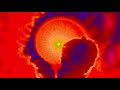
- NASA | Superstar Eta Carinae Shoots Cosmic Rays
- Runtime
- 2:09
- Date posted
- 8 years ago
- Description
- A new study using data from NASA's NuSTAR space telescope suggests that the most luminous and massive stellar system within 10,000 light-years, Eta Carinae, is accelerating particles to high energies -- some of which may reach Earth as cosmic rays. https://go.nasa.gov/2tPxKpA
Cosmic rays with energies greater than 1 billion electron volts (eV) come to us from beyond our solar system. But because these particles -- electrons, protons and atomic nuclei -- all carry an electrical charge, they veer off course whenever they encounter magnetic fields. This scrambles their paths and masks their origins. Eta Carinae, located about 7,500 light-years away in the southern constellation of Carina, contains a pair of massive stars whose eccentric orbits bring them unusually close every 5.5 years. The stars contain 90 and 30 times the mass of our Sun.
Both stars drive powerful outflows called stellar winds, which emit low-energy X-rays where they collide. NASA's Fermi Gamm...

- Title
- Happy 4th of July from NASA
- Runtime
- 0:48
- Date posted
- 8 years ago
- Description
- NASA wishes you a safe and happy Independence Day.
Since the beginning of human space flight, NASA’s astronauts, rockets and
spacecraft have flown the American flag to Earth orbit, the Moon, Mars, and beyond.
https://www.nasa.gov/content/the-american-flag-in-us-missions

- Title
- New Resupply Mission Launches to Space Station on This Week @NASA – June 29, 2018
- Runtime
- 3:15
- Date posted
- 8 years ago
- Description
- Almost three tons of supplies and science experiments are headed to the International Space Station, and – Webb Telescope is now targeting March of 2021 as a new launch date … a few of the stories to tell you about – This Week at NASA!
This video is available for download from NASA's Image and Video Library: https://images.nasa.gov/details-NHQ_2018_0629_New%20Resupply%20Mission%20Launches%20to%20Space%20Station%20on%20This%20Week%20@NASA%20%E2%80%93%20June%2029,%202018.html