NASA
Launch of Northrop Grumman CRS-12 Mission: Cygnus Delivers Cargo to International Space Station

- Title
- Launch of Northrop Grumman CRS-12 Mission: Cygnus Delivers Cargo to International Space Station
- Runtime
- 59:39
- Date posted
- 7 years ago
- Description
- On Sat., Nov. 2 at 9:59 a.m. EDT, Northrop Grumman's Antares rocket and Cygnus spacecraft launched from Wallops Flight Facility in Virginia on a cargo resupply mission to the International Space Station. Cygnus delivered around 8,200 pounds of research, supplies, and hardware to the orbiting laboratory, including supplies for upcoming spacewalks and student CubeSats.
Read more about the mission: https://www.nasa.gov/press-release/nasa-science-cargo-heads-to-space-station-on-northrop-grumman-mission/

- Title
- NASA's ICON: Countdown to T-Zero for a Mission to Study Space Weather
- Runtime
- 11:15
- Date posted
- 7 years ago
- Description
- Where does Earth's atmosphere end and space begin? This and other questions soon will be answered by NASA’s Ionospheric Connection Explorer, or ICON, satellite. Get ready to watch as the Pegasus countdown reaches T-Zero from its carrier aircraft flying near the Kennedy Space Center.
Learn more about this mission that launched on Oct. 10, 2019: https://www.nasa.gov/icon

- Title
- Happy Halloween from NASA
- Runtime
- 0:25
- Date posted
- 7 years ago
- Description
- Even though it is Halloween, NASA is giving you some “Easter Eggs” in this video.
Can you spot the significance of the house number? (Hint: T-Minus)
The sounds you hear, as the pumpkin is carving, are actually real spooky sounds from space. Listen: https://www.nasa.gov/vision/universe/features/halloween_sounds.html
The pictures in the windows are from NASA Science’s Spooky Saturn, and SDO’s Jack-o-lantern Sun. Take a look: https://solarsystem.nasa.gov/resources/17543/spooky-saturn/
https://www.nasa.gov/content/goddard/sdo-jack-o-lantern-sun
Do you like the “NASA Pumpkin?"… Guess what? You can create your own NASA Space Pumpkins: https://spaceplace.nasa.gov/pumpkins/en/
Of course, the candy is collected by little Trick-or-Treaters who are part of the “Artemis Generation" and one could even be the first to set foot on Mars: https://www.nasa.gov/artemis/Be_a_part_of_the_Artemis_Generation
Th...

- Title
- NASA Explorers S3 E4: Chasing Clouds
- Runtime
- 5:34
- Date posted
- 7 years ago
- Description
- "Earth science is a subject far too big for one country, one agency, to tackle all by itself.” So #NASAExplorers team up with researchers from around the country and the planet to answer some big questions about fires, clouds and climate from the Western Pacific, where we still have a lot to learn about the interaction between fires and cloud formation. #S3E4

- Title
- International Partnership for the Moon and Mars on This Week @NASA – October 25, 2019
- Runtime
- 4:02
- Date posted
- 7 years ago
- Description
- International partnerships for the Moon and Mars, an update on that historic all-woman spacewalk, and a milestone for the James Webb Space Telescope … a few of the stories to tell you about –- This Week at NASA!
This video is available for download from NASA's Image and Video Library: https://images.nasa.gov/details-NHQ_2019_1025_International%20Partnership%20for%20the%20Moon%20and%20Mars%20on%20This%20Week%20@NASA%20%E2%80%93%20October%2025,%202019

- Title
- NASA in Silicon Valley Live - Halloween Episode
- Runtime
- 1:36:52
- Date posted
- 7 years ago
- Description
- Need a #NASACostume idea for Halloween? Join us at 7 p.m. EDT for a new episode of NASA in Silicon Valley Live to see some space-tacular outfits as we host our annual NASA-themed Halloween costume and cosplay contest!

- Title
- NASA Explorers S3 E3: The Carbon Problem
- Runtime
- 4:43
- Date posted
- 7 years ago
- Description
- In the Arctic, fires are a natural part of the ecosystem. But as the climate changes, fires are burning longer and hotter, releasing long-buried carbon from the soil. #NASAExplorers are looking from high in the sky to deep below the ground to better understand how a warming climate affects fires in the Arctic…and how fires in the region will contribute to climate change in the future. #S3E3

- Title
- #AskNASA┃ What are the Next Generation Spacesuits?
- Runtime
- 3:32
- Date posted
- 7 years ago
- Description
- Spacesuits are personalized spaceships that mimic all of the protections from the harsh environment of space and the basic resources that Earth and its atmosphere provide.
Spacesuit Engineers Amy Ross, Kristine Davis and Dustin Gohmert showcase the advanced features of the next generation spacesuits that will be worn by astronauts as they explore the Moon as part of the Artemis program.
Submit question below using #AskNASA and subscribe to learn more from our experts.

- Title
- First All-Woman Spacewalk
- Runtime
- 2:04
- Date posted
- 7 years ago
- Description
- On Oct 18, NASA astronauts Jessica Meir and Christina Koch performed the first all-woman spacewalk. Koch & Meir replaced a faulty battery charge/discharge unit that failed to activate after a previous spacewalk. This was the fourth spacewalk for Christina Koch and the first for Jessica Meir.
Video Producer: Sonnet Apple
Music: Universal Production Music

- Title
- The First All Woman Spacewalk Outside the Space Station on This Week @NASA – October 18, 2019
- Runtime
- 4:44
- Date posted
- 7 years ago
- Description
- A first aboard the space station, some gear well-suited for the Artemis generation, and ensuring astronaut safety … a few of the stories to tell you about – This Week at NASA!
This video is available for download from NASA's Image and Video Library: https://images.nasa.gov/details-NHQ_2019_1018_The%20First%20All-Woman%20Spacewalk%20Outside%20the%20Space%20Station%20on%20This%20Week%20@NASA%20%E2%80%93%20October%2018,%202019

- Title
- NASA Astronauts Complete All-Woman Spacewalk
- Runtime
- 7:52:39
- Date posted
- 7 years ago
- Description
- On Friday, Oct. 18, NASA astronauts Christina Koch and Jessica Meir completed NASA's first all-woman spacewalk. During the 7-hour, 17-minute spacewalk, the pair replaced a failed power controller and completed several other tasks in preparation for future spacewalks.
Learn more about spacewalks: https://www.nasa.gov/mission_pages/station/spacewalks/.

- Title
- First All-Woman Spacewalk on October 18
- Runtime
- 1:13
- Date posted
- 7 years ago
- Description
- NASA astronauts Jessica Meir and Christina Koch are set to conduct the first spacewalk to be performed by two women on Friday, Oct. 18, 2019.
They will be replacing a faulty battery charge/discharge unit that failed to activate after a spacewalk Oct. 11. The faulty unit is preventing a set of recently installed batteries from providing increased power. It must be replaced before continuing a series of spacewalks to install new batteries.
Watch live coverage here on NASA TV and nasa.gov/live Friday beginning at 6:30 a.m. Eastern. The spacewalk is scheduled to begin at about 7:50 a.m.
Video Producer: Sonnet Apple
Music: Universal Production Music

- Title
- NASA Explorers S3 E2: Follow that Plume!
- Runtime
- 4:39
- Date posted
- 7 years ago
- Description
- Chasing smoke is a round-the-clock business. Wildfire smoke can travel long distances and over several days, so #NASAExplorers with the Fire Influence on Regional to Global Environments and Air Quality (FIREX-AQ) mission took to the field to find where it goes. From a plane directly above the Shady Fire in the middle of the afternoon to a valley in the Sawtooth Mountains at 1 in the morning, explorers are gathering important data about how fire smoke affects communities near and far. #S3E2

- Title
- NASA Introduces New Spacesuits for the Moon and Mars
- Runtime
- 1:11
- Date posted
- 7 years ago
- Description
- At NASA Headquarters on Oct. 15, 2019, Administrator Jim Bridenstine introduced the Exploration Extravehicular Mobility Unit (xEMU) and Orion Crew Survival System suit which will be will be worn by first woman and next man as they explore the Moon as part of the #Artemis program.
This video is available for download from NASA's Image and Video Library: https://images.nasa.gov/details-NHQ_2019_1016_NASA%20Introduces%20New%20Spacesuits%20for%20the%20Moon%20and%20Mars
Video Producer: Sonnet Apple
Music: Universal Production Music

- Title
- Space Is Hard
- Runtime
- 2:09
- Date posted
- 7 years ago
- Description
- Space travel is hard and unforgiving, but we have never been more ready to meet the unknown.
Team members from NASA’s #Artemis program share the risks and rewards of this next era of exploration. Artemis will push the boundaries of human exploration and send the first woman and next man to the Moon by 2024, preparing for missions to Mars and beyond.
This video is available for download from NASA's Image and Video Library: https://images.nasa.gov/details-NHQ_2019_1015_Space%20Is%20Hard

- Title
- #AskNASA┃ Who Is Going with Us?
- Runtime
- 3:31
- Date posted
- 7 years ago
- Description
- We're going forward to the Moon, together. NASA astronaut Alvin Drew answers the question, “Who is going with us?”
He describes the purpose of the Gateway and how it helps with our plans to explore the Moon and Mars. Alvin also underlines how NASA partnerships will contribute to the Artemis Program.
Comment with your #AskNASA question and subscribe to learn more from our experts!

- Title
- Power Play Spacewalks Aboard the Space Station on This Week @NASA – October 11, 2019
- Runtime
- 4:00
- Date posted
- 7 years ago
- Description
- A pair of power plays aboard the space station, checking out progress of our Commercial Crew Program, and studying the frontier of space … a few of the stories to tell you about – This Week at NASA!
This video is available for download from NASA's Image and Video Library: https://images.nasa.gov/details-NHQ_2019_1011_Power%20Play%20Spacewalks%20Aboard%20the%20Space%20Station%20on%20This%20Week%20@NASA%20%E2%80%93%20October%2011,%202019

- Title
- NASA Astronauts Spacewalk Outside the International Space Station on Oct. 11, 2019
- Runtime
- 8:27:43
- Date posted
- 7 years ago
- Description
- On Friday, Oct. 11, NASA astronauts Andrew Morgan and Christina Koch ventured outside the International Space Station for a 6 hour, 45-minute spacewalk. This was the second in a series of five planned spacewalks to complete battery installation. The duo exited the station’s Quest airlock in their U.S. spacesuits and continued installation of new lithium-ion batteries on the station's Port-6 truss structure.

- Title
- Meet Former NASA Astronaut Kathy Sullivan: the First American Woman to Walk in Space
- Runtime
- 1:28
- Date posted
- 7 years ago
- Description
- 35 years ago, on October 11, 1984, NASA astronaut Kathy Sullivan became the first American woman to walk in space. We video chatted with Kathy to ask her about this historic feat as well as her thoughts on the upcoming all-female spacewalk scheduled to take place October 21, 2019, with NASA astronauts Christina Koch and Jessica Meir.
More about women at NASA: https://women.nasa.gov/.
Video Producer: Sonnet Apple
Music: Universal Production Music

- Title
- The First Artemis Flight Path Around the Moon
- Runtime
- 0:39
- Date posted
- 7 years ago
- Description
- Our Artemis program will return humans to the Moon by 2024. Artemis I, the first Artemis mission, will test all of the human rated systems in deep space — including the Orion spacecraft and Space Launch System rocket. This is its 26 day journey… in 30 seconds.
What is Artemis? https://go.nasa.gov/30P0EEq
Download this video: https://images.nasa.gov/details-NHQ_2019_1010_Artemis%20I%20Mission%20Trajectory

- Title
- NASA Explorers S3 E1: Seeing Through Smoke
- Runtime
- 4:41
- Date posted
- 7 years ago
- Description
- To understand fires on Earth, you need a broad view — spanning from the poles to the equator and looking from high above the planet to down deep under the soil. That’s where #NASAExplorers come in! With satellites, with airplanes, with their own hands and with a data record spanning decades, Explorers are studying how our planet burns… and how that burning changes with the climate. This season, we’re headed to the western Pacific Ocean to the Northwest Territories and beyond to look fires on Earth.
#S3E1

- Title
- Living and Working: Valuable Spaceflight Data Collaboration Tool
- Runtime
- 2:16
- Date posted
- 7 years ago
- Description
- The International Space Station is the largest human-made structure in low Earth orbit (LEO) and serves as a space environment research laboratory where astronauts perform experiments in several unique fields including physics, astronomy, and biology. NASA’s Genelab collects valuable spaceflight experiment data for researchers and scientists to learn from this unique environment. GeneLab is an interactive, open-access resource where scientists can upload, download, store, search, share, transfer, and analyze omics data from spaceflight and corresponding analogue experiments. The biological studies conducted on the International Space Station generate critical data that scientists use to determine how terrestrial biology changes as a result of spaceflight.

- Title
- #AskNASA┃ How Are We Going to the Moon?
- Runtime
- 2:53
- Date posted
- 7 years ago
- Description
- NASA Spacesuit Engineer Lindsay Aitchison answers the question “How are we going to the Moon?” Comment on this video using #AskNASA with your questions for upcoming episodes! She addresses key questions about our plans to explore the Moon and Mars in the Artemis Program. Lindsay also highlights how the Gateway will help in our missions to Mars.
This video is available for download from NASA's Image and Video Library: https://images.nasa.gov/details-NHQ_2019_1007_AskNASA%20EP105%20Lindsay%20Aitchison.html
- Title
- NASA Astronauts Spacewalk Outside the International Space Station on Oct. 6, 2019
- Runtime
- 8:42:07
- Date posted
- 7 years ago
- Description
- On Sunday, Oct. 6, NASA astronauts Andrew Morgan and Christina Koch ventured outside the International Space Station for a 7 hour, 1 minute-long spacewalk. The duo exited the station’s Quest airlock in their U.S. spacesuits and began installation of new lithium-ion batteries on the Port-6 truss structure. This was the first in a series of five planned spacewalks to complete the battery installation.

- Title
- Expedition 60 Crew Returns Safely from the Space Station on This Week @NASA – Oct 4, 2019
- Runtime
- 3:28
- Date posted
- 7 years ago
- Description
- A safe conclusion to the latest long-duration spaceflight, calling on industry to help us accelerate our return to the Moon, and practice makes perfect – before the real thing … a few of the stories to tell you about – This Week at NASA!

- Title
- #EZScience: The Search for New Planets
- Runtime
- 7:04
- Date posted
- 7 years ago
- Description
- Let's talk about science! Watch the second episode of our #EZScience series to learn about our search for new planets using the Hubble Space Telescope, NASA’s Transiting Exoplanet Survey Satellite, James Webb Space Telescope and more!
ABOUT THE SERIES: In our #EZScience video series with the National Air and Space Museum, NASA's associate administrator for science Dr. Thomas Zurbuchen and Museum director Dr. Ellen Stofan talk about the latest in planetary science and exploration.
Learn more: https://www.nasa.gov/ezscience
#S1E2

- Title
- #EZScience: Exploring the Moon with Apollo
- Runtime
- 7:49
- Date posted
- 7 years ago
- Description
- Let's talk about science! Watch the first episode of our #EZScience series to learn about the Apollo program that sent humans to the Moon, what we learned from our first Moon landings and what's next for lunar exploration.
ABOUT THE SERIES: In our #EZScience video series with the National Air and Space Museum, NASA's associate administrator for science Dr. Thomas Zurbuchen and Museum director Dr. Ellen Stofan talk about the latest in planetary science and exploration.
Learn more: https://www.nasa.gov/ezscience
#S1E1

- Title
- #AskNASA From Space: Astronauts Answer Your Questions
- Runtime
- 7:01
- Date posted
- 7 years ago
- Description
- What would you want to see or do on the Moon? What does the International Space Station smell like? Do you ever take a break and just enjoy the view? From space, astronauts Christina Koch and Jessica Meir answered questions from social media sent using #AskNASA.

- Title
- #AskNASA┃ Why Are We Going to the Moon?
- Runtime
- 3:37
- Date posted
- 7 years ago
- Description
- NASA Chief Scientist Jim Green answers the question “Why are we going to the Moon?” Comment on this video using #AskNASA with your questions for upcoming episodes!
He addresses key questions about our plans to explore the Moon and Mars, including where we will most likely find water on the Moon. Jim shares his extensive background in Planetary Science to explain the significance of returning with international and commercial partners. Jim also highlights how we are currently exploring Mars with the Curiosity rover.

- Title
- NASA's Vertical Motion Simulator
- Runtime
- 1:50
- Date posted
- 7 years ago
- Description
- The simulator at NASA's Ames Research Center will help the agency develop new software and other tools for landing on the Moon.

- Title
- New Arrivals Welcomed Aboard the Space Station on This Week @NASA – September 27, 2019
- Runtime
- 4:21
- Date posted
- 7 years ago
- Description
- New arrivals in low-Earth orbit – welcome aboard the space station! More research, supplies, and other cargo heads to the station, and a new partner for our Moon to Mars effort … a few of the stories to tell you about – This Week at NASA!
This video is available for download from NASA's Image and Video Library:https://images.nasa.gov/details-NHQ_2019_0927_New%20Arrivals%20Welcomed%20Aboard%20the%20Space%20Station%20on%20This%20Week%20@NASA%20–%20September%2027,%202019.html

- Title
- NASA Explorers: Fires
- Runtime
- 0:36
- Date posted
- 7 years ago
- Description
- Fire. It’s one of the things that makes Earth so unusual. This season has been one of extremes, with large fires burning from the tropical rainforest to north of the Arctic circle. NASA Explorers have been there every step of the way, investigating the fires as they burn and tracking their effects down the line. From satellites, airplanes, on the ground and in the lab, NASA Explorers are working to understand our home planet and how it burns.
Join us this October as we take a closer look at fire and the people who study it. #S3E0

- Title
- Soyuz Launch Carries Three Space Travelers to the International Space Station
- Runtime
- 1:30:33
- Date posted
- 7 years ago
- Description
- Three space travelers, including NASA astronaut Jessica Meir, Oleg Skripochka of the Russian space agency Roscosmos and spaceflight participant Hazzaa Ali Almansoori from the United Arab Emirates, launched to space at 9:57 a.m. EDT on Wednesday, Sept. 24, 2019, for a nearly six-hour ride to the International Space Station.
- Title
- #AskNASA┃ What is Artemis?
- Runtime
- 2:58
- Date posted
- 7 years ago
- Description
- NASA astronaut Serena M. Auñón-Chancellor answers the question ‘What is Artemis?’ Comment on this video using #AskNASA with your questions for upcoming episodes!
Dr. Auñón-Chancellor reveals more about the program to land American astronauts, including the first woman and the next man, on the Moon by 2024. She also shares her experience in long-duration spaceflight aboard the International Space Station on the Expedition 56/57 missions.
For more information about Artemis:
https://www.nasa.gov/what-is-artemis

- Title
- Highlighting Artemis with Help from Hollywood on This Week @NASA – September 20, 2019
- Runtime
- 4:29
- Date posted
- 7 years ago
- Description
- Highlighting Artemis with help from Hollywood, preparing to launch to the only laboratory in microgravity, and testing new lunar landing technology … a few of the stories to tell you about – This Week at NASA!
This video is available for download from NASA's Image and Video Library: https://images.nasa.gov/details-NHQ_2019_0920_Highlighting%20Artemis%20with%20Help%20from%20Hollywood%20on%20This%20Week%20@NASA%20%E2%80%93%20September%2020,%202019.html

- Title
- #AskNASA ┃ Special Episode #AskBrad
- Runtime
- 2:26
- Date posted
- 7 years ago
- Description
- What questions would you ask NASA? Actor Brad Pitt, who plays an astronaut in his new movie Ad Astra, helps us kick off our new #AskNASA YouTube series with a few questions about space exploration. What did you learn from watching astronauts on the International Space Station? Would you rather visit the Moon or Mars?

- Title
- #AskNASA: Brad Pitt Helps NASA Kick Off New Video Series
- Runtime
- 0:41
- Date posted
- 7 years ago
- Description
- Subscribe so you don't miss any episodes of our #AskNASA series where NASA experts will answer your questions about space exploration!
Actor Brad Pitt, who plays an astronaut in his latest film, "Ad Astra," joins NASA to kick off a new series where NASA experts take your questions. Tune in for our full episode with Brad Pitt on Friday, Sept. 20, and more episodes with our subject matter experts starting Monday, Sept. 23.
- Title
- SpaceX Crew Dragon Parachute Test
- Runtime
- 1:37
- Date posted
- 7 years ago
- Description
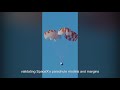
- The SpaceX #CrewDragon spacecraft parachutes successfully deploy during the latest development test. This test simulated a pad abort, where the vehicle is tumbling at low altitude before parachute deploy, validating SpaceX’s parachute models and margins. As a part of NASA’s Commercial Crew Program, SpaceX has been developing and testing the Crew Dragon parachute system, which is comprised of two drogue parachutes and four main ring-sail parachutes—the same type of parachutes that have been commonly and successfully used for human spaceflight in the past.
More on Commercial Crew and SpaceX: https://go.nasa.gov/2O8cS7X
Download this video: https://images.nasa.gov/details-KSC-20190918-VP-MWC01-SPACEX-PARACHUTE.html

- Title
- Brad Pitt Speaks with NASA Astronaut Nick Hague Aboard the International Space Station
- Runtime
- 17:45
- Date posted
- 7 years ago
- Description
- "What's a spacewalk like? What do you feel?" As NASA prepares to send the first woman and next man to the Moon by 2024 under the #Artemis program, Brad Pitt is playing an astronaut in his latest film, Ad Astra. On Sept. 16 from NASA Headquarters in Washington, the actor spoke to astronaut Nick Hague about what it’s truly like to live and work in space.
Here are the questions that Brad Pitt asked Nick Hague?
0:59 How did we do [in the movie]? How was our Zero-G?
1:33 Do you know what everything is on the wall behind you?
2:33 What are the repercussions on your body in Zero-G?
2:38 How do you gauge your waking hours if you see 16 sunrises and sunsets each day?
3:50 Is there a night shift?
4:45 Could you see the Chandrayaan-2 Moon mission from the International Space Station?
6:15 What are your current missions?
8:02 What does spaceflight affect your mental state? How do you keep it at peace?
9:25 What is your experienc...

- Title
- Inside NASA's Psyche Mission to Learn about Collisions and Crater Formation
- Runtime
- 2:51
- Date posted
- 7 years ago
- Description
- One of the first steps in understanding the geology of Psyche is for the Psyche science team to find out more about collisions and crater formation on metallic asteroids. Join Psyche Mission Science Team Co-Investigator Simone Marchi of the Southwest Research Institute as he explains how impact experiments are conducted at NASA's Ames Vertical Gun Range and what we can learn about the cratering process to further understand and interpret the geology of Psyche.
Learn more about the mission: https://www.jpl.nasa.gov/missions/psyche/

- Title
- An Exoplanet Discovery from Hubble on This Week @NASA – September 13, 2019
- Runtime
- 3:51
- Date posted
- 7 years ago
- Description
- Hubble makes an exoplanet discovery, the next space station crew gets ready to launch, and back to work in Florida after weathering the storm … a few of the stories to tell you about – This Week at NASA!
This video is available for download from NASA's Image and Video Library: https://images.nasa.gov/details-NHQ_2019_0913_An%20Exoplanet%20Discovery%20from%20Hubble%20on%20This%20Week%20@NASA%20%E2%80%93%20September%2013,%202019.html

- Title
- Views of Hurricane Dorian from the International Space Station - September 6, 2019
- Runtime
- 22:19
- Date posted
- 7 years ago
- Description
- Cameras outside the International Space Station captured views at 8:10 a.m. Eastern time September 6 of a weakening Hurricane Dorian from 260 miles in altitude as it churned just off the outer banks of North Carolina. In its 8 a.m. EDT advisory, the National Hurricane Center said category 1 Hurricane Dorian is moving toward the northeast near 14 mph with maximum sustained winds of 90 miles an hour. The general motion of Dorian, with an increase in forward speed, is expected through Saturday. On the forecast track, the center of Dorian will move near or over the coast of North Carolina during the next several hours. The center should move to the southeast of extreme southeastern New England tonight and Saturday morning, and then across Nova Scotia late Saturday or Saturday night.
Dorian should remain a potent hurricane as it moves near or along the coast of North Carolina during the next several hours. Dorian is forecast to become a post-tropical cyclone with hurricane-fo...

- Title
- Keeping an eye on Hurricane Dorian from Space on This Week @NASA – September 6, 2019
- Runtime
- 2:58
- Date posted
- 7 years ago
- Description
- Keeping an eye on Hurricane Dorian, the next crew headed to the International Space Station, and a better understanding of Sun-driven space weather … a few of the stories to tell you about – This Week at NASA!
This video is available for download from NASA's Image and Video Library: https://images.nasa.gov/details-NHQ_2019_0906_Keeping%20an%20eye%20on%20Hurricane%20Dorian%20from%20Space%20on%20This%20Week%20@NASA%20%E2%80%93%20September%206,%202019.html

- Title
- Views of Hurricane Dorian from the International Space Station - September 5, 2019
- Runtime
- 6:36
- Date posted
- 7 years ago
- Description
- Cameras outside the International Space Station captured views at 8:59 a.m. EDT on Sept. 5 of Hurricane Dorian from 260 miles in altitude as it traveled up the Eastern seaboard of the United States.
A turn toward the northeast is anticipated by tonight, and a northeastward motion at a faster forward speed is forecast on Friday. On the forecast track, the center of Dorian will continue to move close to the coast of South Carolina today, and then move near or over the coast of North Carolina tonight and Friday. The center should move to the southeast of extreme southeastern New England Friday night and Saturday morning, and approach Nova Scotia later on Saturday.
Maximum sustained winds are near 115 miles per hour with higher gusts. Dorian is a category 3 hurricane on the Saffir-Simpson Hurricane Wind Scale. Some fluctuations in intensity are expected this morning, followed by slow weakening through Saturday. However, Dorian is expected to remain a hurrica...

- Title
- Views of Hurricane Dorian from the International Space Station - September 4, 2019
- Runtime
- 17:03
- Date posted
- 7 years ago
- Description
- Cameras outside the International Space Station captured views at 9:48 a.m. Eastern time September 4 of Hurricane Dorian from 260 miles in altitude as it travelled in a direction parallel to the northeast coast of Florida. In its 10 a.m. EDT advisory, the National Hurricane Center said Dorian is moving toward the north-northwest near 8 miles per hour with a northwest or north-northwest motion expected through this morning. A turn toward the north is forecast by this evening, followed by a turn toward the north-northeast on Thursday morning. On this track, the core of Hurricane Dorian will move dangerously close to the Florida east coast and the Georgia coast through tonight. The center of Dorian, which is a category 2 hurricane, is forecast to move near or over the coast of South Carolina and North Carolina Thursday through Friday morning. Maximum sustained winds are near 105 miles per hour with higher gusts. Some weakening is expected during the next couple of days, even though Do...
- Title
- Views of Hurricane Dorian from the International Space Station - September 3, 2019
- Runtime
- 7:10
- Date posted
- 7 years ago
- Description
- Cameras outside the International Space Station captured views at 10:37 a.m. EDT on Sept. 3 of Hurricane Dorian from 260 miles in altitude as it began to move from an almost stationary position over the northwestern Bahamas. Now a high category 2 hurricane, the storm is beginning to move northwestward at about 2 miles per hour with a slightly faster motion toward the northwest or north-northwest expected later today and tonight. A turn toward the north is forecast by Wednesday evening, followed by a turn toward the north-northeast Thursday morning. On this track, the core of extremely dangerous Hurricane Dorian will gradually move north of Grand Bahama Island this evening. The hurricane will then move dangerously close to the Florida east coast late today through Wednesday evening, very near the Georgia and South Carolina coasts Wednesday night and Thursday, and near or over the North Carolina coast late Thursday and Thursday night.
Data from reconnaissance aircraft indica...

- Title
- Views of Hurricane Dorian from the International Space Station - September 2, 2019
- Runtime
- 3:12
- Date posted
- 7 years ago
- Description
- Cameras outside the International Space Station captured views at 11:27 a.m. EDT on Sept. 2 of Hurricane Dorian from 260 miles in altitude as it churned over northwestern Bahamas. In its 11:00 a.m. EDT advisory, the National Hurricane Center said Dorian was almost stationary, moving toward the west at just 1 mile an hour just over 100 miles east of West Palm Beach, Florida, packing catastrophic sustained winds of 155 miles an hour. A slow westward to west-northwestward motion is forecast during the next day or so, followed by a gradual turn toward the northwest and north. On this track, the core of extremely dangerous Hurricane Dorian will continue to pound Grand Bahama Island through much of today and tonight. The hurricane will move dangerously close to the east coast of Florida tonight through Wednesday evening and dangerously close to the Georgia and South Carolina coasts Wednesday night and Thursday. Currently, Dorian is a category 4 hurricane on the Saffir-Simpson Hurricane Win...
- Title
- Views of Hurricane Dorian from the International Space Station - September 1, 2019
- Runtime
- 4:35
- Date posted
- 7 years ago
- Description
- Cameras outside the International Space Station captured views September 1 of Hurricane Dorian from 260 miles in altitude at 12:16 p.m. Eastern time as it churned over the Atlantic Ocean over the northern Bahamas. The storm, which is moving in a westerly direction with sustained winds of 180 miles an hour, is a dangerous Category 5 hurricane, carrying the strongest winds in recorded history for the northwestern Bahamas. The National Hurricane Center said in its 11 a.m. EDT advisory that Dorian is inflicting catastrophic damage to the Abacos and Grand Bahama Islands. Dorian is forecast to approach the east coast of Florida before taking a possible track up the southeastern U.S. seaboard later this week.
Download this video: https://images.nasa.gov/details-jsc2019m000805_Hurricane_Dorian_190901.html
For the latest updates on Hurricane Dorian from NASA, visit: https://blogs.nasa.gov/hurricanes/tag/dorian-2019/

- Title
- Views of Hurricane Dorian from the International Space Station - August 31, 2019
- Runtime
- 6:39
- Date posted
- 7 years ago
- Description
- Cameras outside the International Space Station captured views August 31 of Hurricane Dorian at 11:28 a.m. Eastern time as it churned over the Atlantic Ocean. The storm, which is moving in a generally westerly direction with winds of 145 miles an hour, may approach Category 5 hurricane status, according to the National Hurricane Center, as it makes its way toward the east coast of Florida and a possible ride up the southeastern seaboard next week.
Download this footage: https://images.nasa.gov/details-jsc2019m000804_Hurricane_Dorian_190831.html
For the latest updates on Hurricane Dorian from NASA, visit: https://blogs.nasa.gov/hurricanes/tag/dorian-2019/

- Title
- Views of Hurricane Dorian from the International Space Station - August 30, 2019
- Runtime
- 15:23
- Date posted
- 7 years ago
- Description
- Cameras outside the International Space Station captured views August 30 of rapidly intensifying Hurricane Dorian at 12:18 p.m. Eastern time as it churned over the Atlantic Ocean. The storm, which is moving to the northwest, is forecast by the National Hurricane Center to approach the east coast of Florida Monday evening as a likely category 4 hurricane.
To download this video, visit https://images.nasa.gov/details-jsc2019m000803_Hurricane_Dorian_190830.html
For the latest updates on orbital views of Hurricane Dorian from NASA, visit: https://blogs.nasa.gov/hurricanes/tag/dorian-2019/