U.S. National Weather Service
IMET Training - 2022 - 4

- Title
- IMET Training - 2022 - 4
- Runtime
- 0:10
- Date posted
- 5 years ago
- Description

- Title
- IMET Training - 2022 - 3
- Runtime
- 0:09
- Date posted
- 5 years ago
- Description
- Title
- IMET Training - 2022 - 2
- Runtime
- 0:49
- Date posted
- 5 years ago
- Description

- Title
- IMET Training - 2022 - 1
- Runtime
- 1:04
- Date posted
- 5 years ago
- Description

- Title
- Snow Squalls Strike Quickly
- Runtime
- 0:40
- Date posted
- 5 years ago
- Description
- Conditions deteriorate rapidly. Soon, there is no safe place. It can all change in seconds.
Snow squalls can be deadly on highways. Delay travel or safely exit highways when a snow squall warning is issued for your area.
Video credit: William Van Aacken

- Title
- Thunderstorm Wind Threats
- Runtime
- 1:09
- Date posted
- 5 years ago
- Description
- Dangerous winds are often associated with hurricanes and tornadoes, but thunderstorms also pose a threat.
Straight-line winds can exceed 100 mph, causing damage similar to a tornado. Weaker, more common wind speeds of as low as 60 mph are still dangerous.
Stay indoors during high winds. Avoid vehicles and boats. If caught outside, get to shelter immediately!
When inside, stay far away from windows.
Before high winds, trim trees, secure loose outdoor items, and park your car away from large trees.
For more about wind safety:
weather.gov/safety/wind

- Title
- Probabilistic Snowfall Forecast: Understanding Uncertainty
- Runtime
- 2:52
- Date posted
- 5 years ago
- Description
- There is always uncertainty in the forecast.
It’s very unlikely that any computer model snow forecast, especially days in advance, will be exactly right. Sometimes it’s even difficult to forecast amounts the day of the event.
Don’t focus so much on exact numbers.
Our forecast offices produce a range of possibilities available on each office’s winter page.
Probabilistic snowfall is a way of expressing a full range of forecast information, giving possible outcomes.
These forecasts complement existing forecast graphics to show the range of snowfall possibilities.
* 1) Official forecast -- 2) high end -- 3) low end
* When the “high end” and “low end” numbers are closer together, there is greater confidence in the snow amounts. When they are wider apart, there is less confidence and more uncertainty in the forecast.
*The official forecast is what has the best chance of occurri...

- Title
- How to access data on the weather.gov/climate page
- Runtime
- 2:25
- Date posted
- 5 years ago
- Description
- Quick tutorial explaining how access data on the weather.gov/climate page

- Title
- Beach Hazards: VacayOk!
- Runtime
- 2:23
- Date posted
- 5 years ago
- Description
- Know before you go! Stay weather-ready whily enjoying your beach vacation!
For more safety tips on rip currents and other beach hazards, visit weather.gov/vacayok
- Title
- Cold Water Can Kill You
- Runtime
- 0:53
- Date posted
- 6 years ago
- Description
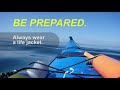
- Even when the air is hot… …water can be cold.
If you fall into cold water, you can die in the first minute due to cold shock. Those that survive will begin to lose muscle control, even strong swimmers.
After that, hypothermia will begin to set in, in as early as 30 minutes.
Be Prepared:
- Always wear a life jacket
- Wear protective gear (wet suit, dry suit)
- Check the water temperature, and plan accordingly
For more info, visit weather.gov/safety/coldwater

- Title
- What is Wet Bulb Globe Temperature?
- Runtime
- 1:36
- Date posted
- 6 years ago
- Description
- Heat is a major weather-related hazard.
Although heat hazards are common during outdoor physical activity, heat-related illness and fatalities are preventable.
Heat stress is commonly measured by the Heat Index or the “feels like temperature”.
An alternative method is the wet bulb globe temperature (WBGT).
WBGT estimates the effect of temperature, relative humidity, wind speed, and solar radiation on humans.
Why is it called Wet Bulb Globe Temperature?
WBGT is derived from a combination of temperatures from three thermometers:
Black globe - for solar factor (sun angle and cloud cover)
Wet bulb - for humidity
Dry bulb - for the ambient temperature
WBGT values of 90 or greater are dangerous for strenuous outdoor activities.
WBGT has been used for decades by military agencies, OSHA, and marathon organizers.
The American College of Sports Medici...

- Title
- Winter Forecasting: Hazards
- Runtime
- 1:45
- Date posted
- 6 years ago
- Description

- Title
- Winter Forecasting: Uncertainty
- Runtime
- 1:09
- Date posted
- 6 years ago
- Description

- Title
- Winter Forecasting: Variation
- Runtime
- 1:38
- Date posted
- 6 years ago
- Description

- Title
- Just Another Day, in Our Employees' Own Words
- Runtime
- 2:32
- Date posted
- 6 years ago
- Description
- The National Weather Service was formed by small moments combining to form a long history of dedicated people who live the mission, day-in and day-out. The most memorable days in our history began as just another day....here is what that means to today's NWS employees in their own words. #NWS150
- Title
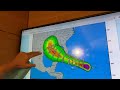
- Aug 23, 2020, 830am EDT Laura and Marco Update
- Runtime
- 6:15
- Date posted
- 6 years ago
- Description

- Title
- Winter Travel Timeline
- Runtime
- 2:03
- Date posted
- 6 years ago
- Description
- Are you planning to travel by car this winter? It’s important to know the steps you can take to be prepared and Weather-Ready!
Step 1 - A few weeks out:
A few weeks before traveling, begin preparations by gathering supplies for your vehicle. Supplies should include: a repair kit, blankets, road salt, a shovel, drinking water, a flashlight, and batteries.
Step 2 - One week out:
One week before traveling, monitor the forecast for potential hazardous weather on the horizon. Be prepared to adjust your travel plans. Make sure to familiarize yourself with multiple routes.
Step 3 - A few days out:
A few days before traveling, make sure that your vehicle supplies have actually been placed in your vehicle. Check the forecast again, as certainty will have increased (example: the forecast is now showing a Winter Storm Watch).
Step 4 - The day before:
The day before, check road conditions, and check ...
- Title
- Outdoor Lightning Safety
- Runtime
- 1:12
- Date posted
- 6 years ago
- Description
- Each year in the United States:
- Thunderstorms produce 20-25 million lightning flashes that strike the ground
- Lightning kills at least 20 people, and injures hundreds more, often in devastating and permanent ways
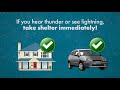
Many lightning deaths occur during recreational activities, often when sheltering under a tree. Do NOT do this!
Why does lightning often strike trees? Because lightning is attracted to tall objects.
In fact, it’s dangerous to even be near a tree or other tall object, since electricity from lightning spreads out through the ground.
So, where is a safe place to go? You are generally safe indoors, or inside a hard-topped vehicle.
If you hear thunder or see lightning, take shelter immediately!
And check the forecast so you can know before you go! If a thunderstorm is likely, it’s safest to avoid being outdoors in the first place.
weather.gov

- Title
- Facebook Live update on Tropical Storm Cristobal - June 7, 2020 8:30 a.m. EDT
- Runtime
- 4:45
- Date posted
- 6 years ago
- Description

- Title
- 2020 Atlantic Hurricane Season Outlook
- Runtime
- 2:13
- Date posted
- 6 years ago
- Description
- NOAA’s Climate Prediction Center is predicting a 60 percent chance that the 2020 Atlantic hurricane season will be above-normal. There is a 30 percent chance of a near-normal season and just a 10 percent chance of a below-normal season.
We can expect a likely range of 13-19 named storms, of which 6-10 are expected to become hurricanes. Of those hurricanes, 3-6 are expected to become major hurricanes of Category 3 or higher.
---
FULL TRANSCRIPT:
On May 21st, NOAA issued its 2020 seasonal hurricane outlook for the Atlantic and eastern Pacific basins.
For the Atlantic, a busy hurricane season is predicted.
Here at NOAA, we're predicting a 60 percent chance that the 2020 Atlantic hurricane season will be above-normal. There is a 30 percent chance of the season being near-normal and only a ten percent chance of it being below-normal.
Overall, this year's outlook reflects several climate factors that are c...
- Title
- The Science of Hail
- Runtime
- 1:23
- Date posted
- 6 years ago
- Description
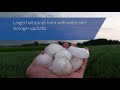
- Chunks of ice that fall from the sky can cause serious damage to property, and injuries to people and animals. But how does hail form?
Towards the colder, upper part of a thunderstorm, water droplets freeze together.
These small ice chunks fall through the cloud, but updrafts lift them back up to the colder sections, where the ice chunks continue to gather more droplets freezing to their surfaces, increasing in size.
As the hail grows heavier than the updraft can hold, it falls to the ground. Larger hailstones form with wider and stronger updrafts.
The largest hailstone in the USA by weight and diameter fell in Vivian, SD on July 23, 2010. It measured 8 inches in diameter and weighed 1.94 pounds.
Ranging from the size of a pea to a volleyball, hail can cause a big impact. Hail is just another reason to stay inside during thunderstorms.
- Title
- The Science Behind Tornadoes
- Runtime
- 1:13
- Date posted
- 6 years ago
- Description
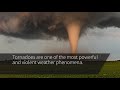
- Tornadoes are one of the most powerful and violent weather phenomena. Although the details of tornado formation are still being researched, there are a few general steps to their formation.
Most tornadoes develop from supercell, which are storms that are characterized by strong rotating updrafts.
A supercell develops because of wind shear in the atmosphere, which is wind moving different speeds at different heights.
Wall clouds develop as supercell rapidly moist air into the storm. If a tornado forms, this is where it would occur. If air converges rapidly beneath the wall cloud, the rotation narrows and spins faster and faster, just like ice skaters spin faster when their arms are drawn in.
When this rotation extends from the ground to the cloud, a tornado has formed. However, not all supercell produce tornadoes, because just the right conditions are needed at the surface.
When a Tornado Warning is issued for your are...

- Title
- The Science Behind Lightning
- Runtime
- 1:44
- Date posted
- 6 years ago
- Description
- You already know “When Thunder Roars, Go Indoors” and “See A Flash, Dash Inside!” But do you know what causes lightning and thunder in the first place?
Clouds grow tall as warm air rises and water vapor condenses. Eventually the clouds grow above the freezing level, where the water vapor turns to ice.
As these very small pieces of ice bump into each other, an electrical charge builds up. The lighter, positively charged ice crystals rise to the top of the cloud. The heavier, negatively charged water droplets fall to the bottom.
When the charges build up enough, a spark occurs between the two charged regions in the cloud. This is called in-cloud lightning.
The rapid expansion of the heated air causes thunder. Since light travels faster than sound, lightning its seen before thunder is heard.
Sometimes a build-up og positive charges happens at the ground. When these positive particles are attracted to negative pa...

- Title
- How the NWS learned to listen to the Deaf
- Runtime
- 1:14
- Date posted
- 6 years ago
- Description
- Meteorologist Trevor Boucher briefly describes how the NWS learned to begin serving the Deaf population; immersing ourselves into the culture we are serving. It's by asking the right questions first and learning how to listen that we are able to effectively serve this culture.

- Title
- What has the NWS done to serve the Deaf so far?
- Runtime
- 1:13
- Date posted
- 6 years ago
- Description
- Meteorologist Trevor Boucher recaps some of the work that has been done to serve the Deaf population more effectively, including re-envisioning safety slogans, incorporating ASL into safety/awareness materials, and ways to provide non-auditory reliant warning notifications.

- Title
- Safe Place Selfie 2020
- Runtime
- 1:05
- Date posted
- 7 years ago
- Description
- If there was one extreme weather preparedness action you want your loved ones to take, what would it be? For many, that one action is to know ahead of time where their safe place is located. On April 8th, 2020, please join the National Weather Service and its Weather-Ready Nation Ambassadors to take a “selfie” and post with the hashtag #SafePlaceSelfie.
https://www.weather.gov/wrn/safeplaceselfie

- Title
- Just Another Day (captioned)
- Runtime
- 1:45
- Date posted
- 7 years ago
- Description

- Title
- Just Another Day
- Runtime
- 1:45
- Date posted
- 7 years ago
- Description
- Like raindrops becoming a storm, our agency was formed by small moments -- millions of moments -- combining to form a long history of dedicated employees committed to their mission of providing data, observations, forecasts, and warnings to protect lives and livelihoods every day over the past 150 years.

- Title
- Blizzard Safety
- Runtime
- 1:02
- Date posted
- 7 years ago
- Description
- In a short time, a blizzard can turn a nice day... into a white mess.
A happy little shed... becomes a frozen ice box.
A beautiful garden... is buried a thick blanket of snow.
A youthful tree... sustains permanent damage.
Though a blizzard's effects on your surroundings are uncontrollable, you can minimize the effects on you.
Stock up on food, water, medications, and batteries. Be prepared for power outages.
Keep an emergency supply kit in your vehicle... but try to avoid driving anywhere.
Limit time outside, and avoid excessive physical activity. Check on your neighbors.
For more winter safety tips, visit weather.gov/winter

- Title
- Sneaky Winter Hazards - Part 2
- Runtime
- 1:08
- Date posted
- 7 years ago
- Description
- First snow:
The first snow of the year can often cause major problems on the road as people adjust to the poor driving conditions.
Safety tips: 1) Slow down. 2) Don't use cruise control. 3) Leave plenty of distance between you and other vehicles.
Sun glare:
The low sun angle and possibility of fresh fallen snow means that even when the forecast is bright and sunny, your drive may be hazardous.
Safety tips: 1) Slow down. 2) Use sunglasses and your car's visor. 3) Leave plenty of distance between you and other vehicles.
Freezing drizzle:
The fine layer of ice that forms during freezing drizzle may be hard to notice on the road, but it is one of winter's most dangerous types of weather.
Safety tips: 1) Slow down. 2) Don't use cruise control. 3) Leave plenty of distance between you and other vehicles.
Snow squalls:
There is a long history of deadly traffic accidents associated with these intense snow events th...

- Title
- Sneaky Winter Hazards - Part 1
- Runtime
- 1:08
- Date posted
- 7 years ago
- Description
- Flash freeze:
Wet roads can freeze quickly at night or when there is a rapid drop in temperature behind a cold front.
Safety tips: 1) Slow down. 2) Don't use cruise control. 3) Leave plenty of distance between you and other vehicles.
Dense fog:
Fog can be hazardous to drivers, mariners, and aviators and contributes to thousands of travel accidents every year. Visibility often changes quickly in fog.
Safety tips: 1) Slow down. 2) Use your low-beam headlights 3) Leave plenty of distance between you and other vehicles.
Rain after a long dry stretch:
Oil and debris can accumulate on the road when it hasn't rained for a while, so when it first starts to rain, the road can become slick and catch drivers by surprise.
Safety tips: 1) Slow down. 2) Don't use cruise control. 3) Leave plenty of distance between you and other vehicles.
Rain with a temperature near freezing:
Ice can form on roads and lead to dangerous ...

- Title
- Rip Current: Protect Yourself to Save Others
- Runtime
- 1:37
- Date posted
- 7 years ago
- Description
- Bystander Safety Tips

- Title
- Dangerous High Surf, Respect The Power of the Ocean!
- Runtime
- 0:55
- Date posted
- 7 years ago
- Description

- Title
- Sneaker Waves: Respect the Power of the Ocean!
- Runtime
- 1:32
- Date posted
- 7 years ago
- Description

- Title
- Dangerous Shore Acre Waves
- Runtime
- 6:52
- Date posted
- 7 years ago
- Description

- Title
- Patrick Durkin Story (full-length)
- Runtime
- 9:55
- Date posted
- 7 years ago
- Description

- Title
- Patrick Durkin's Story (overview)
- Runtime
- 2:54
- Date posted
- 7 years ago
- Description

- Title
- NOAA/NWS Spring Flood Outlook 2019
- Runtime
- 3:08
- Date posted
- 8 years ago
- Description
- National Hydrologic Assessment: https://www.nws.noaa.gov/oh/2019NHA.html
Spring Flood Outlook Story Map: https://arcg.is/1LjvSy
- Title
- #SafePlaceSelfie 2019
- Runtime
- 0:51
- Date posted
- 8 years ago
- Description
- weather.gov/wrn/safeplaceselfie
Knowing your “safe place” is the most essential preparedness activity to save your life from extreme weather.
Wednesday, April, 2019, is #SafePlaceSelfie day!
Learn the weather hazards that exist in your area.
Find locations that will keep you safe…and take a selfie!
On Wednesday, April 3rd, at 11:11am local time, share your photo with the hashtag #SafePlaceSelfie
Be creative! Think of all the weather threats in your area.
Challenge others to prepare!
Tag someone on social media and ask them…”Where is your safe place from extreme weather?”
Attachments area

- Title
- Snow Squalls
- Runtime
- 1:36
- Date posted
- 8 years ago
- Description
- Severe impacts from snow squalls threaten lives and property on our Nation's high speed interstates and highways every winter season.
Travel delays, disruptions to commerce, and damage to highway infrastructure cost millions of dollars nationwide.
Beginning November 1, 2018, Snow Squall Warnings will be issued when whiteout conditions from heavy snowfall and gusty winds coincide with FLASH FREEZES.
Poor visibility and flash (sudden) freezes on highway road surfaces can be deadly.
Snow squalls can develop and move quickly, similar to warm season severe weather.
Snow Squall Warnings will be active for 30 to 60 minutes, similar to Severe Thunderstorm Warnings.
A Snow Squall Warning means: DELAY HIGHWAY TRAVEL or SAFELY EXIT before the snow squall arrives.
Snow squalls pose serious threats to personal safety and property and produce costly transportati...

- Title
- Winter Driving Preparedness
- Runtime
- 1:04
- Date posted
- 8 years ago
- Description
- Each year, on average, more than 6,000 people are killed and more than 480,000 are injured due to weather-related vehicle crashes. Each winter, it's important to make sure your vehicle is properly prepared.
Emergency Kit:
- Survival Blanket
- Road Salt
- Shovel
- Scraper
- Jumper Cables
- Drinking Water
- Repair Kit
- Flashlight, Flares
Vehicle Prep:
- Fill wiper fluid
- Check tire pressure
- Check tire tread
- Check oil
For more winter safety tips and information, visit weather.gov/winter

- Title
- Turn Around, Don't Drown PSA Music Video featuring Matt Hawk
- Runtime
- 0:31
- Date posted
- 8 years ago
- Description
- Written, composed and performed by Matt Hawk
Learn more: weather.gov/TADD
Producer: Linda Taylor
Director: Bob Schwartz
Additional versions (spoken, Spanish): https://www.youtube.com/playlist?list=PLBdd8cMH5jFkFQZoTZEUOzxRgAX468Bfp

- Title
- Turn Around, Don't Drown PSA by Matt Hawk
- Runtime
- 0:11
- Date posted
- 8 years ago
- Description
- Learn more: weather.gov/TADD
Musical versions in English and Spanish: https://www.youtube.com/playlist?list=PLBdd8cMH5jFkFQZoTZEUOzxRgAX468Bfp
- Title
- PSA: "Dé la vuelta, no se ahogue" con Matías Villarreal alias Matt Hawk
- Runtime
- 0:31
- Date posted
- 8 years ago
- Description
- Escrita, compuesta e interpretada por Matías Villarreal alias Matt Hawk
Obtenga más información: weather.gov/TADD
Productor: Linda Taylor
Director: Bob Schwartz
Versiones adicionales: https://www.youtube.com/playlist?list=PLBdd8cMH5jFkFQZoTZEUOzxRgAX468Bfp

- Title
- PSA: "Dé la vuelta, no se ahogue" con Matías Villarreal alias Matt Hawk y Flaco Jiménez
- Runtime
- 0:31
- Date posted
- 8 years ago
- Description
- Escrita, compuesta e interpretada por Matías Villarreal alias Matt Hawk
Acordeón: Flaco Jiménez
Obtenga más información: weather.gov/TADD
Productor: Linda Taylor
Director: Bob Schwartz
Versiones adicionales: https://www.youtube.com/playlist?list=PLBdd8cMH5jFkFQZoTZEUOzxRgAX468Bfp

- Title
- What Are Blowout Tides?
- Runtime
- 0:45
- Date posted
- 8 years ago
- Description
- Blowout tides are a rare phenomena that occur when strong, persistent off-shore winds blow water out of a waterway.
In some cases, blowout tides can quickly reverse and turn into coastal flooding as the wind subsides or changes direction.
Blowout tides can occur on the coastlines of oceans and large lakes or even in rivers and bays.
weather.gov

- Title
- What is a 500-year flood?
- Runtime
- 0:59
- Date posted
- 8 years ago
- Description
- The term 500-year flood doesn’t necessarily mean that it’s only going to happen one time every 500 years. Rather, it’s a reference to the probability of occurrence.
For instance, a 100-year flood means there is a 1% chance in any given year of having a flood of that magnitude. For a 500-year flood, there is a 0.2% chance of having a flood of that magnitude occurring.
These 100-year and 500-year events are independent events, from the perspective of probability. In other words, if a 100-year flood event occurs, that does NOT mean that people are “safe” for 99 years. The risk of having the flood in any given year is the same, even if it occurred recently.
For flood safety tips & information, please visit:
weather.gov/flood
Video footage:
Author: FKY
Author webpage: https://vimeo.com/fky
Licence: ATTRIBUTION LICENSE 3.0 (http://creativecommons.org/licenses/by/3.0/us/)
Downloaded at Mazwai.com

- Title
- Enhanced Fujita Scale for Tornadoes
- Runtime
- 0:58
- Date posted
- 8 years ago
- Description
- EF0
Wind: 65-85 mph
Damage: Minor
EF1
Wind: 86-110 mph
Damage: Moderate
EF2
Wind: 111-135 mph
Damage: Considerable
EF3
Wind: 136-165 mph
Damage: Severe
EF4
Wind: 166-200 mph
Damage: Devastating
EF5
Wind: 200+ mph
Damage: Incredible
For tornado safety tips and information, visit:
weather.gov/tornado

- Title
- #SafePlaceSelfie
- Runtime
- 1:11
- Date posted
- 8 years ago
- Description
- If there was one extreme weather preparedness action you want your loved ones to take, what would it be? For many, that one action is to know ahead of time where their safe place is located. Please join the National Weather Service and its Weather-Ready Nation Ambassadors and take a “selfie” and post with the hashtag #SafePlaceSelfie.
weather.gov/wrn/SafePlaceSelfie

- Title
- Automated Weather Balloon Launch in Nottingham, England
- Runtime
- 1:17
- Date posted
- 8 years ago
- Description
- This video of an automated weather balloon launch in Nottingham, England, shows how the robotics inside a Vaisala autolaunch system run a self-check, prepare the equipment, inflate the balloon and then release it into the atmosphere.
NOAA's National Weather Service is installing autolaunchers at a quarter of its 92 upper-air sites nationwide where weather balloons are launched, including all 13 sites in Alaska. The Alaska autolaunch demonstration project is under way, with some sites already installed and in operation. Learn more about NOAA's use of this new technology at http://bit.ly/NWSAutoBalloonLaunchPilotProject.
Credit: Video courtesy of Ian Morley, Field Service Engineer, Met Office.