U.S. National Weather Service
Rip Current Safety Podcast

- Title
- Rip Current Safety Podcast
- Runtime
- 1:57
- Date posted
- 9 years ago
- Description

- Title
- Leon the Lightning Lion PSA
- Runtime
- 0:31
- Date posted
- 9 years ago
- Description

- Title
- Soccer Star Siri Mullinix Explains Why She Leaves the Field for Lightning
- Runtime
- 0:05
- Date posted
- 9 years ago
- Description

- Title
- Teen Struck 20 Minutes After Last Lightning Strike
- Runtime
- 0:31
- Date posted
- 9 years ago
- Description

- Title
- Teen Struck 20 Minutes After Last Lightning Strike
- Runtime
- 0:32
- Date posted
- 9 years ago
- Description

- Title
- Leon the Lightning Lion PSA
- Runtime
- 0:31
- Date posted
- 9 years ago
- Description

- Title
- Thunderstorm Types
- Runtime
- 1:25
- Date posted
- 9 years ago
- Description
- For thunderstorm safety tips & information, please visit:
weather.gov/thunderstorm
Thunderstorm types include:
Single cell:
These are short lived, and while hail and gusty wind can develop, they are typically not severe. Like all thunderstorms, these can still produce dangerous lightning.
Multi-cell cluster:
These form in clusters with numerous cells that merge together. Their speed can make a difference in the amount of rain an area receives, and they occasionally produce large hail and damaging wind.
Squall line:
A multi-cell line that can extend for hundreds of miles. These can persist for many hours and produce damaging winds and hail.
Supercell:
These powerful storms responsible for most tornadoes in the US. They also produce extreme winds, flash flooding, and very large hailstones.
This video includes footage from...

- Title
- Ways To Get Warnings
- Runtime
- 1:18
- Date posted
- 9 years ago
- Description
- weather.gov/wrn
Ways to get warnings:
Wireless Emergency Alerts (WEA):
Emergency messages sent by the National Weather Service (NWS) and other agencies via your mobile carrier. Your phone will receive the alerts moments after being issued. Phones that are using cell towers in the alert zone will receive the WEA.
NOAA Weather Radio:
A nationwide network of radio stations broadcasting continuous weather info from your local NWS office. These battery-powered radios are a great source of weather warnings when the power is out and at night when you may be sleeping.
The Internet:
Check weather.gov on a desktop or mobile.weather.gov on your mobile device. Other ways to find warnings online include social media, other weather sites and apps, and local news sites.
Local TV & Radio:
Local stations broadcast official warnings, plus forecasts and storm track...

- Title
- Weird Weather
- Runtime
- 2:08
- Date posted
- 9 years ago
- Description
- Check out the full weird weather collection at:
https://www.weather.gov/owlie/weird-weather
Haboobs:
Haboobs are powerful dust storms that form when a thunderstorm collapses.
The collected air is either blown out in powerful gusts, or the air cools and falls rapidly to the surface in a microburst.
The strong winds it releases are pushed in front of the storm, and pick up dust and debris to create a wall thousands of feet high and miles across.
Light pillar:
Long pillars of multicolored light streaking the sky, light pillars are a common effect that can be found all over the world.
They come from tiny crystals of ice in the atmosphere. Ice is very thin, shaped like plates with hexagonal faces.
When ice drifts down through the air, it falls close to horizontally. When light hits the wider top and bottom sides of each crystal, it bounces around and reflects off y...

- Title
- #SafePlaceSelfie
- Runtime
- 1:26
- Date posted
- 9 years ago
- Description
- If there was one extreme weather preparedness action you want your loved ones to take, what would it be? For many, that one action is to know ahead of time where their safe place is located. In early April, please join the National Weather Service and its over 7300 Weather-Ready Nation Ambassadors and take a “selfie” and post with the hashtag #SafePlaceSelfie.
weather.gov/wrn/SafePlaceSelfie

- Title
- SF PSA
- Runtime
- 1:06
- Date posted
- 9 years ago
- Description

- Title
- The Atmosphere in Motion: The Science of Wind
- Runtime
- 1:32
- Date posted
- 9 years ago
- Description
- Wind is a part of weather we experience all the time, but why does it actually happen? The air will be still one day, and the next, powerful gusts of wind can knock down trees. What causes wind?
Wind is simply air in motion, caused by temperature and pressure differences in the atmosphere. The greater the difference, the faster the wind can blow.
Air in high pressure areas flows towards low pressure, as the atmosphere attempts to equalize.
Over a distance, the Earth’s rotation deflects the wind, so that it curves. In the Northern Hemisphere, winds flow clockwise around high pressure, and counter-clockwise around low pressure.
Winds can also be created by temperature differences, like sea breeze. As air over the land warms, it rises and is replaced by cooler air from over water, creating a steady onshore wind.

- Title
- Science of Frost Formation
- Runtime
- 1:16
- Date posted
- 9 years ago
- Description
- Frost can be annoying to scrape off your car, but did you ever think about how it got there?
Clear skies enhance radiational cooling, meaning more heat escapes the Earth’s surface into the atmosphere.
Calm to light winds prevent stirring of the atmosphere, which allows a thin layer of super-cooled temperatures to develop at the surface.
Cool temperatures, with some moisture, promote ice crystal development.
Frost can form when the official low is above freezing, as temperatures are measured 2 meters above ground. Ground temperatures can be 5 to 10℉ cooler than the air just above the surface.

- Title
- Science of Fog Formation
- Runtime
- 1:22
- Date posted
- 9 years ago
- Description
- Fog limits visibility, delays air travel, brings danger to the roads, and makes things generally spooky. But, how does it form?
Radiation Fog forms at night under clear skies with calm winds, when heat absorbed by the Earth’s surface during the day is radiated into space.
Advection Fog is the result of condensation caused by the horizontal movement of warm, moist air over a cold surface, such as snow or ice.
Steam Fog can be seen on any lake during the fall, and is caused by cool air moving water that is still warm from the summer.
Freezing Fog occurs when it’s 32℉ or below and water droplets touch a surface, upon which they can freeze. Any object the freezing fog touches will become coating with ice.
Valley Fog forms when air along hilltops begins to cool after sunset. The air becomes dense and heavy and drains down into the valley, saturating the valley air and forming fog.
- Title
- Wildfire Safety Tips
- Runtime
- 1:24
- Date posted
- 9 years ago
- Description
- October 20, 1991 - A brush fire ignites in the hills above Oakland, California. Winds spread the blaze and nearby homes are engulfed. The fire spreads further, crossing highways, engulfing homes and entire neighborhoods. Firefighters eventually control the inferno, and but not before over 3,000 homes are destroyed and 25 people killed. Do you know how to protect yourself from wildfires?
Protect your home: Clear brush away from your home. Use fire-resistant landscaping and construction measures. Have emergency supplies in a safe place. Plan your family’s escape route.
If you see a wildfire: Get away quickly, then call 911. Don’t approach it! Wildfires spread quickly and can change direction. Remove yourself from danger first, and then seek help.
Wildfire smoke is a health risk (dust masks don’t help). It can: Sting your eyes. Irritate your respiratory system. Worsen chronic heart disease.

- Title
- Space Weather - What Are The Impacts?
- Runtime
- 1:36
- Date posted
- 9 years ago
- Description
- On March 13, 1989, a powerful storm triggered a major power blackout in Canada that left 6 million people without electricity for 9 hours. That storm came from space.
The sun is the main source of space weather. Eruptions of plasma and magnetic field structures from the sun’s atmosphere and sudden bursts of radiation can cause space weather effects at or near Earth.
We can see space weather in the form of the Aurora Borealis. The aurora is caused by electrons from the sun colliding with the Earth’s upper atmosphere.
Space weather can interrupt communications. Radio and satellite communications, aviation, and emergency response systems can all be affected by extreme space weather events.
The power grid can also be affected by space weather. Extreme events can cause blackouts. These events are rare but they do happen.
Space weather can also impact the Global Positioning System (GPS). During periods of disturbed s...

- Title
- What To Do During a Drought
- Runtime
- 1:11
- Date posted
- 9 years ago
- Description
- Formerly green vegetation turns dry and brittle, authorities restrict water use to only the most basic needs, and failing crops can devastate local economies. During drought conditions, it’s important to you know what to do to minimize the impacts.
Conserve Water. Take shorter showers. Turn off the water while brushing your teeth or shaving. Water your lawn less often. Avoid washing your car.
Practice Fire Prevention. Don’t set off fireworks when conditions are dry. Deposit cigarette butts in the proper receptacle to avoid starting a fire. Pour water over campfires and fire pits to ensure they are complete out.
Follow Directions From Local Officials. Follow burn bans. If there are restrictions on water usage, be sure to heed them!
- Title
- Winter Outlook 2017-2018
- Runtime
- 2:29
- Date posted
- 9 years ago
- Description
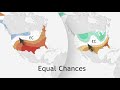
- On October 19th, NOAA issued its December through February outlook for temperature, precipitation, and drought. Both observations and computer forecasts suggest La Niña is likely to develop. See the video for details about the outlooks, or visit climate.gov/winter2017.
During La Niña winters, we often see greater-than-average snowfall around the Great Lakes and in the northern Rockies, with less-than-average snowfall throughout the mid-Atlantic region. Regardless of the outlook where you live, be prepared for typical winter hazards such as extreme cold and snowstorms.

- Title
- Hurricane Irma
- Runtime
- 1:20
- Date posted
- 9 years ago
- Description
- Description
- Title
- NWS Director Louis Uccellini on Hurricane Harvey
- Runtime
- 1:24
- Date posted
- 9 years ago
- Description
- Description

- Title
- Owlie Skywarn: Help Build a Weather-Ready Nation!
- Runtime
- 1:19
- Date posted
- 9 years ago
- Description

- Title
- WRN Ambassadors
- Runtime
- 1:15
- Date posted
- 10 years ago
- Description
- Weather-ready nation (noun)
1. Businesses, communities, and individuals that understand weather, water and climate hazards and prepare in advance.
Is your organization prepared for the dangers of extreme weather? Join the thousands that are! Inspire people you know to be READY, RESPONSIVE, RESILIENT!
4 Awesome Reasons to become a Weather-Ready Nation Ambassador:
1. Knowledge at your fingertips
2. Peer Influence
3. Platform to Speak Up
4. Organizational Pride
Become a Weather-Ready Nation Ambassador
www.noaa.gov/wrn
- Title
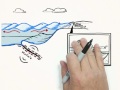
- Galu Lolo: Sauni nei ma tapena auā lou saogalemu! (Tsunamis: Be Prepared and Stay Safe! - Samoan)
- Runtime
- 2:29
- Date posted
- 10 years ago
- Description
- This fast draw video from NOAA explains how to prepare for and respond to a tsunami. If you live, work, or play on the coast, be prepared and stay safe! Learn more about tsunamis and tsunami safety: http://www.weather.gov/tsunamisafety
Click here for English version: https://youtu.be/x0GX_kc7JZo •• Haga clic aquí para la versión en español: https://youtu.be/7U4rJ2bdSuc
- Title
- Teamwork on Weather at Sea: The United States Volunteer Observing Ship Program (VOS)
- Runtime
- 13:30
- Date posted
- 10 years ago
- Description
- The only way to determine precise, real-time, sea-level conditions offshore is from weather observations made aboard ships at sea. NOAA's National Weather Service and the worldwide maritime community cooperate through the VOS program to improve marine weather forecasts which supports international commerce and increases SOLAS: the safety of life at sea.
More: http://www.vos.noaa.gov/

- Title
- Lightning Safety for the Deaf and Hard of Hearing Community
- Runtime
- 1:16
- Date posted
- 10 years ago
- Description
- If you see a flash, dash inside! Some can't rely on audible cues for lightning safety to stay weather aware. The Deaf and Hard of Hearing community rely on visual cues to know when to seek shelter.
This Public Safety Announcement (PSA) was developed by the National Weather Service in coordination with the Deaf and Hard of Hearing community to help promote lighting safety.

- Title
- Tsunamis: ¡Prepárate y mantente a salvo!
- Runtime
- 1:49
- Date posted
- 10 years ago
- Description
- Esta animación de pizarrón blanco de NOAA explica cómo prepararse y responder ante un tsunami. Si vives, trabajas o pasas tiempo en la costa, prepárate y mantente a salvo. Aprenda más sobre los tsunamis y las medidas de seguridad en: http://www.weather.gov/tsunamisafety
Click here for English version: https://youtu.be/x0GX_kc7JZo •• Click here for Samoan version: https://youtu.be/bLfEh488P1k

- Title
- Weathermen at War: USCGC MUSKEGET Posthumous Purple Heart Ceremony
- Runtime
- 3:18
- Date posted
- 10 years ago
- Description
- On November 19, 2015, U.S. Coast Guard and NOAA officials presented posthumous Purple Heart medals to honor civilian Weather Bureau observers who were killed in action when the USCG Cutter to which they were assigned, USCGC MUSKEGET, was torpedoed and sunk by a German U-Boat during the battle of the Atlantic on September 9, 1942. At the time of its sinking, the USCGC MUSKEGET had 121 men on board: 9 commissioned officers, 107 enlisted men, one public health service officer, and four civilian employees of the U.S. Weather Bureau. The military personnel aboard the MUSKEGET received the Purple Heart medal posthumously soon after the sinking, with the assumption they were killed as the result of enemy action. It was not until the discovery of the U-755 logs in 2014 that confirmed this incident, however, that the civilian weathermen became eligible for this honor
Family members of George Kubach, Lester Fodor, and Edward Weber were honored with Purple Hearts at the U.S. Navy Memorial N...

- Title
- Tsunamis: Be Prepared and Stay Safe!
- Runtime
- 1:47
- Date posted
- 10 years ago
- Description
- This fast draw video from NOAA explains how to prepare for and respond to a tsunami. If you live, work, or play on the coast, be prepared and stay safe! Learn more about tsunamis and tsunami safety: http://www.weather.gov/tsunamisafety
Haga clic aquí para la versión en español: https://youtu.be/7U4rJ2bdSuc •• Samoan version: https://youtu.be/bLfEh488P1k

- Title
- Frostbite Awareness Tips from the National Weather Service
- Runtime
- 0:39
- Date posted
- 11 years ago
- Description
- Frostbite can occur on exposed body parts during extreme cold. Uncovered faces, cheeks and extremities such as fingers and toes are most susceptible. When temperatures are around 0 degrees Fahrenheit and the wind is blowing at 15 miles per hour, frostbite can occur in approximately 30 minutes. The colder the temperatures or the stronger the wind, the faster frostbite will occur. Dress properly for the cold. If you feel pain or numbness, find warm shelter. If symptoms persist seek medical attention.
Check weather.gov before venturing out.

- Title
- Driver Ignores Barriers and Drives into Flooded Road—Watch What Happens
- Runtime
- 0:31
- Date posted
- 11 years ago
- Description
- Watch as the driver of a pickup truck in Columbia, South Carolina, does exactly what you're not supposed to do when encountering a flooded roadway by driving around a barricade into swiftly-moving floodwater during the historic flooding of October 2015.
This driver was rescued, but people die each year doing what he did. More than half of all flood-related drownings occur when a vehicle is driven into hazardous floodwater. A mere 6 inches of fast-moving flood water can knock over an adult. It takes just 12 inches of rushing water to carry away a small car, while 2 feet of rushing water can carry away most vehicles. It is NEVER safe to drive or walk into flood waters.
Turn Around Don't Drown!
http://tadd.weather.gov/

- Title
- RadarLoopAug29 Bkg
- Runtime
- 0:26
- Date posted
- 11 years ago
- Description
- Hurricane Katrina Radar Loop

- Title
- We Are the National Weather Service
- Runtime
- 1:36
- Date posted
- 11 years ago
- Description
- No matter the season...
When weather is at its worst...
There is a group working around the clock to keep you safe so you know what's coming and how to prepare...
No matter what nature brings
We are the National Weather Service.
Building a Weather-Ready Nation
Learn more: www.weather.gov | www.noaa.gov/wrn

- Title
- National Water Center
- Runtime
- 4:14
- Date posted
- 11 years ago
- Description
- The National Weather Service is proud to announce the opening of the new National Water Center in Tuscaloosa, Alabama. The Center will be in the forefront of addressing the complicated water resources and water management challenges that we will face as a nation today and into the foreseeable future.

- Title
- Turn Around Don't Drown PSA
- Runtime
- 0:53
- Date posted
- 12 years ago
- Description
- Never Drive or Walk into Flood Waters - Turn Around Don’t Drown!
Flooding is one of the leading causes of weather related fatalities in the U.S. On average, flooding claims nearly 90 lives each year. More than half of these deaths occur in motor vehicles when people attempt to drive through flooded roadways. This happens because people underestimate the force and power of water, especially when it is moving.
Just six inches of fast-moving water can knock over and carry off an adult. Twelve inches of water can float a small car. If that water is moving, it can carry that car away. Eighteen to twenty-four inches of flowing water can carry away most vehicles, including large SUVs. It is impossible to tell the exact depth of water covering a roadway or the condition of the road below the water. This is especially true at night when your vision is more limited. It is never safe to drive or walk through flood waters. Any time you come to a flooded road, walk...

- Title
- Tsunami Preparedness: Applying Lessons from the Past
- Runtime
- 2:29
- Date posted
- 12 years ago
- Description
- Since the catastrophic Indian Ocean Tsunami in 2004, tremendous strides have been made in tsunami warning capabilities. Today, we are much better prepared to detect and respond to tsunamis before they strike. See how a tsunami is generated. Also, learn how to recognize the warning signs and what to do to protect yourself and your loved ones from tsunamis.

- Title
- When it Comes to Lightning, Don't Catch the Big One
- Runtime
- 0:13
- Date posted
- 12 years ago
- Description
- Pro fisherman Jason Mitchell provides an important lightning safety message to fishermen.

- Title
- When it Comes to Lightning, Don't Catch the Big One
- Runtime
- 0:26
- Date posted
- 12 years ago
- Description
- Pro fisherman Jason Mitchell provides an important lightning safety message to fishermen.

- Title
- NOAA 2014 Atlantic Hurricane Outlook Update
- Runtime
- 1:22
- Date posted
- 12 years ago
- Description
- Dr. Gerry Bell from NOAA's Climate Prediction Center discusses the updated outlook for the 2014 Atlantic hurricane season. The update predicts a 70 percent chance of a below-normal season, a 25 percent chance of a near-normal season and only a five percent chance of an above-normal season. For more details, see: http://1.usa.gov/1oHd3TP

- Title
- Space Weather Impacts: Power
- Runtime
- 2:49
- Date posted
- 12 years ago
- Description
- Eruptions on the Sun lead to disturbances on Earth’s magnetic field, known as geomagnetic storms. These geomagnetic storms can create electrical currents that can result in significant impacts on our electric power grid. Impacts can include damage to critical grid assets and even blackout. NOAA space weather forecasters provide critical early warning of these geomagnetic storms, allowing grid operators to take measures to ensure no disruption of the power supply.

- Title
- Space Weather Impacts: GPS
- Runtime
- 3:14
- Date posted
- 12 years ago
- Description
- GPS has changed society. Multiple applications: oil drilling, aviation, precision agriculture, surveying, military operations, emergency response, recreational, and so much more depend on the continuous availability of this vital satellite navigation system. These critical applications rely not only on navigational services provided by GPS, but high accuracy timing as well. Space weather storms can interfere with the high accuracy and availability of GPS leading to erroneous information or even complete loss of GPS capabilities. NOAA’s Space Weather Prediction Center provides critical information on potential interference to GPS applications to end-users around the world.

- Title
- Space Weather Impacts: Communications
- Runtime
- 3:41
- Date posted
- 12 years ago
- Description
- Effective communication can mean the difference between life and death. There are many different types of technology that contribute to various forms of communication. Some of these technologies can experience significant degradation due to space weather storms. End-users, such as the aviation and emergency response communities can encounter significant impacts on the critical communication assets they depend on. NOAA space weather forecasters provide alerts and warnings to ensure key situational awareness when systems are being impacted, and help operators determine alternatives during space weather disturbances.

- Title
- Are You Weather-Ready?
- Runtime
- 0:31
- Date posted
- 12 years ago
- Description
- NOAA asks you to "Be a Force of Nature." Learn how!

- Title
- An Introduction to Space Weather and the Space Weather Prediction Center
- Runtime
- 4:57
- Date posted
- 12 years ago
- Description
- We rely on advanced technology for almost everything we do today. Satellite communications, GPS applications, and the electric power grid provide the backbone to our Nation’s economic vitality and national security. This technology however, is vulnerable to a threat from space — our Sun. Eruptions from the Sun can have a profound impact on society. In Boulder, Colorado NOAA space weather forecasters maintain a constant vigil on the Sun, alerting a diverse customer base when storms are imminent. Operators from many sectors will take mitigating actions to protect the critical infrastructure that we have come to depend on.

- Title
- June 2014 Lightning Safety Awareness Message
- Runtime
- 2:18
- Date posted
- 12 years ago
- Description
- NWS Lightning Safety Specialist John Jensenius discusses the dangers of
lightning and what how to stay safe this summer.
Remember, "When Thunder Roars, Go Indoors!"

- Title
- Tsunamis: Know What to Do
- Runtime
- 7:58
- Date posted
- 13 years ago
- Description
- This Emmy-award winning video was produced by the San Diego Office of Emergency Management with support from the National Tsunami Hazard Mitigation Program, which is led by NOAA.
This video is also available in two versions in Spanish (both with subtitles and as a direct translation):
English with Spanish Captions:
https://www.youtube.com/watch?v=M6n0gsDeUio
Spanish, No Captions:
https://www.youtube.com/watch?v=hVUl3XCbI7c

- Title
- Flood Safety: Wireless Emergency Alerts
- Runtime
- 0:28
- Date posted
- 13 years ago
- Description
- Flooding can happen in a flash. Don't be caught off guard.
If you have a smartphone, chances are it has a built-in feature to automatically receive and display Wireless Emergency Alerts from the National Weather Service when flash flooding and other hazards are happening nearby.
You will not be charged to receive these alerts so keep them enabled on your phone. They could save your life.
To learn more, visit these sites.
http://www.weather.gov/wirelessalerts
http://www.ctia.org/wea
Flood footage courtesy of The Weather Channel
- Title
- Get Weather Ready: During a Tornado
- Runtime
- 1:42
- Date posted
- 13 years ago
- Description
- If your area is under a tornado warning, would you know what to do to stay safe? You may only have a few minutes to get to safety. Knowing what actions to take when a tornado threatens your area will make you a Force of Nature and is an important step in building a Weather-Ready Nation. For more info. on tornadoes and tornado safety, see:
http://www.spc.noaa.gov/faq/tornado/

- Title
- Get Weather Ready: Before a Tornado
- Runtime
- 1:57
- Date posted
- 13 years ago
- Description
- Tornadoes are nature's most violent storms. Knowing what to do before a tornado strikes to keep you and your loved ones safe. Doing so will make you a Force of Nature and is an important step in building a Weather-Ready Nation. For more info. on tornadoes and tornado safety, see:
http://www.spc.noaa.gov/faq/tornado/

- Title
- Get Weather Ready: After a Tornado
- Runtime
- 1:46
- Date posted
- 13 years ago
- Description
- After the tornado has passed, there are still important steps you must take to remain safe. Knowing what to do will make you a Force of Nature and is an important step in building a Weather-Ready Nation. For more info. on tornadoes and tornado safety, see:
http://www.spc.noaa.gov/faq/tornado/
- Title
- Preparing and Launching a Weather Balloon
- Runtime
- 2:12
- Date posted
- 13 years ago
- Description
- This video shows how the National Weather Service prepares and launches weather balloons with special instruments attached as part of the forecast process.