Smithsonian
SI-Q Can you learn your A-B-Cs from a statue?

- Title
- SI-Q Can you learn your A-B-Cs from a statue?
- Runtime
- 1:14
- Date posted
- 11 years ago
- Description
- James Ulak, curator of Japanese art at Smithsonian's Freer Gallery of Art and Arthur M. Sackler Gallery, answers: Can you learn your A-B-Cs from a statue? See more from the Freer Gallery of Art collection at http://open.asia.si.edu.

- Title
- Smithsonian Institute for Biodiversity Genomics Launch Event 12/12/2014
- Runtime
- 1:20:58
- Date posted
- 11 years ago
- Description
- In association with the publication of a Special Issue of Science on Avian Genomics, The Grand Challenges Consortia are celebrating the launch of the new Smithsonian Institute for Biodiversity Genomics (BioGenomics). Genomics, the comprehensive study of an organism’s genome, unifies and empowers all of the biological sciences. The integration of genomic science, methods, tools, applications, and findings has already had an immeasurable impact on all corners of scientific research in biodiversity and will lead to new discoveries that will benefit current and future human societies.
With the launch of BioGenomics the Smithsonian Institution will provide the high-profile, multi-disciplinary scholarship, leadership, collaborative spirit, and logistical support necessary to enhance our understanding of the natural world through genomics. The excellence, vision, and global reach of the Smithsonian is represented by the collections and field-based initiatives of our museums an...

- Title
- SI-Q Which household pests are Hollywood stars?
- Runtime
- 1:02
- Date posted
- 12 years ago
- Description
- These common household pests star in numerous movies and television shows. Join the O. Orkin Insect Zoo at Smithsonian's National Museum of Natural History for a closer look at our favorite actors!

- Title
- SI-Q How do you get a butterfly to come to lunch?
- Runtime
- 1:08
- Date posted
- 12 years ago
- Description
- Butterflies at the O. Orkin Insect Zoo at Smithsonian's National Museum of Natural History have plenty to snack on thanks to the staff at Smithsonian Gardens. See how beautiful flowers and beautiful insects make a great team.

- Title
- SI-Q How many cables does it take to hang a 5-ton airplane?
- Runtime
- 1:00
- Date posted
- 12 years ago
- Description
- Join Anthony Carp at Smithsonian's National Air and Space Museum as he shows us the science behind how he hangs some of our heaviest artifacts at the Steven F. Udvar Hazy Center.
- Title
- Meet a Kiwi at Smithsonian National Zoo
- Runtime
- 2:56
- Date posted
- 12 years ago
- Description
- You too can meet a kiwi! Micaela Jemison from Smithsonian Science takes us to the Smithsonian's National Zoo where she gets up close and personal with a kiwi. From their amazing sense of smell to the whisker-like feathers on their face, we learn all about New Zealand's national icon with kiwi keeper, Kathy Brader.
You can meet a kiwi on Mondays, Wednesdays and Fridays at 11 a.m. in the bird house at the Smithsonian's National Zoo.
Visit: www.smithsonianscience.org

- Title
- SI-Q How do you entertain an otter?
- Runtime
- 1:27
- Date posted
- 12 years ago
- Description
- Join Smithsonian's National Zoo keeper, Stacey Tabellario, as she shows us why enrichment activities for our Asian Small-Clawed Otters are so important.
- Title
- SI-Q What plant smells good enough to eat?
- Runtime
- 1:20
- Date posted
- 12 years ago
- Description
- Staff from Smithsonian Gardens show us plants that smell good enough to eat!

- Title
- Scientist uses heavy metal music to train wild bats in Panama
- Runtime
- 0:34
- Date posted
- 12 years ago
- Description
- How do you train a wild animal to come back to you after you have set it free? If it is a fringe-lipped bat, Trachops cirrhosis, just play a bit of heavy metal music.
Bat researcher and postdoctoral fellow, Inga Geipel from the Smithsonian’s Tropical Research Institute in Panama, has trained wild bats to associate a music with food.
Learn more at: http://smithsonianscience.org/2014/10/scientist-uses-heavy-metal-music-train-wild-bats-panama/
Music: Planks
Video: Inga Geipel

- Title
- SIQ How can you help make history with the Smithsonian
- Runtime
- 1:46
- Date posted
- 12 years ago
- Description
- The Smithsonian Institution Archives staff answer: How can you help make history with the Smithsonian?

- Title
- The Roosevelts: A Conversation with Ken Burns
- Runtime
- 1:04:13
- Date posted
- 12 years ago
- Description
- THE ROOSEVELTS: AN INTIMATE HISTORY, a new documentary by filmmaker Ken Burns, chronicles the lives of Theodore, Franklin and Eleanor Roosevelt, three members of the most prominent and influential family in American politics. Together, they not only redefined the relationship Americans had with their government and with each other, but also redefined the role of the United States within the wider world.
On Tuesday, September 16 from 1-2 pm EDT, join Burns and a panel of experts in a webcast c

- Title
- The State of the Birds 2014 report
- Runtime
- 51:31
- Date posted
- 12 years ago
- Description
- One hundred years after the extinction of the passenger pigeon, the top bird-science and conservation groups in the nation have come together to publish The State of the Birds 2014—the most comprehensive review of long-term trend data for U.S. birds ever conducted.
- Title
- Arid and Grassland Habitats - The State of the Birds 2014
- Runtime
- 1:04
- Date posted
- 12 years ago
- Description
- This video is about arid and grassland habitats described in The State of the Birds 2014 report. For more articles and video go to Smithsonian Science http://smithsonianscience.org/

- Title
- Wetland Habitats - The State of the Birds 2014
- Runtime
- 1:05
- Date posted
- 12 years ago
- Description
- This video is about wetland habitats described by The State of the Birds 2014 report. For more articles and video go to Smithsonian Science http://smithsonianscience.org/

- Title
- The State of the Birds 2014
- Runtime
- 3:57
- Date posted
- 12 years ago
- Description
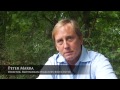
- This video is about The State of the Birds 2014 report. Micaela Jemison from Smithsonian Science interviews Dr. Peter Marra from the Smithsonian Migratory Bird Center about The State of the Birds 2014 report. For more articles and video go to http://smithsonianscience.org/
Photo Credits:
Alex Schwab - The lower Kalalau Valley, Koke'e State Park, Kauai, Hawaii
Kelly Colgan Azar - Rusty Blackbird
Dick Daniels - Northern Bobwhite

- Title
- Coastal Habitats - The State of the Birds 2014
- Runtime
- 1:09
- Date posted
- 12 years ago
- Description
- This video is about coastal habitats described in The State of the Birds 2014 report. For more articles and video go to Smithsonian Science http://smithsonianscience.org/

- Title
- Forest Habitat - The State of the Birds 2014
- Runtime
- 0:53
- Date posted
- 12 years ago
- Description
- This video is about forest habitat described by The State of the Birds 2014 report. For more articles and video go to Smithsonian Science http://smithsonianscience.org/

- Title
- Celebrating the birthday of the first Przewalski’s horse born from artificial insemination.
- Runtime
- 2:59
- Date posted
- 12 years ago
- Description
- Scientists at the Smithsonian Conservation Biology Institute are celebrating the anniversary of the first birth of a Przewalski’s horse by artificial insemination. The filly’s first birthday marks a milestone in efforts by the team, lead by reproductive physiologist Budhan Pukazhenthi, to develop genetic techniques to aid in managing this species, which is extinct in the wild.
Przewalski’s horses are an entirely different species from the domestic horse and are truly wild, having never been domesticated by humans. Captive breeding and conservation work in Asia, Europe and North America have successfully replenished the captive population.
As with many captive breeding programs, genetics drive breeding decisions. With hundreds of horses living around the world, often two genetically compatible breeding partners will be living in different facilities, sometimes on different continents. Artificial insemination would help scientists solve the problems of ...

- Title
- Pt. 3 - A Spectrum of Perspectives: Native Peoples and Genetic Research
- Runtime
- 2:07:39
- Date posted
- 12 years ago
- Description
- 3:45-5:10pm: The Ethics of Blood
Panelists:
Dr. Ngaire Brown (Yuin Nation of New South Wales), National Aboriginal
Community Controlled Health Organisation, invited
Dr. Nanibaa' Garrison (Navajo Nation), Vanderbilt University Center for
Biomedical Ethics & Society
Judge Ron Whitener (Squaxin Island Tribe), University of Washington Native
American Law Center
Moderator: Dr. Mark Trahant (Shoshone-Bannock Tribe), University of Alaska-Anchorage
5:15-5:30pm: Closing Remarks
This meeting is co-hosted by the National Congress of American Indians, the National Human Genome Research Institute, and the National Museum of the American Indian as part of the Genome: Unlocking Life's Code exhibit at the Smithsonian's National Museum of Natural History. Our goal in hosting this Symposium is to demonstrate the range of perspectives in Native communities on genomics, highlight key topics for ongoing ...

- Title
- Love tequila, love pollinating bats!
- Runtime
- 3:01
- Date posted
- 12 years ago
- Description
- Do you enjoy tequila? Then you need to raise your glass to the pollinating bats that helped to make it! Here at Smithsonian Science we are celebrating Pollinator Week by exploring the world of pollinating bats.
Micaela Jemison from Smithsonian Science interviews Dr. Don Wilson from the Smithsonian National Museum of Natural History about the roles bats play in pollination. See http://smithsonianscience.org/2014/06/love-tequila-toast-pollinating-bats/

- Title
- SI-Q Is there a woman on the moon?
- Runtime
- 1:48
- Date posted
- 12 years ago
- Description
- Karlie Leung, intern at the Smithsonian's Center for Folklife and Culture Heritage, tells the story of Hou Yi and the Ten Suns.
Don't miss more folktales from China at the Smithsonian Folklife Festival: http://www.festival.si.edu/
Animation by Aurelie Beatley

- Title
- SI-Q How did mail smarten up?
- Runtime
- 0:52
- Date posted
- 12 years ago
- Description
- Nancy Pope, curator of postal history at the Smithsonian's National Postal Museum, answers: How did mail smarten up?

- Title
- SI-Q When do stamps glow in the dark?
- Runtime
- 1:36
- Date posted
- 12 years ago
- Description
- Daniel A. Piazza, curator of Philately at Smithsonian's National Postal Museum answers: When do stamps glow in the dark?

- Title
- SI-Q Who put a feather on that letter?
- Runtime
- 1:06
- Date posted
- 12 years ago
- Description
- Daniel A. Piazza, curator of Philately at Smithsonian's National Postal Museum answers: Who put a feather on that letter?

- Title
- El Smithsonian es...
- Runtime
- 1:31
- Date posted
- 12 years ago
- Description
- El Smithsonian es el complejo de museos y de investigación más grande del mundo. Cuenta con 19 museos y galerías, además del Parque Zoológico Nacional.
Nuestros expertos comparten sus ideas y nuestras colecciones a través de nuestros museos, centros de investigación y bibliotecas; en nuestros sitios web, nuestras revistas y canales de medios; y con socios en todo el país y el mundo. Juntos aprendemos de diferentes maneras.
Para más información acerca de cómo tú puedes aprender con el Smithsonian, visita www.si.edu.
El Smithsonian cuenta con la generosidad de personas como tú. Apoya al Smithsonian hoy y ayúdanos a compartir la historia, cultura, arte y ciencia de nuestro país con el resto del mundo.

- Title
- SI-Q What ate the South?
- Runtime
- 0:44
- Date posted
- 12 years ago
- Description
- Ashley N. Egan, research botanist and assistant curator at Smithsonian's National Museum of Natural History answers: What ate the South?

- Title
- SI-Q Are clones taking over the world?
- Runtime
- 0:55
- Date posted
- 12 years ago
- Description
- Ashley N. Egan, research botanist and assistant curator at Smithsonian's National Museum of Natural History answers: Are clones taking over the world?

- Title
- SIQ Can animals take a selfie?
- Runtime
- 3:17
- Date posted
- 12 years ago
- Description
- Yes! When an animal trips a "camera trap" as a part of a project between the North Carolina Museum of Natural Sciences and the Smithsonian.
These photos help researchers answer questions about mammal distribution and abundance and use this information for conservation.

- Title
- SIQ Can beetles be researchers?
- Runtime
- 0:53
- Date posted
- 12 years ago
- Description
- John Ososky, museum specialist at the Smithsonian's National Museum of Natural History Osteo Prep Laboratory answers: Can beetles be researchers?

- Title
- SIQ Where can you find an extinct flock?
- Runtime
- 1:05
- Date posted
- 12 years ago
- Description
- Jonathan Kavalier, supervisory horticulturist for Smithsonian Gardens, answers: Where can you find an extinct flock?

- Title
- SIQ What business lets you work, sleep and pray in the same place?
- Runtime
- 1:07
- Date posted
- 12 years ago
- Description
- Masum Momaya, curator at the Smithsonian Asian Pacific American Center, answers: What business lets you work, sleep and pray in the same place?
- Title
- SIQ Why do many Indian Americans take off their shoes before entering the house?
- Runtime
- 0:42
- Date posted
- 12 years ago
- Description
- Masum Momaya, curator at the Smithsonian Asian Pacific American Center, answers: Why do many Indian Americans take off their shoes before entering the house?

- Title
- The Smithsonian Is...
- Runtime
- 1:31
- Date posted
- 12 years ago
- Description
- The Smithsonian asks and answers questions about science, art, history and culture, exciting the learning in everyone, every day.
Our experts share their ideas and our treasures through our museums, research centers and libraries; on our websites, magazines and media channels; and with partners across America and around the globe. We learn in all different ways, with all different kinds of people.
For more about how you can learn with Smithsonian, visit www.si.edu.
The Smithsonian relies on the generosity of people like you. Please support the Smithsonian today and help us bring alive our nation's history, culture, art and science for people around the world.

- Title
- Antonio Curet habla acerca de la arqueología en el Smithsonian
- Runtime
- 0:41
- Date posted
- 12 years ago
- Description
- Conoce a Antonio Curet, curador de las colecciones arqueológicas de México, Centro América y el Caribe en el Museo Nacional del Indígena Americano.

- Title
- Taína Caragol habla acerca del arte latino en el Smithsonian
- Runtime
- 0:53
- Date posted
- 12 years ago
- Description
- Conoce a Taína Caragol, curadora de arte e historia latina en la Galería Nacional de Retratos.

- Title
- Ariana Curtis talks urban anthropology at the Smithsonian
- Runtime
- 0:42
- Date posted
- 12 years ago
- Description
- Meet Ariana Curtis, Curator of Latino Studies at the Anacostia Community Museum.

- Title
- Ariana Curtis habla acerca de la antropología en el Smithsonian
- Runtime
- 0:43
- Date posted
- 12 years ago
- Description
- Conoce a Ariana Curtis, curadora de estudios latinos en el Museo Comunitario de Anacostia.

- Title
- Antonio Curet talks archeology at the Smithsonian
- Runtime
- 0:47
- Date posted
- 12 years ago
- Description
- Meet Antonio Curet, Curator of the archeological collections from Mexico, Central America and the Caribbean at the National Museum of the American Indian.

- Title
- Taína Caragol talks Latino art at the Smithsonian
- Runtime
- 0:53
- Date posted
- 12 years ago
- Description
- Meet Taína Caragol, Curator of Latino Art and History at the National Portrait Gallery.

- Title
- Margaret Salazar-Porzio habla acerca de la historia latina en el Smithsonian
- Runtime
- 0:35
- Date posted
- 12 years ago
- Description
- Conoce a Margaret Salazar-Porzio, curadora de historia y cultura latina en el Museo Nacional de Historia Americana.

- Title
- Margaret Salazar-Porzio talks Latino history at the Smithsonian
- Runtime
- 0:41
- Date posted
- 12 years ago
- Description
- Meet Margaret Salazar-Porzio, Curator of Latino History and Culture at the National Museum of American History.
- Title
- SIQ Can a bloom kill?
- Runtime
- 0:56
- Date posted
- 12 years ago
- Description
- Nick Pyenson, curator of fossil marine mammals at the Smithsonian's National Museum of Natural History, answers: Can a bloom kill?
Learn more about the Cerro Ballena discovery here: http://cerroballena.si.edu

- Title
- SI-Q ¿Dónde se pueden encontrar ballenas sobre una autopista?
- Runtime
- 0:48
- Date posted
- 12 years ago
- Description
- Jorge Velez-Juarbe, Colaborador de investigación en el Museo Nacional de Historia Natural: ¿Dónde se pueden encontrar ballenas sobre una autopista?

- Title
- SI-Q How can an exhibition make you sing?
- Runtime
- 1:08
- Date posted
- 12 years ago
- Description
- S. Xavier Carnegie, Theatre Programs' creative director at the Smithsonian's National Museum of American History answers: How can an exhibition make you sing?

- Title
- SI-Q How can history talk back?
- Runtime
- 1:05
- Date posted
- 12 years ago
- Description
- S. Xavier Carnegie, Theatre Programs' creative director at the Smithsonian's National Museum of American History answers: How can history talk back?

- Title
- Impacts of Energetic Outbursts from Supermassive Black Holes Reveal About Galaxy Evolution
- Runtime
- 1:02:21
- Date posted
- 12 years ago
- Description
- The Secretary's Distinguished Research Lecture Award recognizes a scholar's sustained achievement in research, long-standing investment in the Smithsonian, outstanding contribution to a field, and ability to communicate research to a nonspecialist audience.
Christine began her career as a postdoctoral fellow at the Harvard-Smithsonian Center for Astrophysics in 1974; in 1975, she was selected to be a Junior Fellow in the Harvard Society of Fellows. She has been an astrophysicist at SAO since 1978, heading the Chandra Calibration Group from 1990--2010; she has served as Director of the Consortium for Unlocking the Mysteries of the Universe since 2010.
While an undergraduate at Harvard, Christine analyzed moon rocks and meteorites at SAO for which she received the Nininger Meteorite Award. With the 1970 launch of Uhuru, the first satellite devoted exclusively to X-ray astronomy, Christine looked beyond our solar system to Cygnus X-1, a binary X-ray source in whi...

- Title
- SIQ How can art catch a cold?
- Runtime
- 0:58
- Date posted
- 13 years ago
- Description
- Caitlin Richeson, conservation intern at Smithsonian's Hirshhorn Museum and Sculpture Garden, answers: How can art catch a cold?

- Title
- 6. Sabine O'Hara, Sustaining Economics - Anthropocene: Planet Earth in the Age of Humans
- Runtime
- 1:32:28
- Date posted
- 13 years ago
- Description
- Sabine O'Hara Sustaining Economics for a Sustaining Planet
Panel Discussion Rob Nixon, Torben C. Rick, Gavin A. Schmidt, S. Joseph Wright
Moderator W. John Kress
The Smithsonian Institution's Grand Challenges Consortia hosted a symposium on October 11, 2012 to address the tremendous scope of transformations now occurring on the Earth with profound effects on plants, animals, and natural habitats. Geologists have proposed the term Anthropocene, or "Age of Man", for this new period in the history of the planet. The symposium focused on the arrival and impact of this new era through the lenses of science, history, art, culture, philosophy, and economics, and promoted discussion, debate, and deliberation on these issues of change.
Speakers included Charles C. Mann, journalist and author of 1493: Uncovering the New World Columbus Created; Sabine O'Hara, Dean of the College of Agriculture, Urban Sustainability, & Environmental Sciences at the University of th...

- Title
- 7. The Honorable Timothy E. Wirth, Summation - Anthropocene: Planet Earth in the Age of Humans
- Runtime
- 18:18
- Date posted
- 13 years ago
- Description
- The Honorable Timothy E. Wirth Summation
The Smithsonian Institution's Grand Challenges Consortia hosted a symposium on October 11, 2012 to address the tremendous scope of transformations now occurring on the Earth with profound effects on plants, animals, and natural habitats. Geologists have proposed the term Anthropocene, or "Age of Man", for this new period in the history of the planet. The symposium focused on the arrival and impact of this new era through the lenses of science, history, art, culture, philosophy, and economics, and promoted discussion, debate, and deliberation on these issues of change.
Speakers included Charles C. Mann, journalist and author of 1493: Uncovering the New World Columbus Created; Sabine O'Hara, Dean of the College of Agriculture, Urban Sustainability, & Environmental Sciences at the University of the District of Columbia; Richard Alley, Professor of Geosciences at Pennsylvania State University; and photographer and filmmaker Chris ...

- Title
- 8. W. John Kress, Closing Remarks - Anthropocene: Planet Earth in the Age of Humans
- Runtime
- 6:55
- Date posted
- 13 years ago
- Description
- The Smithsonian Institution's Grand Challenges Consortia hosted a symposium on October 11, 2012 to address the tremendous scope of transformations now occurring on the Earth with profound effects on plants, animals, and natural habitats. Geologists have proposed the term Anthropocene, or "Age of Man", for this new period in the history of the planet. The symposium focused on the arrival and impact of this new era through the lenses of science, history, art, culture, philosophy, and economics, and promoted discussion, debate, and deliberation on these issues of change.
Speakers included Charles C. Mann, journalist and author of 1493: Uncovering the New World Columbus Created; Sabine O'Hara, Dean of the College of Agriculture, Urban Sustainability, & Environmental Sciences at the University of the District of Columbia; Richard Alley, Professor of Geosciences at Pennsylvania State University; and photographer and filmmaker Chris Jordan. Each of these presentations was followed by re...