Euractiv
What makes 2025 the lucky year for EV buyers

- Title
- What makes 2025 the lucky year for EV buyers
- Runtime
- 17:42
- Date posted
- 2 years ago
- Description
- German carmakers are under pressure. They must meet new EU carbon emission targets. Chinese manufacturers are gaining ground with cheaper, subsidized electric vehicles. A new German government could bring policy changes for the industry.
How are German carmakers trying to save the EV market?
In this episode, host Giada Santana talks to Jasper Steinlein, a reporter covering energy, the environment, and transport. They discuss the crisis facing German carmakers and how political parties are promising to fix it.

- Title
- Why Brussels is excluded from the Israel-Hamas peace talks
- Runtime
- 19:43
- Date posted
- 2 years ago
- Description
- Israel-Hamas ceasefire talks are hanging by a thread, despite months of brokering from Qatar, Egypt and the United States. Talks are stalling over how far Israeli troops should withdraw, according to what an informed US official told the Associated Press.
Despite contributing over €500 million in humanitarian aid to Palestinians over the past 25 years—and pledging another €120 million—the EU still doesn’t have a seat at the table.
So, why isn't Brussels be part of the peace process?
In this episode, host Giada Santana speaks with Relief International Gaza Program Manager Yara Mowafy about the humanitarian situation in the Gaza Strip. To analyze the EU's involvement, she interviews ECFR Middle East expert Hugh Lovatt.

- Title
- The EU’s next move as Big Tech gets behind Trump
- Runtime
- 15:33
- Date posted
- 2 years ago
- Description
- The incoming Trump presidency is changing the rules of the game for big tech compliance with digital EU regulation. Meta axed its fact-checking team in the United States, while Google did similarly in the EU. On X, Musk now wields the platform as a political megaphone.
The potential political ramifications – particularly in terms of misinformation and political interference – are hard to gauge. What tools does the world’s most powerful regulatory force have to shield online users from harm?
In this episode, host Giada Santana and tech reporter Anupriya Datta discuss X and Meta's latest developments and whether the DSA can hold them accountable.

- Title
- Unpacking the Polish Presidency with diplomat Sobkowiak-Czarnecka
- Runtime
- 11:28
- Date posted
- 2 years ago
- Description
- For the next six months, Poland will chair the Presidency of the Council of the EU and coordinate the 27 member states under the motto ‘Security, Europe!’. But even just convincing countries to agree on what security means will be extremely difficult.
So, how is the Polish presidency preparing for its mandate?
"The big task for the Polish presidency will be to foster unity in terms of sending support, money, and equipment to Ukraine," said Magdalena Sobkowiak-Czarnecka, Poland's EU affairs undersecretary. But looking at the last years, not all members are on the same page.
In this episode, host Giada Santana interviews Sobkowiak-Czarnecka to find out how Poland plans to steer its presidency.
- Title
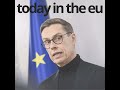
- Why Russia wants to leave the Baltics in the dark
- Runtime
- 24:28
- Date posted
- 2 years ago
- Description
- Leaders meet today to coordinate on how to better defend the Baltic Sea after the latest incident saw the cutting of four internet and one power transmission cable on Christmas day. EU officials suspect Russia is behind the sabotage. If they are right, this attack marks a step up in the Kremlin’s hybrid warfare strategy.
"Towards the end at least of the Cold War, everyone learned the rules. Now, we are much less certain of what the other side wants to communicate”, said historian Vladislav Zubok,"and that for me, is rather disconcerting".
In this episode, host Giada Santana analyzes the latest cable-cutting incident with defense editor Aurelie Pugnet and energy & climate reporter Niko Kurmayer. Expert Vladislav Zubok chimes in to draw parallels between now and the Cold War

- Title
- How Austria’s new leader could test the EU and what Brussels can do to push back
- Runtime
- 16:24
- Date posted
- 2 years ago
- Description
- The bloc of populists within the European Union might soon expand to include Austria. Herbert Kickl is likely to become Austria’s next Chancellor. Until recently, even his own party thought he was too extreme for the job. Now, his rise comes at a crucial time for Europe’s security concerns, especially given the politician’s favorable stance towards the Kremlin. But Brussels has more than one tool to retaliate.
How did Austria get here? And what might Kickl’s leadership mean for the future of the country—and the EU?
In this episode, host Giada Santana interviews Karnitschnig to discuss Austria’s political shift and its implications for Europe.

- Title
- Top10. How Musk’s White House appointment could test the EU
- Runtime
- 16:36
- Date posted
- 2 years ago
- Description
- In this episode, we revisit a significant development in the transatlantic tech landscape: Elon Musk’s controversial appointment as head of the US Department of Government Efficiency (DOGE) and its potential impact on EU-US relations.
Host Giada Santana and Euractiv's Eliza Gritski explore the EU’s probe into X, the implications of Musk’s new role, and what this means for the future of EU digital policy and transatlantic relations.
[Note: This episode was originally published on Nov 18th.]

- Title
- Top10. The climate ambitions of the next EU commission
- Runtime
- 14:41
- Date posted
- 2 years ago
- Description
- In this episode, we look back at a critical development in Europe’s green agenda: Teresa Ribera’s appointment by President von der Leyen to steer Europe’s green transition while ensuring its competitiveness.
Host Giada Santana and Environment hub editor Donagh Cagney delve into the commissioner nominees and discuss the future of EU energy and environment policy.
[Note: This episode was originally published on Sep 19th.]

- Title
- Top10. Von der Leyen launches new EU commission with surprising picks
- Runtime
- 14:32
- Date posted
- 2 years ago
- Description
- In this episode, we revisit a pivotal moment in EU politics: Commission President Ursula von der Leyen’s unveiling of her proposed team of European Commissioners.
Host Evi Kiorri speaks with politics reporter Nicoletta Ionta to unpack the implications of these changes for EU governance.
[Note: This episode was originally published on Sep 18th.]

- Title
- Top10. EU-US trade: what EU economy ministers fear about second Trump term
- Runtime
- 17:39
- Date posted
- 2 years ago
- Description
- In this episode, we revisit an important discussion from November 21st, when EU economy ministers convened to tackle the future of EU-US trade relations.
With the prospect of a protectionist, pro-tariff Trump administration looming, the talks were anything but straightforward. Key industries like Germany’s automotive sector are already under significant pressure, and the risk of a broader trade war remains a serious concern. How is Europe preparing to adapt to a potentially shifting US trade agenda?
In this episode, host Evi Kiorri speaks with Euractiv's economy reporter Thomas Nielsen Moeller to explore the strategies at play.
[Note: This episode was originally published on Nov 21st.]

- Title
- Top10. Why the EU is divided over the Mercosur trade deal
- Runtime
- 17:35
- Date posted
- 2 years ago
- Description
- As we reflect on the key milestones of the past year, we revisit the conclusion of a historic trade agreement between the EU and the Mercosur countries (Argentina, Brazil, Paraguay, and Uruguay) on December 6th. After 25 years of negotiations, the deal will create one of the world’s largest free trade zones.
In this episode, host Giada Santana and agrifood reporter Sofia Sanchez Manzanaro delve into the details of the EU-Mercosur deal and explore the controversies surrounding it.
[Note: This episode was originally published on Dec 9th.]
- Title
- Top10. The vote that might end EU anti-deforestation law
- Runtime
- 17:28
- Date posted
- 2 years ago
- Description
- As the year winds down, we revisit a critical moment in the EU’s environmental efforts: the European Parliament’s decision on the landmark anti-deforestation law, the EUDR, back on November 14th.
In this episode, host Giada Santana and agrifood reporter Sofia Sánchez Manzanaro examine the supporters and detractors of the EUDR and discuss the potential outcomes of the vote.
[Note: This episode was originally published earlier this year.]
- Title
- Top10. The future of the EU budget behind the leak
- Runtime
- 14:50
- Date posted
- 2 years ago
- Description

- Title
- Top10. Niinistö report: How the EU must gear up for future crises
- Runtime
- 15:23
- Date posted
- 2 years ago
- Description
- As the year comes to a close, we revisit a pivotal conversation on how the EU can brace itself for the challenges ahead. A landmark report by outgoing Finnish president Sauli Niinistö offers a sobering reality check, spanning recommendations from climate change management to intelligence sharing.
In this episode, host Giada Santana and politics reporter Nicholas Wallace explore the report’s key proposals, including EU-NATO competition, Niinistö’s intelligence unit concept, and lessons from Finland’s approach to resilience.
[Note: This episode was originally published on Oct 31st]

- Title
- Top10. German coalition collapse: what European leaders fear
- Runtime
- 15:23
- Date posted
- 2 years ago
- Description
- As we reflect on the events that shaped Europe this year, we’re revisiting one of the most dramatic moments in German politics: the collapse of Germany’s coalition government.
This political upheaval has left European leaders concerned about its impact on European cooperation, especially as the continent braces for Donald Trump’s potential return to the White House. But how do European leaders view Germany’s instability, and what are the broader implications for Europe?
To explore these questions, host Evi Kiorri speaks with Berlin-based reporter Nick Alipour.
[Note: This episode was originally published on Nov 8th]
- Title
- Top10. Draghi,The EU to consider report's proposals or face 'slow agony'
- Runtime
- 20:00
- Date posted
- 2 years ago
- Description
- As we look toward 2025, we revisit a crucial moment from earlier this year: September 9th, when Mario Draghi presented his highly anticipated report on European competitiveness to President Ursula von der Leyen. The report highlighted the urgent need to boost productivity to achieve the EU’s ambitious political and economic goals.
In this episode, host Evi Kiorri and economy reporter Thomas Moller-Nielsen break down the key takeaways from Draghi’s report and discuss its potential implications for Europe’s future.
[Note: This episode was originally published on September 10th.]
- Title
- Looking back at Europe's defining moments of 2024
- Runtime
- 25:52
- Date posted
- 2 years ago
- Description
- This year brought seismic changes across Europe: political crises, shifting environmental priorities, and debates about the continent’s industrial strategy.From the Green Deal’s transformation to the US election, we explore how decisions made this year will shape the continent for decades. How did Germany’s government collapse ripple across the EU? What does a more competitiveness-focused agenda mean for climate policy? And what’s next for Europe in a world dominated by US-China tensions?
In this special episode of Today in the EU, host Giada Santana is joined by Euractiv's publisher René Moerland and editors Anna Brunetti and Donagh Cagney, to unpack the stories that made 2024 unforgettable.

- Title
- How can the EU rapidly decarbonise heavy-duty road transport?
- Runtime
- 4:28
- Date posted
- 2 years ago
- Description
- The Euractiv event, "How can the EU rapidly decarbonise heavy-duty road transport?", focused on achieving climate-neutral heavy-duty transport by combining zero-emission vehicles with the necessary enabling conditions. Discussions highlighted key issues such as public charging, high-voltage networks, electricity grids, and building a strong business case for customers.
Policymakers and industry leaders emphasised the need to lower total cost of ownership, tackle infrastructure gaps, and ensure Member States implement EU legislation to create a level playing field.
For more EU news, visit our webpage: https://www.euractiv.com/
Follow us on Social Media
Twitter: https://twitter.com/EURACTIV
Facebook: https://www.facebook.com/EURACTIV
Instagram: https://www.instagram.com/euractiv/

- Title
- We want a world built on peace: recognise the Palestinian voice and future!
- Runtime
- 1:37
- Date posted
- 2 years ago
- Description
- Video provided by We Move Europe
Published by Euractiv's Advocacy Lab
We all want to live in a world built on peace, respect and dignity. To end the horrors in Gaza, the Westbank, and Israel, - everyone needs a place to belong and an equal voice.
Over half the world acknowledges the Palestinian people’s right to belong in a state of their own. But Europe is one of the major nay-sayers. By the end of last year, only 9 out of 27 countries in the EU recognised Palestine as a state.
And yet, a wind of change is blowing. Spain, Ireland and Norway recognised the state of Palestine as the “only way to achieve peace.”
The Palestinian people and their allies are being erased from the land they live on, from the media and from international talks. While this is taking place, no one is safe and there can be no peace.
Recognising Palestine and the Palestinians’ right to the land they live on will be a major blow to those who w...
- Title
- How German parties plan to win voters in upcoming snap elections
- Runtime
- 20:52
- Date posted
- 2 years ago
- Description
- Germany’s political groups officially kicked off their campaign trail after Chancellor Scholz lost a no-confidence vote on Tuesday (17 December). With a snap election now set for February, the race is well underway.
From their manifestos, both the SPD (S&D) and CDU/CSU (EPP) appear to be carefully calibrating their messaging on key voter concerns – such as aid to Ukraine, economic policy, and migration. Their goal? To win over voters without shutting the door on future coalition deals.
But which alliances stand a real chance, and what is the strategy behind the catchy slogans?
In this episode, host Giada Santana teams up with Euractiv’s Berlin-based reporters, Nick Alipour and Jasper Steinlein, to unpack how the CDU/CSU and SPD are branding themselves and the strategies driving their campaigns.

- Title
- Why Macron’s bid to stay relevant is falling short
- Runtime
- 13:52
- Date posted
- 2 years ago
- Description
- François Bayrou's appointment as France's new prime minister is the latest in a series of questionable political moves Emmanuel Macron has made since June, which have increasingly put the president in a vulnerable position.
Outmanoeuvred by his long-time ally Bayrou, who used his political leverage to secure the job, Macron now faces a public growing all the more sceptical of his leadership. The new French prime minister, however, appears ready to move past party lines to guarantee the government’s survival. What cards is Bayrou prepared to play to lock in his power?
In this episode, host Giada Santana speaks with Paris-based politics reporter Théo Bourgery-Gonse to discuss how Bayrou outplayed Macron and what this means for the French government’s future.

- Title
- Lessons from the EU's watchdog: Emily O’Reilly on ethics and accountability
- Runtime
- 19:51
- Date posted
- 2 years ago
- Description
- The European Parliament will elect the new EU Ombudsman on Tuesday (17 December) to replace Emily O'Reilly, with her successor set to inherit her impressive legacy.
In a sit-down interview with Giada Santana, O’Reilly reflected on her time in office, the current political climate, and her landmark inquiry into Frontex.

- Title
- Digital governance in the era of hybrid warfare, with Estonia’s digital minister
- Runtime
- 16:27
- Date posted
- 2 years ago
- Description
- Estonia, a leader in digital governance, is known for remote internet voting, online public services, and digital IDs, earning recognition as the world’s second most digitalized government, according to the United Nations. But its technological advancements have made it a target for cyber interference from Moscow as geopolitical tensions move online.
“The propaganda budget for Russia is bigger than the whole Estonian state budget,” said Estonia’s Digital Minister Liisa Pakosta to Euractiv.
“It’s a hybrid war between the autocratic and democratic world," the minister added.
The Baltic state shares a 294-kilometre border with Russia and is home to a 300,000-strong Russian-speaking minority, factors that increase its exposure to Kremlin-linked hybrid warfare. How has Estonia built its tech-driven society, and how is it helping its neighbours fend off digital threats?
In this episode, host Giada S...
- Title
- Why Georgia’s pivot toward Russia may backfire
- Runtime
- 15:09
- Date posted
- 2 years ago
- Description
- Georgia’s parliament is set to elect the country’s next president on Saturday (14 December), a vote that could backfire for the ruling Dream Party as it has opted to back pro-Russian candidate Mikheil Kavelashvili. During its four terms in power, Georgian Dream has gradually worked towards eroding democratic institutions - a move that has alienated much of civil society, including top national banks and diplomats, many of whom have publicly distanced themselves from the government.
In this episode, host Giada Santana speaks with Carnegie's Thomas De Waal about Georgia's apparent shift towards Russia and what the EU can do to respond.
- Title
- Critical raw materials - How can the EU and Kazakhstan cooperate?
- Runtime
- 59:21
- Date posted
- 2 years ago
- Description
- Kazakhstan is a major producer of critical raw materials (CRMs), and an increasingly important energy supplier for the European Union. Metals and chemicals from Kazakhstan are helpful in the EU’s efforts to advance the green and digital transition. The Central-Asian state is becoming a key player in supporting EU sectors such as the net-zero industry, space, defence, and technology.
The EU-Kazakhstan relations were recently strengthened by the Annual Cooperation Council which took place in October 2024, which aims to strengthen political, economic and trade cooperation. Cooperation in the raw material sector was particularly reinforced by the Memorandum of Understanding (MoU), signed in November 2022.
Kazakhstan’s recent accession to the Mineral Security Partnership (MSP) Forum, which serves as a new platform for cooperation in the CRMs area, also broadened EU-Kazakhstan relations further.
In the context of the upcoming European Commission’s...

- Title
- The controversial EU-level talks on borders, smuggling and asylum procedures
- Runtime
- 15:09
- Date posted
- 2 years ago
- Description
- Talk of EU migration policy have dominated Brussels this week, with at least 15 EU countries deciding to freeze asylum requests for Syrian citizens and EU leaders set to vote on key matters at the EU Home Affairs Council.
EU's migration policy will be high on the political agenda when EU interior ministers meet in Brussels on Thursday (12 December).
Key decisions include a vote on extending Schengen membership to Romania and Bulgaria, revising anti-smuggling measures, and promoting the implementation of the EU Migration Pact at the national level.
In this episode, host Giada Santana and Euractiv's politics reporter Nicoletta Ionta look at the controversial migration debates at the EU level and their potential outcomes.

- Title
- The competing regional powers in the way of Syria’s new government
- Runtime
- 25:54
- Date posted
- 2 years ago
- Description
- As a transitional government takes shape in Syria, hopes run high for the country to regain its democratic status after a decade-long dictatorship. However, the aftermath leaves a fragmented political scenario that might easily spiral into chaos. From Moscow to Ankara and Teheran, regional powers are competing for relevance through the support of the different armed groups involved in the fall of Bashar al Assad’s regime. And if Europe strives for stability in the country, it has a role to play as well, according to experts.
In this episode, host Giada Santana breaks down the rivaling interests shaping the future of Syria with Chatham House fellow Chris Phillips and Russian reporter Iuliia Akhmedova.

- Title
- What Europe risks losing amid the US-China trade war
- Runtime
- 14:09
- Date posted
- 2 years ago
- Description
- The European Union could face unexpected fallout from the latest round of sanctions imposed by Beijing on U.S. markets, as China banned the shipment of three rare minerals critical for building next-generation weapons and military equipment.
How does the US-China trade war impact the European Union, and how can Europe protect its defense industry at at such a crucial time?
In this episode, host Giada Santana and defense reporter Aurelie Pugnet discuss the latest escalation in the tit-for-tat between Beijing and Washington and what it implies for the Union.

- Title
- Why the EU is divided over the Mercosur trade deal
- Runtime
- 17:35
- Date posted
- 2 years ago
- Description
- The EU and four Mercosur countries (Argentina, Brazil, Paraguay, and Uruguay) finalised a historic trade agreement on Friday (6 December) after 25 years of talks. First proposed in 1999, the deal will establish one of the world's largest free trade zones – but not everyone seems to be happy about it. The deal has drawn sharp criticism in the Union over environmental and political concerns. So, what does the South American trade pact entail, and why has it created such deep divisions within the EU?
In this episode, host Giada Santana and agrifood reporter Sofia Sanchez Manzanaro unpack the EU-Mercosur deal and the controversies it has sparked.

- Title
- Europe holds its breath as Romania heads to the polls one last time
- Runtime
- 14:34
- Date posted
- 2 years ago
- Description
- Brussels is on tenterhooks as Romania heads to the polls on Sunday (8 December) to choose between pro-Moscow TikTok star Călin Georgescu and pro-European hopeful Elena Lasconi in the final round of the presidential elections.
In a country where one in three citizens trust the government, the semi-presidential system could grant far-right candidate Georgescu significant power to challenge parliamentary majorities and potentially shift the country's stance on Moscow.
In this episode, host Giada Santana and Euractiv's senior editor Georgi Gotev break down the elections in Romania and assess the situation as the country prepares for its next chapter.

- Title
- The ceasefire in Lebanon and Europe's waning role in the Middle East
- Runtime
- 18:53
- Date posted
- 2 years ago
- Description
- The number of violations of the US-brokered ceasefire in Lebanon has surpassed 100 since the ceasefire agreement took effect last Wednesday, casting doubts on hopes for peace between Hezbollah and Israel. Besides condemning the breaches, the EU's absence from the negotiating table during these tense moments raises questions about its relevance in the Middle East.
In this episode, host Giada Santana talks to Middle East experts Bilal Saab and Julien Barnes-Dacey about the terms of the shaky ceasefire agreement amidst Washington and Brussels’s diplomatic efforts in the region.

- Title
- Media Partnership: The Future of SEPs and Innovation in Europe
- Runtime
- 1:24:46
- Date posted
- 2 years ago
- Description
- Governments across the world have recognised the strategic importance of leadership in key technological standards, including for cellular communications, and relying on an open, industry-led standardisation process.
The European Union's proposed regulation on Standard Essential Patents (SEPs) has sparked significant debate within the technology industry over its implications on Europe's ability to innovate in next-generation technologies such as 5G and 6G. Concerns have been raised regarding the potential impact on innovation, competitiveness but also national security and defence capabilities.
Over a roundtable lunch hosted by Euractiv in collaboration with Qualcomm, representatives from industry, academia, and government will delve into the future of SEPs and standardisation in Europe.
Questions to be discussed include:
- How will the proposed regulation impact national security and defence capabilities?
- What is the role of courts...

- Title
- Explaining Europe's campaign to roll back the protection of wolves
- Runtime
- 11:55
- Date posted
- 2 years ago
- Description
- Wolf protection is back on the table for EU lawmakers as they must now reopen talks on the EU's Habitats Directive, a cornerstone of EU biodiversity policy. The Standing Committee of the Bern Convention decided to back a European Commission proposal weakening the protection of wolves on Tuesday (3 December), meaning MEPs must now reconsider one of the EU's flagship biodiversity policies. But why is the European Commission waging a crusade against wolves? And how does it align with the union's environmental pledges?
In this episode, host Giada Santana and Euractiv's Energy, Environment and Transport reporter Barbara Machado reflect on the political motives behind lowering the protection status of wolves and its wider implications for biodiversity.

- Title
- Media Partnership - Tax Transparency on the eve of Public CbC & CSRD Reporting
- Runtime
- 1:32:25
- Date posted
- 2 years ago
- Description
- With the EU Public Country by Country Reporting and the CSRD Directive having entered into force in 2024, Tax Transparency will become a reality within the EU legal reporting framework. Debates are still active on the merits of such initiatives, with some companies gradually have become more transparent about their tax affairs, while others have kept their tax cards closer to their chest. Ultimately, in 2026, qualifying companies will have to disclose their CbC-Reporting and need to include comprehensive information in their CSRD-reporting, insofar tax is considered a material topic.
For the last decade there has been a lot of focus in the EU on additional reporting and anti-abuse measures, which ultimately had lead to a high cost of tax compliance. According to the Draghi Report this has resulted in the EU having proportionally smaller companies compared to the US. In the current context, the European Business Tax Forum (EBTF) estimated it was the right time to make a sta...

- Title
- The urban mobility transition – How can the EU achieve more sustainable transport
- Runtime
- 1:30:21
- Date posted
- 2 years ago
- Description
- Urban mobility plays a pivotal role in the EU’s broader green transition goals. For the EU to meet its commitment to reducing carbon emissions and achieving climate neutrality by 2050, innovation and transformation in the mobility sector is crucial.
In the latest study on urban mobility transition by EIT Urban Mobility, findings show that investments in innovation are already yielding significant results in improving traffic congestion and reducing emissions in several European cities. By 2030, technological progress in mobility solutions could help reduce CO2 emissions by 21%.
According to the report, public transport emerges as the most affordable and inclusive solution to reduce urban mobility emissions. By 2030, public transport ridership could increase by up to 7%, while private car trips could drop by up to 16%. Moreover, findings show that shifting to active transport modes like walking and cycling could generate €1,170 in health savings per capita ...

- Title
- Why Michel Barnier’s young government might fall
- Runtime
- 13:17
- Date posted
- 2 years ago
- Description
- The current French government might be the shortest-lived in the history of the fifth Republic as opposition parties announced the possibility of a vote of no-confidence on Monday (2 December). Ongoing tense negotiations over financial cuts and taxes have kept the government at risk of falling for the past two months. Why are budget talks threatening a political crisis in France?
In this episode, host Giada Santana and politics reporter Thèo Bourgery-Gonse chat about the controversies around the French budgetary package and the looming threat on Barnier’s head.

- Title
- Wiener Stadtwerke: Achieving climate neutrality by 2040
- Runtime
- 2:49
- Date posted
- 2 years ago
- Description
- Peter Weinelt, Director-General of Wiener Stadtwerke, spoke with Euractiv about the company's ambitious goals of achieving climate neutrality by 2040 while maintaining energy security and affordability for all citizens and industries.
Created for Wiener Stadtwerke, by Euractiv's Advocacy Lab
For more EU news, visit our webpage: https://www.euractiv.com/
Follow us on Social Media
Twitter: https://twitter.com/EURACTIV
Facebook: https://www.facebook.com/EURACTIV
Instagram: https://www.instagram.com/euractiv/
- Title
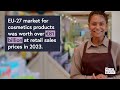
- Europe's beauty and personal care industry is a powerhouse of economic activity.
- Runtime
- 0:28
- Date posted
- 2 years ago
- Description
- The beauty and personal care industry is a vital pillar of Europe’s society and economy contributing €29bn in added economic value to Europe and employing almost three million people across its value chain.
An economic powerhouse, a critical job creator, a driver of innovation and a leader in sustainability, the industry represents an entire ecosystem of farmers, artisans, small and medium sized enterprises (SMEs) and international companies that showcase Europe’s savoir-faire on a global stage.
The value chain’s commitment to innovation strengthens the competitiveness of the European economy, contributing to its sustained growth and positioning Europe as a global leader in the beauty and personal care sector.
Video provided by The Value of Beauty
Published by Euractiv's Advocacy Lab
https://www.euractiv.com/section/economy-jobs/video/europes-beauty-and-personal-care-industry-is-a-powerhouse-of-economic-activity/
For more...

- Title
- The real cost of Europe's new competitiveness agenda
- Runtime
- 16:19
- Date posted
- 2 years ago
- Description
- When voters cast their ballots in recent European elections, the economy topped their long list of concerns. Shortly after, Commission President von der Leyen assumed office with a clear mission: make Europe more competitive to keep pace with the US and China.
But the push for global competitiveness seems to sideline labour and social policies, which have long been seen as hallmarks of Europe’s economic model. So, how does the Commission plan to make the Union wealthier? And who is at risk of being left behind?
In this episode, host Giada Santana chats with economics editor Anna Brunetti about the wind of change sweeping European economic policy.

- Title
- Operation Interflex – BTS from Ukrainian soldiers’ training abroad
- Runtime
- 17:44
- Date posted
- 2 years ago
- Description
- In the past two weeks, Russian forces have achieved the fastest breakthrough in eastern Ukraine since the beginning of the invasion. As the Ukrainian army is in dire need of new recruits and equipment, hundreds of soldiers are under special training as part of Operation Interflex, aimed at providing them with vital skills to manage death-threatening situations.What is the operation like? How can this training impact Ukrainian troops’ success on the frontlines?
In this episode, host Giada Santana hears from defence reporter Aurélie Pugnet about what she discovered during a trip on the ground.

- Title
- Parliament’s winners and losers: A conversation with Greens and right-wing ECR
- Runtime
- 23:03
- Date posted
- 2 years ago
- Description
- On Wednesday (27 November), the new college of commissioners was approved with 370 votes to 282 against – marking the lowest majority in history. The mandate is filled with uncertainties, except one: the centre-right European People’s Party (EPP) enjoys free rein in Parliament negotiations, with master strategist Manfred Weber cosying up and forging alliances outside the centrist majority. How do non-coalition groups view this new, secretive, and unpredictable European Parliament?
In this episode, host Giada Santana talks about the rationale behind the vote with two MEPs: Daniel Freund of the Greens and Carlo Fidanza of the right-wing European Conservatives and Reformists (ECR).

- Title
- Strasbourg special: EU Parliament’s most burning vote of the year
- Runtime
- 16:14
- Date posted
- 2 years ago
- Description
- After weeks of political manoeuvring and backroom deals, MEPs are set to vote today (27 November) on Von der Leyen's next College of Commissioners.
While the EP’s greenlight seems certain after EPP, Renew, and S&D struck a platform agreement last week, the incoming College might be sworn in with the narrowest support in recent history. So, where do the different political groups stand? And what effect will the vote have on Parliament's future powerplays?
In this episode, host Giada Santana and politics reporters Nicoletta Ionta and Magnus Lund Nielsen talk numbers, alliances and behind-the-scenes buzz from Strasbourg's corridors.

- Title
- Draghi report, competitiveness and EU corporate reporting requirements facing backlash
- Runtime
- 14:14
- Date posted
- 2 years ago
- Description
- European businesses are increasingly concerned about the EU's growing regulatory and reporting requirements, which they say hamper competitiveness and productivity.
The combination of high energy prices (well above those in the US) and stringent sustainability and compliance requirements is putting pressure on several industries, and small and medium-sized enterprises (SMEs) in particular.
While the European Union aims to reduce reporting obligations by 25%, the challenge is to balance simplification with maintaining the core objectives of its laws, such as climate and human rights standards. These concerns echo key findings of the Draghi report, which highlighted the EU's struggles with productivity and global competition.
To dig deeper, host Evi Kiorri was joined by Euractiv's Berlin-based economy reporter Jonathan Packroff.
[Edited by Daniel Eck]

- Title
- Unlocking the potential of affordable Innovation through the pharmaceutical legislation
- Runtime
- 2:33
- Date posted
- 2 years ago
- Description
- James Burt, Chair of the Value Added Medicines Sector Group at Medicines for Europe shares his vision how off-patent innovation can help sustainably address today's major public health needs such as antimicrobial resistance, cardiovascular disease or the burden on health systems.
Through the EU pharmaceutical legislation, addressing the market failure which has long blocked off-patent innovation is within reach.
Medicines for Europe is calling for all types of repurposed medicines to be considered in Article 84, while only rewarding those which prove they significant patient benefits and address important public health needs.
In these videos, James shares his view on the ways we can bring the best out of existing pharmaceuticals and bring those benefits to patients.
Created for Medicines for Europe, by Euractiv's Advocacy Lab
For more EU news, visit our webpage: https://www.euractiv.com/
Follow us on Social Media
Twitter: h...

- Title
- ICC arrest warrants for Netanyahu, Gallant, and Hamas commander – what now?
- Runtime
- 17:04
- Date posted
- 2 years ago
- Description
- The International Criminal Court (ICC) has issued arrest warrants for Israeli Prime Minister Benjamin Netanyahu, former Defence Minister Yoav Gallant, and Hamas military commander Mohammed Deif, citing alleged war crimes and crimes against humanity during the recent conflict between Israel and Hamas.
Both Israel and Hamas have dismissed the allegations, giving predictably polarised responses. The Israeli government condemned the ICC’s decision as “antisemitic,” while Hamas called the warrants for Netanyahu and Gallant an “important historical precedent.” But what do these arrest warrants mean, and can the Court's 124 member states – none of which include Israel or the US – enforce this decision?
To answer these questions, host Evi Kiorri spoke with ICC correspondent and host of the Hague-based Asymmetrical Haircuts podcast, Janet Anderson.

- Title
- What we expect from the last day of COP29
- Runtime
- 16:38
- Date posted
- 2 years ago
- Description
- As the global climate summit is expected to wrap up today (22 November) in Baku, Azerbaijan, country ministers have already started tough negotiations around the implementation of the final treaty.
All eyes are on the final sum allocated to the new climate finance goal (NCQG), which will determine how many resources developed countries will provide to the global south to limit greenhouse gas emissions. But the discrepancy in ambition and timeline between the two parties has so far locked talks in a standstill. Where are the COP29 climate talks headed? And where does the EU stand in these negotiations?
Join host Giada Santana and energy & environment reporter Niko Kurmayer as they outline COP29's trajectory and possible scenarios for its last day. The European University Institute's head of delegation, professor Simone Borghesi, dials in from Baku.
- Title
- Delivering Benefits for Patients and health systems through value added medicines
- Runtime
- 1:47
- Date posted
- 2 years ago
- Description
- James Burt, Chair of the Value Added Medicines Sector Group at Medicines for Europe shares his vision how off-patent innovation can help sustainably address today's major public health needs such as antimicrobial resistance, cardiovascular disease or the burden on health systems.
Through the EU pharmaceutical legislation, addressing the market failure which has long blocked off-patent innovation is within reach.
Medicines for Europe is calling for all types of repurposed medicines to be considered in Article 84, while only rewarding those which prove they significant patient benefits and address important public health needs.
In these videos, James shares his view on the ways we can bring the best out of existing pharmaceuticals and bring those benefits to patients.
Created for Medicines for Europe, by Euractiv's Advocacy Lab
For more EU news, visit our webpage: https://www.euractiv.com/
Follow us on Social Media
Twitter: h...

- Title
- EU-US trade: what EU economy ministers fear about second Trump term
- Runtime
- 17:39
- Date posted
- 2 years ago
- Description
- EU economy ministers will meet today (November 21) to discuss the future of EU-US trade relations although the prospect of a possible protectionist and pro-tariff Trump administration looks set to make for difficult talks.
With key industries such as Germany’s automotive sector already under significant pressure and the risk of a wider trade war on the horizon, how is Europe preparing to adapt to a shifting US trade agenda?
To find out, host Evi Kiorri speaks to Euractiv's economy reporter Thomas Nielsen Moeller.

- Title
- Media Partnership - Ironing out a Steel Action Plan for a green transition made in Europe
- Runtime
- 1:20:44
- Date posted
- 2 years ago
- Description
- The European steel industry employs over 300,000 people directly and supports millions more indirectly. As the backbone of many key industrial value chains, including clean technologies from renewables to electric vehicles, steel has been foundational to the European Union, driving prosperity, resilience, and innovation.
Yet European steel’s viability and leadership in breakthrough decarbonisation projects - worth billions in investments - are now under threat. Global steel overcapacity, unfair trade practices, high energy costs, and increasing carbon prices are eroding Europe’s industrial competitiveness, as highlighted in the recent Draghi Report.
Can the EU’s renewed focus on industrial competitiveness and the proposed Steel Action Plan be the solution? What does it take to shape an actionable, timely European Steel Action Plan to address these crucial challenges?
Join this EUROFER Conference - running alongside the exhibition “Steel: A...

- Title
- Safeguarding consumers in the digital age – Challenges and opportunities
- Runtime
- 2:15
- Date posted
- 2 years ago
- Description
- On 12 November, Euractiv hosted a discussion on consumer protection in the digital world. Panellists explored how digital advancements can enhance online safety, the enforcement of existing legislation, and addressing gaps to build a more secure digital environment.
https://www.euractiv.com/section/digital/video/safeguarding-consumers-in-the-digital-age-challenges-and-opportunities/
For more EU news, visit our webpage: https://www.euractiv.com/
Follow us on Social Media
Twitter: https://twitter.com/EURACTIV
Facebook: https://www.facebook.com/EURACTIV
Instagram: https://www.instagram.com/euractiv/