Chatham House
The road to COP27 In conversation with Egypt and Bangladesh
- Title
- The road to COP27 In conversation with Egypt and Bangladesh
- Runtime
- 1:04:01
- Date posted
- 4 years ago
- Description
- With climate change impacts wreaking increasing devastation across the world, it is more urgent than ever that governments and other stakeholders deliver on the commitments made in the ‘Glasgow Climate Pact’ adopted at COP26 in Glasgow in November 2021.
Shortly before COP27, Chatham House is convened a hybrid discussion to explore:
What progress or regressions have been made since COP26 on mitigation, adaptation, finance, and loss and damage?
What are the key issues to watch, what are the main challenges and what would be a ‘good outcome’ at COP27?
How are negotiations affected by the transformation of the food systems, the shift from fossil fuels and increasing visibility of climate impacts?
How is the current geopolitical context impacting climate action, in particular the war in Ukraine?

- Title
- Food system transformation: A blind spot for climate and biodiversity action
- Runtime
- 1:01:01
- Date posted
- 4 years ago
- Description
- Tackling the dual crises of climate change and biodiversity loss requires extraordinary levels of action at an unprecedented speed. Agriculture is the biggest user of land, the biggest source of methane emissions, a major contributor to total greenhouse gas emissions and the leading driver of biodiversity loss.
Anything short of a food system transformation puts climate and biodiversity objectives in peril. However, governments have not yet produced credible pathways and strong policies for tackling our growing ‘foodprint’ – the negative impacts of what we grow and eat.
In advance of COP27 in Sharm El-Sheikh for climate and COP15 in Montreal for biodiversity, Chatham House has published a new briefing paper which examines aligning food systems with climate and biodiversity targets.
The paper reviews the climate and biodiversity policy landscape to 2030, with a focus on land-based aspects and the inclusion of food and agriculture. The paper h...

- Title
- Climate Finance and rural livelihoods in the Sahel
- Runtime
- 57:18
- Date posted
- 4 years ago
- Description
- The Sahel region is acutely vulnerable to the impacts of climate change and desertification, with many of its rapidly-expanding populations largely relying on climate-sensitive livelihoods such as smallholder agriculture, pastoralism, and fishing.
Declining cereal production stemming from environmental and political insecurity has led to the region’s worst hunger crisis in a decade in 2022, with 33 million people classified as food insecure. Despite the severe impacts of environmental variabilities on agricultural capacities, biodiversity, and livelihoods, Sahelian countries continue to lack sufficient domestic and international climate finance for adaptation and mitigation.
At this event, the Minister of Finance of the Republic of Niger Hon. Dr Ahmat Jidoud discussed the financing priorities for promoting community-led climate policy in the Sahel that centred livelihood creation and diversification. He also outlined how Niger plans to balance financing need...
- Title
- Minerals, Society, and the Environment in the Democratic Republic of the Congo (DRC)
- Runtime
- 28:21
- Date posted
- 4 years ago
- Description
- The Democratic Republic of Congo (DRC) is pivotal to the fight against climate change, with the Congo Basin rainforest – 60 percent of which lies in the DRC – reported to absorb around 4 percent of the world's annual carbon emissions. The country also holds minerals critical to the transition to a low-carbon future, including cobalt and copper as well as lithium for sustainable battery technologies.
However, the extraction of green minerals brings its own environmental and developmental risks, including pollution and stress on ecosystems and communities, and a complex policy challenge to ensure that benefits and jobs accrue to Congo's people. Despite producing 70 percent of the world’s cobalt, the DRC captures only 3 percent of electric vehicle battery value chains.
At this event, HE President Félix Tshisekedi, President of the Democratic Republic of Congo, discussed the country’s policy vision for balancing the imperatives of economic development and...

- Title
- Rishi Sunak in Downing Street, John Kerry at Chatham House
- Runtime
- 38:46
- Date posted
- 4 years ago
- Description
- Rishi Sunak enters Downing Street as the youngest prime minister in modern times, whilst also this week Chatham House welcomed the US Special Presidential Envoy on Climate, John Kerry, to discuss what lies ahead for COP27. To discuss all this, Bronwen Maddox is joined by John Kampfner, Executive Director of Chatham House’s UK in the World Initiative, Simon Fraser, formerly of the Foreign and Commonwealth Office, Hans Kundani an Associate Fellow with the Europe Programme and Anna Åberg, a Research Associate with our Environment and Society Programme.
Read our expertise here:
Conflict, fragility and multilateral climate funds
Hard times ahead for Sunak to restore UK's credibility
The road to COP27: In conversation with US Special Presidential Envoy for Climate John Kerry
Subscribe to Independent Thinking wherever you get your podcasts. Please listen, rate, review and subscribe.
Presented...

- Title
- The road to COP27: In conversation with US Special Presidential Envoy for Climate John Kerry
- Runtime
- 1:02:29
- Date posted
- 4 years ago
- Description
- What will progress on climate change look like at COP27?
With global attention zeroing in on COP27, policymakers and world leaders will meet in Egypt to take the next step in the fight against the climate crisis. The planet is on course to warm well beyond 1.5°C and climate hazards are increasing our exposure to climate risk. Violent and unpredictable weather events increasingly leave devastation among communities, particularly in vulnerable countries.
At the same time, the ripple effects of the conflict in Ukraine will have wide-ranging economic, social and geopolitical consequences for years to come. Whilst some finance is being made available, more is needed to properly address the damage caused by climate change and fund the transition to net zero worldwide. These challenges have become more acute as the world grapples with a growing energy crisis, the war in Ukraine and a troubling economic outlook.
Joined by US Special Presidential Envoy fo...
- Title
- The road to COP27: In conversation with US Special Presidential Envoy for Climate John Kerry
- Runtime
- 1:03:16
- Date posted
- 4 years ago
- Description
- What will progress on climate change look like at COP27?
With global attention zeroing in on COP27, policymakers and world leaders will meet in Egypt to take the next step in the fight against the climate crisis. The planet is on course to warm well beyond 1.5°C and climate hazards are increasing our exposure to climate risk. Violent and unpredictable weather events increasingly leave devastation among communities, particularly in vulnerable countries.
At the same time, the ripple effects of the conflict in Ukraine will have wide-ranging economic, social and geopolitical consequences for years to come. While some finance is being made available, more is needed to properly address the damage caused by climate change and fund the transition to net zero worldwide. These challenges have become more acute as the world grapples with a growing energy crisis, the war in Ukraine and a troubling economic outlook.
The following questions are considere...

- Title
- What is the future of the international human rights system?
- Runtime
- 1:21:30
- Date posted
- 4 years ago
- Description
- Amid turbulent change, can the established human rights system survive a fragmented geopolitical order and rising populism?
The world’s post-Second World War system of global human rights faces historic and multiple challenges. Autocratic and elected populist governments are actively seeking to undermine international and regional human rights frameworks and norms. At the same time, new technologies are placing unprecedented power in the hands of autocratic governments or aspiring autocrats.
Can international and regional human rights norms and mechanisms be reformed to meet these threats or will they continue to fray in the face of geopolitical competition and domestic pressures?
This event is a discussion of a new Chatham House-Brookings Institution book, Reclaiming Human Rights in a Changing World Order. The book seeks to analyse these multiple changes and their impacts on global and regional human rights systems to provide specific recommend...

- Title
- Youth representatives: the answer to meaningful engagement?
- Runtime
- 59:47
- Date posted
- 4 years ago
- Description
- As the world contends with a succession of interrelated crises, from climate change to inflation, how are young people's interests being represented in policymaking processes?
At this hybrid roundtable event, young people, including members of the Common Futures Conversations community and youth representatives themselves, came together to discuss the practical ways young people have been included in governance. They share their experiences, explore how effective these channels are and how youth representation should be strengthened in the future, including a campaign to reinstate UK youth delegates to the UN.
Speakers:
Mohammad Karim, UK's Head Delegate to the Y20
Safia Sangster, UK's Head Delegate to the Y7
William Awomoyi, UK Youth Ambassador to the Commonwealth
Chair: Katie McCann, Common Futures Conversations, Chatham House
Find out more about Common Futures Conversations: https://www.chathamhouse.org/about-us/our...

- Title
- Climate and conflict
- Runtime
- 57:34
- Date posted
- 4 years ago
- Description
- In an ever more challenging security horizon, climate change and the destruction of the natural environment represent some of the most significant challenges.
These crises are pushing more states towards conflict and resulting in greater risks of destabilisation. Scarcity of resources, mass migration, food shortages and infrastructure damage are just some of the outcomes that could spark violent conflict as a result of accelerating changes.
Many of the world’s porous borders are at threat from the ‘spillover’ effect of climate change and environmental decline. The precarious nature and vulnerability of some countries place much of our globalized world at risk.
There is a pressing need for decision-makers to identify practical solutions and address the root causes while avoiding the risks and pitfalls of transition. The globalized nature of the climate and many environmental problems means that what happens in one country is not contained to...

- Title
- Democracy in America: Next generation politics
- Runtime
- 1:10:25
- Date posted
- 4 years ago
- Description
- Examining the key issues shaping youth voter turnout in America.
Gen Z and Millennials are the largest, most diverse and most progressive voting bloc in American history. In November 2020, young people voted in historic numbers and helped deliver the White House to President Biden.
But despite being politically engaged in the past, polling shows young voters are increasingly disillusioned by the state of American democracy.
This panel examines the key issues shaping youth voter turnout before the midterm elections and how next-generation politics are changing the US.

- Title
- Tackling human trafficking in Iraq
- Runtime
- 58:08
- Date posted
- 4 years ago
- Description
- This event screens a documentary on human trafficking in Iraq and discusses prospects for the effective combatting of the issue and the consequences of corruption for the most vulnerable.
The sex trade in Iraq has soared in the past two decades, fuelled by complex socio-economic factors and enabled by a tangled web of powerful interests, the ruling elite and armed groups, a toxic mix that has become the hallmark of America’s post-2003 legacy in Iraq. Decades of war and hardship have increased poverty rates, lowered education levels and reinforced patriarchal norms that marginalize women, making them more vulnerable to exploitation from the system.
Efforts to combat the trafficking of women have been ineffective, and all too often, victims are convicted of prostitution while those who benefit from the trade rarely face accountability. Even those women who avoid prosecution are marginalized from their communities, and in many cases, face the risk of honour kil...

- Title
- Restoring democracy in Venezuela
- Runtime
- 1:10:34
- Date posted
- 4 years ago
- Description
- In early May 2022, Chatham House convened a private workshop with diplomats, human rights groups, representatives from Venezuela and experts, under the Chatham House Rule, to discuss a potential roadmap to help Venezuelans restore fundamental human rights and democratic processes and institutions to their country.
Participants discussed the current framework of sanctions on Venezuela; possible strategies for coordination to incentivize the return of the government of Nicolás Maduro to the negotiating table; the facilitation of humanitarian assistance; scenarios for the lead-up to the 2024 elections; the domestic and international political context for these policy goals; and the diplomatic and economic resolve required – and how it might be obtained – to see these shared objectives through.
Following the meeting, Chatham House produced a summary reflecting the major points of consensus and recommendations on how democratic members of the international com...

- Title
- Russian society and elites since the partial mobilization
- Runtime
- 1:28:19
- Date posted
- 4 years ago
- Description
- Discussing developments in the mood of the wider Russian population and the solidity of the elites, considering the changing course of the war.
Russia’s partial mobilization, combined with its annexation of four Ukrainian regions, was conceived by the Kremlin to shift the fortunes of war back in Moscow’s favour.
A significant side effect of these radical moves has been a noticeable shift in the Russian public mood and in its perception of the war.
What once was a distant war, possible for most Russians to ignore, has come much closer to home, affecting almost everyone. Many Russians, who are neither fleeing nor being signed up, are seeking to avoid ‘complicity’.
This online roundtable discusses these and other related developments concerning the mood of the society and elites in Russia.
- Title
- What is the difference between a pandemic and a PHEIC? | Explainer | Chatham House
- Runtime
- 2:09
- Date posted
- 4 years ago
- Description
- Emma Ross outlines the differences between a Public Health Emergency of International Concern (PHEIC) and a pandemic.
Emma explains that a PHEIC is a formal designation, giving a special status for an emergency caused by an infectious disease outbreak from the World Health Organization (WHO), tied to international law through the International Health Regulations (IHR).
IHR define what countries are supposed to do to prevent, prepare for, and respond to infectious disease emergencies or other public health events across borders.
A PHEIC is the strongest global alert the WHO can formally make and, when it is declared, countries have a legal duty to respond quickly, whereas with a pandemic there is no infrastructure around the decision-making process, agreed criteria, or agreement of what countries need to do in response.
Although there is not even a universally agreed definition of a pandemic, it can be argued this term may have more im...
- Title
- War on Ukraine: The state of the global response
- Runtime
- 1:15:01
- Date posted
- 4 years ago
- Description
- Implications of the war for the future of multilateralism.
Russia’s war on Ukraine has tested the capacity for a unified global response to grave violations of the UN Charter. We are in unchartered territory as a nuclear member of the United Nations Security Council attacks a non-nuclear country.
Multilateral institutions that were born out of an effort to prevent war are struggling to prove their relevance in the face of growing existential threats to humanity.
The war is exacerbating divisions within the global community, disrupting food and energy supplies worldwide and contributing to a profound crisis of multilateralism.
The longer these divisions last, the longer the war in the middle of Europe and the harder it will be to respond to the interconnected global crises that threaten us all.
This discussion offers a unique insight into the macro geopolitical questions in relation to the war in Ukraine with ...

- Title
- Chinas political chessboard the 20th party congress
- Runtime
- 1:04:51
- Date posted
- 4 years ago
- Description
- In October, the Chinese Communist Party (CCP) will assemble to appoint new leaders and discuss political, social, economic and foreign policy priorities for the coming 2022–2027 period and beyond.
One of the key outcomes of the meeting of China’s political class is the future of current President Xi Jinping. Technically at the end of his second 5-year term, Xi was due to step down this year. The next generation of leadership was supposed to step in, as the next stage of the Party’s evolution takes place. However, this is unlikely to happen.
The president has consolidated his power, manoeuvring allies into key positions and developing a faction of support in the Party. With 'Xi Jinping Thought' added to the Party charter and China’s constitution and term limits removed, Xi shows no intention of stepping down. Who will determine the direction of the country?
However, the president is not all-powerful. Critics and alternative factions operate...

- Title
- How not to do foreign policy
- Runtime
- 59:29
- Date posted
- 4 years ago
- Description
- The history of international affairs is littered with catastrophic decisions at key moments. Different policy decisions and actions taken at the time might have led to a more peaceful and prosperous world. While foreign policy analysis, discussions and debates seek to replicate successes, this event asks how to avoid catastrophic failure.
Are there learnings from past failures? From the use of economic sanctions, which have emerged as a ‘go-to’ tool of diplomacy, to failures of negotiations, the panel answers this key question by exploring prominent historic case studies.
Questions discussed include:
Why do policymakers pursue decisions regardless of past results?
Would a ‘Hippocratic Oath’ for policy-minded professionals act as a buffer against bad decision-making?
How do policymakers go beyond this minimum ‘do no harm’ requirement?
What would constitute more effective interventions in the curren...

- Title
- Why burning biomass is not zero-carbon | Explainer | Chatham House
- Runtime
- 4:14
- Date posted
- 4 years ago
- Description
- Short animation explaining why burning biomass produces more carbon dioxide per unit of energy generated than almost all fossil fuels.
The climate emergency requires countries to transition away from fossil fuels, but it is important to be careful about the alternative energy sources chosen. In particular, concern is growing over the use of biomass for energy, which is generated when wood or other plant material is burnt to generate heat and electricity.
Many governments treat biomass energy as zero-carbon at the point of combustion, and subsidize it in the same way as renewables such as solar or wind, resulting in a large increase in the use of biomass for energy in the UK and the European Union (EU) over the past 15 years.
The treatment of biomass as zero-carbon in policy frameworks rests on the argument that biomass emissions will be reabsorbed by forest growth, particularly from trees planted to replace those cut down to burn.
Bu...

- Title
- What caused the 2022 food crisis? | Explainer | Chatham House
- Runtime
- 2:11
- Date posted
- 4 years ago
- Description
- Gareth Price, senior research fellow in the Asia-Pacific programme outlines the various overlapping and cascading risks which have turned into a global crisis.
He talks about how COVID-19 has caused problems with supply chains and imported labour which has affected harvesting the crops in Southeast Asia, alongside existing regional problems related to climate change, famine, and civil war.
In developed countries, food availability is there but the cost has risen. but in poorer countries, there it are food shortages because the food isn’t available.
He says that, according to the World Food Programme, more than 800 million people stand at risk of malnutrition and 50 million of those are on the edge of famine.

- Title
- Brexit net zero and the invasion of Ukraine
- Runtime
- 1:26:05
- Date posted
- 4 years ago
- Description
- The impacts of climate change are becoming more apparent in the UK, Europe and globally. The last seven years have been the warmest on record globally, and the UK experienced temperatures exceeding 40 degrees for the first time ever in 2022.
However, since last November’s COP26 summit in Glasgow, the government’s attention to the climate crisis has been deflected by the ongoing impacts of Brexit and, more recently, the invasion of Ukraine. Political strategies in response to the war and rapid and significant price rises have raised questions of how energy security and affordability can better support one another as the UK and Europe face a largely energy-induced cost-of-living crisis with winter approaching.
This roundtable explores the relationship between post-Brexit energy and climate policy and politics in the context of the war in Ukraine. Findings from a UKERC scenarios exercise will be shared and attendees will discuss what political action is imper...

- Title
- South Asia the crucible for a global debt crisis
- Runtime
- 59:31
- Date posted
- 4 years ago
- Description
- After growing anger at the economic collapse in Sri Lanka, President Rajapaksa fled the country in July 2021. Hamstrung by external debt of more than $50 billion owed to creditor nations and private bondholders, public sentiment had finally boiled over as the country’s politicians could not find suitable answers to remedy the economy. Its eventual default represented its first sovereign debt default since independence in 1948.
Sri Lanka’s woes are part of a gloomy global pattern that is playing out. According to Bloomberg, over a dozen developing markets risk defaulting on their debt repayments. Global trends and the shock of Russia’s invasion of Ukraine have dragged a variety of countries into trouble, from seemingly well-managed countries like Ghana to the wheat-dependent economy of Egypt. In each case, economic crisis threatens political stability.
As the rapidly changing global economic environment continues apace, is the collapse of the Sri Lankan e...

- Title
- Christopher Sabatini's new book examines the global challenge to human rights
- Runtime
- 2:41
- Date posted
- 4 years ago
- Description
- The latest Chatham House/Brookings Institution Press book Reclaiming Human Rights in a Changing World Order is published this month – a timely reminder of the continuing relevance of human rights for millions of people worldwide and the need for renewed action.
Cover of the book 'Human Rights in a Changing World Order'
The legitimacy of many of the accepted tenets of international human rights have over the years been undermined by the impact of shifting geopolitics, polarized domestic policies, the rise of populist nationalism, and new technologies.
In this book, Christopher Sabatini, Senior Research Fellow for Latin America at Chatham House, has assembled a diverse group of leading scholars who, together with human rights activists and young leaders from across the world, offer practical advice to policymakers, academics and all champions of human rights on ways to protect, reform and shore up global, regional and domestic human rights protections.

- Title
- A new transatlantic relationship?
- Runtime
- 1:24:06
- Date posted
- 4 years ago
- Description
- US senator Jeanne Shaheen examines the implications of new UK leadership, the war in Ukraine, and NATO expansion for the US–UK relationship.
In recent weeks, the UK has ushered in a new prime minister and a new monarch. The US will hold potentially power-shifting mid-term elections in November after nearly two years of the Biden presidency that promised to bring the US ‘back’ as a global leader in international affairs.
These leadership changes come at a time when Europe is at war, NATO is expanding and US–China competition is re-ordering long-held alliances. Old assumptions about foreign policy are in flux in the midst of huge international challenges.
Democratic senator Shaheen, a senior member of the Senate Foreign Relations Committee, explores how these changes might influence the US–UK ‘special’ relationship.
How will the trajectory of Russia’s war on Ukraine influence the bilateral relationship?
...

- Title
- Brazil: The economy beyond the elections
- Runtime
- 1:08:27
- Date posted
- 4 years ago
- Description
- Whatever the outcome of the 2022 presidential elections, what economy will the president inherit?
On Sunday 2 October, Brazilians headed to the polls for the first round of the presidential election. Incumbent Jair Bolsonaro, aided by Paulo Guedes, Brazil’s economy minister, has presided over four years in office attempting to implement radical reforms.
The reforms were aimed initially at injecting fiscal responsibility and market incentives, but have recently stalled and Brazil’s debt burden and inflation have increased.
While Brazil remains a diverse economy with strong sectors, including agriculture, fintech and services, the country is facing economic headwinds amid political polarization and uncertainty. By no small measure, the 2022 election is era-defining in Brazil’s modern history.
Key questions to be discussed by the panel include:
With fiscal prudence seemingly abandoned amid a stalling economy, what wil...
- Title
- Myths and misconceptions around Russian military intent
- Runtime
- 1:27:39
- Date posted
- 4 years ago
- Description
- Russia's assault on Ukraine has severely tested many long-standing assumptions about the nature and effectiveness of Russian military power. But in addition to the confounding of assumptions about Russia's tactical and operational capabilities and strategic competence, other deep-rooted misconceptions persist regarding Russia's attitude to warfare overall.
Chatham House's Russia and Eurasia Programme has commissioned a pool of subject matter experts on Russian military affairs to address some of these longer-term conceptual challenges in understanding Russian hard power, which are not directly linked to current operations in Ukraine.
This research paper challenges a number of ideas about Russian military power and doctrine which have become entrenched among non-specialists but are based on false premises or a misreading of Russia’s own aims, objectives and methods. And some of these misconceptions may have major implications for any future confrontation betw...

- Title
- Are the sanctions against Russia working? | Explainer | Chatham House
- Runtime
- 1:23
- Date posted
- 4 years ago
- Description
- James Nixey, director of the Russia and Eurasia programme at Chatham House, explores whether
sanctions have been effective in deterring Russia.
He argues that the reality is sanctions have
dealt Russia a chronic blow. It is cut off from capital markets, foreign businesses have left, Russia cannot borrow because it has
a lousy credit rating, unemployment and inflation are spiking, and it simply cannot find new markets for imports.
Sanctions do also limit Russia's room for manoeuvre in terms of its military action, especially in the future, as well as condemning Russia to a future of impoverishment and ultimately
social discord domestically.
- Title
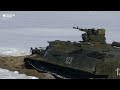
- The militarization of Russian polar politics | Explainer | Chatham House
- Runtime
- 4:56
- Date posted
- 4 years ago
- Description
- Russia’s policies for the polar regions overlap and are increasingly becoming militarized, as the perception of threats to Russian national interests grows.
This has direct consequences for other polar nations and for NATO and its allies. In the Arctic, a fear of encirclement by NATO and its allies informs this posture – heightened by worsening relations with the West over Russia’s renewed war against Ukraine and potential NATO expansion.
Mathieu Boulègue, senior research fellow in the Russia and Eurasia programme at Chatham House explains why a key Russian goal is to secure control over the Northern Sea Route amid increased human activity prompted by climate change.
He says that, in Antarctica, Russia perceives a need to protect its national interests against other state parties to the Antarctic Treaty System.
This video supports a research paper which details the reasons behind Russia’s militarized postures in the Arctic ...

- Title
- Climate finance and conflict dynamics
- Runtime
- 1:03:33
- Date posted
- 4 years ago
- Description
- With climate change, fragility and conflict challenges worsening, the role of international climate finance is more urgent than ever.
From the implementation of climate finance and who it reaches to the rush for renewable energy, the inclusion of conflict analysis and conflict sensitivity principles often remain absent from climate finance discussions and planning.
With COP27 around the corner and for the occasion of International Peace Day, stakeholders ranging from government representatives to climate activists discuss their perspectives on the role of conflict and conflict sensitivity as part of climate finance and action.
This event was organized in partnership with International Alert.
- Title
- Myths and misconceptions around Russian military intent
- Runtime
- 10:11
- Date posted
- 4 years ago
- Description
- Authors discuss their new Chatham House research which aims to address some of the longer-term conceptual challenges in understanding Russian hard power, which are not directly linked to current operations in Ukraine.
Their work challenges some ideas about Russian military power and doctrine which have become entrenched among non-specialists but are based on false premises or a misreading of Russia’s own aims, objectives and methods.
Some of these misconceptions may have major implications for any future confrontation between Russia and one or more adversaries, potentially including NATO members.
Read the research
https://www.chathamhouse.org/2022/07/myths-and-misconceptions-around-russian-military-intent

- Title
- A new tool for nature-based investments | Explainer | Chatham House
- Runtime
- 1:31
- Date posted
- 4 years ago
- Description
- Short animation explaining a new investor framework specifically for understanding the risks and returns
of nature-based investments.
Many investors are looking to decarbonize their portfolio to help meet net zero targets. Nature-based solutions can help to
protect and restore ecosystems and address societal challenges,
boosting biodiversity and increasing
well-being in local communities.
When it comes to assessing risks and returns, traditional investment approaches
make a solid foundation. But they only take you so far, and conventional forest-based approaches
have their limitations too, by narrowly defining the type of return
on investment.
This tool explains
to investors how to apply a traditional investment approach and explores which attributes of forest-based approaches can be considered too, unpacking risks and returns across environmental, social, and governance attributes, including ...

- Title
- Is Russia winning the war? | Explainer | Chatham House
- Runtime
- 1:18
- Date posted
- 4 years ago
- Description
- James Nixey, director of the Russia and Eurasia programme at Chatham House outlines the likelihood or not of a victory for Russia in its war on Ukraine.
He says nobody is winning this war currently and that both sides have strengths and weaknesses. Ukraine has superior numbers, better resolve and morale and international backing, while Russia has superior weaponry and superior stores of ammunition
Both sides are holding each other in check with each achieving minor victories without any decisive blows. And both sides are trying to get to a better position at the negotiating table, but neither are there yet.
He concludes the likely outcome is messy rather than a clear cut victory for either side. But even that looks like it's still up for grabs on the battlefield right now.

- Title
- Russia China defence and security relations insights from the expert community
- Runtime
- 1:00:51
- Date posted
- 4 years ago
- Description
- In the defence and security realms, Russia–China relations resemble more pragmatic cooperation based on shared, calculated interests than an alliance.
This event presents and discusses key findings from a recent expert survey conducted by Chatham House with the aim to gather insights on Russia–China military, defence, and security relations.
Survey responses helped identify areas of bilateral cooperation but also crucial friction points and obstacles that prevent the relationship from developing further, as well as policy pathways for the West.

- Title
- A new prime minister, a new place for the UK in the world?
- Runtime
- 1:29:01
- Date posted
- 4 years ago
- Description
- On 5 September, Britain will have a new prime minister. While the campaign to replace Boris Johnson has largely focused on taxation and domestic issues, a new leader has the opportunity to redefine Britain’s role on the world stage.
The Johnson administration’s foreign policy saw worsening tensions with Brussels, increasing hawkishness towards China, a firm commitment to support Ukraine, differences with Commonwealth allies and a new geopolitical strategy outlined in the Integrated Review.
Britain’s new prime minister must steer the ship in choppy waters, at a time when some of the UK’s historic alliances are under doubt, and the global order seems more fractured than it has in decades.
Our panel will address the following questions:
What is the role of UK foreign policy as we face a recession and cost of living crisis?
Will UK–EU relations improve, and should we expect a different approach to the Nort...

- Title
- Feminist interrogations of global nuclear politics
- Runtime
- 58:00
- Date posted
- 4 years ago
- Description
- Feminist interactions with the global nuclear order have been sustained for many years. However, in recent years the feminist approach to nuclear politics has been largely ignored by research. Action from Indigenous groups and those in the global South has been particularly neglected.
In this webinar, authors from International Affairs’ new special section will share their views on how we can reconceptualize the global nuclear order with a feminist and postcolonial lens. The session will explore research on Indigenous women’s resistance to nuclear waste in North America, masculinity in the Cuban missile crisis, and what a feminist-Gandhian ethic could do for nuclearism in India.
The speakers in this event drew on the following research:
• Rethinking global nuclear politics, rethinking feminism (https://doi.org/10.1093/ia/iiac118)
• Indigenous women's resistances at the start and end of the nuclear fuel chain (https://doi.org/10.1093/ia/iiac...

- Title
- Global responses to China's Belt and Road Initiative
- Runtime
- 58:31
- Date posted
- 4 years ago
- Description
- International responses to China’s Belt and Road Initiative have been varied. They not only reflect states’ attitudes towards China but also their domestic politics and how they perceive their place in the world order.
In this video, International Affairs authors will share their insights on how Japan is approaching China in the context of the Indo-Pacific, Chinese influence in Myanmar and Italy’s China policy.
International Affairs was started at Chatham House in 1922 to communicate research to members who could not attend in person. Over the last 100 years, it has transformed into a journal that publishes academically rigorous and policy-relevant research.
The speakers in this event drew on the following research:
• Japan's ‘Indo-Pacific’ question: countering China or shaping a new regional order? (https://doi.org/10.1093/ia/iiz241)
• Myanmar's strategy in the China–Myanmar Economic Corridor: a failure in hedging? (h...

- Title
- Democracy in Africa: Interview with HE Hakainde Hichilema, President of the Republic of Zambia
- Runtime
- 6:05
- Date posted
- 4 years ago
- Description
- African states and societies are grappling with the dual complex challenges of democratizing and developing their economies – in the context of the most diverse continent in the world with some of its least developed countries.
President Hichilema outlines what must be done to facilitate resilient democratic environments across Africa and prevent democratic backsliding. He was attending Chatham House for an event discussing Zambia’s political and economic reform and recovery.
Watch the event, ‘Zambia’s political and economic reform and recovery’.
https://www.chathamhouse.org/events/all/research-event/zambias-political-and-economic-reform-and-recovery
- Title
- Is Ukraine politically divided? | Explainer | Chatham House
- Runtime
- 1:10
- Date posted
- 4 years ago
- Description
- James Nixey addresses whether there are political divisions in Ukraine or if the country is united in its fight for independence.
James says the irony is that Ukraine is a more cohesive country, a more unified country than at any time in its post-independence life with, according to a recent poll, 75 per cent of Ukrainians believing their country is now headed in the right direction.
He comments that political division is largely a Kremlin narrative, and that Ukraine is currently less divided than many other countries, such as the UK, the US, or Italy.
Although there is some divide between Ukrainian speakers and native Russian speakers, that has not translated into any sort of disunity so far as the approach to, and the resolve to combat and defeat Russia is concerned.
- Title
- Interview with Hon. Carlos Zacarias, mineral resources and energy minister of Mozambique
- Runtime
- 7:21
- Date posted
- 4 years ago
- Description
- Mozambique’s energy sector offers a unique opportunity for accelerating economic development and poverty alleviation. Improving the lives of ordinary Mozambicans will require robust policy frameworks and a national strategy to fully harness the opportunities for diversified development from the natural resources sector.
Hon. Carlos Zacarias reflects on the importance of the energy sector as a catalyst for diversified economic development and discusses Mozambique’s vision for a just energy transition.

- Title
- War on Ukraine: The geopolitics of energy
- Runtime
- 1:06:37
- Date posted
- 4 years ago
- Description
- Oil and gas are central to the Russian economy. The EU has adopted its sixth sanctions package, which contains a complete import ban on all Russian crude oil and petroleum products. This covers 90 per cent of the EU's current oil imports from Russia. Furthermore, the UK and US ban on the insurance for oil cargo will impede Russia's capacity to redirect exports to other markets.
Despite some decoupling since the war, Europe still depends heavily on Russian energy, especially Germany and Italy. The EU has given €35 billion to Russia for energy supplies since the start of the war and only €1 billion to fund Ukraine's defence. Cutting off the revenues to Russia derived from energy imports will have an impact on the European and global economies.
The EU has also pledged to cut gas imports from Russia by two-thirds over the next year and is considering alternative sources of energy including liquified natural gas imports from Qatar and the United States. The ...

- Title
- Can the Iran nuclear agreement be salvaged ? | Explainer | Chatham House
- Runtime
- 1:52
- Date posted
- 4 years ago
- Description
- The JCPOA is shorthand for the Iran nuclear agreement that was signed in 2015 between Iran, the US, UK, France, Germany, China and Russia, whereby Iran agreed to make its nuclear programme more transparent, as well as constrain its nuclear advances, in exchange for sanctions relief. The agreement was operating successfully until 2018, when former US president, Donald Trump, withdrew from the agreement, seeking to pressure Iran to make a stronger, longer and improved agreement. Since then, tensions with Iran over its nuclear programme have accelerated and Iran has responded by further advancing its nuclear programme. When the Biden administration came into office in 2021, they recommenced nuclear negotiations with Iran. These negotiations have been ongoing for a little over a year but have yet to arrive at a new agreement.

- Title
- How has the Ukraine invasion affected JCPOA negotiations | Explainer | Chatham House
- Runtime
- 1:21
- Date posted
- 4 years ago
- Description
- There is no clear indication that the invasion of Ukraine has had a direct impact on the stalled nuclear negotiations between Iran and the international community.
But when the war broke out, the Russians tried to pressure the negotiators that they should receive some concessions and have sanctions immunity for their support and involvement in facilitating the Iran nuclear agreement.
But there is still no sign of a new agreement and Iran is dragging its feet, likely because it doesn't see US President Joe Biden as committed enough to the JCPOA. Iran is worried that the deal will not survive another US election. And in the context of the war, Iran sees opportunities in dragging its feet and hedging its bets.

- Title
- Why has Putin made a trip to Iran ? | Explainer | Chatham House
- Runtime
- 1:20
- Date posted
- 4 years ago
- Description
- Vladimir Putin recently attended a set of bilateral and trilateral meetings in Tehran, alongside Turkey's president, Recep Tayyip Erdoğan, and Iran's president, Ebrahim Raisi. The visit was symbolic for all parties but particularly for Putin, who wanted to show that he is not as isolated as Western countries would like him to be. Putin's visit also shows that Middle Eastern states have been hedging in this war, trying to keep their relations with all sides open. The bilateral meetings also tried to highlight that Putin is a relevant international actor. Turkey, in particular, was negotiating with Putin over the release of grain. Overall, the meeting was very symbolic and scored a political win in that regard.

- Title
- How can we deliver responsible technology?
- Runtime
- 1:00:29
- Date posted
- 4 years ago
- Description
- In the UK, the technology sector is estimated to have grown tenfold in the last ten years and in Africa tech start-ups have blown up from the Silicone Savannah in Kenya to Lagos’ Yaba District. In the face of a disconnect between the pace of technological developments and government regulation how can we make sure the tech companies are behaving ethically and contributing positively to the world?
Throughout June and July 2022, members of Chatham House’s Common Futures Conversations community shared and discussed the impacts of technology on society and developed policy solutions to deliver a responsible tech sector. In this event, they discussed their ideas with Dr Nnenna Ifeanyi-Ajufo, Vice-chair of the African Union Cyber Security Experts Group and Arthur Holland Michel, Senior Fellow at the Carnegie Council. The panel was chaired by Hugo Barker.
Find out more about Common Futures Conversations: https://www.chathamhouse.org/about-us/our-departments/com...

- Title
- War on Ukraine Disinformation
- Runtime
- 55:43
- Date posted
- 4 years ago
- Description
- Disinformation threatens democracy, security, social cohesion and public health worldwide. The ongoing war in Ukraine is the latest example of disinformation being weaponized to sow confusion and division both at home and abroad. Experts discuss the threat of disinformation to peace and democracy in Ukraine:
How is Ukraine fighting disinformation?
Should social networks be more regulated?
What lessons can be learned from Russia's use of disinformation campaigns in other countries?
As with all Chatham House member events, questions from members drive the conversation. This event is part of Chatham House’s ongoing work on The Future of Conflict

- Title
- G7 summit priorities and outcomes
- Runtime
- 1:00:27
- Date posted
- 4 years ago
- Description
- Leaders of the largest Western economies will hold a meeting in Germany from 26–28 June for the G7 summit. Strong alliances for a sustainable planet, economic stability and transformation, a commitment to pandemic prevention and control, food security, girls’ education and the West’s commitment to restoring peace in Ukraine are among the pressing issues on the agenda.
This event examines the priorities and outcomes that emerge from this critical meeting:
What commitments were made for the G7 to make progress on these issues?
What is the G7’s role in fulfilling sustainable economic recovery, the 2030 Agenda and the Paris Agreement?
What are the implications for the UK’s global role in a time of international turmoil?
As with all Chatham House member events, questions from members drive the conversation. This event is part of Chatham House’s ongoing work on Reinvigorating multilateralism.

- Title
- Belvedere Forum 2022: Panel on the future of Europe and the EU-UK relations
- Runtime
- 1:09:49
- Date posted
- 4 years ago
- Description
- Chair: Sir Robin Niblett KCMG, Director and Chief Executive, Chatham House
Speakers:
• Min Konrad Szymanski, Minister for European Union Affairs, former MEP (2004-2014)
• Olaf Henricson-Bell, EU Director, FCDO
- Title
- Belvedere Forum 2022: Breakout session | The role of the Polish diaspora in the UK
- Runtime
- 1:17:13
- Date posted
- 4 years ago
- Description
- Chair: Dr Pawel Surowiec, Senior Lecturer, University of Sheffield and the Belvedere Forum Steering Committee (UK)
Speakers:
• Prof Anne White, Professor of Polish Studies, University College London, SSEES
• Magda Harvey, Head, White Eagle Appeal
• Cllr Aga Dychton, Deputy Mayor and Councillor, Watford Council
• Barbara Drozdowicz, CEO, East European Resource Centre

- Title
- Belvedere Forum 2022: Plenary Session Three | Poland, UK, and the Future of the West
- Runtime
- 57:48
- Date posted
- 4 years ago
- Description
- Chair: Hans Kundnani, Director, Europe Programme, Chatham House
Speakers:
• Dr Leslie Vinjamuri, Director of the US and the Americas Programme, Dean at the Queen Elizabeth II Academy for Leadership in International Affairs, Chatham House
• Charles Grant, Director, Centre for European Reform
• Dr Małgorzata Bonikowska, President, Centre for International Relations Foundation
• Prof Marek Cichocki, Professor, Collegium Civitas & European Centre Natolin
- Title
- Belvedere Forum 2022: Closing remarks
- Runtime
- 11:21
- Date posted
- 4 years ago
- Description
- • Prof Zdzisław Krasnodębski, Co-chair of the Polish-British Belvedere Forum Joint Steering Committee
• Sir Malcolm Rifkind KCMG QC, Co-chair of the Polish-British Belvedere Forum Joint Steering Committee