Chatham House
War on Ukraine: The impact and risks

- Title
- War on Ukraine: The impact and risks
- Runtime
- 11:11
- Date posted
- 4 years ago
- Description
- The war is bringing tremendous changes to Ukraine’s society as all ties with Russia and Ukraine’s Soviet legacy are now cut off.
The society appears more united and the people more trusting of the leadership, which is uncharacteristic for Ukrainians. The society is also becoming more mature and, after all the damages and losses to life, it will be unlikely to tolerate corruption and slow reforms once the war is over.
Experts discuss how the war is shaping Ukrainian society and politics at a Chatham House conference which examined the implications of the war for the wider region.
https://www.chathamhouse.org/events/all/conference/russias-war-how-will-it-shape-regions-future
What are the main risks for Ukraine in the coming six months, and how long should the West support Ukraine?
Speakers:
Olena Bilan, Head of Research, Dragon Capital
Anna Korbut, Former Academy Associate, Russia and Eurasia Programme, Chatham Ho...

- Title
- The future for Belarus
- Runtime
- 5:10
- Date posted
- 4 years ago
- Description
- Russia’s war in Ukraine has already changed Belarus. It has become a focus point in international community and will never again be a ‘forgotten country of Europe’.
Experts discuss various possible outcomes of the war for Belarus at a Chatham House conference which examined the implications of the war for the wider region.
https://www.chathamhouse.org/events/all/conference/russias-war-how-will-it-shape-regions-future
Speakers:
Samantha de Bendern, Associate Fellow, Russia and Eurasia Programme, Chatham House
Anaïs Marin, Associate Fellow, Russia and Eurasia Programme, Chatham House
Ryhor Astapenia, Academy Associate Director and Belarus Initiative Director, Russia and Eurasia Programme, Chatham House

- Title
- The UK tilts to the Indo-Pacific – with Shashank Joshi
- Runtime
- 23:45
- Date posted
- 4 years ago
- Description
- In our final episode of the year, we discuss the UK’s foreign policy ‘tilt’ to the Indo-Pacific where, despite the turnover in British prime ministers, London has eyes on being a strategic player in the region. The last eighteen months have seen the deployment of a Royal Navy carrier strike group, the emergence of the AUKUS alliance, talk of closer diplomatic ties with India and ASEAN and, in the context of Brexit, the UK potentially joining the CPTPP pan-Pacific trade deal. How sustainable is a UK presence in the Indo-Pacific? And what are the UK’s strategic objectives in the region?
Joining Bronwen Maddox this week to discuss the UK’s ambitions in the Indo-Pacific are Shashank Joshi, the Defence Editor at The Economist and Veerle Nouwens, a Senior Research Fellow at RUSI and co-author of a recent Chatham House report on transatlantic cooperation in the Indo-Pacific.
Read our expertise:
Transatlantic cooperation on the Indo-Pa...
- Title
- Built for net zero
- Runtime
- 1:03:33
- Date posted
- 4 years ago
- Description
- How can sustainable infrastructure deliver on low-carbon commitments?
Demand for sustainable infrastructure is increasing in scale and complexity as developed and developing countries seek to accelerate the transition to low-carbon economies while improving living standards for all.
Delivering on net zero will require significant public and private investment, with spending on physical assets alone requiring a yearly commitment of at least $7 trillion according to estimates by the International Federation of Consulting Engineers (FIDIC).
To ensure the successful build-out of modern green infrastructure across target sectors from transport and energy to water, innovative financing and collaborative project delivery models are needed to support climate commitments, energy-efficiency, and sustainable living options.
This discussion examines how construction design and infrastructure strategies should evolve to deliver on sustainability...

- Title
- Common Futures Conversations: Young people's ideas for climate adaptation
- Runtime
- 1:00:20
- Date posted
- 4 years ago
- Description
- The world is rapidly approaching a tipping point when it comes to preventing many of the catastrophic impacts of the climate crisis. Across the globe, communities are already beset by extreme weather events with tragic results.
As the realities of climate change become ever present, more attention is being paid to adaptation, the ability for communities and countries to minimize the damage climate change is bringing.
Throughout October and November 2022, Common Futures Conversations members from Africa and Europe discussed climate adaptation and generated ideas for how their communities, cities, and countries could better adapt to the impacts of climate change.
In this event, three young people present and discuss their ideas with a panel of experts.
Panellists:
Omnia El Omrani, COP27 President Envoy on Youth
Jyri Jäntti, Climate Change Specialist, RCC Kampala, UNFCCC
Hassan Mowlid Yasin, Executive Director, Soma...

- Title
- Prospects for advancing global health priorities through global governance fora
- Runtime
- 1:01:45
- Date posted
- 4 years ago
- Description
- Examining how the G7 and G20 can support funding for global health priorities by integrating health into transnational political agendas.
Time and again the international community has failed to respond with funding commitments of sufficient scale and duration to address global health priorities that demand international coordination and funding, despite strong arguments for political commitment.
Global governance fora such as the G7 and the G20 can play a key role in advancing international funding for global health priorities by integrating health into transnational political agendas.
The G7 has led innovations in financing and resource allocations for global health emergencies and G20 has this year established a new pandemic fund at the World Bank.
However, the fallout of the COVID-19 pandemic, the Russian invasion of Ukraine and other competing global priorities, as well as domestic policies, have affected the the G7 response to ...

- Title
- Ukraine vs Russia: Exploring strengths and weaknesses
- Runtime
- 1:31:56
- Date posted
- 4 years ago
- Description
- This event analyses the current state of both countries’ militaries, economies, and societies, and how various factors will influence the outcome.
Despite the Ukrainian army’s steady progress at liberating territories occupied by Russia, the war is far from over.
The war has had a transformative effect on both countries’ militaries, societies, and economies. From the billions of dollars of weapons poured into Ukraine, to the shock of mobilization on Russia’s society, there have been radical shifts in both countries.
As the war enters its winter phase, more change will come. Speakers assess Ukraine’s and Russia’s current – and inherent – strengths and weaknesses, and the risk and opportunities they offer.

- Title
- Session 4: Key trends to watch out for across the region
- Runtime
- 1:05:24
- Date posted
- 4 years ago
- Description
- What should we call and how should we define this region?
Will the term ‘near abroad’ still make sense in 10 years? Does it even make sense today?
Does the region conceivably have a bright future or is it destined to be a backwater?
What can we hope for, and what do we have to fear?
Russia's war: How will it shape the region's future?
This conference takes a deep-dive into the implications of the war for the wider region.

- Title
- Session 2: Ukraine's reconstruction
- Runtime
- 1:18:55
- Date posted
- 4 years ago
- Description
- What are the best conditions to enable rapid recovery?
Can and will the West do enough to help Ukraine?
Can Ukraine’s history of corruption be transcended?
What are the best conditions to enable rapid recovery?
What is the current and likely future mix of funding sources among Russian assets, loans, grants, EU structural funds, development finance bonds and FDI?
Is the EU market now Ukraine’s economic home front?
Will ‘war innovation’ modernize post-war Ukraine and if so, how?
What are the prospects for the reintegration of Ukraine’s occupied territories?
What might Ukraine’s democracy look like in the short/medium term?
Russia's war: How will it shape the region's future?
This conference takes a deep-dive into the implications of the war for the wider region.

- Title
- Session 1: Introduction and what kind of Russia will emerge from the war?
- Runtime
- 1:35:19
- Date posted
- 4 years ago
- Description
- What will the war do to Russia and the Russian people?
How will the West deal with a potentially more isolated Russia?
Can Russia transform the way it sees the region and what will it take for such change to occur?
What kind of defeat for Russia could be beneficial or disastrous for Russia and the world?
Can there ever be a better Russia and if so, how?
Can we and should we hasten Putin’s exit?
What will Russia’s brain drain do to it and to the rest of the world?
What is the future of Russia’s campaign for global influence?
Russia's war: How will it shape the region's future?
This conference takes a deep-dive into the implications of the war for the wider region.
- Title
- Reporting Putin’s wars: Ukraine and Syria – with Oz Katerji
- Runtime
- 28:21
- Date posted
- 4 years ago
- Description
- As 2022 comes to a close, this week on the podcast the staff of Chatham House reflect on a year of war in Ukraine and twelve years of war in Syria. Joining Bronwen Maddox in the studio is Oz Katerji, a war correspondent and freelance journalist who in the early stages of the Syrian uprising reported on the brutality of the regime of Bashar al-Assad from neighbouring Lebanon and Turkey and covered closely the role played by Russia's armed forces in the conflict. Having written extensively on the Middle East, in January of this year he journeyed to Ukraine, where he was present in Kyiv on February 24th as Russia began its invasion. He reported extensively on the battle for Ukraine’s capital and later Russia's offensive in the Donbas in Foreign Policy magazine, the New Statesman and Rolling Stone.
Joining Bronwen to unpack the wider role played by Vladimir Putin's military in Ukraine and Syria are James Nixey, the Director of our Russia and Eurasia programme and Lina Kha...

- Title
- Russia's war on everybody
- Runtime
- 1:01:01
- Date posted
- 4 years ago
- Description
- Experts discuss the methods Moscow has employed to exert influence around the world over recent decades.
Russia’s assault on Ukraine has reminded the world about the threat it faces from Moscow. But that’s not the only war that Russia has been fighting and Ukraine is not the only target.
Long before February 2022, Russia was already engaged in semi-covert campaigns across Europe and around the world, using any means possible to expand its power and influence and leaving a trail of destruction along the way.
In his new book, Russia’s War on Everybody, Chatham House associate Keir Giles examines what this longer war means for us all. Instead of talking only to diplomats, politicians and generals, Giles has looked instead at the effect of Russia’s ambition on ordinary people.
Interviewing 40 eyewitnesses from four continents, he has tried to tell the stories we don’t hear about the impact of Russia’s hostility on individual...

- Title
- Macroeconomic risks from biodiversity loss and the role of finance at COP15
- Runtime
- 59:44
- Date posted
- 4 years ago
- Description
- What role will finance play in enabling a successful global biodiversity framework?
COP15 for biodiversity is taking place between 7-19 December with finance expected to be a headline issue. In the lead-up to the summit, Chatham House explores the macroeconomic risks from biodiversity loss and the imperative to mobilize finance for nature.
More than half of global GDP depends on nature but biodiversity is declining faster than at any time in human history. Biodiversity loss could pose risks to the financial system through complex feedback loops, externalities and tipping points, including both transition and physical risks.
What risks to biodiversity loss and land degradation pose to financial and macroeconomic stability? And what can financial institutions as well as financial regulators and supervisors do to manage and mitigate nature-related financial risks?
At the same time as stakeholders are becoming aware of the financial risk...

- Title
- Africa-Japan relations and evolving multilateralism
- Runtime
- 1:38:53
- Date posted
- 4 years ago
- Description
- The eighth edition of the Tokyo International Conference on African Development (TICAD), held in Tunisia from 27–28 August 2022, marked the second time that Japan’s now-triennial summit was hosted in an African country, after TICAD 6 was held in Kenya in 2016.
The summit was attended by 48 representatives of African countries and at least 20 heads of state and government and included a pledge by the Japanese government to commit $30 billion in public and private finance to Africa over the next three years.
In reaffirming the three pillars of TICAD 8 – revolving around the economy, societal resilience, and peace and stability – the newly adopted Tunis Declaration (28 August 2022) also outlined some of the key projects underpinning Japan’s pledge, including a $4 billion fund for a Green Growth Initiative with Africa (GGA).
2023 will mark 30 years since the inception of TICAD in 1993 and ten years since the African Union (AU)’s adoption o...

- Title
- Closing Panel: Reflections on Trust, Resilience and Ways Forward for Cyber Capacity Building
- Runtime
- 51:26
- Date posted
- 4 years ago
- Description
- What is the role of cyber capacity-building in achieving national goals and development outcomes, and what can we learn from the UK’s largest-ever overseas cyber capacity-building project? Join policymakers, practitioners and experts for networking and knowledge-sharing.
Around the world, more and more countries are harnessing digital transformation to contribute to national sustainable development goals and outcomes. There is increased recognition of the need to integrate cybersecurity considerations into the digital development agenda, to reduce the risks from the misuse of digital technologies and harness the opportunities of thriving, open societies powered by trusted technologies and a free, open, peaceful and secure cyberspace.
Against this backdrop, Chatham House is bringing together key stakeholders, practitioners, experts and decision-makers for a hybrid conference, learning from the experience of the UK’s largest-ever overseas cyber capacity-buil...

- Title
- Working Towards a Cyber Resilient Healthcare Sector
- Runtime
- 28:16
- Date posted
- 4 years ago
- Description
- What is the role of cyber capacity-building in achieving national goals and development outcomes, and what can we learn from the UK’s largest-ever overseas cyber capacity-building project? Join policymakers, practitioners and experts for networking and knowledge-sharing.
Around the world, more and more countries are harnessing digital transformation to contribute to national sustainable development goals and outcomes. There is increased recognition of the need to integrate cybersecurity considerations into the digital development agenda, to reduce the risks from the misuse of digital technologies and harness the opportunities of thriving, open societies powered by trusted technologies and a free, open, peaceful and secure cyberspace.
Against this backdrop, Chatham House is bringing together key stakeholders, practitioners, experts and decision-makers for a hybrid conference, learning from the experience of the UK’s largest-ever overseas cyber capacity-buil...

- Title
- How to Protect Societies from Ransomware Cyberattacks
- Runtime
- 34:36
- Date posted
- 4 years ago
- Description
- What is the role of cyber capacity-building in achieving national goals and development outcomes, and what can we learn from the UK’s largest-ever overseas cyber capacity-building project? Join policymakers, practitioners and experts for networking and knowledge-sharing.
Around the world, more and more countries are harnessing digital transformation to contribute to national sustainable development goals and outcomes. There is increased recognition of the need to integrate cybersecurity considerations into the digital development agenda, to reduce the risks from the misuse of digital technologies and harness the opportunities of thriving, open societies powered by trusted technologies and a free, open, peaceful and secure cyberspace.
Against this backdrop, Chatham House is bringing together key stakeholders, practitioners, experts and decision-makers for a hybrid conference, learning from the experience of the UK’s largest-ever overseas cyber capacity-buil...

- Title
- Integrating Gender and Inclusion into Cyber Capacity Building
- Runtime
- 33:28
- Date posted
- 4 years ago
- Description

- Title
- Opening Panel & Speeches: What Role Does Cyber Capacity Building Play in Achieving Cyber Resilience?
- Runtime
- 1:39:51
- Date posted
- 4 years ago
- Description
- What is the role of cyber capacity-building in achieving national goals and development outcomes, and what can we learn from the UK’s largest-ever overseas cyber capacity-building project? Join policymakers, practitioners and experts for networking and knowledge-sharing.
Around the world, more and more countries are harnessing digital transformation to contribute to national sustainable development goals and outcomes. There is increased recognition of the need to integrate cybersecurity considerations into the digital development agenda, to reduce the risks from the misuse of digital technologies and harness the opportunities of thriving, open societies powered by trusted technologies and a free, open, peaceful and secure cyberspace.
Against this backdrop, Chatham House is bringing together key stakeholders, practitioners, experts and decision-makers for a hybrid conference, learning from the experience of the UK’s largest-ever overseas cyber capacity-buil...

- Title
- Nigeria's 2023 elections: Security, economic and foreign policy imperatives
- Runtime
- 1:19:01
- Date posted
- 4 years ago
- Description
- In conversation with Bola Ahmed Tinubu.
Nigeria is scheduled to hold presidential and national assembly elections on 25 February 2023 as well as governorship and other subnational elections on 11 March 2023.
The elections will end President Muhammadu Buhari’s two terms in office since his election in 2015 and will mark the first time that he is not engaging in a presidential poll since Nigeria’s transition to civilian rule in 1999 – an important marker in Nigeria’s trajectory of democratic consolidation.
Nigeria’s recently enacted Electoral Act has contributed to improved hope around the election process, reflected in the addition of 12.29 million new voters in Nigeria’s voter registration exercise across the federation’s 36 states and 1,491 constituencies.
Yet Nigeria stands at a critical juncture, having suffered from two recessions in the past six years, unprecedented levels of food insecurity, persistent fuel...

- Title
- Nigeria's 2023 elections: Security, economic and foreign policy imperatives
- Runtime
- 1:12:31
- Date posted
- 4 years ago
- Description
- In conversation with Bola Ahmed Tinubu.
Nigeria is scheduled to hold presidential and national assembly elections on 25 February 2023 as well as governorship and other subnational elections on 11 March 2023.
The elections will end President Muhammadu Buhari’s two terms in office since his election in 2015 and will mark the first time that he is not engaging in a presidential poll since Nigeria’s transition to civilian rule in 1999 – an important marker in Nigeria’s trajectory of democratic consolidation.
Nigeria’s recently enacted Electoral Act has contributed to improved hope around the election process, reflected in the addition of 12.29 million new voters in Nigeria’s voter registration exercise across the federation’s 36 states and 1,491 constituencies.
Yet Nigeria stands at a critical juncture, having suffered from two recessions in the past six years, unprecedented levels of food insecurity, persistent fuel...

- Title
- The Econominc Basis of Democracy
- Runtime
- 1:01:12
- Date posted
- 4 years ago
- Description
- Understanding contemporary challenges to democracy in Europe requires looking beyond the rise of 'populism'. A sharp increase in economic inequality over the past decades has translated into political inequality. This suggests it is not just the policies themselves that need to be looked at to understand the current anti-system political backlash, but also how policy is made.
A recent paper published by the Europe programme at Chatham House argues that economic policymaking has one further in the EU than anywhere else, often entrenching economic inequality by taking economic policy questions out of the sphere of democratic contestation.
The green economic transition and other policy challenges such as tackling high inflation means it is critical to understand how economic change can be successfully accomplished without triggering a political backlash.
Cas Muddle and several of the other authors of this report discuss its findings, what it means ...

- Title
- Protests in China, missile tests in North Korea - with Ankit Panda
- Runtime
- 31:22
- Date posted
- 4 years ago
- Description
- Anti-lockdown protests are sweeping the cities of Beijing, Shanghai, and Guangzhou. What does the unrest tell us about China’s response to COVID-19? How serious a challenge are they for Xi Jinping’s legitimacy so soon after the 20th Party Congress? Meanwhile on the Korean Peninsula, 2022 has been a record year for Pyongyang’s ballistic missile tests. How far has the North’s nuclear programme and its missile systems developed, and what does it mean for the country’s neighbours such as Japan?
Joining Bronwen Maddox in the studio to answer these questions and more are Ben Bland the Director of Chatham House’s Asia-Pacific programme and Dr Yu Jie a Senior Research Fellow with the Asia programme. Joining the panel this week from Washington DC is special guest Ankit Panda, the Stanton Senior Fellow at the Carnegie Endowment for International Peace, and Editor-at-Large for The Diplomat magazine.
Read our expertise:
China’s zero-CO...

- Title
- Students' pitch: What are the most important and urgent environmental security issues?
- Runtime
- 1:38:56
- Date posted
- 4 years ago
- Description
- Students at Kings College London pitch what they believe will be the most pressing environmental security issues in the next five years.
Chatham House Sustainability Accelerator has partnered with the War Studies Department at King’s College London to ask students to explore ideas for the most important issues at the intersection of the environment and security.
In this inaugural event, seven finalists present the ideas to an esteemed panel of judges from Chatham House, the Ministry of Defence and King’s College London.
Together, these presentations paint a picture of the security environment that young thought leaders will contend with as they progress through their careers, navigating the pressing security risks brought about by climate change and the biodiversity loss.

- Title
- Weathering the storm: The UK’s role in the world today
- Runtime
- 1:07:16
- Date posted
- 4 years ago
- Description
- In conversation with David Miliband.
With a new government in the midst of a global order in flux, the UK’s position in the world needs re-examining. Twenty months since the UK’s Integrated Review on international policy and security, Britain’s global blueprint is being reviewed and updated in light of major global developments.
Today, Brexit and the Russia’s invasion of Ukraine require adjustments to the UK’s strategic thinking and positioning in the world. As the economic and political turmoil of previous weeks begins to abate, this is an important moment to once again determine Britain’s role in Europe and beyond.
Realigning British foreign policy in a rapidly shifting international order will be a major challenge for the new administration . International Rescue Committee’s CEO and President, and former UK Foreign Secretary, David Miliband, examines the risks and opportunities for a critical year ahead.
...

- Title
- Global Heath Reaching vulnerable populations at scale with essential medicines
- Runtime
- 1:28:37
- Date posted
- 4 years ago
- Description
- Essential healthcare products, such as vaccines and medicines, remain unaffordable and unavailable in much of the world, particularly impacting 83 per cent of the world's population living in low- and middle-income countries (LMICs).
Innovative pharmaceutical companies play a key role in improving the situation for billions across the world. For more than 15 years, the Access to Medicine Foundation has been assessing and tracking industry's action to improve access to medicine in LMICs.
The Access to Medicine Index, published regularly since 2008 and now in its 8th edition, tracks progress, identifies best practices and demonstrates where action is urgently needed to improve access to medicine for some of the world's most vulnerable populations.
Due to be released on 15 November, the latest edition takes a fresh look at how the world's largest innovative pharmaceutical companies are performing on access to medicine.
In partnership wi...

- Title
- War in Tigray, Zaporizhzhia under fire
- Runtime
- 32:57
- Date posted
- 4 years ago
- Description
- In Tigray, the world’s largest armed conflict rages between Ethiopian federal government troops and the Tigray Defence Forces. With estimates placing those killed in the fighting at 600,000, how did Ethiopia, one of Africa’s great success stories, descend into civil war, and what hopes are there for recent peace initiatives? Meanwhile in Ukraine, all eyes are on Zaporizhzhia, as Europe’s largest nuclear plant continues to be occupied by Russian forces. With fresh reports of explosions near the dormant reactors, how is the international community responding? Finally, what role does Turkey, a middle power country with great power ambitions, surprisingly play in both conflicts?
Joining guest host John Kampfner on the podcast this week are Dr Patricia Lewis, the Director of our International Security programme here at Chatham House, Ahmed Soliman, a Senior Research Fellow, on our Africa programme and Galip Dalay, an Associate Fellow with our Middle East and North Afri...

- Title
- What Happened at COP27?
- Runtime
- 1:01:51
- Date posted
- 4 years ago
- Description
- The COP27 summit closes out another year marked by record-breaking floods, deadly heatwaves and other extreme weather events, on top of global energy and food shortages and a cost-of-living crisis. Remarkable geopolitical shifts including Russia’s invasion of Ukraine have weakened commitments to climate goals and led many to worry that governments are backtracking on their climate pledges.
UN officials have urged countries to show up to COP27 with greater ambition but instead of new pledges, the focus is expected to be on whether countries are following through on commitments made at COP26.
This event explored whether COP27 has met the challenge of truly moving the needle, whether we are getting back on track for staying within the 1.5°C temperature rise, or for loss and damage and climate justice. Our expert panel will discuss the summit’s overall success and impact on delivering in key areas: climate finance, mitigation, adaptation, loss and damage, nat...

- Title
- The battle for truth: The BBC's role at 100
- Runtime
- 1:15:16
- Date posted
- 4 years ago
- Description
- Join Tim Davie, director general of the BBC, and others to discuss how the BBC shapes, and is shaped by, the world today.
This year, the BBC turns 100 and the World Service 90 in a world facing crises of increasing scale and frequency and in an age of disinformation, democratic disruption and a growing assault on truth and free reporting worldwide. What does this mean for Britain’s foremost news provider at home and across the globe?
This conversation considers:
How does the BBC navigate a drastically changing media landscape?
What does the BBC represent in the UK and to the world?
What ‘soft power’ does the BBC have and how does it use it best?
As with all members events, questions from the audience drive the conversation.
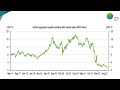
- Title
- The road to COP27 In conversation with Yannick Glemarec Green Climate Fund
- Runtime
- 1:01:17
- Date posted
- 4 years ago
- Description
- Achieving the goals of the Paris Agreement requires huge investment in emerging markets and developing countries, and the mobilization of climate finance is expected to be a headline issue at COP27 in Sharm-el Sheikh in November.
The multilateral climate funds, of which the Green Climate Fund (GCF) is the largest, play a significant role in the international climate finance architecture by using international public finance to support adaptation and mitigation projects in the Global South.
Shortly before COP27, Chatham House hosted an event with the GCF Executive Director, Yannick Glemarec, to discuss key trends in the provision of climate finance and the role of GCF in meeting the Paris Agreement’s goals.
This event was part of the Waddesdon Club Webinar Series. The Waddesdon Club is a Chatham House initiative to encourage climate leadership in financial and economic policymaking. Since 2016, it has proved to be a highly successful forum for co...

- Title
- Protests sweep Iran, the legacy of invasion for Iraq
- Runtime
- 40:44
- Date posted
- 4 years ago
- Description
- In Iran, since September the country has been swept by thousands of women-led protests, demanding an end to the morality police and the even the fall of the Islamic Republic. Meanwhile at Chatham House this week, we hosted our long-awaited Iraq conference, which delved heavily into the multiple challenges facing Iraq two decades on from the invasion that toppled Saddam Hussein.
Joining Bronwen Maddox on the podcast this week are Dr Sanam Vakil, the Deputy Director of our Middle East and North Africa programme, Dr Renad Mansour, a Senior Research Fellow, for the Middle East and North Africa Programme and the Project Director of our Iraq Initiative and Sanya Burgess, a digital investigations journalist with Sky News.
Read our expertise:
Iraq initiative conference 2022
The Sadrist movement in Iraq
Iran protests highlight its crisis of legitimacy
Subscribe to Independent Thinking wherever you ...

- Title
- What is deglobalization? | Explainer | Chatham House
- Runtime
- 6:42
- Date posted
- 4 years ago
- Description
- What is meant by deglobalization, what does it mean for efforts to address global challenges, and are there any benefits to having a less globalized world?
Read the full article here: https://www.chathamhouse.org/2021/10/what-deglobalization
Script by Jon Wallace, Digital Content Manager, Digital Transformation.

- Title
- Iraq conference 2022: Session 5: In conversation with HE Dr Ali Allawi
- Runtime
- 1:00:51
- Date posted
- 4 years ago
- Description
- Ali Allawi, the former deputy prime minister and minister of finance for Iraq speaks with Bronwen Maddox, director and chief executive of Chatham House.
The Chatham House Iraq Initiative Conference 2022 brings together policymakers, analysts, academics and activists in London and online to discuss the past year’s developments, and explore the potential trajectory of Iraq’s politics, security, and economy in the context of increasing uncertainty and instability.
This conference is part of Chatham House’s Iraq Initiative.
https://www.chathamhouse.org/about-us/our-departments/middle-east-and-north-africa-programme/iraq-initiative

- Title
- Iraq conference 2022: Session 4: The struggle for women’s rights in Iraq
- Runtime
- 1:18:10
- Date posted
- 4 years ago
- Description
- Iraqi women have been central to mass protests in recent years that have demanded change and an end to the post-2003 political order.
The patriarchal system in Iraq means that the institutions of the state – including government departments, the judiciary and security services – are disproportionately dominated by men, but take decisions on a daily basis that affect the lives of women.
The ruling parties have scored political points by taking advantage of the quota system that guarantees women at least 25% of parliamentary seats, and as such, parliament has failed to drive forward laws that improve the lives of women.
For instance, the anti-domestic violence bill has languished in parliament for over two years, largely because of the weakness of Iraq’s parliament and the barriers holding women back from more senior decision-making roles across the state.
This panel provides insight into the struggle for women’s rights in Ir...
- Title
- Iraq conference 2022: Session 3: Iraq in a transforming region
- Runtime
- 1:07:32
- Date posted
- 4 years ago
- Description
- At Mustafa Al Kadhimi’s September 2022 address to the UN General Assembly, the former prime minister put forward his vision of Iraq as a regional mediator. The historic 2021 Baghdad summit offered glimpses of this potential, as Baghdad brought together Iranian, Gulf, and other regional foreign ministers.
Kadhimi’s successor Mohammad Shia al-Sudani and newly-instated President Latif Rashid now face the challenge of continuing this progress. However, Iraq continues to be at the whim of its neighbours as, in recent months, both Turkey and Iran have launched attacks in its territory, ostensibly in the name of their own national security.
This panel provides insights into the relationship between Iraq and its neighbours and explores the potential for its role in a region going through a significant shift in its political and security dynamics.

- Title
- Iraq conference 2022: Session 2: Iraq’s climate crisis and its threat to stability
- Runtime
- 1:19:54
- Date posted
- 4 years ago
- Description
- COP27 in Egypt has put a spotlight on the MENA. In a region generally vulnerable to rising temperatures and extreme weather events, Iraq stands out as a country at particular risk.
Drought and desertification are causing increasingly frequent severe dust storms, formerly fertile agricultural land is becoming barren, and summer temperatures are reaching more than 50 degrees celsius.
Associated social challenges, including electricity and water shortages, illness due to heat and dust inhalation, and rapid rural to urban migration are driving unrest and contributing to social instability.
This panel provides insight into the implications for Iraq and its neighbours of discussions underway in Egypt, and discusses the environmental and social challenge facing the country as the climate crisis continues to escalate.

- Title
- Iraq conference 2022: Session 1: Iraq’s political crisis: The end or rebirth of the system?
- Runtime
- 1:15:53
- Date posted
- 4 years ago
- Description
- Iraq has a new government under prime minister Mohammad Shia al-Sudani. But it is missing a critical element: 2021 election winner Muqtada al-Sadr, who after failing to form a majority government has withdrawn from parliamentary politics and threatens to oppose any government assembled without him.
The Shia Coordination Framework, however, is moving forward with the major Sunni and Kurdish parties to form a government and negotiate for senior positions across the state. The country’s ethno-sectarian power-sharing system – muhasasa – has delivered a consensus government after every election since 2005, and yet this time, the rules of the game seemed strained.
All the while, the Iraqi people continue to suffer as the country’s myriad challenges go unaddressed.
This session explores the most recent political developments in Iraq and discuss what the last year’s turmoil means for the future of the post-2003 political consensus.

- Title
- The Commonwealth reimagined
- Runtime
- 1:04:32
- Date posted
- 4 years ago
- Description
- Ghana’s minister of foreign affairs, the Hon. Shirley Ayorkor Botchwey, discusses her vision for a modern Commonwealth and how the organization can evolve and match today’s demands from its members.
The death of HM Queen Elizabeth II has focused attention on the future of the Commonwealth. The Commonwealth is an expanding voluntary organisation of 56 independent countries in Africa, Asia, the Americas, Europe, and the Pacific.
Its appeal is increasingly beyond the circle of former British colonies – ex-French colonies Togo and Gabon officially joined in October 2022 and the ex-Portuguese colony, Angola, has applied. The Commonwealth Secretariat, established in 1965, is its main intergovernmental agency, which coordinates and carries out much of the Commonwealth’s work, supported by a network of more than 80 organisations.
King Charles III now heads the Commonwealth, which is focused on shared goals of prosperity, democracy and peace. Howev...

- Title
- What can we expect from Tokayev’s 'New Kazakhstan'?
- Runtime
- 3:09:01
- Date posted
- 4 years ago
- Description
- As the presidential election in Kazakhstan approaches, experts discuss the political and economic situation in the country.
Kazakhstan experienced social unrest in January 2022 with more than 200 people killed. The violence, while neither fully or widely understood, channelled broader discontent with the country’s inequalities and the influence of its ex-president Nursultan Nazarbayev.
Since then, Nazarbayev’s designated successor Kassym-Jomart Tokayev has been limiting the control of the Nazarbayev clan over the country’s resources. It remains to be seen whether the release of this grip will put an end to the cronyism of the Nazarbayev era or whether this is a prelude to Tokayev’s own consolidation of power.
The panel discusses the following questions:
How successful has Tokayev’s reform agenda been?
How has the political economy changed since the exit of President Nursultan Nazarbayev?
Can Kazakhstan present it...

- Title
- The US midterms surprise, COP27 commences
- Runtime
- 32:03
- Date posted
- 4 years ago
- Description
- In the United States, the midterm elections threw up some surprising results, with the anticipated Republican ‘red wave’ failing to materialise. Meanwhile at COP27 in Egypt, world leaders met in the first week of the summit. What did their presence achieve?
To find out, returning to the podcast this week with Bronwen Maddox are Leslie Vinjamuri, Director of our US and Americas Programme who was in Atlanta Georgia for the midterms and Anna Aberg Research Associate, Environment and Society Programme who is on the ground at COP27. Joining them are Peter Trubowitz, a Professor of International Relations, and Director of the Phelan US Centre at the London School of Economics and Antony Froggart, the Deputy Director and Senior Research Fellow of our Environment and Society Programme.
Read our expertise:
Democracy in America: Midterm elections and America’s global signal
America's vote shows a desire for stability and cal...

- Title
- Ukraine’s energy sector under Russian attack
- Runtime
- 5:52
- Date posted
- 4 years ago
- Description
- John Lough analyses Ukraine’s energy production and storage capabilities, prospects for surviving the winter, and how to rebuild the sector after the war.
The war has had a devastating effect on Ukraine’s energy sector, with electricity production falling by at least 30 per cent as of September 2022.
In the early days of the war, Russia attacked Ukraine’s biggest functioning refineries and oil storages in an effort to destroy its oil-refining capacity and stop fuel supplies to the Ukrainian army.

- Title
- The EU response to the war in Ukraine
- Runtime
- 6:53
- Date posted
- 4 years ago
- Description
- Kataryna Wolczuk analyses EU responses to the war in Ukraine, the level of assistance provided, and the next steps on the road to Ukraine’s membership of the EU.
Since the full-scale Russian invasion of Ukraine, the European Union (EU) has offered various forms of assistance, ranging from military to rebuilding schools.
But the key form of assistance which is really vital is macroeconomic assistance to help Ukraine survive the dramatic impact the war has had on the economy and the budget.
Ukraine was also granted a candidate status, giving the country a prospect of membership, with some conditions attached.
- Title
- Democracy in America: mid-term elections and America’s global signal
- Runtime
- 1:22:26
- Date posted
- 4 years ago
- Description
- As the Biden presidency reaches its halfway mark, how will the US electorate’s response impact international affairs?
During the 2020 campaign, Biden argued for America to re-engage with allies abroad, declaring at the Munich Security Conference in 2021 that 'America is back'. The November mid-term elections are a major milestone in post-Trump, as US voters provide a verdict on the Democrats' two years in office.
Despite its divisive and polarised political environment, US elections still hold significant outcomes for the rest of the world. A heavy focus on domestic issues will no doubt still influence American foreign policy, constraining or liberating the White House for the next two years.
When most Americans and the administration are focused on domestic issues, what are the likely outcomes for US foreign policy?
The panel of experts discuss:
What can be expected in the first major election since the Capit...

- Title
- What’s next in UK monetary policy?
- Runtime
- 1:58:11
- Date posted
- 4 years ago
- Description
- A panel of leading experts discuss the future direction of UK monetary policy.
The UK’s so-called ‘mini-budget’ on 23 September led to a severe market reaction and a wave of criticism at home and abroad that ultimately forced the sacking of the UK chancellor Kwasi Kwarteng and contributed to the downfall of Liz Truss’s government.
The new chancellor Jeremy Hunt is due to deliver what will essentially be an entirely new budget in mid-November, with a full assessment from the Office of Budget Responsibility. This will follow the meeting of the Bank of England’s interest rate setting Monetary Policy Committee (MPC) on Thursday 3 November.
Given rising inflationary pressures worldwide, it seems highly likely that the MPC will increase interest rates once again, but by how much and how far there will have to be an additional premium linked to the government’s fiscal strategy is far from clear.
On 4 November, Chatham Hou...

- Title
- American democracy in 2022: Trump, insurrection, and midterm elections
- Runtime
- 1:01:04
- Date posted
- 4 years ago
- Description
- How much has Donald Trump changed US politics and democracy, and will Trump and ‘Trumpism’ be more or less significant in the years ahead?
America’s democracy is divided, polarized and fragmenting. Inequality and internal division have a long history. But Trump’s lasting influence on the Republican party, and politics more broadly, continues to leave a mark. Repeated denials of President Joe Biden’s 2020 election win, wrapped in claims of electoral fraud, have eroded faith in the democratic institutions.
The memories of 6 January are still fresh, reminding all of the dangers posed by such actions. All told, America’s democracy has taken a beating in recent years.
To help make sense of the events over recent years and consequences for the coming mid-terms, Peter Baker and Susan Glasser (authors of The Divider: Trump in the White House 2017–2021) walk through in detail how the American politics of today has been arrived at.

- Title
- War on Ukraine the energy crisis and Europes impending long winter
- Runtime
- 58:50
- Date posted
- 4 years ago
- Description
- Since Russia’s invasion of Ukraine, the global community has been responding to significant price shocks, especially energy. As Europe heads into a particularly difficult winter, policymakers are grappling with the costs, both political and economic, required to make sure Russian energy blackmail does not succeed.
Retaining a unified front against Russia and providing continued support to the Ukrainian government will be great challenges. As the cold begins to bite, war fatigue may accelerate among the populations of Europe. Providing their people with adequate heat will not come cheaply for governments across the continent at a time of economic uncertainty.
At this critical moment of Russia’s invasion, experts will discuss:
Have European preparations been sufficient to stave off an energy crisis this winter?
What will be Russia’s reaction during and after the winter period, particularly if Europe avoids energy market failures?
...

- Title
- Lula wins in Brazil, US midterms approach
- Runtime
- 24:00
- Date posted
- 4 years ago
- Description
- In Brazil, former president Luiz Inácio Lula da Silva beat incumbent Jair Bolsonaro by the narrowest of margins. Meanwhile in the United States, the Democrats are fighting to retain the House and Senate from a resurgent Republican Party, still enamoured with Donald Trump. Joining Bronwen Maddox this week are Leslie Vinjamuri, Director of our US and Americas Programme, Christopher Sabatini, Senior Fellow on Latin America and Ana Yang, Executive Director of our Sustainability Accelerator.

- Title
- Black perspectives on International Relations
- Runtime
- 1:01:36
- Date posted
- 4 years ago
- Description
- As social boundaries change, the viewpoints of black academics, thought leaders and policymakers have grown in both influence and strength worldwide, challenging western and institutional norms.
However, many institutions and organizations, long established with the exclusion of black voices, have to adapt if there is to be greater inclusion and diversity of thought when tackling major global issues.
Growing reflection on the legacy of colonialism and the importance of the power of diversity may be needed for today’s problems.
The search for global racial equality has seen a growing commitment to ensuring the black experience is at the heart of geopolitical discussions.
This panel discussion looks at what changes are occurring now and how is the conversation shifting. It also examines the challenges posed by the increasing politicization of race and culture issues in the current political environment.
Key questions dis...

- Title
- Ukraine’s resilient wartime economy | Explainer | Chatham House
- Runtime
- 8:39
- Date posted
- 4 years ago
- Description
- Timothy Ash discusses the impact of Russia’s war on Ukraine’s economy, effectiveness of the Western financial assistance, and what the country needs to maintain economic stability.
In the face of war, Ukraine’s economy resilience has been remarkable. Despite a big hit on economic activity with various estimates of the loss of GDP being from 35-40 per cent, basic economic functions have been maintained.
The banking system has continued to work uninterrupted, alongside the infrastructure, railways, and telecommunications networks.

- Title
- Ukraine’s domestic politics amid the war | Explainer | Chatham House
- Runtime
- 9:32
- Date posted
- 4 years ago
- Description
- Orysia Lutsevych discusses the pressing political issues inside Ukraine, the popular support and challenges to Zelenskyy’s leadership, and what victory means for Ukrainians.
Since the start of Russia’s aggression, Ukraine has remained consolidated around the political and military goals to restore its territorial integrity and the legally recognised borders of 1991. All other divisions and internal discourses that took place before the war were put aside.
But Ukraine, a democracy with a vibrant civil society, is seeing a re-emergence of internal debate around security, economy, and the health of its democracy.