Centers for Disease Control and Prevention (CDC)
Anthrax surface sampling: How to sample with macrofoam swab on nonporous surfaces

- Title
- Anthrax surface sampling: How to sample with macrofoam swab on nonporous surfaces
- Runtime
- 6:00
- Date posted
- 3 years ago
- Description
- This training provides instructions for the collection of environmental Bacillus anthracis spores, or anthrax, from nonporous surfaces using macrofoam swabs. The collection method demonstrated in this video is based on the CDC/NIOSH surface sampling procedures for Bacillus anthracis spores from smooth, non-porous surfaces. This method is available on the NIOSH website at https://www.cdc.gov/niosh/topics/emres/surface-sampling-bacillus-anthracis.html.

- Title
- Partnership for Health-Medication Adherence Follow-Up Visit
- Runtime
- 6:50
- Date posted
- 3 years ago
- Description
- A telemedicine demonstration on adapting the Partnership for Health–Medication Adherence’s seven counseling steps for follow-up visits.
- Title
- Initial Partnership for Health-Medication Adherence Visit
- Runtime
- 9:24
- Date posted
- 3 years ago
- Description
- A demonstration of the Partnership for Health–Medication Adherence’s seven steps for conducting a brief adherence counseling conversation with a patient during their clinic checkup visit.

- Title
- Vaccines: A Critical Tool in the Fight Against Antimicrobial Resistance-AUG 2023
- Runtime
- 1:27:15
- Date posted
- 3 years ago
- Description
- Antimicrobial resistance is an urgent global public health threat. Prevention tools, such as vaccines, are an effective tool to slow the emergence and spread of antimicrobial resistance and to save lives in the United States and around the world. Vaccines can help prevent infections from happening in the first place, thereby reducing use or misuse of antibiotics. Vaccines can also reduce infection duration or severity and reduce transmission of antimicrobial-resistant pathogens. That’s why CDC and partners are committed to driving innovation to develop and deploy vaccines to help slow the emergence and spread of antimicrobial resistance. What you will learn:
• How vaccines can help slow the emergence and spread of antimicrobial resistance and can protect human health.
• How CDC is working to understand the potential impact of new vaccines through population-based surveillance and electronic health record data analyses characterizing the burden of key healthcare-a...

- Title
- Fundamentals of Handling Compressed Gas Cylinders Safely – Attaching the Regulator
- Runtime
- 2:07
- Date posted
- 3 years ago
- Description
- Knowing how to properly use compressed gas cylinders is essential for maintaining a safe laboratory. The regulator on a gas cylinder controls the flow and pressure of gas from the cylinder to your laboratory equipment. This training video shows a step-by-step tutorial for safely attaching a regulator to a compressed gas cylinder, including the proper tools and how to check for damage.
This video can also be viewed at
https://reach.cdc.gov/job-aids-resources

- Title
- Fundamentals of Handling Compressed Gas Cylinders Safely – Checking your System for Leaks
- Runtime
- 2:08
- Date posted
- 3 years ago
- Description
- Checking your compressed gas cylinder for leaks will help keep your laboratory safe and will also help maintain accurate laboratory procedures. This training video shows how to use a bubble test to check for leaks and changes in gas pressure at both the inlet and outlet valves on the regulator. Regularly checking for leaks and keeping a record of these system checks helps maintain a safe working environment in the laboratory.
This video can also be viewed at
https://reach.cdc.gov/job-aids-resources

- Title
- Excel Tool Tutorial #6: Thematic Analysis
- Runtime
- 11:07
- Date posted
- 3 years ago
- Description
- This is the final video in a tutorial series on using the CDC Excel Tool for Thematic Analysis. This video will walk you through the steps of conducting a thematic analysis using the tool and example data.
You can download a free copy of the tool and training materials here: https://www.cdc.gov/ncezid/resources/thematic-analysis.html
For any questions about the tool, please email us at textanalysistool@cdc.gov.

- Title
- Excel Tool Tutorial #5: PivotCharts and PivotTables
- Runtime
- 6:27
- Date posted
- 3 years ago
- Description
- This is video #5 in a tutorial series on using the CDC Excel Tool for Thematic Analysis. In this video you will be introduced to the basics of using PivotTables in Excel to summarize your coded text data in preparation for completing a thematic analysis in the next and final step.
You can download a free copy of the tool and training materials here: https://www.cdc.gov/ncezid/resources/thematic-analysis.html
For any questions about the tool, please email us at textanalysistool@cdc.gov.

- Title
- Excel Tool Tutorial #4: Coding Your Data
- Runtime
- 6:36
- Date posted
- 3 years ago
- Description
- This is video #4 in a tutorial series on using the CDC Excel Tool for Thematic Analysis. This video will review the process of applying codes from the pre-built coding schemes to segments of your text data.
You can download a free copy of the tool and training materials here: https://www.cdc.gov/ncezid/resources/thematic-analysis.html
For any questions about the tool, please email us at textanalysistool@cdc.gov.

- Title
- Excel Tool Tutorial #3: Preparing Your Text
- Runtime
- 6:24
- Date posted
- 3 years ago
- Description
- This is video #3 in a tutorial series on using the CDC Excel Tool for Thematic Analysis. In this video you will walk through the steps of formatting your text data so that you can copy it into the tool.
You can download a free copy of the tool and training materials here: https://www.cdc.gov/ncezid/resources/thematic-analysis.html
For any questions about the tool, please email us at textanalysistool@cdc.gov.

- Title
- Excel Tool Tutorial #2: Analysis Planning
- Runtime
- 6:36
- Date posted
- 3 years ago
- Description
- This is video #2 in a tutorial series on using the CDC Excel Tool for Thematic Analysis. This video will review the planning worksheet, the transcript log sheet and choosing a coding scheme in the tool.
You can download a free copy of the tool and training materials here: https://www.cdc.gov/ncezid/resources/thematic-analysis.html
For any questions about the tool, please email us at textanalysistool@cdc.gov.

- Title
- Excel Tool Tutorial #1: Introduction to the Tool
- Runtime
- 5:27
- Date posted
- 3 years ago
- Description
- Welcome to our series of videos on using the CDC created Excel tool for thematic analysis. This tool was created so that anyone working in a public health emergency can analyze text data without needing licensed software. This video #1 provides an overview of the tool. Subsequent videos will walk you through an example analysis showing you how to complete each of the steps needed to analyze your text data using the tool.
You can download a free copy of the tool and training materials here: https://www.cdc.gov/ncezid/resources/thematic-analysis.html
For any questions about the tool, please email us at textanalysistool@cdc.gov.

- Title
- PMGR: Death and Data: Why They Matter to the Public Health Practitioner
- Runtime
- 58:15
- Date posted
- 3 years ago
- Description
- The November 2023 Preventive Medicine Grand Rounds (PMGR) features Dr. Anindita Issa, Medical Officer in the National Center for Emerging and Zoonotic Infectious Diseases at the Centers for Disease Control and Prevention. In this presentation, Dr. Issa discusses the death investigation process and how mortality data are used by public health systems. She also talks about mortality data tracking challenges and efforts to improve the death investigation system. This includes discussion on data modernization efforts to promote data sharing and interoperability.
For continuing education (CE) credits, visit https://tceols.cdc.gov/; search for course WD4441-110123. CEs will be available after 12/5/2023 and expire 12/5/2025. Course access code: CDCPMRF
Audio Description Video: https://www.youtube.com/watch?v=rcRFsO5fuYg

- Title
- PMGR: Death and Data: Why They Matter to the Public Health Practitioner - Audio Description
- Runtime
- 1:21:32
- Date posted
- 3 years ago
- Description
- The November 2023 Preventive Medicine Grand Rounds (PMGR) features Dr. Anindita Issa, Medical Officer in the National Center for Emerging and Zoonotic Infectious Diseases at the Centers for Disease Control and Prevention. In this presentation, Dr. Issa discusses the death investigation process and how mortality data are used by public health systems. She also talks about mortality data tracking challenges and efforts to improve the death investigation system. This includes discussion on data modernization efforts to promote data sharing and interoperability.
For continuing education (CE) credits, visit https://tceols.cdc.gov/; search for course WD4441-110123. CEs will be available after 12/5/2023 and expire 12/5/2025. Course access code: CDCPMRF

- Title
- How to Plan for B. pseudomallei Exposure Cases - A Laboratory Perspective
- Runtime
- 50:01
- Date posted
- 3 years ago
- Description
- This presentation describes the role of laboratory professionals in detecting B. pseudomallei in clinical specimens and how to plan for possible exposure cases.
This video can also be viewed at
https://reach.cdc.gov/job-aids-resources

- Title
- CLIA Proficiency Testing (PT) Final Rule, CMS-3355-F
- Runtime
- 37:18
- Date posted
- 3 years ago
- Description
- This presentation provides information about the CLIA Proficiency Testing (PT) Final Rule which was published in the Federal Register Notice on July 11, 2022. This webinar describes changes to analytes (substances) used during PT that have been added and removed, the criteria for acceptable performance, and an overview of PT program administrative processes.
This video can also be viewed at
https://reach.cdc.gov/job-aids-resources

- Title
- Developing and Implementing an Individualized Quality Control Plan
- Runtime
- 55:37
- Date posted
- 3 years ago
- Description
- This webinar focuses on the development and implementation of an individualized quality control plan. You will learn to recognize common sources of laboratory error, to identify the Clinical Laboratory Standards Institute Evaluation Protocol number 23 guideline as a resource for risk management and building an Individualized Quality Control Plan, and to acknowledge the variety of engineered control processes.

- Title
- Oregon State Public Health Laboratory Shares Lessons Learned from Its Newborn Screening Program
- Runtime
- 1:00:32
- Date posted
- 3 years ago
- Description
- This OneLab Network event provides an overview of the newborn screening system and how the state of Oregon has advanced its newborn screening work to improve health outcomes in babies across the state.

- Title
- HEADS UP to Athletic Trainers: Farewell (With Audio Description)
- Runtime
- 0:48
- Date posted
- 3 years ago
- Description
- The HEADS UP to Athletic Trainers: Online Concussion Training shows ways athletic trainers can improve concussion education, prevention, and management—from concussion foundations to stakeholder education, and from implementing safety and response plans to ongoing concussion care. This training was developed through a partnership between the Centers for Disease Control and Prevention (CDC) and the National Athletic Trainers’ Association (NATA) to share the latest guidance on concussion prevention management. Learn more: https://www.cdc.gov/headsup/

- Title
- Don’t be that person—wash your hands
- Runtime
- 0:22
- Date posted
- 3 years ago
- Description
- Norovirus germs can spread easily when you don’t wash your hands

- Title
- Protect the health of your everything with recommended vaccines
- Runtime
- 0:31
- Date posted
- 3 years ago
- Description
- When your loved ones are everything, their health is everything. Get recommended vaccines and take everyday steps to protect you and yours from the worst of flu, COVID-19, and RSV this fall and winter virus season. Learn more by visiting https://bit.ly/40GpDd7
- Title
- How to remove a tick
- Runtime
- 1:00
- Date posted
- 3 years ago
- Description
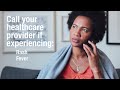
- Tick bites can make people sick. If you find a tick attached to your skin, remove the tick as soon as possible. Use clean, fine-tipped tweezers to grasp the tick as close to the skin’s surface as possible. Pull upward with steady even pressure. After removing the tick, clean the bite area and your hands with rubbing alcohol or soap and water. Learn more: https://www.cdc.gov/ticks/removing_a_tick.html
- Title
- Transforming Health & Safety Sensor Data into Information and Action: Heat Stress/Strain
- Runtime
- 1:29:26
- Date posted
- 3 years ago
- Description
- A recording of a webinar held July 25, 2023, by the NIOSH Center for Direct Reading and Sensor Technologies. The webinar features three speakers and a round table discussion at the end. Topic: heat stress and heat strain – a common occupational hazard in environments like mining, construction, manufacturing, and oil and gas extraction. Some occupational health and safety professionals may need to regularly address heat stress in the workplace and monitor symptoms of heat strain among workers. The Center promotes the knowledgeable adoption of advanced monitoring methodologies to prioritize workers’ occupational health, safety, and wellbeing. Advanced monitoring technologies generate large quantities of data at a high velocity, from different sources and of varying quality. These different aspects of the data require professionals to engage in transforming sensor data into usable information, knowledge, and decision making to achieve the best value in health and safety. Audience: Pro...

- Title
- Jack of All Trades, Master of None: One State Dental Director's Perspective
- Runtime
- 1:29:08
- Date posted
- 3 years ago
- Description
- Dr. Harry Goodman's presentation covers three main objectives. Firstly, participants will develop an understanding of the ASTDD competency domains and the different levels associated with state dental directors and programs. Secondly, the presentation aims to raise awareness regarding the core public health principles and the 10 essential public health services that are foundational for state dental directors and programs promoting oral health. Lastly, attendees will gain insights from a case study detailing how a state dental director effectively managed a public oral health crisis.

- Title
- Social Network Strategy: Orientation and Coaching Session Demonstration
- Runtime
- 10:37
- Date posted
- 3 years ago
- Description
- Social Network Strategy (SNS) is an evidence-supported approach to identify, engage and motivate people with undiagnosed HIV infection to accept HIV testing. SNS is based on the underlying principles that people in the same social network share the same behaviors that increase the chances of getting or transmitting HIV, and, in addition, that people in the same social network know and trust each other.
This video demonstrates the orientation and Coaching Session between an SNS Manger and Recruiter, following the Coaching Session guide that can be found in the Participant Manual. The goal of the video is to show providers how to conduct an orientation and how to implement an SNS Coaching Session with fidelity. The video demonstrates how SNS Managers can orientate Recruiters and how to come up with a plan on how to approach their Network Associates to bring them in for HIV testing.
- Title
- Routine Microscopy – Wet Mount
- Runtime
- 3:04
- Date posted
- 3 years ago
- Description
- Demonstration of how to perform a wet mount using a bright-field microscope and the proper equipment.
This video can also be viewed at
https://reach.cdc.gov/job-aids-resources

- Title
- Routine Microscopy – KOH Preparation
- Runtime
- 2:16
- Date posted
- 3 years ago
- Description
- Demonstration of how to perform a potassium hydroxide or, KOH preparation, for detecting the presence of yeast in a specimen under a microscope.
This video can also be viewed at
https://reach.cdc.gov/job-aids-resources

- Title
- Routine Microscopy – India Ink
- Runtime
- 1:51
- Date posted
- 3 years ago
- Description
- Demonstration of the proper technique for performing an India ink stain.
This video can also be viewed at
https://reach.cdc.gov/job-aids-resources

- Title
- Routine Microscopy – Gram Stain Procedure
- Runtime
- 2:55
- Date posted
- 3 years ago
- Description
- Demonstration of performing a gram stain procedure following the American Society of Microbiology’s Manual of Clinical Microbiology Procedures.
This video can also be viewed at
https://reach.cdc.gov/job-aids-resources

- Title
- Routine Microscopy – Direct Smear
- Runtime
- 2:32
- Date posted
- 3 years ago
- Description
- Demonstration of performing a direct smear from a specimen in the last step for culturing microorganisms.
This video can also be viewed at
https://reach.cdc.gov/job-aids-resources

- Title
- Introduction to Social Media Platforms, Strategy, and Analytics
- Runtime
- 43:41
- Date posted
- 3 years ago
- Description
- This webinar introduces social media platforms, as well as discuss best practices, goal setting, and platform analytics.

- Title
- Help keep yourself and others safe from overdose (:30)
- Runtime
- 0:31
- Date posted
- 3 years ago
- Description
- Some things in life mix well; like peanut butter and jelly. Others don’t. Mixing drugs, including drugs and alcohol, and medications your doctor prescribed, can put you at a greater risk of an overdose. Over 50% of overdose deaths involve multiple drugs. Carrying naloxone and administering it if you think someone is overdosing is a great way to help keep yourself and the people around you safe. And if you think someone’s in danger, always call 911. Find out more about specific risks of mixing certain drug combination and the signs of an overdose at cdc.gov/stopoverdose.

- Title
- CDC Signos Vitales: Los trabajadores de la salud enfrentan una crisis de salud mental
- Runtime
- 3:01
- Date posted
- 3 years ago
- Description
- Los trabajadores de la salud enfrentaron exigencias abrumadoras y niveles críticos de agotamiento (o burnout, en inglés) aun antes de la pandemia de COVID-19, la cual trajo todavía más factores estresantes. Ahora, los trabajadores de la salud están teniendo una crisis de salud mental, con reportes de agotamiento y mala salud mental a niveles más altos que antes de la pandemia. Para obtener más información, visite https://www.cdc.gov/spanish/mediosdecomunicacion/comunicados/d_vs_trabajadores-salud_102423.html.

- Title
- How Will the National Firefighter Registry for Cancer Protect My Data?
- Runtime
- 1:39
- Date posted
- 3 years ago
- Description
- The NIOSH National Firefighter Registry (NFR) for Cancer program is excited to share this video on how the NFR will protect firefighters’ data. More information about the NFR is available at http://www.cdc.gov/nfr

- Title
- How the National Firefighter Registry for Cancer Works
- Runtime
- 2:49
- Date posted
- 3 years ago
- Description
- The NIOSH National Firefighter Registry (NFR) for Cancer program is excited to share this video on how the NFR works and how to enroll. More information about the NFR is available at http://www.cdc.gov/nfr

- Title
- What is the National Firefighter Registry for Cancer?
- Runtime
- 1:26
- Date posted
- 3 years ago
- Description
- The National Firefighter Registry (NFR) for Cancer program is excited to share this video with background information on the NFR. You can find more information about the NFR at http://www.cdc.gov/nfr

- Title
- Join the National Firefighter Registry for Cancer
- Runtime
- 2:16
- Date posted
- 3 years ago
- Description
- Fire service members discuss why joining the National Firefighter Registry (NFR) for Cancer is important. More information about the NFR is available at http://www.cdc.gov/nfr

- Title
- Join the National Firefighter Registry for Cancer: Bryan Frieders
- Runtime
- 0:57
- Date posted
- 3 years ago
- Description
- Bryan Frieders discusses why joining the National Firefighter Registry (NFR) for Cancer is important. More information about the NFR is available at http://www.cdc.gov/nfr

- Title
- Join the National Firefighter Registry for Cancer: Jeff Pauley
- Runtime
- 1:12
- Date posted
- 3 years ago
- Description
- Jeff Pauley discusses why joining the National Firefighter Registry (NFR) for Cancer is important. More information about the NFR is available at http://www.cdc.gov/nfr

- Title
- Join the National Firefighter Registry for Cancer: Regina Wilson
- Runtime
- 1:16
- Date posted
- 3 years ago
- Description
- Regina Wilson discusses why joining the National Firefighter Registry (NFR) for Cancer is important. More information about the NFR is available at http://www.cdc.gov/nfr

- Title
- Join the National Firefighter Registry for Cancer: Manuel Fonseca
- Runtime
- 1:17
- Date posted
- 3 years ago
- Description
- Manuel Fonseca discusses why joining the National Firefighter Registry (NFR) for Cancer is important. More information about the NFR is available at http://www.cdc.gov/nfr

- Title
- Join the National Firefighter Registry for Cancer: Judy Smith Thill
- Runtime
- 1:06
- Date posted
- 3 years ago
- Description
- Judy Smith Thill discusses why joining the National Firefighter Registry (NFR) for Cancer is important. More information about the NFR is available at http://www.cdc.gov/nfr

- Title
- SMART Work Design for Healthy and Productive Work
- Runtime
- 59:07
- Date posted
- 3 years ago
- Description
- This webinar is part of the National Institute for Occupational Safety and Health (NIOSH) Total Worker Health Webinar Series. We hosted Professor Sharon Parker, PhD, Director of the Centre for Transformative Work Design at Curtin University. She presented her work developing the S.M.A.R.T. work design model, a framework to help design meaningful and motivating work. The presentation covers why work design is critical to worker well-being and how you can incorporate the model into your organization.
The recording includes a short Q&A discussion with the audience. Free continuing education is available.
Instructions for Obtaining Continuing Education (CE)
To receive continuing education (CE) for WD4530-101823- NIOSH Total Worker Health® Webinar Series - SMART Work Design for Healthy and Productive Work - October 18, 2023 (Web on Demand), please visit CDC TRAIN (https://www.train.org/cdctrain/welcome) and search for the course in the Cours...

- Title
- 5 Things to Know About HIV Today! Demetre Daskalakis, MD, MPH
- Runtime
- 2:22
- Date posted
- 3 years ago
- Description
- Dr. Demetre shares 5 key facts about HIV today. One, the meaning of U=U. Two, covers the options available for HIV treatment. Three, talks about pre-exposure prophylaxis or PrEP. Four, informs of post-exposure prophylaxis or PEP. Five, provides information on HIV testing.
This video is a joint production of KFF's Greater Than HIV and CDC's Let's Stop HIV Together.

- Title
- 5 Things People Get Wrong About HIV - Demetre Daskalakis, MD, MPH
- Runtime
- 1:53
- Date posted
- 3 years ago
- Description
- Dr. Demetre addresses 5 misconceptions people usually get wrong about HIV. You are not able to get HIV from everyday items or casual contact. People whose viral load is undetectable cannot transmit to their sexual partners. The best way to control your HIV is through antiretroviral medications. Having a lot of sexual partners is not the reason people get HIV, it is exposure to HIV. Lastly, if you think you may have been exposed to HIV, ask to be tested.
This video is a joint production of KFF's Greater Than HIV and CDC's Let's Stop HIV Together.

- Title
- Let's Talk About HIV Treatment - Demetre Daskalakis, MD, MPH
- Runtime
- 1:31
- Date posted
- 3 years ago
- Description
- Dr. Demetre talks about the advances of HIV treatment. When taking HIV treatment as prescribed, you can reach an undetectable level, which prevents the transmission of HIV to your sexual partners.
This video is a joint production of KFF's Greater Than HIV and CDC's Let's Stop HIV Together.

- Title
- Let's Talk About HIV Testing – Frequency - Demetre Daskalakis, MD, MPH
- Runtime
- 0:46
- Date posted
- 3 years ago
- Description
- Dr. Demetre speaks about how HIV testing frequency depends on your lifestyle. People should get tested once a year but gay, bisexual, other men who have sex with men, transgender individuals are recommended to test up to once every 3-6 months. Talking to your medical provider is the best way to stay on top of your health.
This video is a joint production of KFF's Greater Than HIV and CDC's Let's Stop HIV Together.

- Title
- Community Health Workers Take Swift Action on Marburg Virus Disease Alert in Tanzania
- Runtime
- 2:15
- Date posted
- 3 years ago
- Description
- On March 21, 2023, Tanzania government officials declared the first Marburg Virus Disease (MVD) outbreak within the Kagera region. CDC’s Tanzania country office worked with partners to immediately offer support in surveillance, epidemiology, and data management. In partnership with Amref, CDC shares a remarkable story of a dedicated Community Health Worker (CHW) from Tanzania, who played a significant role in reporting the MVD outbreak in her community. The courageous actions of the CHW triggered a rapid response from the Ministry of Health in Tanzania, leading to preventing the spread of the virus worldwide.
Transcript: https://www.cdc.gov/globalhealth/video/transcripts/ghsa-project-mvd-video_transcript.html

- Title
- EH Nexus Webinar - August 29, 2023
- Runtime
- 1:01:10
- Date posted
- 3 years ago
- Description
- On Tuesday, August 29, 2023, 1:00–2:00 p.m. E.T., subject matter experts from the Centers for Disease Control and Prevention’s (CDC) Division of Environmental Health Science and Practice (DEHSP) and Division of Cancer Prevention and Control (DCPC) served as presenters for this webinar.
During this webinar, you will learn about
- The need for sub-county data along with challenges of working with sub-county data,
- Systematic solutions for handling sub-county data,
- The process for testing and displaying sub-county data, with examples focusing on cancer registry data, and
- How to access sub-county data through the Tracking Network and how to share sub-county data using various tools
Angela Werner, PhD, MPH (she/her)
Lead Data Scientist
DEHSP/CDC
Aaron Vinson, MPH (he/him)
Health Scientist
Hite Consulting
DEHSP/CDC
Jane Henley, MSPH (she/hers)
Epi...

- Title
- Fundamentals of Laboratory Safety: Safety Resources Scenario
- Runtime
- 0:52
- Date posted
- 3 years ago
- Description
- Wearing proper personal protective equipment (PPE), like a laboratory coat, can help protect employees from incidents like spilling or splashing biological or chemical hazards on themselves while performing procedures in the laboratory. In this video, a laboratory technician notices that a fellow employee is wearing their laboratory coat outside the laboratory in the office area. The technician worries that this practice could result in an exposure incident. What safety resources are available to help the technician identify whether this practice is an incident or near miss and direct them on how to address the situation?
This video can also be viewed at
https://reach.cdc.gov/job-aids-resources