The Justice Department
Janet Lauritsen (2 of 3): Why is it so difficult to predict the likelihood of repeat victimization?

- Title
- Janet Lauritsen (2 of 3): Why is it so difficult to predict the likelihood of repeat victimization?
- Runtime
- 1:19
- Date posted
- 15 years ago
- Description
- I think one thing that would be a mistake is for victim service providers who provide mental health services to do so with the expectation that it will necessarily reduce the risk of revictimization. I don't think such programs should be judged on that basis.
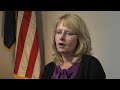
- Title
- Janet Lauritsen (1 of 3): What is the National Crime Victimization Survey?
- Runtime
- 1:36
- Date posted
- 15 years ago
- Description
- The National Crime Victimization Survey is a nationally representative survey of victims in the United States that's designed to provide estimates of victimization that are representative of the population for persons ages 12 and older in the U.S. The survey interviews people for a maximum of three and a half years at six-month intervals, so the same person is interviewed multiple times.

- Title
- Eric Martin (5 of 5): What will the site evaluations of HOPE consist of?
- Runtime
- 1:45
- Date posted
- 15 years ago
- Description
- The evaluation will consist of randomized control trials at each of the four sites. Approximately 200 probationers will be assigned the HOPE treatment condition and 200 probationers will remain what we call "probation as usual." They just receive regular probation.
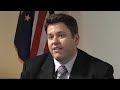
- Title
- Eric Martin (1 of 5) Testing What Works in Probation: Replicating HOPE - What is HOPE?
- Runtime
- 1:24
- Date posted
- 15 years ago
- Description
- The Hawaii HOPE Program started in 2004. Judge Steven Alm and Chief Probationer Cheryl Inouye created the program because they saw the same offenders coming before them in the court for the same offenses, mostly drug-involved offenses, missed appointments, dirty urine tests, not meeting with their counselor if they're in some kind of treatment program.

- Title
- Eric Marting (2 of 5): What were the initial findings of the HOPE evaluation?
- Runtime
- 0:38
- Date posted
- 15 years ago
- Description
- The initial HOPE evaluation, conducted in part by NIJ, looked at drug-involved offenders who were in the HOPE program. They chose to only focus on drug-involved offenders just to make the comparisons between the offenders easier. HOPE is more than just a program for drug-involved offenders.

- Title
- Eric Martin (4 of 5): Is there variation between the Hawaii HOPE program and the evaluation sites?
- Runtime
- 1:20
- Date posted
- 15 years ago
- Description
- When we had to translate the components of Hawaii HOPE to the four jurisdictions on the U.S. mainland, there was quite a bit of variation. As anyone who's familiar with the system, probation is under the sheriff's office in some localities; it's under the department of corrections in other localities. The courts may or may not have the authority to do certain things. There may be caps on the amount of time you can give a probationer without revoking the probation.

- Title
- Eric Martin (3 of 5): What is NIJ's current involvement with HOPE?
- Runtime
- 0:43
- Date posted
- 15 years ago
- Description
- NIJ is actually engaged currently in two HOPE projects. One is the HOPE demonstration field experiment with our partner BJA. We're replicating the HOPE program in four different sites on the U.S. mainland.

- Title
- U.S. Department of Justice's Request for Research on Indigent Defense
- Runtime
- 9:08
- Date posted
- 15 years ago
- Description
- Our mission is to help the justice system efficiently deliver outcomes for individuals regardless of wealth or status, and a necessary component of our work is strengthening and improving indigent defense. How we do that is of course varied, but one important aspect is the research that's needed to identify solutions to indigent defense, and that's why the solicitation is so important.

- Title
- Redonna Chandler (1 of 3): What is Addiction?
- Runtime
- 2:41
- Date posted
- 15 years ago
- Description
- Addiction is fundamentally a brain disease. It results in changes that occur within the structure of the brain that are manifested in a functional way, and behaviors, the hallmark feature of which is the compulsive seeking and use of drugs in spite of negative consequences. Addiction occurs because of repeated exposure of the brain to different addictive substances.

- Title
- Redonna Chandler (2 of 3): The Relationship Between Drugs and Crime
- Runtime
- 2:05
- Date posted
- 15 years ago
- Description
- Lots of research shows that drugs and crime are linked, that there are many individuals in the criminal justice system that have substance abuse problems. In fact, over half of those who are involved in federal prisons, state prisons, and jails report regular drug use, and when you look at the diagnosis of substance abuse disorders specifically, you find that within incarcerated populations, a high percentage meet the diagnostic criteria for substance abuse disorders.

- Title
- Redonna Chandler (3 of 3): Drug Abuse as a Chronic Condition
- Runtime
- 3:06
- Date posted
- 15 years ago
- Description
- We know from science that addiction is a chronic condition similar to other chronic conditions, like diabetes, asthma, and hypertension. And what that means is that all of these chronic conditions really require a long-term focus for treatment, where you have individuals who may need multi-pronged interventions—they may benefit from medication as well as behavioral interventions—and they may need multiple courses of treatment over time.
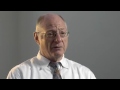
- Title
- Geoffrey Alpert (4 of 4): Lessons for Law Enforcement Executives About Use of Force
- Runtime
- 1:43
- Date posted
- 15 years ago
- Description
- I think lesson number one is we've got to protect our officers and we've got to provide them with the tools and the training to use those tools so they can reduce any kind of injury as much as possible. But that doesn't mean giving them free rein to injure or abuse citizens and I think they owe the citizens that type of response where they're using the least amount of force necessary.

- Title
- Geoffrey Alpert (3 of 4): Training Is Key to Knowing When to Use a CED (e.g., Taser)
- Runtime
- 1:22
- Date posted
- 15 years ago
- Description
- I think officers have to be trained to understand what they're facing. How do you deal with a threat? They've all been through defensive tactics. They've all been through learning how to fight and learning how to use their hands and be able to control a suspect. They've got to understand that the CED is a tool that they bring out when those don't work or when there's a chance that they'll get hurt if the other person is already being aggressive.

- Title
- Geoffrey Alpert (2 of 4): Proper Use of CEDs (e.g., Tasers)
- Runtime
- 2:44
- Date posted
- 15 years ago
- Description
- A conducted energy device is a wonderful tool for law enforcement if used properly. Having been hit with one, I can tell you it's very painful. It takes away your muscle control. If used properly and when officers are trained to cuff someone under power, if they're trained to reevaluate once they've used it to see if it's really effective and what's next, again it's an innovation in law enforcement that is really a positive one to reduce injuries to officers and the suspects.
Now, the problem comes in when these devices are used improperly, when they're used to punish someone, when they're used when they don't have to.

- Title
- Geoffrey Alpert (1 of 4): What Is Use of Force?
- Runtime
- 1:43
- Date posted
- 15 years ago
- Description
- Dr. Alpert discusses the importance of police use of force policies and procedures

- Title
- 2011 National Intertribal Youth Summit (NIYS) in Santa Fe, New Mexico
- Runtime
- 7:52
- Date posted
- 15 years ago
- Description
- The Eight Minute Highlight Video from the 2011 National Intertribal Youth Summit (NIYS) in Santa Fe, New Mexico includes images and activities of the week-long event. Youth, government officials, sports and entertainment leaders, and non-profit representatives who attended the NIYS speak about its impact and future work to be done with and for American Indian and Alaskan Native Youth.

- Title
- Translational Criminology: A Message from the Director
- Runtime
- 5:05
- Date posted
- 15 years ago
- Description
- This is the third in a series of conversations with John Laub, Ph.D., Director of the National Institute of Justice. Dr. Laub dicusses "Fusing NIJ's Dual Mission Through Translational Criminology," "Questions That Guide NIJ's Approach to Translational Criminology" and "The Role of 'Trust' in Translational Criminology"

- Title
- Body Armor Video for Procurement
- Runtime
- 11:09
- Date posted
- 15 years ago
- Description
- When it comes to saving an officer's life, nobody can hold back. NIJ's National Law Enforcement and Corrections Technology Center has created a video that can help procurement officials find the right vest for the right officer.

- Title
- Body Armor Video for Officers
- Runtime
- 19:18
- Date posted
- 15 years ago
- Description
- Law Enforcement officers need proper equipment when they go to work. NIJ and National Law Enforcement Technology Center work together to ensure that body armor standards help officers do their jobs. A new video is available for officers.

- Title
- Video Evidence from U.S. vs. Umar Farouk Abdulmutallab: 200 grams
- Runtime
- 0:53
- Date posted
- 15 years ago
- Description
- Video Evidence from U.S. vs. Umar Farouk Abdulmutallab. Demonstrating 200 grams of PETN on Aluminium.

- Title
- Philip Cook (3 of 3): The Role of Private Action in Crime Reduction
- Runtime
- 2:57
- Date posted
- 15 years ago
- Description
- This interview followed the presentation "Economical Crime Control: Perspectives from Both Sides of the Ledger" given as part of NIJ's Research for the Real World Seminar Series by Philip J. Cook, PhD, ITT/Sanford Professor of Public Policy, Professor of Economics and Sociology, Duke University.

- Title
- Philip Cook (2 of 3): Crime Control Today: The Good Guy/Bad Guy Framework
- Runtime
- 5:10
- Date posted
- 15 years ago
- Description
- This interview followed the presentation "Economical Crime Control: Perspectives from Both Sides of the Ledger" given as part of NIJ's Research for the Real World Seminar Series by Philip J. Cook, PhD, ITT/Sanford Professor of Public Policy, Professor of Economics and Sociology, Duke University.

- Title
- Philip Cook (1 of 3): The Normative Economistic Framework of Crime Control
- Runtime
- 2:15
- Date posted
- 15 years ago
- Description
- This interview followed the presentation "Economical Crime Control: Perspectives from Both Sides of the Ledger" given as part of NIJ's Research for the Real World Seminar Series by Philip J. Cook, PhD, ITT/Sanford Professor of Public Policy, Professor of Economics and Sociology, Duke University.

- Title
- Translating Science: A Town Hall on the Challenges (1 of 9), Introduction
- Runtime
- 5:45
- Date posted
- 15 years ago
- Description
- At the 2011 NIJ Conference we brought together the leaders of several federal science agencies for a discussion about the challenges of using scientific discoveries to shape policy and practice. This video is the first of nine showing the entire plenary session.
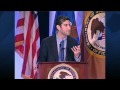
- Title
- Translating Science: A Town Hall on the Challenges (2 of 9), David Chambers
- Runtime
- 7:26
- Date posted
- 15 years ago
- Description
- At the 2011 NIJ Conference we brought together the leaders of several federal science agencies for a discussion about the challenges of using scientific discoveries to shape policy and practice. This video features David Chambers, Ph.D., Associate Director for Dissemination and Implementation Research, National Institute of Mental Health, U.S. Department of Health and Human Services and is the second of nine showing the entire session.

- Title
- Translating Science: A Town Hall on the Challenges (3 of 9), John Easton
- Runtime
- 8:30
- Date posted
- 15 years ago
- Description
- At the 2011 NIJ Conference we brought together the leaders of several federal science agencies for a discussion about the challenges of using scientific discoveries to shape policy and practice. This video is the first of nine showing the entire plenary session. This video features John Easton, Ph.D., Director, Institute of Education Sciences, U.S. Department of Education, and is the third of nine showing the entire session.

- Title
- Translating Science: A Town Hall on the Challenges (5 of 9), Linda Mellgren
- Runtime
- 13:14
- Date posted
- 15 years ago
- Description
- At the 2011 NIJ Conference we brought together the leaders of several federal science agencies for a discussion about the challenges of using scientific discoveries to shape policy and practice. This video features Linda Mellgren, Senior Social Science Analyst, Office of the Assistant Secretary for Planning and Evaluation, U.S. Department of Health and Human Services, and is the fifth of nine showing the entire session.
- Title
- Translating Science: A Town Hall on the Challenges (4 of 9), Patrick Gallagher
- Runtime
- 5:44
- Date posted
- 15 years ago
- Description
- At the 2011 NIJ Conference we brought together the leaders of several federal science agencies for a discussion about the challenges of using scientific discoveries to shape policy and practice. This video features Patrick Gallagher, Ph.D., Director, National Institute of Standards and Technology, and is the X of nine showing the entire session.

- Title
- Attorney General Holder Addresses the 2011 NIJ Conference
- Runtime
- 10:51
- Date posted
- 15 years ago
- Description
- We now find ourselves in the midst of what some are calling a "golden age of research." That's certainly true in today's Justice Department. In fulfilling our most important responsibility — that is protecting the American people — we are committed to identifying and to implementing evidence-based solutions; an approach that allows us to be tough and — yes, as Laurie said, and I'll say it again — "smart on crime."

- Title
- Translating Science: A Town Hall on the Challenges (7 of 9), Q&A cont.
- Runtime
- 5:26
- Date posted
- 15 years ago
- Description
- At the 2011 NIJ Conference we brought together the leaders of several federal science agencies for a discussion about the challenges of using scientific discoveries to shape policy and practice. This video features the panel addressing the question "How do we prepare for the future?"

- Title
- Translating Science: A Town Hall on the Challenges (6 of 9), Q&A
- Runtime
- 1:00
- Date posted
- 15 years ago
- Description
- At the 2011 NIJ Conference we brought together the leaders of several federal science agencies for a discussion about the challenges of using scientific discoveries to shape policy and practice.

- Title
- Translating Science: A Town Hall on the Challenges (8 of 9), Q&A cont.
- Runtime
- 2:40
- Date posted
- 15 years ago
- Description
- At the 2011 NIJ Conference we brought together the leaders of several federal science agencies for a discussion about the challenges of using scientific discoveries to shape policy and practice. This video features the panel addressing the question "Do you have any advice for how to take a successful, locally-based program to scale nationally?"

- Title
- Translating Science: A Town Hall on the Challenges (9 of 9), Q&A cont.
- Runtime
- 1:54
- Date posted
- 15 years ago
- Description
- At the 2011 NIJ Conference we brought together the leaders of several federal science agencies for a discussion about the challenges of using scientific discoveries to shape policy and practice. This video features the panel addressing the question "How do we educate elementary school children"

- Title
- Translational Criminology and the Science of Community (10 of 11), Edward Davis
- Runtime
- 16:59
- Date posted
- 15 years ago
- Description
- Research shows that healthy communities share basic values: neighbors look out for one another and social connections are strong. A panel at the 2011 NIJ Conference addresses this issue. This video features Edward Davis, Police Commissioner, Boston Police Department, MA, and is the tenth of eleven showing the entire session.

- Title
- Translational Criminology and the Science of Community (1 of 11), Introduction by John H. Laub
- Runtime
- 4:34
- Date posted
- 15 years ago
- Description
- Research shows that healthy communities share basic values: neighbors look out for one another and social connections are strong. A panel at the 2011 NIJ Conference addresses this issue. This video is the first of eleven showing the entire session.

- Title
- Translational Criminology and the Science of Community (11 of 11), Michael Davis
- Runtime
- 13:33
- Date posted
- 15 years ago
- Description
- Research shows that healthy communities share basic values: neighbors look out for one another and social connections are strong. A panel at the 2011 NIJ Conference addresses this issue. This video features Michael Davis, Chief of Police, Brooklyn Park Police Department, MN, and is the final of eleven showing the entire session.

- Title
- Translational Criminology and the Science of Community (2 of 11), Robert Sampson
- Runtime
- 9:01
- Date posted
- 15 years ago
- Description
- Research shows that healthy communities share basic values: neighbors look out for one another and social connections are strong. As part of a panel at the 2011 NIJ Conference, Robert J. Sampson, Henry Ford II Professor of the Social Sciences, Harvard University, addresses Lessons from Chicago and Beyond.

- Title
- Translational Criminology and the Science of Community (3 of 11), Robert Sampson cont.
- Runtime
- 4:19
- Date posted
- 15 years ago
- Description
- Research shows that healthy communities share basic values: neighbors look out for one another and social connections are strong. As part of a panel at the 2011 NIJ Conference, Robert J. Sampson, Henry Ford II Professor of the Social Sciences, Harvard University, addresses the Project on Human Development in Chicago Neighborhoods.
- Title
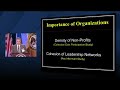
- Translational Criminology and the Science of Community (8 of 11), Robert Sampson cont.
- Runtime
- 3:34
- Date posted
- 15 years ago
- Description
- Research shows that healthy communities share basic values: neighbors look out for one another and social connections are strong. As part of a panel at the 2011 NIJ Conference, Robert J. Sampson, Henry Ford II Professor of the Social Sciences, Harvard University, addresses how organizations matter.
- Title
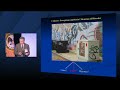
- Translational Criminology and the Science of Community (7 of 11), Robert Sampson cont.
- Runtime
- 2:37
- Date posted
- 15 years ago
- Description
- Research shows that healthy communities share basic values: neighbors look out for one another and social connections are strong. As part of a panel at the 2011 NIJ Conference, Robert J. Sampson, Henry Ford II Professor of the Social Sciences, Harvard University, addresses systematic social observation.

- Title
- Translational Criminology and the Science of Community (9 of 11), Robert Sampson cont.
- Runtime
- 2:56
- Date posted
- 15 years ago
- Description
- Research shows that healthy communities share basic values: neighbors look out for one another and social connections are strong. As part of a panel at the 2011 NIJ Conference, Robert J. Sampson, Henry Ford II Professor of the Social Sciences, Harvard University, concludes his address on Lessons from Chicago and Beyond.

- Title
- Translational Criminology and the Science of Community (4 of 11), Robert Sampson cont.
- Runtime
- 7:33
- Date posted
- 15 years ago
- Description
- Research shows that healthy communities share basic values: neighbors look out for one another and social connections are strong. As part of a panel at the 2011 NIJ Conference, Robert J. Sampson, Henry Ford II Professor of the Social Sciences, Harvard University, discusses collective efficacy.

- Title
- Translational Criminology and the Science of Community (5 of 11), Robert Sampson cont.
- Runtime
- 2:32
- Date posted
- 15 years ago
- Description
- Research shows that healthy communities share basic values: neighbors look out for one another and social connections are strong. As part of a panel at the 2011 NIJ Conference, Robert J. Sampson, Henry Ford II Professor of the Social Sciences, Harvard University, addresses Lessons from Chicago and Beyond.

- Title
- Translational Criminology and the Science of Community (6 of 11), Robert Sampson cont.
- Runtime
- 1:44
- Date posted
- 15 years ago
- Description
- Research shows that healthy communities share basic values: neighbors look out for one another and social connections are strong. As part of a panel at the 2011 NIJ Conference, Robert J. Sampson, Henry Ford II Professor of the Social Sciences, Harvard University, addresses the importance of culture.

- Title
- David Kirk (2 of 2): Did Residential Change in New Orleans Reduce Recidivism? - NIJ
- Runtime
- 2:15
- Date posted
- 15 years ago
- Description
- This interview followed the presentation "Going Home (or Not): How Residential Change Might Help Former Offenders Stay Out of Prison," given as part of NIJ's Research for the Real World Seminar Series by David Kirk, Assistant Professor, University of Texas at Austin.
The content presented in these videos results from NIJ-funded research, development and evaluation projects. The content is not intended to create, does not create, and may not be relied upon to create any rights, substantive or procedural, enforceable at law by any party in any matter civil or criminal. Opinions or points of view expressed in these videos represent those of the speakers and do not necessarily represent the official position or policies of the U.S. Department of Justice. Any products and manufacturers discussed in these videos are presented for informational purposes only and do not constitute product approval or enforcement by the U.S. Department of Justice.

- Title
- David Kirk (1 of 2): Did Residential Change in New Orleans Reduce Recidivism? - NIJ
- Runtime
- 2:40
- Date posted
- 15 years ago
- Description
- This interview followed the presentation "Going Home (or Not): How Residential Change Might Help Former Offenders Stay Out of Prison," given as part of NIJ's Research for the Real World Seminar Series by David Kirk, Assistant Professor, University of Texas at Austin.
The content presented in these videos results from NIJ-funded research, development and evaluation projects. The content is not intended to create, does not create, and may not be relied upon to create any rights, substantive or procedural, enforceable at law by any party in any matter civil or criminal. Opinions or points of view expressed in these videos represent those of the speakers and do not necessarily represent the official position or policies of the U.S. Department of Justice. Any products and manufacturers discussed in these videos are presented for informational purposes only and do not constitute product approval or enforcement by the U.S. Department of Justice.

- Title
- Michel Moore - Collaboration Between Researchers and Law Enforcement - NIJ
- Runtime
- 3:01
- Date posted
- 15 years ago
- Description
- "Collaboration Between Researchers and Law Enforcement Agencies"
Michel Moore, Director, Office of Special Operations, Los Angeles Police Department, Los Angeles, Calif.
NIJ Conference
June 2011
This interview was conducted at the 2011 NIJ Conference in Arlington, VA. Visit http://www.nij.gov/events/welcome.htm for more information.
The content presented in these videos results from NIJ-funded research, development and evaluation projects. The content is not intended to create, does not create, and may not be relied upon to create any rights, substantive or procedural, enforceable at law by any party in any matter civil or criminal. Opinions or points of view expressed in these videos represent those of the speakers and do not necessarily represent the official position or policies of the U.S. Department of Justice. Any products and manufacturers discussed in these videos are presented for informational purposes only and do not...

- Title
- John E. Shanks - Keeping Police Officers Safe on the Road - NIJ
- Runtime
- 2:05
- Date posted
- 15 years ago
- Description
- "Keeping Police Officers Safe on the Road"
John E. Shanks, National Law Enforcement Officers Memorial Fund
NIJ Conference
June 2011
This interview was conducted at the 2011 NIJ Conference in Arlington, VA. Visit http://www.nij.gov/events/welcome.htm for more information.
The content presented in these videos results from NIJ-funded research, development and evaluation projects. The content is not intended to create, does not create, and may not be relied upon to create any rights, substantive or procedural, enforceable at law by any party in any matter civil or criminal. Opinions or points of view expressed in these videos represent those of the speakers and do not necessarily represent the official position or policies of the U.S. Department of Justice. Any products and manufacturers discussed in these videos are presented for informational purposes only and do not constitute product approval or enforcement by the U.S. Departm...

- Title
- Edward Latessa - Crimesolutions.gov: "What Works" in Criminal Justice - NIJ
- Runtime
- 2:05
- Date posted
- 15 years ago
- Description
- "Crimesolutions.gov: "What Works" in Criminal Justice, Juvenile Justice and Crime Victim Services"
Edward Latessa, University of Cincinnati
NIJ Conference
June 2011
This interview was conducted at the 2011 NIJ Conference in Arlington, VA. Visit http://www.nij.gov/events/welcome.htm for more information.
The content presented in these videos results from NIJ-funded research, development and evaluation projects. The content is not intended to create, does not create, and may not be relied upon to create any rights, substantive or procedural, enforceable at law by any party in any matter civil or criminal. Opinions or points of view expressed in these videos represent those of the speakers and do not necessarily represent the official position or policies of the U.S. Department of Justice. Any products and manufacturers discussed in these videos are presented for informational purposes only and do not constitute product approval o...
- Title
- Patrick Gallagher - From Research Agencies to Policymakers and Practitioners - NIJ
- Runtime
- 2:44
- Date posted
- 15 years ago
- Description
- "Translating Science from Research Agencies to Policymakers and Practitioners"
Patrick Gallagher, Director, National Institute of Standards and Technology
NIJ Conference
June 2011
This interview was conducted at the 2011 NIJ Conference in Arlington, VA. Visit http://www.nij.gov/events/welcome.htm for more information.
The content presented in these videos results from NIJ-funded research, development and evaluation projects. The content is not intended to create, does not create, and may not be relied upon to create any rights, substantive or procedural, enforceable at law by any party in any matter civil or criminal. Opinions or points of view expressed in these videos represent those of the speakers and do not necessarily represent the official position or policies of the U.S. Department of Justice. Any products and manufacturers discussed in these videos are presented for informational purposes only and do not constitute pro...