The Atlantic
A Crisis for Democrats

- Title
- A Crisis for Democrats
- Runtime
- 30:48
- Date posted
- 2 years ago
- Description
- After his disastrous debate performance in June, President Biden faced calls from Democratic lawmakers and power brokers to step aside. But with the president firmly committed to staying in, what recourse does the party have? How would the Democratic Party replace the presumptive nominee? Would such an extreme step be possible? And would it ultimately help against Trump?
Guest host Adam Harris is joined by staff writers Mark Leibovich and Elaine Godfrey to discuss.
Get more from your favorite Atlantic voices when you subscribe. You’ll enjoy unlimited access to Pulitzer-winning journalism, from clear-eyed analysis and insight on breaking news to fascinating explorations of our world. Subscribe today at TheAtlantic.com/podsub (http://theatlantic.com/podsub) .
Learn more about your ad choices. Visit podcastchoices.com/adchoices (https://podcastcho...

- Title
- Are We Talking About Therapy Too Much?
- Runtime
- 48:51
- Date posted
- 2 years ago
- Description
- Does everyone really need therapy?
The destigmatization of mental health problems—and the normalization that many people do struggle with severe mental illnesses—has been one of the great cultural transformations of the 21st century. But has this shift carried unintended consequences?
After all, what if therapy is less like exercise—something everyone should do to be healthy—and more like prescription medication—something you should only really use if you need it? Host Jerusalem Demsas talks to Dr. Lucy Foulkes (https://www.psych.ox.ac.uk/team/lucy-foulkes) , a researcher at the University of Oxford who has become increasingly concerned that raising awareness is not unambiguously good.
Get more from your favorite Atlantic voices when you subscribe. You’ll enjoy unlimited access to Pulitzer-winning journalism, from clear-eyed analysis and insight on breaking news to fascinating explorations of our world. Subscribe t...

- Title
- Who Really Benefits From Remote Work?
- Runtime
- 43:41
- Date posted
- 2 years ago
- Description
- The prevailing narrative of remote work has often been boiled down to: Workers love it, and bosses hate it. But according to Natalia Emanuel, a labor economist at the Federal Reserve Bank of New York, it may not be that simple.
Emanuel co-authored a study, looking at software engineers at an unnamed Fortune 500 company where half of the workers were functionally remote. What she found was that there were varying tradeoffs for each scenario—working remotely or working in the office—depending on an employee’s age, experience, gender, and more.
So was the Great Remote-Work Experiment a success? That’s what the first episode of The Atlantic’s Good on Paper podcast (https://www.theatlantic.com/podcasts/good-on-paper/) —hosted by Jerusalem Demsas—dives into.
Get more from your favorite Atlantic voices when you subscribe. You’ll enjoy unlimited access to Pulitzer-winning journalism, from clear-eyed analysis and insigh...

- Title
- The Coming Labor Shortage Is Not Good News
- Runtime
- 43:15
- Date posted
- 2 years ago
- Description
- Does an aging workforce mean greater worker power?
One of the takeaways from pro-worker advocates during the pandemic financial crisis was that employees saw fantastic gain. As demand for workers skyrocketed, employees got to be choosy. What bosses called “The Great Resignation” was actually workers having the power to demand better wages and working conditions, as well as the willingness to quit jobs that wouldn’t offer those things.
But economist Adam Ozimek (https://x.com/ModeledBehavior?ref_src=twsrc%5Egoogle%7Ctwcamp%5Eserp%7Ctwgr%5Eauthor) warns that people may be taking the wrong lesson about tight labor markets, and that the coming labor shortage isn’t cause for celebration—but concern.
Get more from your favorite Atlantic voices when you subscribe. You’ll enjoy unlimited access to Pulitzer-winning journalism, from clear-eyed analysis and insight on breaking news to fascinating explorations of our world. S...

- Title
- Britain’s Conservatives Are About to Lose Big
- Runtime
- 26:52
- Date posted
- 2 years ago
- Description
- Parliamentary elections on July 4th look bleak for Britain’s ruling Conservative Party. The Tories will almost certainly lose power for the first time in 14 years. And lose big. Polls show they could see the largest swing between the main parties in modern history. Rishi Sunak could possibly become the first sitting prime minister to lose their own seat in a general election.
So what have Conservatives done wrong? What has Labour done right? And as 2024 repeats 2016 with another pair of pivotal U.K. and U.S. votes, what can Americans look to learn from Britain?
Get more from your favorite Atlantic voices when you subscribe. You’ll enjoy unlimited access to Pulitzer-winning journalism, from clear-eyed analysis and insight on breaking news to fascinating explorations of our world. Subscribe today at TheAtlantic.com/podsub (http://theatlantic.com/podsub) .
...

- Title
- Are Young Men Becoming More Sexist?
- Runtime
- 51:01
- Date posted
- 2 years ago
- Description
- Are young men becoming radicalized? Could they be further to the right than even their fathers and grandfathers? These are big questions that have yet to be answered definitively, but in some countries, electoral results and polls suggest that a meaningful contingent of young men are frustrated and may be finding a home in radical spaces.
Host Jerusalem Demsas talks to Dr. Alice Evans (https://x.com/_alice_evans?lang=en) , a researcher at Stanford University who has been traveling the world, diving into qualitative and quantitative research to uncover why some societies are more equal than others. Her insights help tease out why some young men may be turning against the tide of egalitarianism.
Get more from your favorite Atlantic voices when you subscribe. You’ll enjoy unlimited access to Pulitzer-winning journalism, from clear-eyed analysis and insight on breaking news to fascinating explorations of our world. Subscribe today at TheAtlantic....

- Title
- Who Really Protests, and Why?
- Runtime
- 39:59
- Date posted
- 2 years ago
- Description
- In 2020, two major protest movements defined our political landscape: the racial justice protests after the murder of George Floyd and the anti-lockdown protests pushing against COVID-19 restrictions. At the time, these movements were seen by many as near polar opposites and were often defined by their extremes.
But did the two actually have much in common?
Host Jerusalem Demsas talks to Nick Papageorge, an economist at Johns Hopkins University, who co-authored a paper called, “Who Protests, What Do They Protest, and Why? (https://www.iza.org/publications/dp/15697/who-protests-what-do-they-protest-and-why) ” His research calls into question our assumptions about the participants of mass protest. Are they really dominated by fringe elements? How can we tell? And what does it mean to misunderstand the people that make up social movements?
Get more from your favorite Atlantic voices when you subscribe. You’ll enjoy unlimite...

- Title
- The Truth About Immigration and Public Opinion
- Runtime
- 41:46
- Date posted
- 2 years ago
- Description
- In recent years, there's been an overarching narrative that immigration is seen as an obvious political loser for the left and a clear political winner for the right. But does that theory make sense?
Host Jerusalem Demsas talks to John Burn-Murdoch (https://x.com/jburnmurdoch?lang=en) , columnist and chief data reporter for the Financial Times, about the factors that influence public opinion on immigration—and why it may not be as simple as political commentators would have you believe.
Get more from your favorite Atlantic voices when you subscribe. You’ll enjoy unlimited access to Pulitzer-winning journalism, from clear-eyed analysis and insight on breaking news to fascinating explorations of our world. Subscribe today at TheAtlantic.com/podsub (http://theatlantic.com/podsub) .
Learn more about your ad choices. Visit podcastchoices.com/adchoices (https://podcastchoices.com/adchoices)

- Title
- The Airport Lounge Arms Race
- Runtime
- 27:21
- Date posted
- 2 years ago
- Description
- For years now, the fanciest places in air travel keep getting fancier. Airport lounges have become bigger, nicer, and far more ubiquitous than only a few years ago. They’ve gone from a nice place to wait between flights to full-blown luxury hideaways complete with free spa treatments. What happened?
Amanda Mull, former Atlantic staff writer and explainer of all things consumer culture, tells the curious history behind the airport lounge (https://www.theatlantic.com/magazine/archive/2024/06/airport-lounges-access-chase-amex/678206/) and why—even if you never set foot in one—you’re still paying for them.
Learn more about your ad choices. Visit podcastchoices.com/adchoices (https://podcastchoices.com/adchoices)
- Title
- How to Be Immortal Online
- Runtime
- 34:54
- Date posted
- 2 years ago
- Description
- With digital spaces regularly evolving and updating, and the infinite scroll beckoning to us at all times, this episode questions if we have, as a culture, fully embraced the end of endings. Hanna Reichel, an associate professor of reformed theology at Princeton Theological Seminary, helps illuminate how the emergence of godlike AI and the rise of creator culture compare with the reformations and transformations through which people lived (and died) in the past.
Write to us at howtopodcast@theatlantic.com.
Music by Forever Sunset (“Spring Dance”), baegel (“Cyber Wham”), Etienne Roussel (“Twilight”), Dip Diet (“Sidelined”), Ben Elson (“Darkwave”), and Rob Smierciak (“Whistle Jazz”).

- Title
- How to Win at Real Life
- Runtime
- 29:49
- Date posted
- 2 years ago
- Description
- Games can serve as an escape from reality—but they can also shape our understanding of trust, collaboration, and what might be possible IRL. Megan Garber talks with C. Thi Nguyen, an associate philosophy professor at the University of Utah, to better understand how games can help us safely explore our current reality and shape new realities, too.
Write to us at howtopodcast@theatlantic.com.
Music by Forever Sunset (“Spring Dance”), baegel (“Cyber Wham”), Etienne Roussel (“Twilight”), Dip Diet (“Sidelined”), Ben Elson (“Darkwave”), and Rob Smierciak (“Whistle Jazz”).
How to Know What's Real is produced by Natalie Brennan. Our editors are Claudine Ebeid and Jocelyn Frank. Fact-check by Ena Alvarado. Our engineer is Rob Smierciak. The executive producer of audio is Claudine Ebeid, and the managing editor of audio is Andrea Valdez.
Listen to "How To" on your favorite podcast player: https://link.chtbl.com/howtoke...

- Title
- How to Keep Watch
- Runtime
- 25:38
- Date posted
- 2 years ago
- Description
- With smartphones in our pockets and doorbell cameras cheaply available, our relationship with video as a form of proof is evolving. We often say “pics or it didn’t happen!”—but meanwhile, there’s been a rise in problematic imaging including deepfakes and surveillance systems, which often reinforce embedded gender and racial biases. So what is really being revealed with increased documentation of our lives? And what’s lost when privacy is diminished?
In this episode of How to Know What’s Real, staff writer Megan Garber speaks with Deborah Raji, a Mozilla fellow, whose work is focused on algorithmic auditing and evaluation. In the past, Raji worked closely with the Algorithmic Justice League initiative to highlight bias in deployed AI products.
Write to us at howtopodcast@theatlantic.com.
Music by Forever Sunset (“Spring Dance”), baegel (“Cyber Wham”), Etienne Roussel (“Twilight”), Dip Diet (“Sidelined”), Ben Elson (“...

- Title
- How Do You Solve a Problem Like Homelessness?
- Runtime
- 25:07
- Date posted
- 2 years ago
- Description
- Later this summer, the Supreme Court will rule on City of Grants Pass v. Johnson, one of the most important cases on homelessness to come up in a long time. The court will rule on whether someone can be fined, jailed, or ticketed for sleeping or camping in a public space when they’re homeless and have nowhere else to go.
We talk to Atlantic writer and Good on Paper host Jerusalem Demsas about the case and what it may or may not solve. Homelessness has exploded since the 1980s, mostly in cities where housing costs have gone up. Criminalizing—or not criminalizing—people sleeping in public does not change the fact that many people have no other option, and that people who do have places to sleep can’t help but notice their cities have a huge homelessness problem.
Get more from your favorite Atlantic voices when you subscribe. You’ll enjoy unlimited access to Pulitzer-winning journalism, from clear-eyed analysis and insight on breaking news to fascinatin...

- Title
- How to Trust Your Brain Online
- Runtime
- 30:45
- Date posted
- 2 years ago
- Description
- This episode explores the web’s effects on our brains and how narrative, repetition, and even a focus on replaying memories can muddy our ability to separate fact from fiction.
How do we come to believe the things we do? Why do conspiracy theories flourish? And how can we train our brains to recognize misinformation online?
Lisa Fazio, an associate psychology professor at Vanderbilt University, explains how people process information and disinformation, and how to debunk and pre-bunk in ways that can help discern the real from the fake.
Subscribe to "How To" on your favorite podcast player: https://link.chtbl.com/howtokeeptime-youtube
- Title
- How to Live in a Digital City
- Runtime
- 25:59
- Date posted
- 2 years ago
- Description
- What is “real life,” now that the internet and AI are integrated into so much that we do? In the new season of The Atlantic’s popular How To series, co-hosts Megan Garber and Andrea Valdez explore deepfakes, illusions, and misinformation, and how to make sense of where things are really happening. How to Know What’s Real examines how technology has altered our sense of connectedness and how to determine what is authentic and true.
Subscribe to "How To" on your favorite podcast player: https://link.chtbl.com/howtokeeptime-youtube

- Title
- Who Really Benefits From the Great Remote-Work Experiment?
- Runtime
- 37:25
- Date posted
- 2 years ago
- Description
- Four years after the Great Remote-Work Experiment began, the public debate has boiled down to: Bosses hate it and workers love it. But is that all there is to it? Who really benefits from remote work—and who doesn’t? And why is it that women with more job experience suffer the most?
Host Jerusalem Demsas talks to Natalia Emanuel, a labor economist at the Federal Reserve Bank of New York, who co-authored a paper looking at the effects of remote work. Do people understand the tradeoffs they’re making when they choose to work from home? What’s the impact on the team if even one person is remote? And does remote work benefit older workers at the expense of younger ones?
Listen on your favorite podcast player: https://link.chtbl.com/goodonpaper-youtube
- Title
- Is Sasha Velour in Danger?
- Runtime
- 25:27
- Date posted
- 2 years ago
- Description
- Sasha Velour won RuPaul's Drag Race with her spectacular rose-petal lip sync. She wrote and illustrated The Big Reveal: An Illustrated Manifesto of Drag, drew a New Yorker cover, and sells out almost every show of her New York revue, NightGowns. So why is she taking her act down to Murfreesboro, Tennessee, and Bartlesville, Oklahoma? We talk to Velour about this season of her HBO reality show, We're Here.
At a moment when drag is both beloved and reviled, a powerful cultural force and a target, we ask Velour what exactly she's looking for in those places, and what essential truth about drag is hidden in the show's title.
Subscribe to Radio Atlantic on your favorite podcast player: https://link.chtbl.com/radioatlantic-youtube

- Title
- Russia’s Psychological Warfare Against Ukraine
- Runtime
- 29:35
- Date posted
- 2 years ago
- Description
- After months of struggle with little movement, the war in Ukraine may be nearing a crucial point. With American aid stalled for months, the fight has not been going well for Ukraine. Weapons and ammunition are once again on the way after the long-delayed package passed last month. But will it be enough in time? Russia has broken through the lines around Ukraine’s second-largest city and appears ready to threaten a wider offensive.
Atlantic staff writer Anne Applebaum joins to discuss the state of the war and how the fight extends well beyond the battlefield itself. Her June cover story in The Atlantic chronicles the “new propaganda war” that Russia, China, and other illiberal states are waging on the democratic world, and how that war can shape the fate of Ukraine.
Get more from your favorite Atlantic voices when you subscribe. You’ll enjoy unlimited access to Pulitzer-winning journalism, from clear-eyed analysis and insight on breaking news to fascina...

- Title
- How to Know Who’s Real
- Runtime
- 26:06
- Date posted
- 2 years ago
- Description
- Social media has made it easier to build more parasocial relationships with celebrities and influencers. What impact are those connections having on our relationships IRL? And how do they shift our understanding and expectations of intimacy and trust?
Florida State University assistant professor Arienne Ferchaud defines parasocial relationships and discusses how new technologies are changing the role of entertainment in our lives.
Music by Forever Sunset (“Spring Dance”), baegel (“Cyber Wham”), Etienne Roussel (“Twilight”), Dip Diet (“Sidelined”), Ben Elson (“Darkwave”), and Rob Smierciak (“Whistle”).
Write to us at howtopodcast@theatlantic.com.
Listen to How To Know What's Real on your favorite podcast player: https://link.chtbl.com/howtokeeptime-youtube

- Title
- Finally, Male Contraceptives
- Runtime
- 25:02
- Date posted
- 2 years ago
- Description
- Researchers have been hard at work on a number of male contraceptives that could hit the market in the next couple of decades. Options include a hormone-free birth control pill, an injection that accomplishes the same thing as a vasectomy but is easily reversible, and a topical gel men can rub on their shoulders that doesn’t affect mood or libido.
There is a recurring theme in the research on male contraceptives: easy, convenient, minimal side effects. Which is very much not the focus of women’s contraceptive options. What changes in a future in which male contraceptives are readily available, and a routine part of men’s health care? We talk to staff writer Katie Wu.
Get more from your favorite Atlantic voices when you subscribe. You’ll enjoy unlimited access to Pulitzer-winning journalism, from clear-eyed analysis and insight on breaking news to fascinating explorations of our world. Subscribe today at TheAtlantic.com/podsub.
Listen to Ra...
- Title
- What Happened When I Cloned My Own Voice
- Runtime
- 31:06
- Date posted
- 2 years ago
- Description
- What happens when voices can be copied so well they can fool friends, family… and voters?
Staff writer Charlie Warzel has followed the explosion of AI technology with a mix of fascination and fear. DALL-E, Midjourney, Chat-GPT. New leaps in AI tech seem to happen every month now. Recently, he narrowed in on AI voice cloning for a feature for The Atlantic.
He and host Hanna Rosin cloned their voices and tested it out before a live audience at the Cascade PBS Ideas Festival. What are the promises of the technology? And what are the perils?
Get more from your favorite Atlantic voices when you subscribe. You’ll enjoy unlimited access to Pulitzer-winning journalism, from clear-eyed analysis and insight on breaking news to fascinating explorations of our world. Subscribe today at TheAtlantic.com/podsub.

- Title
- Introducing: Good on Paper
- Runtime
- 1:58
- Date posted
- 2 years ago
- Description
- Have you ever heard a commonly held belief or a fast-developing worldview and asked: Is that idea right? Or just good on paper? Each week, host Jerusalem Demsas and a guest take a closer look at the facts and research that challenge the popular narratives of the day, to better understand why we believe what we believe. Good on Paper launches Tuesday, June 4.
Listen and subscribe on your favorite podcast player: https://link.chtbl.com/goodonpaper-youtube
- Title
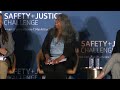
- Examining the Impact and Future of the Landmark Misdemeanor Bail Reforms in Harris County, Texas
- Runtime
- 50:55
- Date posted
- 2 years ago
- Description
- Reforms enacted in the county around Houston more than three years ago have stabilized recidivism rates, and the number of people charged with low-level crimes continues to decline. But some politicians still argue that they endanger public safety. What does the future hold?
The Atlantic’s Ron Brownstein will interview Texas Jail Project’s Krishnaveni Gundu, Harris County Criminal Court Judge Shannon Baldwin, and University of Houston Law Center's Sandra Guerra Thompson.
Want more from AtlanticLIVE? Sign up for our newsletter to hear about all our latest events and offerings. https://www.theatlantic.com/newsletters/sign-up/atlanticlive-promotions/

- Title
- If Plants Could Talk
- Runtime
- 26:46
- Date posted
- 2 years ago
- Description
- Staff writer Zoë Schlanger is the proud owner of a petunia that glows in the dark. But she doesn’t just appreciate the novelty houseplant as work of science. Zoë sees its glow as a way to help us appreciate plants as more alive, more vital, and more complex than we humans typically do. Because in recent years, some scientists have reopened a provocative debate: Are plants intelligent?
They’ve devised experiments that break down elements of this big broad question: Can plants be said to hear? Sense touch? Communicate? Make decisions? Recognize kin?
Schlanger is the author of the upcoming book: The Light Eaters: How the Unseen World of Plant Intelligence Offers a New Understanding of Life in Earth. How could a thing without a brain be considered intelligent? Schlanger has spoken with dozens of botanists, from the most renegade to the most cautious, and she reports back on the state of the revolution in thinking.
Get more from your favorite At...

- Title
- Atlantic Journalists on The Crisis of American Democracy | The Atlantic & University of Nevada, Reno
- Runtime
- 40:33
- Date posted
- 2 years ago
- Description
- Hear a conversation about navigating the rise of political polarization, the future of gun safety, the high stakes for higher education, the social impact of this election, and the role of journalism and technology during these unprecedented times, featuring Atlantic journalists Elaina Plott Calabro, Adam Harris, and Ron Brownstein, and contributor Evan Smith.
Subscribe to The Atlantic on YouTube: http://bit.ly/subAtlanticYT

- Title
- Nevada Sec. of State Francisco Aguilar on Free Elections | The Atlantic & University of Nevada, Reno
- Runtime
- 36:46
- Date posted
- 2 years ago
- Description
- As we enter an election cycle unlike anything we’ve ever witnessed, keeping elections free and fair is more important than ever. Hear Sec. Francisco Aguilar discuss electoral integrity, poll workers, and keeping the ballot process democratic, with Jon Ralston, founder and CEO of The Nevada Independent.
Subscribe to The Atlantic on YouTube: http://bit.ly/subAtlanticYT
- Title
- In Search of America on the Biggest Cruise Ship Ever
- Runtime
- 21:50
- Date posted
- 2 years ago
- Description
- Writer Gary Shteyngart set sail on the inaugural voyage of the biggest cruise ship ever built—the Icon of the Seas—in search of the "real" America. (And maybe to throw a great suite party along the way.) What he found instead, like many a great novelist before him, was a far more isolating experience. Shteyngart recounts his "seven agonizing nights" aboard a giant floating mall full of memorable characters, bad entertainment, even worse food—and the ever-present desire to keep up.
Get more from your favorite Atlantic voices when you subscribe. You’ll enjoy unlimited access to Pulitzer-winning journalism, from clear-eyed analysis and insight on breaking news to fascinating explorations of our world. Subscribe today at TheAtlantic.com/podsub.
Listen to Radio Atlantic on your favorite podcast player: https://link.chtbl.com/radioatlantic-youtube

- Title
- Trump’s Courtroom Campaign
- Runtime
- 25:56
- Date posted
- 3 years ago
- Description
- This episode was published on April 18, 2024.
The Stormy Daniels case may have a less serious fact pattern. But it might turn out to be the one chance to hold Donald Trump accountable for election interference. Atlantic staff writer David Graham explains the importance of the case and how Trump might actually be enjoying this new form of courtroom campaigning.
Subscribe to Radio Atlantic on your favorite podcast player: https://link.chtbl.com/radioatlantic-youtube

- Title
- Money Can Buy You Everything, Except Maybe a Birkin Bag
- Runtime
- 23:11
- Date posted
- 3 years ago
- Description
- Is having a Birkin bag ... a right? Earlier this year, two California residents filed a class-action lawsuit against the French luxury design company Hermès. Their grievance was that although they could afford a coveted Birkin bag made by the company, they could not buy one.
We talk to Atlantic staff writer Amanda Mull about the lawsuit and the current state of the luxury market. What do we actually want from luxury these days? Is there even such a thing anymore as a rare luxury good? And what handbag is Amanda carrying?
Subscribe to Radio Atlantic on your favorite podcast player: https://link.chtbl.com/radioatlantic-youtube

- Title
- Introducing: How to Know What’s Real
- Runtime
- 1:45
- Date posted
- 3 years ago
- Description
- What is “real life,” now that the internet and AI are integrated into so much that we do? In the new season of The Atlantic’s popular "How To" series, co-hosts Megan Garber and Andrea Valdez explore deepfakes, illusions, and misinformation, and how to make sense of where things are really happening. "How to Know What’s Real" examines how technology has altered our sense of connectedness and how to determine what is authentic and true. Subscribe on your favorite podcast player: https://link.chtbl.com/howtokeeptime-youtube

- Title
- During the Eclipse, Don't Just Look Up
- Runtime
- 17:41
- Date posted
- 3 years ago
- Description
- This episode was published April 4, 2024.
Where were you for the 2017 total eclipse? Where will you be this year? And where will you be for the next one in 2045? Hanna talks to Atlantic staff writer Marina Koren about the eclipse as a peculiar event: a beautiful if not slightly unsettling moment that is also a strange marker of time.
And we hear from retired astrophysicist Fred Espenak who's seen more than 20 total eclipses in his life and wonders which eclipse might end up being his last.

- Title
- The Smartphone Kids Are Not All Right
- Runtime
- 27:16
- Date posted
- 3 years ago
- Description
- Hanna talks to her child Jacob about the thing they've argued the most about: being on their phone.
Then, Hanna sits down with social psychologist Jonathan Haidt. In his new book, The Anxious Generation: How the Great Rewiring of Childhood Is Causing an Epidemic of Mental Illness, Haidt argues there is a direct tie between the wide distribution of smartphones and a rise in depression, anxiety, and loneliness among young people.
After which, Hanna asks Jacob: Did I ruin your life?
Get more from your favorite Atlantic voices when you subscribe. You’ll enjoy unlimited access to Pulitzer-winning journalism, from clear-eyed analysis and insight on breaking news to fascinating explorations of our world. Subscribe today at TheAtlantic.com/podsub.
Subscribe to Radio Atlantic on your favorite podcast player: https://link.chtbl.com/radioatlantic-youtube

- Title
- What Are The Greatest American Novels of the Past 100 Years? | New Orleans Book Festival
- Runtime
- 31:48
- Date posted
- 3 years ago
- Description
- Go behind the scenes of our ambitious project establishing a list of the most significant novels published in the U.S. over the last hundred years, recognizing those classics that stand the test of time, but also making the case for the overlooked, the unexpected, the unfairly forgotten, and the recently published works that already feel indelible. Clint Smith III, Ellen Cushing, Jane Kim, and Jemele Hill discuss the omissions staff argued over, books that just missed the cut, and the complexity of deciding which contemporary works—published as recently as last—year to include.
Subscribe to The Atlantic on YouTube: http://bit.ly/subAtlanticYT

- Title
- Jesmyn Ward on Book Bans, "Salvage the Bones," & More | New Orleans Book Festival
- Runtime
- 35:47
- Date posted
- 3 years ago
- Description
- Intellectual freedom and free expression are ever more precarious in America and around the world. Jesmyn Ward, author and professor at Tulane University, speaks about how to protect the freedom to read, learn, and create—and keeping minds open in the face of challenges.
Subscribe to The Atlantic on YouTube: http://bit.ly/subAtlanticYT

- Title
- A Conversation with Walter Isaacson and Jeffrey Goldberg | New Orleans Book Festival
- Runtime
- 44:44
- Date posted
- 3 years ago
- Description
- Author and New Orleans Book Festival Co-Chair Walter Isaacson joins The Atlantic’s editor in chief Jeffrey Goldberg for an interview. Watch this freewheeling conversation between two intellectual heavyweights in the Big Easy.
Subscribe to The Atlantic on YouTube: http://bit.ly/subAtlanticYT

- Title
- Inside a Hospital’s Abortion Committee
- Runtime
- 22:15
- Date posted
- 3 years ago
- Description
- Sarah Osmundson knows how to talk about abortion. She’s learned over the course of her career as a maternal-fetal medicine doctor that some patients are comfortable with the option, and others would never consider it.
Osmundson is a physician in Tennessee, a state with one of the strictest abortion bans in the country following the Supreme Court’s 2022 Dobbs decision. The procedure is illegal at any stage of pregnancy, with limited exceptions to protect the life and health of the mother.
But which cases meet those exceptions? The risks and outcomes of pregnancy aren’t easy to predict, especially for the types of patients Osmundson treats. After Dobbs, her hospital—and others around the country—formed what’s informally known as an “abortion committee” to decide if a patient meets the state’s exceptions. In this episode, Osmundson brings us the rare view inside these deliberations.
Further Reading:
“Their States Bann...

- Title
- The Sound of Cruelty
- Runtime
- 20:40
- Date posted
- 3 years ago
- Description
- We talk to Oscar-nominated sound designer Johnnie Burn about how he created the soundscape of horrors for The Zone of Interest. Burn explains how he collected real sounds from the streets of Europe and mixed them into a soundscape of cruelty happening just out of view. We also do a close analysis of key scenes from the film. "You can shut your eyes, but you can't shut your ears," Burn says.
Subscribe to Radio Atlantic on your favorite podcast player: https://link.chtbl.com/radioatlantic-youtube

- Title
- The Lost Boys of Big Tech
- Runtime
- 29:36
- Date posted
- 3 years ago
- Description
- The original “Burn Book” from Mean Girls was used to spread rumors and gossip about other girls (and some boys) at North Shore High School. Kara Swisher’s new memoir, Burn Book, tells true stories about men (and some women) who ruled Silicon Valley.
Swisher recounts some of the most cringey moments of the early dot-com boom, including the strange antics at parties she never really wanted to go to. But mostly she traces how the idiosyncrasies, blind spots, and enthusiasms of these tech titans have created the world we live in now.
Subscribe to Radio Atlantic at your favorite podcast player: https://link.chtbl.com/radioatlantic-030424-social
- Title
- Can We Keep Time?
- Runtime
- 39:21
- Date posted
- 3 years ago
- Description
- It can be tough to face our own mortality. Keeping diaries, posting to social media, and taking photos are all tools that can help to minimize the discomfort that comes with realizing we have limited time on Earth. But how exactly does documenting our lives impact how we live and remember them?
In this episode, diarist and author Sarah Manguso reflects on the benefits and limitations of keeping track of time, and Charan Ranganath, a professor of psychology and researcher at the UC Davis Center for Neuroscience, discusses what research reveals about how memories work and how we can better keep time.
Subscribe to How to Keep Time on your favorite podcast player: https://link.chtbl.com/howtokeeptime-youtube

- Title
- Maybe You Should Quit Therapy
- Runtime
- 28:01
- Date posted
- 3 years ago
- Description
- Dr. Richard Friedman has been teaching and seeing patients for more than 35 years. Recently, he wrote about the idea that, if therapy has become less of a targeted intervention and more of a weekly upkeep, it might be time to quit. In this episode, Friedman discusses the benefits of quitting therapy, and why it might be hard for some people to contemplate doing just that.
Subscribe to Radio Atlantic on your favorite podcast player: https://link.chtbl.com/radioatlantic-youtube

- Title
- What If Your Best Friend Is Your Soulmate?
- Runtime
- 30:16
- Date posted
- 3 years ago
- Description
- How would life be different if we centered it on our friends? In her new book, The Other Significant Others, Rhaina Cohen visits the extremes of friendship, where pairs describe each other as “soulmates” and make major life decisions in tandem with a friend. We talk to Cohen about the lost history of friendship and why she cringes when couples at the altar describe each other as their “best friend.”
Listen to Radio Atlantic on your favorite podcast player: https://link.chtbl.com/radioatlantic-youtube

- Title
- Time Tips From the Universe
- Runtime
- 33:55
- Date posted
- 3 years ago
- Description
- Time can feel like a subjective experience—different at different points in our lives. It’s also a real, measurable thing. The universe may be too big to fully comprehend, but what we do know could help inform the ways we approach our understanding of ourselves, our purpose, and our time.
Theoretical physicist and black-hole expert Janna Levin explains how the science of time can inspire new thinking and fresh perspectives on a much larger scale.
Music by Rob Smierciak (“Slow Money, Money Time, Guitar Time, Ambient Time”), Gavin Luke (“Time Zones”), Hanna Lindgren (“Everywhere Except Right Here”), and Dylan Sitts (“On the Fritz”).
Write to us at howtopodcast@theatlantic.com.
Listen to How to Keep Time on your favorite podcast player: https://link.chtbl.com/howtokeeptime-youtube

- Title
- The Rise of Techno-Authoritarianism
- Runtime
- 27:16
- Date posted
- 3 years ago
- Description
- In this week’s episode of Radio Atlantic, Adrienne LaFrance, the executive editor of The Atlantic, names and explains the political ideology of the unelected leaders of Silicon Valley. They are “leading an antidemocratic, illiberal movement” she calls: techno-authoritarianism.
Want to share unlimited access to The Atlantic with your loved ones? Give a gift today at theatlantic.com/podgift.
Listen to Radio Atlantic on your favorite podcast player: https://link.chtbl.com/radioatlantic-youtube
- Title
- The ‘Coward of Broward’ Re-Examined
- Runtime
- 26:12
- Date posted
- 3 years ago
- Description
- After the deadliest high school shooting in U.S. history, in 2018, a video circulated showing the school resource officer taking cover behind the wall. He became known as the “Coward of Broward,” and was tried for child neglect. We talk to police reporter Jamie Thompson about what became of him. And what we are leaving out when we reduce school shootings to stories of courage or cowardice.
Get more from your favorite Atlantic voices when you subscribe. You’ll enjoy unlimited access to Pulitzer-winning journalism, from clear-eyed analysis and insight on breaking news to fascinating explorations of our world. Subscribe today at TheAtlantic.com/podsub.
Listen to Radio Atlantic on your favorite podcast player: https://link.chtbl.com/radioatlantic-youtube
- Title
- How to Rest
- Runtime
- 32:02
- Date posted
- 3 years ago
- Description
- Between making time for work, family, friends, exercise, chores, shopping—the list goes on and on—it can feel like a huge accomplishment to just take a few minutes to read a book or watch TV before bed. All that busyness can lead to poor sleep quality when we finally do get to put our heads down.
How does our relationship with rest impact our ability to gain real benefits from it? And how can we use our free time to rest in a culture that often moralizes rest as laziness? Alex Soojung-Kim Pang, the author of several books on rest and director of global programs at 4 Day Week Global, explains what rest is and how anyone can get started doing it more effectively.
Subscribe on your favorite podcast player: https://link.chtbl.com/howtokeeptime-youtube
- Title
- The Last Days of the Barcode
- Runtime
- 28:17
- Date posted
- 3 years ago
- Description
- Once upon a time, a restless cashier would eye each and every item you, the consumer, purchased and key it into the register. This took skill but also time—and proved to be an imperfect way to keep track of inventory. Then one day, a group of grocery executives and inventors came up with a better way: what we now know as the barcode, a rectangle that marks items ranging from insulin to Doritos. It’s so ubiquitous and long-lived that it’s become invisible.
In this episode of Radio Atlantic, editor Saahil Desai gives an early obituary to a monumental and fading technology. Desai walks us through the surprising history of the barcode, from its origins in the grocery business to Walmart and Amazon (with a detour to the movie Deep Throat). The barcode allowed grocers to stock infinite varieties of everything, which led us to expect infinite varieties of everything and made us the highly demanding and sometimes addicted shoppers we are today. We talk about the barcode and ...

- Title
- Why a Good Economy Feels Like a Bad One
- Runtime
- 27:04
- Date posted
- 3 years ago
- Description
- The illusion persists, despite all evidence. Americans are pessimistic about the economic future. They feel worse off than their parent’s generation. Poll after poll shows that at best, only twenty percent of Americans say the economy is doing better than it was a year ago.
More than twenty percent of Americans are doing better than they were a year ago, by many measures. Unemployment is lower, wages are growing, inflation is declining. This is true for Americans across ages and classes. These are tangible improvements in household income that should be cheering people up. They are not. Why? What trick is our minds playing on us that we can’t feel hopeful?
Gilad Edelman, a senior editor at The Atlantic who covers the economy, answers the mystery.
This episode was published January 4, 2024.
Subscribe to Radio Atlantic on your favorite podcast player: https://link.chtbl.com/radioatlantic-youtube
Want to share unlimited...
- Title
- How to Leave Work Time at Work
- Runtime
- 22:13
- Date posted
- 3 years ago
- Description
- Before laptops allowed us to take the office home and smartphones could light up with notifications at any hour, work time and “life” time had clearer boundaries. Today, work is not done exclusively in the workplace, and that makes it harder to leave work at work.
Co-hosts Becca Rashid and Ian Bogost examine the habits that shrink our available time, and Ignacio Sánchez Prado, a professor of Latin American Studies at Washington University in St. Louis, offers his reflections on American culture and shares suggestions for how to use the time we do have, for life.
This episode was co-hosted by Becca Rashid and Ian Bogost. Becca Rashid also produces the show. Editing by Jocelyn Frank and Claudine Ebeid. Fact-check by Ena Alvarado. Engineering by Rob Smierciak. The managing editor of How to Keep Time is Andrea Valdez. Write to us at howtopodcast@theatlantic.com.
Subscribe on your favorite podcast app: https://link.chtbl.com/howtokeeptime-youtube
- Title
- Don’t Buy That Sweater
- Runtime
- 25:10
- Date posted
- 3 years ago
- Description
- We’re in the coldest season. We’re in the shopping season. We’re in the season of hygge. All the cues point to buying yourself a new cozy sweater. Don’t do it, until you hear what Atlantic staff writer Amanda Mull has to say about the cratering quality of knitwear. For years I’ve wondered why my sweaters pilled so quickly, or why they suffocated me, or smelled like tires. And then I read Mull’s recent story, “Your Sweaters Are Garbage.” It turns out that international trade agreements, greedy entrepreneurs, and my own lack of willpower have conspired to erode my satisfaction.
In this episode, Hanna talks with Amanda Mull—who writes the Atlantic column “Material World”—about why so many consumer goods have declined in quality over the last two decades. As always, Mull illuminates the stories the fashion world works hard to obscure, about the quality of fabrics, the nature of working conditions, and about how to subvert a system that wants you to keep...

- Title
- How to Look Busy
- Runtime
- 35:23
- Date posted
- 3 years ago
- Description
- Many of us complain about being too busy—and about not having enough time to do the things we really want to do. But has busyness become an excuse for our inability to focus on what matters?
According to Neeru Paharia, a marketing professor at Arizona State University, time is a sort of luxury good—the more of it you have, the more valuable you are. But her research also revealed that, for many Americans, having less time and being busy can be a status symbol for others to notice. And when it comes to the signals we create for ourselves, sociologist Melissa Mazmanian reveals a few myths that may be keeping us from living the lives we want with the meaningful connections we crave.
Music by Dylan Sitts (“On the Fritz”) and Rob Smierciak (“Slow Money,” “Guitar Time,” “Ambient Time”).
This episode was co-hosted by Becca Rashid and Ian Bogost. Becca Rashid also produces the show. Editing by Jocelyn Frank and Claudine Ebeid. Fact-che...