noaa
Women of the NOAA Corps: Reflections from the Sea and Sky

- Title
- Women of the NOAA Corps: Reflections from the Sea and Sky
- Runtime
- 29:44
- Date posted
- 6 years ago
- Description
- Featuring stories of eight women in the NOAA Corps service, this film serves to elevate public understanding and appreciation of the NOAA Corps, particularly the unique cultural history of women’s service in the Corps, and to inspire future generations of women in scientific service.

- Title
- NOAA Legends: Georgia Madrid
- Runtime
- 2:34
- Date posted
- 6 years ago
- Description
- For NOAA’s 50th anniversary, we interviewed NOAA Legends: people of color who were “firsts” in NOAA science. Georgia Madrid is an Equal Opportunity Specialist for NOAA Research in Boulder, Colorado. As a citizen of the Taos Pueblo and Navajo Tribes, she works to improve the inclusion and understanding of American Indian/Alaska Native issues at NOAA and in the community. Learn more about Georgia and NOAA's 50th anniversary celebration at https://www.noaa.gov/heritage. #NOAAat50

- Title
- NOAA Legends: RADM Evelyn Fields
- Runtime
- 2:40
- Date posted
- 7 years ago
- Description
- For NOAA’s 50th anniversary, we interviewed NOAA Legends: people of color who were “firsts” in NOAA science. Rear Admiral Evelyn Fields (ret.) began her career with NOAA in 1972 as a cartographer working on nautical charting surveys. When the NOAA Corps began recruiting women as commissioned officers, Fields became the first African American female to join. By 1989, she was the first woman to command a NOAA ship. In 1999, she reached the rank of rear admiral and took the helm as NOAA Corps Director. Learn more about RADM Fields and NOAA's 50th anniversary celebration at https://www.noaa.gov/heritage. #NOAAat50

- Title
- 50 Years of Science, Service, and Stewardship
- Runtime
- 1:31
- Date posted
- 7 years ago
- Description
- In 2020, NOAA celebrated 50 years of science, service, and stewardship. Since its inception on October 3, 1970, NOAA has become one the world’s premier science agencies that protects life and property, leads stewardship of the ocean and Great Lakes, and drives the blue economy — a mission that spans from the surface of the sun to the floor of the ocean. You can find more information about NOAA's 50th anniversary at https://www.noaa.gov/heritage

- Title
- NOAA's 50th Anniversary – Our Birthday Story
- Runtime
- 2:16
- Date posted
- 7 years ago
- Description
- Established in 1970 but rooted in scientific evolution dating back to 1807, NOAA has grown with the Nation, serving the American people to this day, every day. You can find more information at https://www.noaa.gov/heritage

- Title
- NOAA: Science, Service, and Stewardship
- Runtime
- 2:44
- Date posted
- 9 years ago
- Description
- The National Oceanic and Atmospheric Administration's work spans from the bottom of the sea to the surface of the sun. Each day, our employees take the pulse of the changing world around us and share that knowledge with others to ensure public safety, protect and restore marine resources, and strengthen our economy. We are scientists, engineers, researchers, technicians, and more who remain united in our common mission: science, service, stewardship.
Transcript:
Narrator: NOAA’s work spans from the bottom of the sea to the surface of the sun. Each day, our employees take the pulse of the changing world around us and share that knowledge with others to ensure public safety, protect and restore marine resources, and strengthen our economy.
Our people are as diverse as our mission. We are scientists, engineers, researchers, technicians, and more, who live the mission every day. We are also the staff who supports the mission behind the scenes.
<...

- Title
- Orphan Orca, Saving Springer Documentary
- Runtime
- 28:55
- Date posted
- 9 years ago
- Description
- Fifteen years ago this summer, the Northwest joined forces to orchestrate the unprecedented rescue of a wild killer whale calf. The effort built trust, partnerships, and goodwill that continue to contribute to killer whale recovery today.

- Title
- NOAA's 2017 Atlantic Hurricane Season Outlook
- Runtime
- 3:11
- Date posted
- 9 years ago
- Description
- Dr. Gerry Bell of NOAA discusses the 2017 Atlantic Hurricane Season Outlook
Learn more about how to prepare for the 2017 hurricane season, and monitor hurricane forecasts throughout the season, from June 1 through November 30:
http://www.nws.noaa.gov/com/weatherreadynation/hurricane_preparedness.html
http://www.nws.noaa.gov/om/hurricane/
http://www.nhc.noaa.gov/

- Title
- Amundsen-Scott South Pole Station: Last Flight Before Winter - February 15, 2017
- Runtime
- 0:52
- Date posted
- 10 years ago
- Description
- Note - This video has no audio.
On February 15, 2017, scientists and staff from the National Science Foundation’s Amundsen Scott Station at the South Pole boarded a specially equipped Air National Guard C-130 for the last scheduled flight from the South Pole for nine months. Get more of the story at: http://www.noaa.gov/stories/photo-last-flight-from-south-pole.
Learn more about the South Pole Baseline Atmospheric Observatory: https://www.esrl.noaa.gov/gmd/obop/spo/

- Title
- The Search for Sturgeon: A Prehistoric and Endangered Fish
- Runtime
- 3:34
- Date posted
- 10 years ago
- Description
- Imagine prehistoric creatures, up to 14 feet long, swimming in creeks and streams along the densely populated East Coast of the U.S. Surprisingly, such animals still exist, and NOAA and partner scientists are using innovative techniques to track them through Chesapeake Bay tributaries.
Sturgeon appeared in the fossil record approximately 200 million years ago, before the evolution of some dinosaurs, including Tyrannosaurus rex. Atlantic sturgeon, ranging from Canada to Florida, were subjected to a robust commercial fishery beginning in 1880. The fishery from Maine to Florida continued through 1998, severely depleting, and in some cases destroying, their populations.
As part of a range-wide effort to conserve the species and protect future generations, scientists with NOAA Fisheries, the U.S. Navy, and private firm Chesapeake Scientific are using tagging and genetic technology to understand how Atlantic sturgeon move through tributaries of the Chesapeake as t...

- Title
- NOAA's 2016 Atlantic Hurricane Season Outlook
- Runtime
- 2:45
- Date posted
- 10 years ago
- Description
- Dr. Gerry Bell of NOAA discusses the 2016 Atlantic Hurricane Season Outlook
Learn more about how to prepare for the 2016 hurricane season, and monitor hurricane forecasts throughout the season, from June 1 through November 30:
http://www.nws.noaa.gov/com/weatherreadynation/hurricane_preparedness.html
http://www.nws.noaa.gov/om/hurricane/
http://www.nhc.noaa.gov/

- Title
- In Memoriam: Dr. Robert M. White, NOAA's First Administrator
- Runtime
- 5:07
- Date posted
- 11 years ago
- Description
- Dr. Robert Mayer “Bob” White, founding Administrator of NOAA, died Wednesday October 13, 2015, after a trailblazing career of public service. Dr. White became NOAA Administrator in 1972, following visionary leadership as the first Federal Coordinator of Meteorology and as Chief of the U.S. Weather Bureau, the latter being one of President John F. Kennedy’s final appointments.
From the outset, Dr. White set a high bar for federal service by pioneering an approach to meteorology that intrinsically linked it to observing, understanding and interacting intelligently with the natural environment. He advocated tenaciously for better weather predictions, and to improve the global weather observing system through the still new technology of Earth-observing instruments carried on satellites. Dr. White’s contributions to global environmental science and the capability to observe and understand global climate change were underscored when he was awarded the Tyler Prize for Env...

- Title
- Turn Around, Don't Drown!
- Runtime
- 0:53
- Date posted
- 11 years ago
- Description
- Never Drive or Walk into Flood Waters - Turn Around Don’t Drown!
Flooding is one of the leading causes of weather related fatalities in the U.S. On average, flooding claims nearly 90 lives each year. More than half of these deaths occur in motor vehicles when people attempt to drive through flooded roadways. This happens because people underestimate the force and power of water, especially when it is moving.
Just six inches of fast-moving water can knock over and carry off an adult. Twelve inches of water can float a small car. If that water is moving, it can carry that car away. Eighteen to twenty-four inches of flowing water can carry away most vehicles, including large SUVs. It is impossible to tell the exact depth of water covering a roadway or the condition of the road below the water. This is especially true at night when your vision is more limited. It is never safe to drive or walk through flood waters. Any time you come to a flooded road, walkway,...
- Title
- The 2004 Indian Ocean Tsunami: A NOAA scientist's story of survival
- Runtime
- 2:33
- Date posted
- 12 years ago
- Description
- On December 26, 2004, while he was on vacation in Thailand, NOAA scientist Dr. Dwayne Meadows was swept away in the one of the first waves of the Indian Ocean tsunami. In this first-hand account, hear Dr. Meadows' story of survival and about the need to be prepared should a tsunami hit your area at home or abroad.
For facts about tsunamis and tips for being prepared, please visit www.weather.gov/tsunamisafety.
For late-breaking tsunami news, watches and warnings from NOAA's National Weather Service on Twitter, follow @NWS_PTWC and @NWS.
Transcript:
I was vacationing in Thailand the day of the 2004 Indian Ocean Tsunami. I was in my beachfront bungalow preparing to go snorkeling, my back was to the ocean.
Lots of people were on the beach and saw the sea recede about 1/4 mile out to sea, leaving fish and the sea floor exposed. Nobody knew that meant a tsunami was coming.
By the time the wave came in and I heard ...

- Title
- The NOAA Corps: Service, Science, Adventure
- Runtime
- 21:17
- Date posted
- 12 years ago
- Description
- 2014 Edition: 21 minutes. Science-minded students and active duty service members who seek adventure and travel have opportunities to serve their country in exciting, flexible and diverse careers, commanding and operating scientific ships and aircraft as officers of the NOAA Commissioned Officer Corps. One of the seven uniformed services of the United States, the Corps is an integral part of the National Oceanic and Atmospheric Administration, an agency of the U.S. Department of commerce.
This video takes you aboard scientific survey ships, hurricane research aircraft, and into a wide range of operating areas nationwide to introduce you to the origin, mission, role and benefits of the NOAA Commissioned Officer Corps.

- Title
- Putting Climate Science on a Stamp: The Making of a USPS Forever® Stamp
- Runtime
- 0:49
- Date posted
- 13 years ago
- Description
- [This is an un-narrated video set to background music.]
On Earth Day 2014 (April 22) the U.S. Postal Service officially unveiled a new Forever® international-rate stamp inspired by a simulation of sea surface temperatures from a @NOAA model of the Earth's climate. The round stamp depicts the globe with North America in the center, surrounded by vivid bands of blue, green and red, signifying the varying temperatures of sea-surface waters.
*Learn more about science behind the stamp from NOAA's Office of Oceanic & Atmospheric Research at http://go.usa.gov/kn9W. More about the NOAA Geophysical Fluid Dynamics Laboratory can be found at http://www.gfdl.noaa.gov.
(If you have questions regarding the purchase of this stamp, please visit the U.S. Postal Service at http://www.usps.com and http://www.uspsstamps.com, and @USPS and @USPSStamps on Twitter.)
#EarthDayStamp2014
Video credit: NOAA.

- Title
- Flood Safety: Wireless Emergency Alerts
- Runtime
- 0:28
- Date posted
- 13 years ago
- Description
- Flooding can happen in a flash. Don't be caught off guard.
If you have a smartphone, chances are it has a built-in feature to automatically receive and display Wireless Emergency Alerts from the National Weather Service when flash flooding and other hazards are happening nearby.
You will not be charged to receive these alerts so keep them enabled on your phone. They could save your life.
To learn more, visit these sites.
weather.gov/wirelessalerts
ctia.org/wea
Flood footage courtesy of The Weather Channel

- Title
- NOAA Instagram 2013
- Runtime
- 0:34
- Date posted
- 13 years ago
- Description
- NOAA welcomes the year 2014 with an instagram of the best photos of 2013

- Title
- NOAA Acting Administrator Dr. Kathryn Sullivan on the 100th Installation of Science On a Sphere
- Runtime
- 1:59
- Date posted
- 13 years ago
- Description
- The 100th NOAA Science On a Sphere was opened in November 2013 at NOAA's headquarters in Silver Spring, MD. This large and luminous sphere can be seen in museums, aquariums, and other science institutions around the U.S. and other locations throughout the world. Using computers and video projectors, the system displays planetary data on an opaque carbon fiber sphere, and presenters can draw from more than 400 annotated datasets to highlight weather observations, climate models, hurricane tracks, ocean acidification plus the latest solar system imagery (including Mars, Jupiter, and the Moon and ancient Earth conditions Pangaea/continental drift). To learn more about the Sphere and to find a location near you, visit http://www.sos.noaa.gov/ or http://www.facebook.com/scienceonasphere

- Title
- 'Symphony of Sharks' by NOAA Fisheries Service
- Runtime
- 1:45
- Date posted
- 13 years ago
- Description
- SHARK WEEK SPECIAL: A symphonic tribute to the beauty and majesty of sharks!
Created by NOAA's Fisheries Service, http://www.fisheries.noaa.gov.
Date: August 2013.

- Title
- NOAA Ocean Today: The Role of Ice in the Ocean, Part 3 of 3 -- The Impacts of Shrinking Ice
- Runtime
- 2:27
- Date posted
- 14 years ago
- Description
- The 2012 Arctic summer sea ice extent is the lowest since taking measurement. This three-part video series explores sea ice and why it is so important; how scientists are detecting and measuring change in sea ice; and the impacts of shrinking Arctic sea ice.
Part 1: http://oceantoday.noaa.gov/role-of-ice-pt1/
Part 2: http://oceantoday.noaa.gov/role-of-ice-pt2/
Part 3: http://oceantoday.noaa.gov/role-of-ice-pt3/

- Title
- NOAA Ocean Today video: Tsunami Strike: Japan, Part 3 of 3: Warning Systems
- Runtime
- 3:07
- Date posted
- 14 years ago
- Description
- On March 11, 2011 a 9.0 magnitude earthquake off the Pacific coast of Japan generated a tsunami. This series of ocean waves sped towards the island nation with waves reaching 24 feet high. The result was devastation and utter destruction.
"Tsunami Strike: Japan" is a three-part series that focuses on the science and technology behind the tragedy. Learn what how it happened from the time the earthquake erupted at 14:46 JST to the tsunami warnings issued three minutes later.
Part 1: http://oceantoday.noaa.gov/tsunamistrikedestruction/
Part 2: http://oceantoday.noaa.gov/tsunamistrikepropagation/
Part 3: http://oceantoday.noaa.gov/tsunamistrikewarning/

- Title
- NOAA Ocean Today video: Tsunami Strike -- Japan Part 2 of 3: Propagation
- Runtime
- 2:04
- Date posted
- 14 years ago
- Description
- On March 11, 2011 a 9.0 magnitude earthquake off the Pacific coast of Japan generated a tsunami. This series of ocean waves sped towards the island nation with waves reaching 24 feet high. The result was devastation and utter destruction.
"Tsunami Strike: Japan" is a three-part series that focuses on the science and technology behind the tragedy. Learn what how it happened from the time the earthquake erupted at 14:46 JST to the tsunami warnings issued three minutes later.
Part 1: http://oceantoday.noaa.gov/tsunamistrikedestruction/
Part 2: http://oceantoday.noaa.gov/tsunamistrikepropagation/
Part 3: http://oceantoday.noaa.gov/tsunamistrikewarning/

- Title
- NOAA Ocean Today video: Tsunami Strike, Japan Part I of 3: Destruction
- Runtime
- 2:55
- Date posted
- 14 years ago
- Description
- On March 11, 2011 a 9.0 magnitude earthquake off the Pacific coast of Japan generated a tsunami. This series of ocean waves sped towards the island nation with waves reaching 24 feet high. The result was devastation and utter destruction.
"Tsunami Strike: Japan" is a three-part series that focuses on the science and technology behind the tragedy. Learn what how it happened from the time the earthquake erupted at 14:46 JST to the tsunami warnings issued three minutes later.
Part 1: http://oceantoday.noaa.gov/tsunamistrikedestruction/
Part 2: http://oceantoday.noaa.gov/tsunamistrikepropagation/
Part 3: http://oceantoday.noaa.gov/tsunamistrikewarning/

- Title
- NOAA Ocean Today: The Role of Ice in the Ocean, Part 2 of 3: How Do We Measure Ice?
- Runtime
- 2:27
- Date posted
- 14 years ago
- Description
- The 2012 Arctic summer sea ice extent is the lowest since taking measurement. This three-part video series explores sea ice and why it is so important; how scientists are detecting and measuring change in sea ice; and the impacts of shrinking Arctic sea ice.
Part 1: http://oceantoday.noaa.gov/role-of-ice-pt1/
Part 2: http://oceantoday.noaa.gov/role-of-ice-pt2/
Part 3: http://oceantoday.noaa.gov/role-of-ice-pt3/

- Title
- NOAA Ocean Today: The Role of Ice in the Ocean, PART 1 of 3: What is Sea Ice & Why Is it Shrinking?
- Runtime
- 2:10
- Date posted
- 14 years ago
- Description
- The 2012 Arctic summer sea ice extent is the lowest since taking measurement. This three-part video series explores sea ice and why it is so important; how scientists are detecting and measuring change in sea ice; and the impacts of shrinking Arctic sea ice.
Part 1: http://oceantoday.noaa.gov/role-of-ice-pt1/
Part 2: http://oceantoday.noaa.gov/role-of-ice-pt2/
Part 3: http://oceantoday.noaa.gov/role-of-ice-pt3/
###

- Title
- NOAA Ocean Today: 'Adopt a Drifter'
- Runtime
- 2:09
- Date posted
- 14 years ago
- Description
- Adopt a Drifter is a unique program that teaches kids about ocean currents in real time. Scientists deploy drifting buoys that collect data on sea surface temperatures. Schools or classrooms "Adopt" one of these buoys and track its location and data online. Adopt a Drifter is science in action -- giving kids an inside view of how the ocean connects us all. http://oceantoday.noaa.gov/adoptadrifter/
TRANSCRIPT BELOW:
Narrator: Covering 70% of the Earth's surface, the ocean plays a major role in our climate, weather, and living conditions for plants and animals.
Through the NOAA Adopt a Drifter Program, kids are learning about ocean currents in real time, as scientists collect and analyze ocean data.
First, drifting buoys are deployed from ships at sea. As they are carried along ocean currents, "drifters" measure and transmit sea surface temperature data and positioning coordinates via satellite for about 400 days.
Surface...

- Title
- NOAA Ocean Today video: 'Marine Protected Areas'
- Runtime
- 1:31
- Date posted
- 14 years ago
- Description
- Chances are you've visited a Marine Protected Area and didn't even know it. If you've gone fishing in central California, diving in the Florida Keys, swimming in Cape Cod, or hiking along the Olympic Coast, you've probably been one of millions of visitors to a Marine Protected Area. When used effectively Marine Protected Areas help ensure a healthy ocean. http://oceantoday.noaa.gov/marineprotectedareas/welcome.html
TRANSCRIPT BELOW:
NARRATOR: Chances are you've visited a Marine Protected Area and didn't even know it. If you've gone fishing in central California, diving in the Florida Keys, swimming in Cape Cod, or hiking along the Olympic Coast, you've probably been one of millions of visitors to a Marine Protected Area, usually referred to as an MPA.
So what exactly are MPAs? They are defined areas, established by state or federal agencies, where natural and cultural resources are given greater protection than the surrounding waters.
...

- Title
- NOAA Ocean Today: 'Dolphins at the Doctor'
- Runtime
- 2:37
- Date posted
- 14 years ago
- Description
- Dolphins have a lot in common with humans. They breathe air, give birth to live young, and they also live in social groups. And some dolphins share a rather unique experience with humans; they go to the doctor.
Well, actually, the doctors make a house call to them. When marine scientists come across a group of sick or dead dolphins, they need to find out why, so they can better protect them. http://oceantoday.noaa.gov/dolphinsatdoctor/welcome.html
Transcript below:
NARRATOR:
Dolphins have a lot in common with humans. They breathe air, give birth to live young, and they also live in social groups. And some dolphins share a rather unique experience with humans; they go to the doctor.
Well, actually, the doctors make a house call to them. When marine scientists come across a group of sick or dead dolphins, they need to find out why, so they can better protect them.
But giving a dolphin a checkup in...

- Title
- NOAA Ocean Today video: 'Our Debris Filling the Sea'
- Runtime
- 2:36
- Date posted
- 14 years ago
- Description
- What do a tropical island in the Pacific Ocean and the Antarctic have in common? Unfortunately, it's marine debris. Even the most remote locations on Earth are fouled by man-made garbage and cast-outs. And a majority of the debris that's found comes from land-based sources. http://oceantoday.noaa.gov/ourdebrisfillingthesea/ and http://marinedebris.noaa.gov/
TRANSCRIPT BELOW:
NARRATOR: What do a tropical island in the Pacific Ocean and the Antarctic have in common?
Unfortunately, it's marine debris. Even the most remote locations on Earth are fouled by man-made garbage and cast-outs. And a majority of the debris that's found comes from land-based sources.
In one marine protected area off the Northwestern Hawaiian Islands, in just one month, 50 metric tons of debris was collected. That's equivalent to 50 elephants worth of trash.
This small sample speaks volumes about the magnitude of this problem. Marine debris is...

- Title
- NOAA Ocean Today video: 'Know Your Ocean'
- Runtime
- 2:38
- Date posted
- 14 years ago
- Description
- Even though the ocean covers about 70 percent of the Earth's surface, people tend to know more information about land than the sea. As a result, our understanding of the ocean is often incomplete or full of misconceptions. How well do you know the ocean? http://oceantoday.noaa.gov/knowyourocean/
TRANSCRIPT below:
NARRATOR:
Even though the ocean covers seventy percent of the Earth's surface, people tend to know more information about land than the sea. As a result, our understanding of the ocean is often incomplete or full of misconceptions. How well do you know the ocean?
You may think Earth has five separate oceans. They're clearly labeled on our maps. But, in actuality, these are all connected, and part of one global ocean system.
Ever wonder why the ocean is blue? You may have heard its because the water reflects the color of the sky. Not quite. Sunlight contains all the colors of the rainbow. When it hits the ocean, ...

- Title
- P-3 Simulator Kangerlussuaq
- Runtime
- 0:52
- Date posted
- 14 years ago
- Description
- NOAA pilots LCDR Cathy Martin (left seat) and LCDR Chris Kerns (right seat) practice a challenging runway approach into Greenland's Kangerlussuaq Airport in a P-3 Orion simulator at Naval Air Station Jacksonville.
- Title
- NOAA Ocean Today video: 'All You Can Eat ... Lionfish!'
- Runtime
- 2:17
- Date posted
- 14 years ago
- Description
- Yum! Help curb the invasive lionfish by eating them! http://oceantoday.noaa.gov/allyoucaneat/welcome.html
Transcript
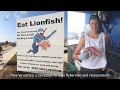
NARRATOR: This is a Lionfish. Once limited to the Indo-Pacific region, they've invaded the waters of The Atlantic, Gulf of Mexico, and Caribbean. Lionfish eat a lot of young fish and shellfish, and with no predators of their own, there's been a population explosion.
By eating, outgrowing, and out-reproducing the native species, these fish are taking over a lion's share of reef ecosystems. Containing this invasive species is a difficult task. So if we can't beat'em, why not eat'em?
That's the plan that fishery managers have cooked up. They've started a campaign to urge fishermen and restaurateurs to catch lionfish and put them on menus. This may be the only way to slow the population explosion and save local fisheries from disappearing.
As a part of that effort, NOAA and other organizations have set up ...
- Title
- NOAA Ocean Today video: 'Celebrate World Ocean Day -- June 8'
- Runtime
- 1:07
- Date posted
- 14 years ago
- Description
- Join us in celebrating World Ocean Day on June 8 every year! http://oceantoday.noaa.gov/worldoceanday/
TRANSCRIPT
MUSIC:
Life began in the ocean over 3.5 billion years ago.
Most major forms of life live in the ocean.
Most volcanic activity occurs in the ocean.
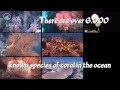
There are over 6,000 known species of coral in the ocean.
The Great Barrier Reef is the largest living structure on Earth and can be seen from space.
The deep sea is the largest habitat on Earth.
The Arctic Ocean covers more than 5 million square miles.
Over 71% of the Earth's surface is ocean.
Celebrate the Ocean
++++++++++++++++++++
Learn more about ocean stewardship mission at: http://www.oceanservice.noaa.gov

- Title
- NOAA Ocean Today: 'Deep-ocean Volcanoes'
- Runtime
- 1:51
- Date posted
- 14 years ago
- Description
- In May 2009 scientists filmed the deepest underwater volcanic eruption ever seen. Watch the sparks fly in nature's own display of fireworks. http://oceantoday.noaa.gov/deepoceanvolcanoes/welcome.html
Transcript
NARRATOR:
Scientists believe that 80 percent of the volcanic eruptions on Earth take place in the ocean. Most of these volcanoes are thousands of feet deep, and difficult to find. But in May of 2009, scientists captured the deepest ocean eruption ever found.
Nearly 4,000 feet below the surface of the Pacific Ocean — in an area between Samoa, Fiji and Tonga - the West Mata volcano was discovered.
The explosions of molten rock were spectacular. This volcano was producing Boninite lavas — believed to be among the hottest erupting on Earth.
Scientists also witnessed molten lava flowing across the deep-ocean sea floor and spotted shrimp living near the volcano's most active areas.
This rese...

- Title
- NOAA Ocean Today video: 'Black Carbon'
- Runtime
- 2:39
- Date posted
- 14 years ago
- Description
- Black carbon is the fancy name for soot. And like carbon dioxide, it's causing changes in the Arctic, such as accelerating the rate of sea ice melt. http://oceantoday.noaa.gov/blackcarbon/welcome.html
TRANSCRIPT:
NARRATOR: Black carbon is the fancy name for soot. And like carbon dioxide, it's causing changes in the Arctic climate.
Black carbon comes from the burning of fossil fuels, like coal and diesel, and from forest fires, and cook stoves. The majority reaching the Arctic comes from North America and Eurasia.
Studies suggest that black carbon is contributing to the acceleration of sea ice melting in the Arctic. Loss of this ice would lead to more rapid warming and possibly irreversible climate change.
Black carbon is dark in color and warms the Earth in two ways: When it's in the air, the particles absorb sunlight and generate heat in the atmosphere. This can affect cloud formation and rain patterns. When i...

- Title
- NOAA Ocean Today video: 'Protecting Titanic'
- Runtime
- 2:15
- Date posted
- 14 years ago
- Description
- The RMS Titanic sunk 100 years ago on April 15, 1912. The memory of the Titanic lives on in movies, books, and museums, but it's the protection of the wreck site that will continue to yield clues about the fateful ship and its passengers. http://oceantoday.noaa.gov/protectingtitanic/welcome.html
TRANSCRIPT:
NARRATOR: More than two and half miles below the surface, the wreckage of the Titanic rests on the seafloor ...... both as a memorial and a living laboratory.
One hundred years ago, the world's most advanced passenger steamship struck an iceberg. On April 15th, 1912, it sank -- losing 1,496 lives.
The legend of Titanic was larger than her size, and finding the wreck site opened a door to not only exploration and scientific study, but to salvage as well.
With ties to multiple nations, steps needed to be taken to preserve and protect the integrity of the wreck site.
For the US, NOAA and the State Departmen...

- Title
- NOAA Ocean Today video: 'Arctic Exploration'
- Runtime
- 2:56
- Date posted
- 14 years ago
- Description
- The Arctic is one of the most remote and uncharted areas of the world. With so many amazing things just waiting to be discovered, Arctic exploration is truly a new scientific frontier. http://oceantoday.noaa.gov/arcticexploration/welcome.html and http://www.arctic.noaa.gov/reportcard/
------------------------------------------
TRANSCRIPT:
The Arctic region includes a vast, ice-covered ocean. This pristine yet rugged environment is one of the least explored and understood places on Earth.
Due to climate changes, summer Arctic ice cover is diminishing, and scientists therefore believe it is vitally important to get a better understanding of this environment and what impact future changes might bring to our world.
Operating from the U.S. Coast Guard icebreaker Healy, NOAA scientists have been involved in studying the sea ice, the water column, and the sea floor. Their missions have used the latest cutting-edge technology.<...

- Title
- NOAA Ocean Today video: 'Arctic Sea Ice Sets Record Low' (2012 report)
- Runtime
- 2:43
- Date posted
- 14 years ago
- Description
- At 1.32 square miles, the 2012 Arctic Summer Sea Ice extent is the lowest in recorded history. The disappearance of summer sea ice cover is one of the most visible warning signs of severe climate change and will have consequences that are felt all over the world. http://oceantoday.noaa.gov/happennowarcticseaice/ and http://www.arctic.noaa.gov/reportcard/
TRANSCRIPT:
NARRATOR: Recent analysis on Arctic sea ice conditions paints a grim picture. According to the National Snow and Ice Data Center, the summer sea ice minimum extent has dropped to its smallest size in recorded history. It's now 3.41 million square kilometers or 1.32 million square miles.
The coverage of sea ice was relatively stable from 1979 -- 2000, but has since been reduced by nearly 50%.
While record lows are bound to be set on occasion, scientists agree that these measurements indicate that the Arctic's sea ice cover is fundamentally changing.
This chart ...

- Title
- NOAA Ocean Today video: 'Coral Forests of the Deep'
- Runtime
- 2:13
- Date posted
- 14 years ago
- Description
- Most corals were once thought to live in tropical waters, close enough to the surface to receive sunlight. But with the help of submersibles, scientists have discovered vast forests of corals living in dark, cold waters. http://oceantoday.noaa.gov/coralforestsofdeep/welcome.html
TRANSCRIPT:
NARRATOR: Most corals were once thought to live in tropical water, close enough to the surface to receive sunlight. But with the help of submersibles and remotely operated vehicles, scientists have discovered vast forests of corals living 200 to 10,000 feet deep in dark, cold waters.
Deep-sea corals can live for hundreds to thousands of years, feeding directly on microscopic animals. They've been found throughout the ocean on the rocky sea floor, in canyons, and on continental slopes. Like their shallow-water relatives, deep-sea corals provide habitats for a huge variety of organisms. In fact, scientists discover new species on each mission to the deep.
<...

- Title
- NOAA Ocean Today video: 'Restoring Coral Reefs'
- Runtime
- 2:18
- Date posted
- 14 years ago
- Description
- Watch science in action! Check out these marine biologists as they reattach healthy coral pieces on this severely damaged coral reef. http://oceantoday.noaa.gov/coralrestoration/
TRANSCRIPT:
NARRATOR: These beautiful coral reefs are in serious trouble. They are being damaged or destroyed by pollution, disease, climate change, and a large number of ship groundings.
Staghorn and elkhorn coral have become threatened species. These corals are the building blocks of reefs in the Caribbean and Florida Keys.
To address these issues, NOAA and its partners started a coral restoration effort. Using innovative techniques, like underwater coral farming and reattaching broken coral pieces, these projects transplant and restore thousands of coral colonies on damaged reef sites.
Trained scuba divers are given special permission to work on the reefs. These divers transplant the new pieces of coral by using cement or epoxy putty...

- Title
- NOAA Ocean Today video: 'Break the Grip of the Rip' (Surviving rip currents)
- Runtime
- 2:15
- Date posted
- 14 years ago
- Description
- More than 100 people die each year from rip currents. Learn what to do if you get caught in a rip current. http://oceantoday.noaa.gov/ripcurrent/
TRANSCRIPT:
The water looks ready for a swim, but there may be a danger awaiting those who enter.
This potentially deadly force is the #1 safety threat at beaches -- it's called a rip current.
Rip currents are fast, powerful channels of water flowing away from the beach and out past the breaking waves. And before you realize it, you can get dragged out far from the shore.
They can be really hard to spot, so exercise caution fi you see the following:
a channel of churning, choppy water;
an area with a noticeable difference in color;
a line of foam, seaweed, or debris moving steadily out to sea;
and/or a break in the incoming wave pattern.
If you get caught in one:
Stay calm, don't fight the curren...

- Title
- NOAA Ocean Today video: 'Whale Rescue'
- Runtime
- 2:27
- Date posted
- 14 years ago
- Description
- Every year whales are injured and killed from entanglements in fishing gear. Watch the heroes who come to their rescue.
----------------------------------
Transcript
NARRATOR: In the last 25 years, 92 large whales have been freed from life threatening entanglements in fishing gear. Such entanglements are threatening the critically endangered North Atlantic Right Whale.
When these whales are spotted who comes to the rescue? A team from the Atlantic Large Whale Disentanglement Network.
When a call comes in, responders race to the whale's location. They attach a GPS buoy to the whale to track its position, in case bad weather delays the rescue. Using grapples, rescuers attach buoys to the fishing gear. These floats make it difficult for the whale to dive and create drag, eventually tiring it out.
When the whale has slowed to an approachable speed, rescuers begin the dangerous task of removing the gear. They cut ...

- Title
- NOAA Ocean Today video: 'Fuel for the Storm' (hurricane)
- Runtime
- 2:20
- Date posted
- 14 years ago
- Description
- How do hurricanes get the strength? By sucking up the heat energy in the ocean. This is why warming ocean temperatures matter. http://oceantoday.noaa.gov/fuelforthestorm/welcome.html
TRANSCRIPT
NARRATOR: We've all heard that hurricanes are one of the most powerful and destructive forces on Earth. But did you ever wonder where they get their strength?
The formation of a hurricane is complicated, but basically, it depends on 3 factors: First, you need warm water, at least 80 degrees. The second ingredient is moist air. And finally, there needs to be converging winds for a hurricane to form.
The actual process begins with a cluster of thunderstorms moving across the surface of the ocean. When the surface water is warm, the storm sucks up heat energy from the water, just like a straw sucks up a liquid. This creates moisture in the air. If wind conditions are right, the storm becomes a hurricane.
This heat energy is the fuel ...

- Title
- NOAA Ocean Today video: 'Tsunami Awareness'
- Runtime
- 3:18
- Date posted
- 14 years ago
- Description
- Tsunamis strike fear in the hearts of people living on the coast. They may be rare, but the devastation they cause makes them a deadly force in nature. Learn the warning signs and what to do to stay safe. http://oceantoday.noaa.gov/tsunamiawareness/welcome.htmlts
Transcript
It can be many miles long, from 1 to 100 feet high, traveling at 400 miles per hour.
This ocean monster is known as a tsunami and it can wreak havoc on coastal populations and landscapes.
A tsunami is a series of ocean waves caused by any large and sudden disturbance of the sea surface.
Tsunamis can be generated by landslides, volcanic eruptions, or even meteorite impacts in the ocean. But they are most often caused by an earthquake where there's a sudden displacement of the ocean floor.
When that happens, there's a transfer of energy from the seafloor to the ocean, causing waves on the surface to radiate outward in all directions. ...

- Title
- NOAA Ocean Today video: 'Hurricane Storm Surge'
- Runtime
- 2:36
- Date posted
- 14 years ago
- Description
- Storm surge is water from the ocean that is pushed toward the shore by the force of the winds swirling around the hurricane. It is the greatest threat to life during a hurricane. http://oceantoday.noaa.gov/hurricanestormsurge/welcome.html
Transcript
Narrator:
Powerful winds aren't the only deadly force during a hurricane. The greatest threat to life actually comes from the water - in the form of storm surge.
Storm surge is water from the ocean that is pushed toward the shore by the force of the winds swirling around the hurricane. This advancing surge combines with the normal tides and can increase the water level by 30 feet or more.
Storm surge combined with waves can cause extensive damage. It can severely erode beaches and coastal highways. The pounding waves can take out boats and buildings. As the waters move inland, rivers and lakes may be affected, and add to the rising flood levels.
While we can't pre...
- Title
- NOAA Ocean Today video: 'The Hurricane Hunters'
- Runtime
- 2:15
- Date posted
- 14 years ago
- Description
- Check out the new version of this video:
https://youtu.be/70n7riR6fCM
A hurricane hunter is a pilot brave enough to fly an airplane into the middle of a hurricane to gather data on temperature, humidity, pressure, etc. This data is critical for forecasting the intensity and path of hurricanes. http://oceantoday.noaa.gov/hurricanehunters/welcome.html
Transcript
Radio from aircraft:
"John, how far north are we going to be going on the, uh, northbound track?"
"108 miles north of the eye"
"Ok -- great."
Narrator:
The job of a hurricane hunter is not for the faint at heart. These brave men and women must fly straight into one of the most destructive forces in nature.
Narrator:
Hurricanes are born over the open ocean, and while satellites can track their movement, meteorologists and researchers need to sample the storms directly to get the most accurate information about them.
<...

- Title
- NOAA Ocean Today Video: 'When Lightning Strikes'
- Runtime
- 1:57
- Date posted
- 14 years ago
- Description
- Not only can lightning strike twice, but it can also strike the ocean. If you hear thunder get out of the water. If you are in a boat, get back to land. If you can't, stay low in the boat or in the cabin. http://oceantoday.noaa.gov/lightning/welcome.html
TRANSCRIPT follows:
NARRATOR:
Lightning is a rapid discharge of electrical energy in the atmosphere.
Each spark can span over five miles in length, reach temperatures hotter than the surface of the sun and contain 100 million volts of electricity.
Lightning strikes are not only dangerous, they can be deadly.
The electrostatic discharge occurs within a cloud, between clouds, or between a cloud and the ground.
Lightning doesn't strike the ocean as much as land, but when it does, it spreads out over the water, which acts as a conductor. It can hit boats that are nearby, and electrocute fish that are near the surface.
If you're at the beach a...

- Title
- Extreme Events of 2012: Looking at the Big Picture
- Runtime
- 3:40
- Date posted
- 14 years ago
- Description
- FROM NOAA's CLIMATE.GOV
Summary: Drought, cold, and massive storms were among the devastating climate-related events that struck the United States in 2012. These events were incredibly destructive and disruptive for people across the country. In this video, NOAA scientist Deke Arndt explains that a better understanding of the relationship between climate and extreme weather is challenging, but important, because it will help our nation become even more "climate smart." View the video online: http://1.usa.gov/UKIJHT
For a full transcript please see: http://www.climatewatch.noaa.gov/video/2013/extreme-events-of-2012
Visit us at http://www.climate.gov, on Twitter at @NOAAClimate and on Facebook at https://www.facebook.com/NOAAClimateGov.

- Title
- NOAA Center for Weather and Climate Prediction Ribbon Cutting Ceremony
- Runtime
- 1:31
- Date posted
- 14 years ago
- Description
- Monday, October 15, 2012
NOAA Center for Weather and Climate Prediction
University of Maryland, College Park
The NOAA Center for Weather and Climate Prediction is a world-class facility that houses 825 meteorologists, scientists, data managers and other NOAA employees who provide the United States with expert weather, water, and climate forecasts that touch everyone's lives. The Center's integrated work space advances NOAA's effort to build a Weather-Ready Nation through improved precision forecasts, effective communications, and strong partnerships.
Featured at the ribbon cutting:
Dr. Louis Uccellini, Director, National Centers of Environmental Predictions
Dan Tangherlini, Acting Administrator, U.S. General Services Administration
Dr. Jane Lubchenco, Administrator, NOAA
The Honorable Barbara Mikulski, U.S. Senator, Maryland
Dr. Rebecca Blank, Acting Secretary, U.S. Department of Commerce
Laura Furgione, Acting ...