NASA
NASA’s SpaceX Crew-11 Arrival & Welcome Remarks

- Title
- NASA’s SpaceX Crew-11 Arrival & Welcome Remarks
- Runtime
- 4:51:39
- Date posted
- 1 year ago
- Description
- After lifting off from NASA's Kennedy Space Center on Thursday, July 31, the crew members of NASA's SpaceX Crew-11 mission are arriving at the International Space Station.
NASA astronauts Zena Cardman and Mike Fincke, JAXA (Japan Aerospace Exploration Agency) astronaut Kimiya Yui, and Roscosmos cosmonaut Oleg Platonov are scheduled to dock in their SpaceX Dragon spacecraft at approximately 2:30 a.m. EDT (0630 UTC) on Saturday, Aug. 2. Station crew will then open the hatches between Dragon and the station, to be followed by a welcome ceremony.
Cardman, Fincke, Yui, and Platonov will spend several months on the station, conducting research to help humans learn how to live in space while making life better on Earth. After Crew-11 arrives at the station, the four members of Crew-10 will depart the station following a brief handover period.
Get the full schedule of events: https://www.nasa.gov/news-release/nasa-sets-coverage-for-agencys-spacex-crew-11-...

- Title
- NASA’s SpaceX Crew-11 Postlaunch News Conference
- Runtime
- 49:41
- Date posted
- 1 year ago
- Description
- Following the successful launch of NASA's SpaceX Crew-11 mission on Thursday, July 31, experts from NASA and our mission partners share updates and answer media questions in a postlaunch news conference.
Participants include:
- Ken Bowersox, associate administrator, NASA’s Space Operations Mission Directorate
- Steve Stich, manager, NASA’s Commercial Crew Program
- Dana Weigel, manager, NASA’s International Space Station Program
- Kazuyoshi Kawasaki, associate director general, Space Exploration Center/Space Exploration Innovation Hub Center, JAXA
- Sarah Walker, director, Dragon Mission Management, SpaceX
NASA astronauts Zena Cardman and Mike Fincke, JAXA (Japan Aerospace Exploration Agency) astronaut Kimiya Yui, and Roscosmos cosmonaut Oleg Platonov lifted off from NASA's Kennedy Space Center at 12:09 p.m. EDT (1609 UTC) for a long-term science mission aboard the International Space Station. Crew-11 is scheduled to dock wi...

- Title
- NASA's SpaceX Crew-11 Launch
- Runtime
- 4:48:46
- Date posted
- 1 year ago
- Description
- We're sending a new crew to the International Space Station!
Watch with us as the four members of NASA's SpaceX Crew-11 mission launch to the station from NASA's Kennedy Space Center in Florida. Liftoff is targeted for 11:43 a.m. EDT (1543 UTC) on Friday, Aug. 1. The first Crew-11 launch attempt, on Thursday, July 31, was scrubbed due to weather: https://www.nasa.gov/blogs/spacestation/2025/07/31/nasa-spacex-stand-down-from-crew-11-launch-due-to-weather/
SpaceX's Dragon spacecraft will carry NASA astronauts Zena Cardman and Mike Fincke, JAXA (Japan Aerospace Exploration Agency) astronaut Kimiya Yui, and Roscosmos cosmonaut Oleg Platonov to the orbiting laboratory for a science mission. This is the 11th crew rotation mission and the 12th human spaceflight mission for NASA to the space station supported by the Dragon spacecraft since 2020 as part of the agency's Commercial Crew Program.
Crew-11 is scheduled to arrive at the station on Saturday, Aug....

- Title
- NASA's SpaceX Crew-11 Launch (July 31, 2025 Attempt)
- Runtime
- 6:09:36
- Date posted
- 1 year ago
- Description
- UPDATE: The July 31 launch attempt for Crew-11 was scrubbed due to weather: https://www.nasa.gov/blogs/spacestation/2025/07/31/nasa-spacex-stand-down-from-crew-11-launch-due-to-weather/ The next attempt is currently scheduled for Friday, Aug. 1.
We're sending a new crew to the International Space Station!
Watch with us as the four members of NASA's SpaceX Crew-11 mission launch to the station from NASA's Kennedy Space Center in Florida. Liftoff is targeted for 12:09 p.m. EDT (1609 UTC) on Thursday, July 31.
SpaceX's Dragon spacecraft will carry NASA astronauts Zena Cardman and Mike Fincke, JAXA (Japan Aerospace Exploration Agency) astronaut Kimiya Yui, and Roscosmos cosmonaut Oleg Platonov to the orbiting laboratory for a science mission. This is the 11th crew rotation mission and the 12th human spaceflight mission for NASA to the space station supported by the Dragon spacecraft since 2020 as part of the agency's Commercial Crew Program.

- Title
- NASA’s SpaceX Crew-11 Prelaunch News Conference
- Runtime
- 57:11
- Date posted
- 1 year ago
- Description
- NASA and the agency's partners preview the launch of NASA’s SpaceX Crew-11 mission. Participants include:
Ken Bowersox, associate administrator, NASA’s Space Operations Mission Directorate
Steve Stich, manager, NASA’s Commercial Crew Program
Dana Weigel, manager, NASA’s International Space Station Program
William Gerstenmaier, vice president, Build and Flight Reliability, SpaceX
Sergey Krikalev, executive director, Human Space Flight Program, Roscosmos
Naoki Nagai, Program Manager of International Space Station, Human Spaceflight Technology Directorate, JAXA
NASA astronauts Zena Cardman and Mike Fincke, Roscosmos cosmonaut Oleg Platonov, and JAXA astronaut Kimiya Yui will launch to the International Space Station on the Dragon spacecraft powered by a Falcon 9 rocket no earlier than July 31.
More information about Crew-11: https://www.nasa.gov/mission/nasas-spacex-crew-11/
Credit: NASA
...

- Title
- NISAR Launch
- Runtime
- 1:58:26
- Date posted
- 1 year ago
- Description
- Join NASA and ISRO (the Indian Space Research Organisation) for the launch of our most advanced Earth-observing radar satellite, which will provide 3D views of land and ice surfaces in unprecedented detail.
The spacecraft is scheduled to launch at 8:10 a.m. EDT (1210 UTC) on Wednesday, July 30, aboard an ISRO Geosynchronous Launch Vehicle Mark II rocket from the Satish Dhawan Space Centre on India’s southeastern coast.
From orbit, the NISAR (NASA-ISRO Synthetic Aperture Radar) satellite will enable scientists to measure small shifts in Earth’s glaciers, volcanoes, forests, and other land and ice surfaces – all down to a fraction of an inch. This data will help communities prepare for natural hazards like landslides and earthquakes, plus respond to them more effectively. With NISAR’s global view, researchers will better understand what’s changing, where, and why.
NISAR's radar will measure surfaces by transmitting a specific microwave sig...

- Title
- NASA's SpaceX Crew-11 Mission to the International Space Station (Official NASA Trailer)
- Runtime
- 1:14
- Date posted
- 1 year ago
- Description
- Four crew members are preparing to launch to the International Space Station as part of NASA’s SpaceX Crew-11 mission to perform research, technology demonstrations, and maintenance activities aboard the orbiting laboratory.
NASA astronauts Zena Cardman and Mike Fincke, JAXA (Japan Aerospace Exploration Agency) astronaut Kimiya Yui, and Roscosmos cosmonaut Oleg Platonov will lift off no earlier than 12:09 p.m. EDT (1609 UTC) on Thursday, July 31, from Launch Complex 39A at NASA's Kennedy Space Center in Florida.
Launch coverage begins at 8 a.m. EDT (1200 UTC).
Watch live here on YouTube: https://youtu.be/U-k_LyA1DQQ
Check us out on our other platforms: https://www.nasa.gov/ways-to-watch/
Credit: NASA
Video Producer: Sonnet Apple
Music: Universal Production Music

- Title
- NISAR: Tracking Earth’s Changing Surface (Official NASA Trailer)
- Runtime
- 1:09
- Date posted
- 1 year ago
- Description
- A powerful new satellite will soon provide insights into natural hazards, ecosystems, agriculture, and other fields of study that affect communities around the globe. The NISAR mission is a collaboration between NASA and ISRO (Indian Space Research Organisation) and will use radar to track Earth’s changing surface in fine detail.
Short for NASA-ISRO Synthetic Aperture Radar, NISAR features an advanced radar system with two instruments: one from ISRO and one built at NASA’s Jet Propulsion Laboratory in Southern California. Using radar enables NISAR to map Earth’s land and ice surfaces day or night, regardless of whether skies are cloudy or clear.
NISAR will launch from ISRO’s Satish Dhawan Space Centre in Sriharikota, India. Launch is targeted for July 2025. Follow https://science.nasa.gov/blogs/nisar for the latest updates.
For more information on the NISAR mission, visit: https://nasa.gov/nisar.
Credit: NASA/JPL-Caltech; Add...

- Title
- How Can I Get Involved with NASA Science? We Asked a NASA Expert
- Runtime
- 1:40
- Date posted
- 1 year ago
- Description
- Want to do real NASA science? You can. Right now, dozens of NASA projects need your help. From spotting asteroids to searching for planets beyond our solar system, and so much more, there are projects for everyone. And you don’t need a PhD to get involved, just your curiosity!
A NASA expert explains how to get involved.
Start exploring: https://science.nasa.gov/citizen-science/
Producers: Scott Bednar, Jessie Wilde
Editor: Daniel Salazar
Credit: NASA

- Title
- Axiom Mission 4 Undocking
- Runtime
- 56:21
- Date posted
- 1 year ago
- Description
- Watch Axiom Mission 4 begin the journey home from the International Space Station. Peggy Whitson, former NASA astronaut and director of human spaceflight at Axiom Space, ISRO (Indian Space Research Organisation) astronaut Shubhanshu Shukla, ESA (European Space Agency) project astronaut Sławosz Uznański-Wiśniewski of Poland, and HUNOR (Hungarian to Orbit) astronaut Tibor Kapu of Hungary return to Earth aboard their SpaceX Dragon spacecraft. Undocking is scheduled at 7:05 a.m. EDT (1105 UTC).
Learn more about the Commercial Crew program: https://go.nasa.gov/3GdWgJ9
Credit: NASA

- Title
- Axiom Mission 4 Hatch Close
- Runtime
- 49:01
- Date posted
- 1 year ago
- Description
- Watch as the Axiom Mission 4 crew – Peggy Whitson, former NASA astronaut and director of human spaceflight at Axiom Space, ISRO (Indian Space Research Organisation) astronaut Shubhanshu Shukla, ESA (European Space Agency) project astronaut Sławosz Uznański-Wiśniewski of Poland, and HUNOR (Hungarian to Orbit) astronaut Tibor Kapu of Hungary – begin final preparations for their return to Earth aboard the SpaceX Dragon spacecraft, currently targeted for Monday, July 14.
After the four-member astronaut crew enters the SpaceX Dragon spacecraft, the hatch will close at 4:55 a.m. EDT (0855 UTC). The spacecraft is scheduled to undock at 7:05 a.m. EDT (1105 UTC).
Learn more about the Commercial Crew program: https://go.nasa.gov/3GdWgJ9
Credit: NASA

- Title
- Actor Bella Ramsey Asks NASA About Space
- Runtime
- 1:30
- Date posted
- 1 year ago
- Description
- “The Last of Us” star Bella Ramsey asks NASA: What is everything we know about space, and what is something we still don’t understand?
Astronaut Nichole Ayers responded to Ramsey from aboard the International Space Station — and for everything not covered in today’s “101 lecture," check out https://plus.nasa.gov!
Credit: NASA and HBO
Video Producer: Sonnet Apple
Music Credit: Universal Production Music

- Title
- Progress 92 Cargo Ship Docking
- Runtime
- 50:16
- Date posted
- 1 year ago
- Description
- After lifting off from Baikonur Cosmodrome in Kazakhstan on Thursday, July 3, a Roscosmos cargo spacecraft, delivering approximately three tons of food, fuel, and supplies, is scheduled to arrive at the International Space Station on Saturday, June 5.
The unpiloted spacecraft will dock autonomously to the space-facing port of the orbiting laboratory’s Poisk module at 5:27 p.m. EDT (2127 UTC) on Saturday, July 5.
The Progress 92 spacecraft will remain docked to the space station for approximately six months before departing for re-entry into Earth’s atmosphere to dispose of trash loaded by the crew.
Learn more about this mission: https://go.nasa.gov/4nkWuz4
- Title
- Progress 92 Cargo Ship Launch
- Runtime
- 38:16
- Date posted
- 1 year ago
- Description
- A Roscosmos cargo spacecraft, delivering approximately three tons of food, fuel, and supplies to the Expedition 73 crew aboard the International Space Station, is launching on a Soyuz rocket from the Baikonur Cosmodrome in Kazakhstan on Thursday, July 3. Liftoff is scheduled for 3:32 p.m. EDT (1932 UTC).
After a two-day journey to the station, the unpiloted spacecraft will dock autonomously to the space-facing port of the orbiting laboratory’s Poisk module at 5:27 p.m. EDT (2127 UTC) on Saturday, July 5.
The Progress 92 spacecraft will remain docked to the space station for approximately six months before departing for re-entry into Earth’s atmosphere to dispose of trash loaded by the crew.
Learn more about this launch: https://go.nasa.gov/4nkWuz4

- Title
- NASA Astronauts Send Fourth of July Wishes From the International Space Station
- Runtime
- 2:41
- Date posted
- 1 year ago
- Description
- Aboard the International Space Station, NASA astronauts Nichole Ayers, Anne McClain, and Jonny Kim share a Fourth of July message and extend their best wishes to those back on Earth in a video recorded on June 16, 2025.
Learn more about the International Space Station: https://www.nasa.gov/international-space-station/
Download this video at: https://images.nasa.gov/details-jsc2025m000120_Expedition_73_Astronauts_Recognize_Independence_Day_250703
Credit: NASA
#Space #SpaceStation #Astronauts

- Title
- Axiom Mission 4 Arrival and Welcome Remarks
- Runtime
- 5:24:21
- Date posted
- 1 year ago
- Description
- Following the successful launch of Axiom Mission 4 from NASA's Kennedy Space Center on Wednesday, June 25, its four crew members are arriving at the International Space Station.
Ax-4 is scheduled to dock with the station at 6:30 a.m. EDT (1030 UTC) on Thursday, June 26; arrival coverage will continue as the Ax-4 crew enters the station and makes welcome remarks. During their two-week stay aboard the orbiting laboratory, the crew of Ax-4 will engage in science, outreach, and commercial activities.
Peggy Whitson, former NASA astronaut and director of human spaceflight at Axiom Space, is commanding the mission, with ISRO (Indian Space Research Organisation) astronaut Shubhanshu Shukla serving as pilot. The two mission specialists are ESA (European Space Agency) project astronaut Sławosz Uznański-Wiśniewski of Poland and Tibor Kapu of Hungary. This mission is sending the first ISRO astronaut to the station as part of a joint effort between NASA and the Indian ...

- Title
- Axiom Mission 4 Launches to the International Space Station
- Runtime
- 1:09:08
- Date posted
- 1 year ago
- Description
- Axiom Mission 4, set to lift off at 2:31 a.m. EDT (0631 UTC) on Wednesday, June 25, is Axiom's fourth private astronaut mission to the International Space Station. Ax-4 is launching from NASA's Kennedy Space Center aboard SpaceX's Dragon spacecraft.
During their two-week stay aboard the orbiting laboratory, the crew of Ax-4 will engage in science, outreach, and commercial activities.
Peggy Whitson, former NASA astronaut and director of human spaceflight at Axiom Space, will command the mission, while ISRO (Indian Space Research Organisation) astronaut Shubhanshu Shukla will serve as pilot. The two mission specialists are ESA (European Space Agency) project astronaut Sławosz Uznański-Wiśniewski of Poland and Tibor Kapu of Hungary. This mission will send the first ISRO astronaut to the station as part of a joint effort between NASA and the Indian space agency. Ax-4 will also carry the first astronauts from Poland and Hungary to stay aboard the space station....

- Title
- Cosmic Dawn (NASA+ Original Documentary)
- Runtime
- 1:36:46
- Date posted
- 1 year ago
- Description
- What does it take to gaze through time to our universe’s very first stars, galaxies, and light? “Cosmic Dawn: The Untold Story of the James Webb Space Telescope,” a NASA+ documentary, takes you behind the scenes of Webb’s journey, through the eyes of the dreamers who made it possible.
The documentary brings viewers on an unprecedented journey through Webb’s delicate assembly, rigorous testing, and triumphant launch, showcasing the sheer complexity and breathtaking risks involved in creating a telescope capable of peering billions of years into the past. Follow the telescope from an idea developed at NASA’s Goddard Space Flight Center all the way to the launchpad in French Guiana, with never-before-seen footage captured by the Webb film crew offering intimate access to the challenges and triumphs along the way.
Find screenings and download bonus content: https://www.nasa.gov/cosmicdawn/
Credit: NASA

- Title
- Cosmic Dawn (Official NASA Trailer)
- Runtime
- 1:52
- Date posted
- 2 years ago
- Description
- Coming June 2025 to NASA+, YouTube, and other platforms, the original documentary film "Cosmic Dawn" takes you behind the scenes of the James Webb Space Telescope.
Relive the pitfalls and the triumphs of the world's most powerful space telescope—from developing the idea of an impossible machine to watching with bated breath as it unfolded, hurtling through space a million miles away from Earth.
You've seen the universe through the eyes of Webb. Now discover how this technological marvel came about through the eyes of the scientists, engineers, and dreamers who made it possible.
Watch the full documentary now: https://www.youtube.com/watch?v=uSMGENDH_QI
Credit: NASA

- Title
- How Do We Do Research in Zero Gravity? We Asked a NASA Expert
- Runtime
- 2:13
- Date posted
- 2 years ago
- Description
- When it comes to experiments in space, astronauts on the International Space Station face challenges you won’t find on Earth: bubbles don’t rise, things float away and many Earth-based lab tools don’t always work the same way. So science in space needs to me reimagined from the ground up.
A NASA scientist explains how we study life, chemistry and physics in orbit.
Learn more about science on the ISS: https://www.nasa.gov/missions/station/iss-research/station-science-101-research-in-microgravity-higher-faster-longer/
Download this video at: https://images.nasa.gov/details/How%20Do%20We%20Do%20Research%20in%20Zero%20Gravity
Producers: Scott Bednar, Pedro Cota, Jessie Wilde
Editor: James Lucas
Credit: NASA

- Title
- Comedian Roy Wood Jr. vs. NASA Acronyms
- Runtime
- 1:04
- Date posted
- 2 years ago
- Description
- What does EVA mean? How about HST? We asked comedian and TV host Roy Wood Jr. what some common NASA acronyms mean.
Credit: NASA

- Title
- How Big is Space? We Asked a NASA Expert
- Runtime
- 1:37
- Date posted
- 2 years ago
- Description
- How big is space? It’s one of the most mind-bending questions we can ask because the deeper we look, the more the universe keeps going. We’ve measured billions of light-years in every direction and still haven’t reached the edge.
A NASA scientists explains what we know — and don’t know — about the size of the cosmos.
Explore more about the universe: https://science.nasa.gov/exoplanets/what-is-the-universe/
Download this video at: https://images.nasa.gov/details/How%20Big%20is%20Space
Producers: Scott Bednar, Pedro Cota, Jessie Wilde
Editor: Daniel Salazar
Title: Sassy McBrass - Instrumental
Composer: Per-Anders Nilsson
Universal Production Music
Credit: NASA
Download this video: https://images.nasa.gov/details/How%20Big%20is%20Space

- Title
- Will the Sun Ever Burn Out? We Asked a NASA Expert
- Runtime
- 1:19
- Date posted
- 2 years ago
- Description
- Will the Sun ever burn out? Not quite, but it will change dramatically. Like all stars, it’s going through a life cycle powered by nuclear fusion. Right now, it’s halfway through its 10-billion-year lifetime.
Eventually, the Sun will expand into a red giant, engulfing the inner planets, then collapse into a white dwarf — a small, hot, dim remnant of its former self.
A NASA scientist explains what’s ahead for our star.
Learn more about our Sun: https://nasa.gov/sun
Download this video at: https://images.nasa.gov/details/Will%20the%20Sun%20Ever%20Burn%20Out
Producers: Scott Bednar, Pedro Cota, Jessie Wilde
Editor: James Lucas
Credit: NASA

- Title
- What is a Black Hole? We Asked a NASA Expert
- Runtime
- 1:34
- Date posted
- 2 years ago
- Description
- What exactly is a black hole? Well, they’re not holes at all, rather incredibly dense regions in space with gravity so strong, not even light can escape.
There are stellar-mass black holes, which form when massive stars collapse and explode in a supernova, and supermassive black holes, which are millions to billions of times more massive and sit at the centers of galaxies.
Scientists know these cosmic powerhouses shape galaxies and influence how the universe evolves. But how do supermassive black holes form? That’s still one of astronomy’s biggest mysteries. A NASA scientist explains what we know (and don’t know) about these cosmic gargantuans.
Explore more on black holes: https://www.nasa.gov/black-holes
Producers: Scott Bednar, Pedro Cota, Jessie Wilde
Editor: Daniel Salazar
Credit: NASA
Download this video: https://images.nasa.gov/details/What%20is%20a%20Black%20Hole

- Title
- U.S. Spacewalk 93
- Runtime
- 9:11:16
- Date posted
- 2 years ago
- Description
- On Thursday, May 1, NASA astronauts Anne McClain and Nichole Ayers will step outside the International Space Station to complete station upgrades. The spacewalk is scheduled to begin at 8 a.m. EDT (1200 UTC) and last about six and a half hours.
McClain and Ayers will relocate communications antenna and install a mounting bracket to prepare for the installation of a new set of International Space Station Rollout Solar Arrays, also called IROSAs, on a later spacewalk. The arrays will boost the station's power generation capability by up to 30%.
McClain will wear a suit with red stripes; Ayers will wear an unmarked suit. This will be the third spacewalk for McClain and the first for Ayers.
Learn more about the spacewalk: https://go.nasa.gov/4jlehE5
Read the latest mission updates from the ISS: https://blogs.nasa.gov/spacestation/
Credit: NASA

- Title
- NASA Astronaut Don Pettit Post-Flight News Conference
- Runtime
- 36:46
- Date posted
- 2 years ago
- Description
- After seven months, 93 million miles, and 670,000 photos, astronaut Don Pettit has returned to Earth. Pettit is taking part in a news conference on Monday, April 28, to discuss his 220-day mission to the International Space Station.
Pettit returned to Earth on April 19 (April 20, Kazakhstan time), along with Roscosmos cosmonauts Alexey Ovchinin and Ivan Vagner. Pettit celebrated his 70th birthday on April 20. During his time in orbit, Pettit conducted hundreds of hours of scientific investigations, including research into 3D printing, water sanitization, and growing plants in space.
Have questions for Don? Join us on NASA's Instagram account after the news conference for a live Q&A: https://www.instagram.com/nasa/
Learn more about this event: https://go.nasa.gov/4ji9Z00
Get the latest updates from the station: https://blogs.nasa.gov/spacestation/
Credit: NASA

- Title
- How Are We Made of Star Stuff? We Asked a NASA Expert
- Runtime
- 1:34
- Date posted
- 2 years ago
- Description
- How are we made of star stuff? Nearly all the elements in your body were forged in ancient stars long before Earth, the Sun or our galaxy even existed. When those stars exploded, they sent their material out into space, scattering elements like carbon, oxygen and iron across the universe. Billions of years later, those same ingredients came together to form everything we know — including you.
A NASA scientist explains how we really are made of star stuff and how telescopes like Hubble and Webb help us trace our cosmic origins.
Explore more: https://science.nasa.gov/universe/stars/
Producers: Scott Bednar, Pedro Cota, Jessie Wilde
Editor: James Lucas
Credit: NASA
Download this video: https://images.nasa.gov/details/How%20Are%20We%20Made%20of%20Star%20Stuff%20Horizontal

- Title
- Seeing Earth as Only NASA Can
- Runtime
- 1:24
- Date posted
- 2 years ago
- Description
- NASA missions have shared unique views of our home planet for more than 60 years. In that time, science and technology in air and space revolutionized our understanding of the Earth system.
We continue to move farther into space, documenting the universe around us. It’s when we turn our gaze back home that we are reminded of the significance of Earth.
To learn more about the NASA missions included in the video, visit:
ER-2: https://www.nasa.gov/centers-and-facilities/armstrong/er-2-aircraft/
International Space Station: https://www.nasa.gov/international-space-station/
EMIT: https://www.earthdata.nasa.gov/data/instruments/emit-imaging-spectrometer
Space Shuttle: https://www.nasa.gov/reference/the-space-shuttle/
PACE: https://pace.gsfc.nasa.gov
Landsat: https://landsat.gsfc.nasa.gov
GOES East/West: https://science.nasa.gov/mission/goes/
Messenger: https://science.nasa.gov/mission/messenger/
Blue ...

- Title
- NASA's SpaceX 32nd Commercial Resupply Services Rendezvous and Docking
- Runtime
- 2:14:11
- Date posted
- 2 years ago
- Description
- Watch a SpaceX Dragon spacecraft dock to the International Space Station after a successful liftoff on April 21 at 4:15 a.m. EDT (0815 UTC). The spacecraft is carrying supplies – including food and essential equipment for the crew – as well as a variety of science experiments.
The Dragon spacecraft is scheduled to remain at the space station until May, when it will depart and return to Earth with research and cargo, splashing down off the coast of California.
Learn more about the science aboard, including studies to produce gold nanoparticles and to test a vision-based sensor that could improve navigation: https://youtu.be/4841piONzVk
Follow the ISS blog for the latest updates: https://www.nasa.gov/blogs/spacestation/
Credit: NASA

- Title
- NASA's SpaceX 32nd Commercial Resupply Services Launch
- Runtime
- 48:41
- Date posted
- 2 years ago
- Description
- The 32nd SpaceX commercial resupply mission to the International Space Station is set to lift off on a Falcon 9 rocket from our Kennedy Space Center in Florida at 4:15 a.m. EDT (0815 UTC), Monday, April 21, delivering science investigations and supplies to the orbiting lab.
SpaceX's Dragon spacecraft is carrying several new research projects to the station, including experiments focused on vision-based navigation, spacecraft air quality, materials for drug and product manufacturing, and advancing plant growth with less reliance on photosynthesis.
More about the research aboard Dragon: https://go.nasa.gov/4j4g53V
Credit: NASA

- Title
- NASA Astronaut Don Pettit Soyuz MS-26 Re-entry and Landing
- Runtime
- 2:04:36
- Date posted
- 2 years ago
- Description
- After 220 days and 93.3 million miles in space, astronaut Don Pettit is returning to Earth on Saturday, April 19.
After undocking from the International Space Station alongside cosmonauts Alexey Ovchinin and Ivan Vagner, Pettit's Soyuz MS-26 spacecraft will begin its deorbit burn at 8:26 p.m. EDT (0026 UTC April 20) and touch down on the steppes of Kazakhstan around 9:20 p.m. EDT (0120 UTC April 20).
This was Pettit's fourth spaceflight; while on the station, Pettit contributed to research that benefits humanity and delighted photography enthusiasts around the world with his unique point of view.
Get the details on Pettit's return to Earth: https://go.nasa.gov/3Eg3z2l
Read the latest updates from the ISS: https://blogs.nasa.gov/spacestation/
Credit: NASA

- Title
- NASA Astronaut Don Pettit Soyuz MS-26 Undocking
- Runtime
- 42:25
- Date posted
- 2 years ago
- Description
- Watch as NASA astronaut Don Pettit, along with Roscosmos cosmonauts Alexey Ovchinin and Ivan Vagner, undock from the International Space Station and begin their voyage back to Earth.
The Soyuz MS-26 spacecraft is set to undock from the space station at 5:57 p.m. EDT (2157 UTC), heading for a parachute-assisted landing at 9:20 p.m. EDT (0120 UTC or 6:20 a.m. Kazakhstan time, Sunday, April 20) on the steppes of Kazakhstan, southeast of the town of Dzhezkazgan. Landing will occur on Pettit’s 70th birthday.
See our full schedule for MS-26's return: https://go.nasa.gov/3Eg3z2l
Follow the ISS blog for the latest updates: https://www.nasa.gov/blogs/spacestation/
Credit: NASA
- Title
- NASA Astronaut Don Pettit Soyuz MS-26 Space Station Farewells and Hatch Closing
- Runtime
- 1:00:31
- Date posted
- 2 years ago
- Description
- Watch as three International Space Station crew members—NASA astronaut Don Pettit, along with Roscosmos cosmonauts Alexey Ovchinin and Ivan Vagner—begin final preparations for their return to Earth aboard Soyuz MS-26, currently targeted for Saturday, April 19.
(In local time, MS-26 will touch down on Sunday, April 20: Pettit's 70th birthday!)
After entering the Soyuz MS-26 spacecraft, the spacecraft's hatch will close at approximately 2:25 p.m. EDT (1825 UTC); the spacecraft is scheduled to undock at 5:57 p.m. EDT (2157 UTC).
See the full schedule for Don Pettit's return to Earth: https://go.nasa.gov/3Eg3z2l
Learn more about the Commercial Crew program: https://go.nasa.gov/3GdWgJ9
Follow the latest mission updates: https://go.nasa.gov/3Eg3z2l
Credit: NASA

- Title
- NASA Astronaut Don Pettit Turns the Camera on Science
- Runtime
- 2:34
- Date posted
- 2 years ago
- Description
- NASA astronaut Don Pettit is scheduled to return home in mid-April 2025 after a seven-month mission aboard the International Space Station as part of Expedition 72. Throughout his stay, Pettit contributed to research that benefits humanity and future space missions, and delighted photography enthusiasts around the world with his unique point of view.
Pettit also shared what he calls his “science of opportunity” to demonstrate how experimenting with our surroundings can help gain a better understanding of how things work. This understanding is enhanced when art, science, and microgravity come together.
More: https://go.nasa.gov/3RmKPB9
Download: https://images.nasa.gov/details/Don_Pettit_Science
Credit: NASA
Producer: Nicole Rose
Music: Universal Production Music

- Title
- Planetary Defenders (NASA+ Original Documentary)
- Runtime
- 1:15:03
- Date posted
- 2 years ago
- Description
- How would humanity respond if we discovered an asteroid headed for Earth? NASA’s "Planetary Defenders" is a gripping documentary that delves into the high-stakes world of asteroid detection and planetary defense.
Journey alongside a dedicated team of astronomers and scientists working tirelessly to track and monitor near-Earth asteroids, aiming to protect our planet from potential impacts. This documentary captures the intricate and collaborative efforts of these unsung heroes, blending cutting-edge science with personal stories to reveal the human spirit behind this critical global endeavor. Witness the drama, the challenges and the triumphs of those on the front lines of planetary defense.
Learn more about NASA’s efforts to find, track and monitor near-Earth asteroids: https://science.nasa.gov/planetary-defense/
Directors: Scott Bednar, Jessie Wilde
Executive Producers: Emily Furfaro, Josh Handal
Producers: Scott Bednar, Caleb...

- Title
- Why Do We Grow Plants in Space? We Asked a NASA Expert
- Runtime
- 1:22
- Date posted
- 2 years ago
- Description
- Plants are more than just greenery, they’re key to helping astronauts survive and thrive off Earth. They provide food and oxygen, recycle water and waste, and even offer psychological benefits.
But the positives don’t stop there. Growing plants in the International Space Station also helps scientists develop new technologies for agriculture in extreme environments, a skill that could benefit future explorers on the Moon and Mars but also agriculture right here on Earth, especially in places where growing food is a challenge.
A NASA scientist explains why space farming is so important for both space exploration and life on our own planet. Learn more about growing plants in space: https://www.nasa.gov/exploration-research-and-technology/growing-plants-in-space/
Producers: Scott Bednar, Pedro Cota, Jessie Wilde
Editor: James Lucas
Credit: NASA

- Title
- Science Launching on SpaceX's 32nd Cargo Resupply Mission to the Space Station
- Runtime
- 1:00
- Date posted
- 2 years ago
- Description
- Experiments focused on vision-based navigation, spacecraft air quality, materials for drug and product manufacturing, and advancing plant growth with less reliance on photosynthesis are bound for the International Space Station via the NASA and SpaceX 32nd commercial resupply services mission.
More: https://go.nasa.gov/42EIrfi
Download: https://go.nasa.gov/4crWU1H
Credit: NASA
Producer: Nicole Rose
Music: Universal Production Music

- Title
- Have We Been to Uranus? We Asked a NASA Expert
- Runtime
- 1:50
- Date posted
- 2 years ago
- Description
- Have We Ever Been to Uranus? In 1986, NASA’s Voyager 2 gave us our first and only close-up look at this ice giant. What it found was a bizarre, tilted world with extreme seasons, swirling methane clouds, narrow dusty rings and icy moons that could even hide oceans beneath their crusts.
Not only could Uranus hold clues about our own solar system but also the many similar-sized planets found throughout the galaxy.
A NASA scientist explains why Uranus is worth a second visit. Explore more about Uranus: https://science.nasa.gov/uranus/
Producers: Scott Bednar, Pedro Cota, Jessie Wilde
Editor: Daniel Salazar
Download Video: https://images.nasa.gov/details/Have%20We%20Been%20to%20Uranus
Credit: NASA

- Title
- Jared Isaacman Senate Nomination Hearing for NASA Administrator
- Runtime
- 3:00:34
- Date posted
- 2 years ago
- Description
- Jared Isaacman is set to participate in his confirmation hearing to become the next NASA administrator. The hearing will take place before Sen. Ted Cruz, and the U.S. Senate Committee on Commerce, Science, and Transportation in the Russell Building in Washington. President Trump formally nominated Isaacman for NASA administrator on Jan. 20, 2025.
For more information about NASA missions, visit: https://www.nasa.gov

- Title
- NASA Astronaut Jonny Kim Soyuz MS-27 Hatch Opening
- Runtime
- 49:11
- Date posted
- 2 years ago
- Description
- After lifting off from the Baikonur Cosmodrome in Kazakhstan and docking with the International Space Station, the Soyuz MS-27 mission to the station is scheduled to open its hatches at approximately 7:20 a.m. EDT (1120 UTC) on Tuesday, April 8.
NASA astronaut Jonny Kim, accompanied by cosmonauts Sergey Ryzhikov and Alexey Zubritsky, will spend approximately eight months on the International Space Station before returning to Earth in December.
Kim was selected to become a NASA astronaut in 2017; before joining NASA's astronaut corps, Kim completed more than 100 combat operations as a Navy SEAL. A dual-designated naval aviator and flight surgeon, Kim received his doctorate in medicine from Harvard Medical School. This is Kim's first mission to the station.
Get the latest mission updates: https://blogs.nasa.gov/spacestation/
Credit: NASA

- Title
- NASA Astronaut Jonny Kim Soyuz MS-27 Docking
- Runtime
- 55:41
- Date posted
- 2 years ago
- Description
- After lifting off from the Baikonur Cosmodrome in Kazakhstan, NASA astronaut Jonny Kim is scheduled to dock with the International Space Station at 5:03 a.m. EST (0903 UTC) on Tuesday, April 8.
Kim was selected to become a NASA astronaut in 2017; before joining NASA's astronaut corps, Kim completed more than 100 combat operations as a Navy SEAL. A dual-designated naval aviator and flight surgeon, Kim received his doctorate in medicine from Harvard Medical School.
Accompanied by cosmonauts Sergey Ryzhikov and Alexey Zubritsky, Kim will spend approximately eight months on the International Space Station before returning to Earth in December. This is Kim's first mission to the station.
Get the latest mission updates: https://blogs.nasa.gov/spacestation/
Credit: NASA

- Title
- NASA Astronaut Jonny Kim Soyuz MS-27 Launch
- Runtime
- 1:21:26
- Date posted
- 2 years ago
- Description
- NASA astronaut Jonny Kim is set to lift off on his first mission to the International Space Station on Tuesday, April 8. Launch is scheduled for 1:47 a.m. EDT (0547 UTC) from the Baikonur Cosmodrome in Kazakhstan.
Kim was selected to become a NASA astronaut in 2017; before joining NASA's astronaut corps, Kim completed more than 100 combat operations as a Navy SEAL. A dual-designated naval aviator and flight surgeon, Kim received his doctorate in medicine from Harvard Medical School.
Kim will launch aboard the Roscosmos Soyuz MS-27 spacecraft, accompanied by cosmonauts Sergey Ryzhikov and Alexey Zubritsky, where they will spend approximately eight months on the International Space Station before returning to Earth in December. Kim will serve as a flight engineer and member of the Expedition 72/73 crew, supporting scientific research to help us learn how to live in space while making life better back on Earth.
After liftoff, MS-27 is scheduled to do...
- Title
- NASA’s Artemis II Mission Patch Just Launched
- Runtime
- 0:28
- Date posted
- 2 years ago
- Description
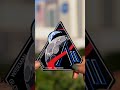
- Behold: the mission patch for Artemis II!
The Artemis II mission will embark on its journey around the Moon early 2026 with four astronauts onboard. Now we’ve got the mission patch to mark the occasion.
To learn more about the Artemis II mission, visit: https://www.nasa.gov/mission/artemis-ii/
Credit: NASA
Patch Designer: Greg Manchess
#NASA #Artemis #Moon

- Title
- What Are the Dangers of Going to Space? We Asked a NASA Expert
- Runtime
- 1:29
- Date posted
- 2 years ago
- Description
- What are the dangers of going to space? Space might look peaceful from afar but it’s a harsh environment, especially for humans. From DNA damage to bone loss to making sure there’s enough food for long missions—space is tough. But NASA is working hard to keep our astronauts safe on every step of the journey.
A NASA scientist explains what it takes.
Explore more on the hazards of human spaceflight: https://www.nasa.gov/hrp/hazards/
Producers: Scott Bednar, Pedro Cota, Jessie Wilde
Editor: James Lucas
Credit: NASA
Download this video: https://images.nasa.gov/details/What%20Are%20the%20Dangers%20of%20Going%20to%20Space

- Title
- NASA's SpaceX Crew-9 Post-Flight News Conference
- Runtime
- 1:00:54
- Date posted
- 2 years ago
- Description
- After completing a long-duration stay aboard the International Space Station, NASA’s SpaceX Crew-9 astronauts — Nick Hague, Suni Williams, and Butch Wilmore — are discussing their scientific mission to space.
The three NASA crew members and Roscosmos cosmonaut Aleksandr Gorbunov returned to Earth on March 18. Gorbunov will not participate in the news conference because of his travel schedule.
Hague, Williams, and Wilmore completed over 900 hours of research while in orbit, conducting more than 150 unique experiments. The crew studied plant growth and development, tested stem cell technology to help patients on Earth, and went on a spacewalk to collect samples from the station’s exterior, studying the survivability of microorganisms in space. Additionally, the crew supported 30 ham radio events with students worldwide and conducted a student-led genetic experiment, helping to inspire the next generation of explorers.
More info on the event:...

- Title
- "Far Out" Episode 2: Now Streaming on NASA+
- Runtime
- 0:24
- Date posted
- 2 years ago
- Description
- What does it take to live on the Moon?
Join host Megan Cruz as she explores how NASA is preparing our lunar pioneers in the newest episode of "Far Out:" https://plus.nasa.gov/video/far-out-science-you-can-eat/

- Title
- How Can I See the Northern Lights? We Asked a NASA Expert
- Runtime
- 1:43
- Date posted
- 2 years ago
- Description
- Want to catch a glimpse of the northern lights? You’ll need dark skies, the right location, good space weather and a little patience!
Auroras happen when charged particles from the Sun interact with Earth's magnetic field, creating dazzling light shows in the sky. A NASA scientist shares tips on where, when and how to see these stunning displays.
Learn more & track auroras: https://www.aurorasaurus.org
How to find and photograph auroras: https://science.nasa.gov/feature/nasas-guide-to-finding-and-photographing-auroras/
Producers: Scott Bednar, Pedro Cota, Jessie Wilde
Editor: Pedro Cota
Credit: NASA
Download video: https://images.nasa.gov/details/How%20Can%20I%20See%20the%20Northern%20Lights

- Title
- NASA Science Live: Aurora Glow, Electric Flow & the EZIE Mission
- Runtime
- 56:37
- Date posted
- 2 years ago
- Description
- Join NASA experts to talk about EZIE, a trio of just-launched NASA spacecraft that will study powerful electric currents in the sky. When colorful auroras glow, intense currents called “electrojets” flow. EZIE will help us better understand these electric currents by looking at the invisible magnetic fingerprints they leave in Earth’s upper atmosphere.
Knowing more about electrojets helps improve models for predicting the effects of space weather, which is important for protecting the power grid, GPS and communications systems on Earth, as well as satellites and astronauts in space.
Join the live chat or submit your questions via social media with the hashtag #AskNASA.
Learn more about EZIE: https://science.nasa.gov/mission/ezie/
For the latest mission updates, check the blog: https://blogs.nasa.gov/ezie/
Join the science team by becoming part of the EZIE-Mag program: https://eziemag.jhuapl.edu/
Credit: NASA

- Title
- Views: Splashing Down On Earth
- Runtime
- 0:34
- Date posted
- 2 years ago
- Description
- NASA astronauts Nick Hague, Suni Williams, Butch Wilmore, and cosmonaut Aleksandr Gorbunov splashed down off the coast of Florida on March 18, concluding NASA's SpaceX Crew-9 mission to the International Space Station.
Get the full story: https://go.nasa.gov/4bXQxTm

- Title
- NASA’s SpaceX Crew-9 Post-Splashdown News Conference
- Runtime
- 1:07:41
- Date posted
- 2 years ago
- Description
- Following the return of NASA's SpaceX Crew-9 mission, NASA and SpaceX will hold a news conference to discuss the crew's return and take media questions. The participants include:
• Joel Montalbano, deputy associate administrator, NASA’s Space Operations Mission Directorate
• Steve Stich, manager, NASA’s Commercial Crew Program
• Bill Spetch, operations integration manager, NASA’s International Space Station Program
• Sarah Walker, director, Dragon Mission Management, SpaceX
NASA's SpaceX Crew-9 mission returned to Earth on Tuesday, March 18, carrying NASA astronauts Nick Hague, Suni Williams, and Butch Wilmore, as well as Roscosmos cosmonaut Aleksandr Gorbunov, after completing a long-duration science expedition aboard the orbiting laboratory.
Learn more about the Commercial Crew Program: https://www.nasa.gov/humans-in-space/commercial-space/commercial-crew-program/
Credit: NASA