Chatham House
Global Leadership and International Co-operation in the Context of COVID-19 and Beyond
- Title
- Global Leadership and International Co-operation in the Context of COVID-19 and Beyond
- Runtime
- 1:15:56
- Date posted
- 6 years ago
- Description
- Former president of Ireland, Mary Robinson, and former president of Liberia, Ellen Johnson Sirleaf, discuss the role of global leadership and international cooperation in the context of COVID-19 and beyond.
As lockdowns begin to ease and borders and economies begin to reopen, the challenges of a COVID-affected world are becoming more apparent. Protectionist trends have been exacerbated and the pandemic has exposed vulnerabilities in avenues to global cooperation and the capacity of international organizations to respond to crises.
The health crisis has dominated international efforts and discourse for the first half of 2020 but it is not the only problem requiring international attention: the climate crisis remains a pressing issue for the global community, attempts to prevent or resolve conflict continue to falter with Yemen now one of the worst humanitarian crises of modern times, protests across the world are forcing communities and governments to address...
- Title
- African Liberation – The Historical and Contemporary Significance of Re-discovered Nationalist Speec
- Runtime
- 1:16:28
- Date posted
- 6 years ago
- Description
- Two speeches at Chatham House in 1968 and 1985 by African nationalist leaders Dr Eduardo Mondlane and Oliver Tambo at key moments of their liberation struggle for majority rule are re-examined for their significance by their daughters and 'Prexy' Nesbitt.
When Dr Eduardo Mondlane delivered his speech outlining his argument for an independent and socialist Mozambique, he did so as FRELIMO’s president and at a time of heightened tensions with Portugal – his country’s colonizers.
By the time Oliver Tambo visited Chatham House in 1985, it was ten years after Mozambique had gained its independence, and nine before the end of apartheid in South Africa. Tambo told his audience, in a speech that is being published for the first time, that his choice was simple – submit or fight.
The arguments outlined by Mondlane and Tambo demonstrate that, while there may have been change in the intervening decades, in the context of the Black Lives Matter move...

- Title
- Report Launch: The Business Case for Investment in Nutrition
- Runtime
- 1:30:32
- Date posted
- 6 years ago
- Description
- In its centenary year, Chatham House, in collaboration with Vivid Economics, has launched an exciting new report revealing the hidden costs of malnutrition in low- and middle-income countries for global business, and the extent to which these costs are recognized and addressed by multinational companies (MNCs).
The report finds that underweight and obesity, together with anaemia and the physical effects of stunting in childhood, significantly reduce productivity among the workforce in low- and middle-income countries. Yet MNCs are routinely overlooking or underestimating this productivity loss and the huge associated costs.
Businesses must do more. Good nutrition is integral to sustainable development and growth, and tackling malnutrition would be a win-win: boosting companies’ bottom lines, readying them for growing scrutiny from investors, and helping to tackle a global problem that claims millions of lives a year.
As COVID-19 pushes UN targ...

- Title
- The Future of the Global Trade System
- Runtime
- 1:03:29
- Date posted
- 6 years ago
- Description
- United States trade representative Robert E Lighthizer provides his outlook on the future of international trading systems in a COVID-19 world.
The economic effects of the COVID-19 pandemic have resulted in unprecedented shocks for supply chains and global trade flows.
What are Washington’s top priorities for trade negotiations? What changes are needed in the international trading system? And what is the administration’s vision for trade negotiation initiatives including US-UK trade relations?
The Chatham House Global Trade Policy Forum aims to develop substantive and actionable policy recommendations for the future direction of global trade in a context of changing geopolitical dynamics and rapid technological transformations.
https://www.chathamhouse.org/about/structure/americas-programme/global-trade-policy-forum
Chatham House Centenary:
Throughout our centenary year in 2020, Chatham House celebrates a century of i...

- Title
- A Century of Supporting African Engagement in International Affairs
- Runtime
- 6:37
- Date posted
- 6 years ago
- Description
- A short presentation highlighting how Chatham House has been both a major forum for discussion on Africa, and an important platform for African leaders.
To mark the centenary of Chatham House, the Africa programme curated an exhibition of archive material which charts the institute's history of engagement with Africa and support for the continent's evolution in international affairs.
Chatham House’s work on Africa has its roots in the liberal imperialism of the post war leaders. But throughout the last 100 years, it has been a platform for progress, playing a vital role in informing policymakers and facilitating debate on African affairs, as well as highlighting African perspectives on global issues.
The History of Africa at Chatham House exhibition was first displayed at Bonham’s in London for a reception in February 2020. It was curated by Christopher Vandome with the assistance of the Chatham House Library. This presentation was drawn from ...

- Title
- International Economic Cooperation and COVID-19
- Runtime
- 1:02:31
- Date posted
- 6 years ago
- Description
- The Rt Hon Lord Darling, former UK chancellor of the exchequer, examines issues presented by the pandemic within the wider uncertain international political and economic context.
The COVID-19 crisis presents an ongoing shock to an already fragile global economy. While the eventual outcome remains uncertain, early signs suggest that a fundamentally different economy will emerge from this period.
While some of these changes could be for the better, there are also major risks, particularly surrounding shifting dynamics and a potential disintegration in international economic coordination and cooperation.
In this uncertain international political and economic context, this session will examine some of the issues presented by the pandemic – both new and those that need to be looked at in an entirely different way as a result of the upheaval.
Can the response to the global health crisis provide a blueprint for international actors to ad...

- Title
- COVID-19 Pandemic Briefing – Leading a Global Response
- Runtime
- 55:10
- Date posted
- 6 years ago
- Description
- A Chatham House Centenary edition of the weekly COVID-19 pandemic briefing with Professor David Heymann and Emma Ross examines what we have learned in the first six months of the pandemic.
As countries grapple with how best to tackle the COVID-19 pandemic and the reverberations it is sending through their societies and economies, understanding of how the virus is behaving, and what measures might best combat it, continues to advance.
How best can we live with this virus in the next one to two years? What is the hope for global solidarity and for achieving equitable access to vaccines and other tools developed to help fight the virus?
Chatham House Centenary:
Throughout our centenary year in 2020, Chatham House celebrates a century of influence, independent analysis and trusted dialogue with a number of exciting initiatives. This event is part of a series of events and research outputs linked to the main goals for our second century, w...
- Title
- Inclusive Governance & Sustainable Development: Bridging Divide Between Local & International Action
- Runtime
- 1:11:32
- Date posted
- 6 years ago
- Description
- Former secretary general of the United Nations, Ban Ki-Moon, considers how governance models can be made more inclusive to facilitate meaningful dialogues between local and international actors.
Global challenges affect communities and societies differently. While action on an international and multilateral level might establish norms, guidelines and legally binding commitments, these play out in local contexts to varying effects. Political, economic and societal structures contribute uniquely to a nation’s capacity to deal with problems that are often not of their making.
For example, climate change disproportionately affects habitats and communities in countries that have contributed the least to carbon emissions and the benefits of technological advancements are often unequally distributed.
Given these disparities and the increasing complexity of global challenges, what is the potential for international governance models and structures to...

- Title
- The Future of Think-Tanks
- Runtime
- 1:33:10
- Date posted
- 6 years ago
- Description
- On the evening of 5 July 1920, the inaugural meeting of the British Institute of International Affairs was held at the Royal Society of Arts in central London.
Now, 100 years later, Chatham House marks its centenary against the backdrop of a global health crisis which has accelerated many of the structural changes in international affairs that were already apparent and which carry worrying echoes of the time of its founding in the early 20th century.
To launch our Centenary Week, running from 6 to 10 July 2020, Chatham House facilitates a conversation between think-tank leaders from across the world, reviewing the role of think-tanks in helping promote peaceful international relations and a better understanding among policymakers and the public of the major contemporary challenges in international affairs.
Questions address in a conversation moderated by Chatham House director Dr Robin Niblett include:
Can think-tanks remain releva...

- Title
- Ban Ki-moon on Inclusive Governance
- Runtime
- 1:35
- Date posted
- 6 years ago
- Description
- The 25 years between the birth of Chatham House and the United Nations (1920-1945) serve as a reminder to all the terrible consequences of retreating into nationalism.
Former UN secretary-general Ban Ki-moon speaking with Chatham House director Robin Niblett about the importance of inclusive governance.

- Title
- Energy in Humanitarian Contexts: Taking Stock of Progress in Light of COVID-19
- Runtime
- 1:31:58
- Date posted
- 6 years ago
- Description
- Discussion about the current state of energy provision in humanitarian settings, with contributions from energy practitioners implementing projects in Rwanda, Jordan, and elsewhere.
An estimated 71 million people are forcibly displaced around the world. Living in densely populated settlements, often with extremely limited access to energy to power health and other facilities, they have been profoundly affected by the COVID-19 pandemic.
The last couple of years have seen significant progress by a range of actors towards integrating energy and environmental concerns in humanitarian response.
Last December, UNHCR launched an ambitious challenge to shift all refugee camps and host communities to renewable energy by 2030, aiming to provide reliable, modern access to energy while lowering the environmental impacts of humanitarian operations.
But to what extent has the pandemic affected these ambitions and the progress of the nascent ‘hu...

- Title
- International Perceptions of North Korea's Security and Foreign Policy Priorities
- Runtime
- 1:00:05
- Date posted
- 6 years ago
- Description
- The panellists consider the extent to which Pyongyang’s security and foreign policy priorities align with international perceptions.
In his 2018 New Year’s Day address, Kim Jong-un declared that North Korea had developed a nuclear deterrent catalysing the country’s adversaries to pay more critical attention to Pyongyang’s domestic and foreign policy priorities.
While popular narratives describe Kim Jong-un as an erratic leader with whom engagement is difficult, a number of intelligence assessments contend that the North Korean leader has relatively rational concerns about his regime’s survival. But how far are these narratives contradictory?
What are Pyongyang’s security and foreign policy goals and how should we understand North Korea’s nuclear deterrent within this context? How should we understand ‘denuclearization’ in the context of North Korea and the Korean Peninsula?
And is there potential for a cohesive in...
- Title
- COVID-19 and the Balance Between Men and Women in Public and Private Life
- Runtime
- 1:00:42
- Date posted
- 6 years ago
- Description
- This webinar examines current shifts in power balances between men and women in both public and private life and their longer-term implications.
While some attention has been placed on the ways in which COVID-19 has brought the world together, the pandemic has shone a light on what continues to keep people apart.
Differences in age, wealth, race and ethnicity, have a profound impact on individual vulnerabilities to the disease and its consequences. Differences have also become apparent in people's experiences of the pandemic be it higher rates of virus-related mortality among men, women’s and girls’ greater vulnerability to domestic violence during lockdown or the differences between male and female leaders in decision-making at times of crisis.
What needs to be done to entrench positive practices, such as an opening of employment opportunities due to long-distance working, emerging from this pandemic? To what extent do certain issues, for e...

- Title
- Building Back Better: The Low Carbon Transition and the Role of the Financial Sector
- Runtime
- 1:29:02
- Date posted
- 6 years ago
- Description
- This webinar seeks to understand how the pandemic is interacting with the need for accelerated action on climate change and greater sustainability in key sectors such as aviation, fossil fuels, and insurance.
The global economic shock caused by COVID-19 will impact the campaign to accelerate climate action for decades.
The shock will almost certainly make the public more sensitive to other ‘black swan’ events, with climate change underpinning many of the most threatening, while the crisis demonstrates that governments are willing to take extraordinary interventionist measures to mitigate life threatening crises.
Much media focus has been placed on the enormous short-term challenges - and future direction of travel - facing a number of major industrial and service sectors, some of which have high carbon footprints.

- Title
- Coordinating the Fight Against Financial Crime
- Runtime
- 48:05
- Date posted
- 6 years ago
- Description
- Illicit finance not only threatens financial stability and inclusion but also provides support for terrorism and is a primary incentive for human trafficking, the illegal wildlife trade and narcotics smuggling. Frequently, actors are able to capitalize on loopholes and inefficiencies resulting from the lack of a coordinated response to financial crime and an underpowered global system for tracking illicit financial flows. The COVID-19 crisis has exacerbated this problem by putting pressure on global supply chains, labour forces, restricting movement of people and limiting the use of banking products and services.
Against this backdrop, the panellists will explore solutions and frameworks to coordinate a successful fight against financial crime. What should be the role of public-private partnerships in combatting financial crime? What do such partnerships need from each side to be efficient and effective? How can the private sector's internal effectiveness impact ‘real-wo...

- Title
- The Impact of China's Belt and Road Initiative: Lessons from Sri Lanka
- Runtime
- 45:55
- Date posted
- 6 years ago
- Description
- Speakers draw on the findings from a recent Chatham House paper to discuss the lessons that may improve future BRI projects in Sri Lanka and elsewhere in the region.
China’s Belt and Road Initiative (BRI) is having profound impacts on recipient countries. Recently, Chinese outbound investment in Sri Lanka has come under scrutiny due to intensifying geopolitical rivalries in the Indian Ocean as well as Sri Lanka’s prime location and ports in the region.
Much of the analysis on this topic so far has focused on how the economic relationship has informed Chinese geopolitical ambitions, via a so-called ‘debt-trap diplomacy’. Such a framing may be misleading, while also overlooking other dimensions of Chinese investment that warrant closer examination.
A recent Chatham House paper examines the pattern of Chinese investment in Sri Lanka to reveal a nuanced picture of benefits and costs.
https://www.chathamhouse.org/publication/chinese-in...

- Title
- Webinar: How Can We Reduce and Sustainably Manage Waste?
- Runtime
- 1:03:29
- Date posted
- 6 years ago
- Description
- Although governments play a huge role in implementing policies and set clear expectations to protect the environment, it is also the responsibility of individuals to learn sustainable ways to dispose of their rubbish. There is an urgent need for innovative thinking and ideas to tackle waste crime, promote resource efficiency and move towards a circular economy by keeping items in use as long as possible. Around 75% of all the waste can be recycled or reused. However, many people do not know which materials can be recycled and how to properly dispose of them.
In this webinar, the Common Futures Conversations community considers a series of new sustainable waste management solutions, with policymakers from the African Union and WasteAid.
Please note: Due to technical difficulties the speaker from the African Union, Olayide Olushola, was not audible for much of the recording. However, Ms Olushola contributed much to the discussion of the ideas as the event progr...

- Title
- Webinar: How Can We Prevent the Misuse of Surveillance Technologies?
- Runtime
- 59:13
- Date posted
- 6 years ago
- Description
- Many states employ surveillance technologies as a way to prevent terrorism, fight crime and to ensure public safety as many individuals will avoid committing a crime if they know their actions are being recorded by a camera. Surveillance technology can also help law-enforcement officers to solve criminal cases with crucial piece of evidence from the recorded videos. However, despite the fact that surveillance technology was created to protect the public by minimising criminal activity and make people feel safe, there is a great misuse of this technology. Some claim that it is an infringement on people’s freedoms and that it is actually a less-effective alternative to physical surveillance.
In this webinar the Common Futures Conversations community considers new ideas for preventing the misuse of surveillance technologies, in discussion with Philip Thigo, Technical Advisor in the Office of the Deputy President of Kenya, and Caroline Wilson Palow, Legal Director at Privacy...

- Title
- Maintaining Momentum in Sudan’s Transition: Delivering International Support
- Runtime
- 1:33:37
- Date posted
- 6 years ago
- Description
- Panellists assess the progress made so far in Sudan’s transition, potential roadblocks now and ahead, and how an enhanced international response can consolidate progress and address key challenges.
Urgent international assistance and direct budgetary support are required to sustain the momentum of the transitional government across priorities such as economic reform and the provision of social welfare, arrears clearance and debt relief, delisting from the US State Sponsor of Terrorism (SST) status, and the implementation of future peace agreements.
The upcoming Sudan Partnership Conference on 25 June – convened by Germany, Sudan, the UN and EU – offers a crucial opportunity for partners to commit funds and coordinate efforts, with immediate impact essential as the decline in basic living standards and the challenge of the COVID-19 outbreak add further complexity to the delicate transition period.

- Title
- Democracy and US Foreign Policy
- Runtime
- 1:25:05
- Date posted
- 6 years ago
- Description
- Panellists discuss the future role of democracy and human rights in America’s foreign policy.
The end of 2019 marked the 14th consecutive year of decline in global freedom, but also a wave of popular movements from Iraq to Hong Kong to Venezuela demanding accountable government and rule of law.
Against this backdrop, the United States and China have vied in increasingly confrontational ways for leadership of an emerging global order. In 2020, the COVID-19 pandemic has further sharpened the potential stakes of this competition for both defenders of democracy and aspiring autocrats.
As tensions in the US-China relationship continue to escalate, the question of values and the role they play in foreign policy has been brought back onto the global stage.
Will democracy itself play a more central role in US post-crisis foreign policy? Will there be a fundamental shift in strategy if a Democratic administration takes office following No...

- Title
- Towards a More Resilient Future for Cities
- Runtime
- 55:42
- Date posted
- 6 years ago
- Description
- As highly dense population centres and hubs of economic activity, cities have taken centre stage in the COVID-19 pandemic, both in terms of the disproportionate impact of the virus on their residents and their respective responses to the crisis. However, social inequalities and insufficient infrastructure and funding are some of the reasons that has meant that the capacity and capability of different cities to contain and respond to COVID-19 has varied considerably across the world.
In light of the coronavirus pandemic, the panel discusses how governments, businesses and citizens can work together to build more resilient cities.
What factors are affecting cities’ abilities to address the current pandemic? And what lessons can we learn from the current crisis to build more resilient cities in the longer term and to address other challenges such as climate change?

- Title
- In Conversation with Audrey Tang
- Runtime
- 1:08:56
- Date posted
- 6 years ago
- Description
- Taiwan’s digital minister Audrey Tang discusses Taiwan's digital response to the crisis and the lessons it holds for the value of civic technology.
The success of Taiwan’s initial response to COVID-19 holds important lessons, not just for effective public health governance, but also for wider complex questions around the relationship between technology and democracy.
Over recent years, Taiwan has developed one of the world’s most vibrant political cultures by making the best use of the best use of technology. Bottom-up information sharing, public-private partnerships, 'hacktivism' and participatory collective action have all been central to the country’s success in coordinating a consensual and transparent set of responses to the ongoing pandemic.
Audrey Tang has been at the forefront of this transformation, working closely with entrepreneurs and hacktivists to rapidly produce a range of maps and applications to help tackle the crisis. ...

- Title
- The Future of Air Travel
- Runtime
- 50:06
- Date posted
- 6 years ago
- Description
- Following the outbreak of the coronavirus, airlines have been forced to cut jobs in the face of a steep decline in passenger demand and companies have had to halt the production and delivery of orders.
However, prior to the crisis the industry was forecasting continued growth in global air traffic and looking to innovate air travel to simultaneously meet the demand for travel while reducing carbon emissions.
Could the pandemic present an opportunity to think innovatively to address the immediate crisis facing the industry and accelerate the switch to newer and greener technology?
Panelists discuss how the pandemic has impacted the industry and if it is possible to view this as an opportunity for reinventing air travel. How have border policies put in place to contain the pandemic impacted air travel and the wider industry? What can companies do to address the concerns of passengers underpinning the declining demand? Does the crisis present an op...

- Title
- International Affairs Webinar: How Images Frame China's Role in African Development
- Runtime
- 52:36
- Date posted
- 6 years ago
- Description
- Images play a key role in how development is understood. For instance, images depicting trade, labour, agriculture and migration in Africa–China relations can appear to tell a story of unfolding industrialization and modernization—what we recognize as development.
However, images also have the ability to reproduce the ideas and values of powerful institutions and leave certain structural violence invisible to the viewer. Using widely circulated images depicting China's impact on African development in western news media sources as an example, this webinar demonstrates the importance of visual politics to policy-making.
Read the International Affairs article: https://doi.org/10.1093/ia/iiaa060

- Title
- Weekly COVID-19 Pandemic Briefing
- Runtime
- 47:40
- Date posted
- 6 years ago
- Description
- As countries grapple with how best to tackle the COVID-19 pandemic and the reverberations it is sending through their societies and economies, understanding of how the virus is behaving, and what measures might best combat it, continues to advance.
The fourteenth in a weekly series of interactive webinars on the coronavirus with Professor David Heymann helping us to understand the facts and make sense of the latest developments in the global crisis.
This session will provide an opportunity for extended audience Q&A and will thus be devoted to audience questions. Questions can be submitted in advance or during the session. To submit a question in advance, please fill in this form.
Professor Heymann is a world-leading authority on infectious disease outbreaks. He led the World Health Organization’s response to SARS and has been advising the organization on its response to the coronavirus.

- Title
- Webinar: How Can We Increase Youth Representation in Government?
- Runtime
- 1:02:24
- Date posted
- 6 years ago
- Description
- For democracy to function, it is important that the local government reflects all its people. Proper representation translates into power, and young people are building bridges across societies as well as fundamental stakeholders in creating social change. However, youth engagement and representation in the government and policy-making processes around the globe is relatively low, according to the UN Department of Economic and Social Affairs. In the UK, for instance, the average age of MPs elected at the 2019 General Election was 51, and 49% of MPs were aged over 50. This is a solid example of youth underrepresentation in government. In Africa, the median age of the continent’s population is 25, but the median age of African leaders is 65. Are governments failing younger Africans? Can we blame on the electoral system? If so, why are young people less likely to be elected globally?
In this webinar policymakers from the European Parliament and YIAGA Africa discuss the cha...

- Title
- EU-US Relations: The View from Washington and Brussels
- Runtime
- 1:01:38
- Date posted
- 6 years ago
- Description
- For decades, despite some policy differences, the US and the European Union have collaborated on global and regional political and economic challenges. Although they view the transatlantic relationship through different lenses, both sides have been united in their efforts to preserve and further European stability.
However, in recent years, decisions by the Trump administration – including the introduction of tariffs, the US’ waning commitment to international accords and treaties and various foreign policy shifts – and its abrupt nature have exacerbated these differences.
This discussion considers the current state of EU-US relations. How philosophically aligned are the EU and the US and how important is this alignment in ensuring a fruitful relationship?
To what extent is the EU’s approach to the US formed by Washington’s perspective and rhetoric on the bloc and vice versa? How central is the EU to American interests in Europe? And ...

- Title
- Economic Diplomacy – The Future of UK Foreign Economic Policy
- Runtime
- 58:59
- Date posted
- 6 years ago
- Description
- Drawing on the conclusions of the first half of the evidence sessions for the LSE Economic Diplomacy Commission, an LSE IDEAS initiative that aims to facilitate strategic discussion and evaluation of the future of the UK’s economic diplomacy, this panel discusses how foreign and economic policy in the coming years is likely to affect UK society and the economy.
What does economic diplomacy encompass and how can the UK use it to its advantage as it navigates economic and foreign policy in a post-EU and a post-pandemic world? What should be the UK’s aims in setting out trade and foreign investment policies outside of the European Union framework?
And what is the UK’s capacity in re-shaping globalization and international institutions and norms for a more sustainable and equitable global community?
This event is held in collaboration with LSE IDEAS.

- Title
- The UN's Vision for a Digital Future
- Runtime
- 1:15:01
- Date posted
- 6 years ago
- Description
- The scale, spread and speed of change brought about by digital technology is unprecedented and the current levels of international cooperation are unequal to the challenge.
Within the space of a few months, the global health crisis has fast-forwarded digitalization across all sectors as well as amplified its core challenges. It has also further accentuated the gaps in connectivity and digital access within, and between, countries as participation in social, political and economic activities are now mainly facilitated by digital infrastructures and internet access.
The new pandemic environment has underscored the fragmentation of responses and approaches to technology deployment and adoption. Now, more than ever, cooperation across domains, and across borders, is urgent and critical to realizing the full social and economic potential of digital technologies, mitigating the risks they pose and curtailing any unintended consequences during and after the current...

- Title
- Chatham House Webinar: The EU-UK Relationship
- Runtime
- 1:00:26
- Date posted
- 6 years ago
- Description
- Ambassador of the European Union to the United Kingdom, João Vale de Almeida, joins Dr Robin Niblett to discuss the EU-UK relationship.

- Title
- Weekly COVID-19 Pandemic Briefing – Asian Responses and the Experience with SARS
- Runtime
- 59:07
- Date posted
- 6 years ago
- Description
- As countries grapple with how best to tackle the COVID-19 pandemic and the reverberations it is sending through their societies and economies, understanding of how the virus is behaving, and what measures might best combat it, continues to advance.
The thirteenth in a weekly series of interactive webinars on the coronavirus with Professor David Heymann and special guest, Professor Gabriel M Leung, helping us to understand the facts and make sense of the latest developments in the global crisis.
How are the epidemics unfolding across Asia? What have been the key features of responses? How has the experience with SARS informed responses and what can the rest of the world learn from how Asian countries are handling the virus?
Professor Heymann is a world-leading authority on infectious disease outbreaks. He led the World Health Organization’s response to SARS and has been advising the organization on its response to the coronavirus.
P...

- Title
- The Role of the EU in Coordinating Responses to Global Health Crises
- Runtime
- 57:45
- Date posted
- 6 years ago
- Description
- This webinar explores what role the European Union has played so far in coordinating national responses to the COVID-19 outbreak and will examine where efforts might have been disconnected or insufficient.
According to the latest World Health Organization (WHO) figures, Europe has been faced with over 1.8 million confirmed cases and over 160,000 deaths as a result of the coronavirus outbreak.
As each member state experiences its own epidemic, approaches to dealing with the virus, as well as restrictions on the economy and population, have varied between countries.
With this mixture of responses and priorities, there have been calls for EU institutions to take a greater role in coordinating the response measures across the continent.
What do the member states expect from the EU during times of global health emergencies? Where might EU institutions be limited in their abilities to fulfil these expectations? How can the EU strengthen ...

- Title
- Russia and the High North: How Should the West Engage the Next Chair of the Arctic Council (2021-23)
- Runtime
- 1:27:35
- Date posted
- 6 years ago
- Description
- This event offers perspectives on Moscow’s agenda for the Arctic Council, as well the challenges and opportunities this could create for stability and security in the High North.
In 2021, for a two-year period, Russia will chair the Arctic Council, the leading intergovernmental forum promoting cooperation in the Arctic. It will do so whilst the region – and the world – grapples with the coronavirus pandemic, ongoing tensions between Russia and the West, and uncertainty over the intentions of China.
This event is organized in partnership with Loughborough University and the Henry Jackson Society.

- Title
- Finding Solutions to Insecurity in Cabo Delgado
- Runtime
- 1:51:14
- Date posted
- 6 years ago
- Description
- Since October 2017, armed attacks in Cabo Delgado, Northern Mozambique have increased in intensity and the spread has widened. More than 1,000 people are thought to have died, and an unknown number of homes and public buildings destroyed.
Reports suggest that more than 100,000 people have been internally displaced by these attacks that have been attributed to an armed Islamist sect. Yet very little is known about who the attackers are, what their strategic objectives are and on whose domestic and international support they rely.
Developing multi-faceted solutions to this insecurity will require detailed understanding of the drivers of this extremism, its connection to local informal and illicit economic activity, and the social and structural roots of disenfranchisement and disenchantment.
At this online event, the speakers explore the structural causes, drivers and dynamics of the armed attacks in Cabo Delgado, including the regional and inter...

- Title
- International Affairs Webinar: Donald Trump and the American Presidency
- Runtime
- 41:07
- Date posted
- 6 years ago
- Description
- The election of Donald Trump has supercharged research into the power of the US presidency. The erosion of formal checks on presidential power from the legislative, judicial and executive branches have enhanced the powers of president. This increased power, as well as the manner in which President Trump has been able to us it, have particularly affected the US foreign policy and the country's reaction to the ongoing crisis. The consequences of this are likely to impact not only the future of the presidency, but of the United States.
Read Daniel Drezner's article, 'Immature leadership: Donald Trump and the American presidency', in International Affairs here: https://doi.org/10.1093/ia/iiaa009

- Title
- COVID-19, The Belt and Road Initiative and China's Evolving Regional Relations
- Runtime
- 1:00:30
- Date posted
- 6 years ago
- Description
- The COVID-19 pandemic and its economic fallout is having a profound impact on China’s Belt and Road Initiative (BRI) and its regional relations. More immediately, the BRI faces budgetary challenges as China’s leadership focuses its resources instead on revitalising the economy at home and maintaining social stability.
Meanwhile, key regional partners of the BRI are also contending with economic crises linked to the global health outbreak, raising concerns over BRI related debts and loans.
But the pandemic has also raised wider questions around China’s regional role in a COVID-affected world which will impact both the vision and shape of the BRI as it continues to evolve as China’s flagship foreign policy.
Against this backdrop, the panel reflects on both the short and long-term implications of the COVID-19 pandemic on the BRI and China’s regional relations.
What challenges has the pandemic posed for the BRI and its region...

- Title
- Palliative Care During COVID-19
- Runtime
- 1:08:58
- Date posted
- 6 years ago
- Description
- Every year, an estimated 40 million people worldwide require palliative care, of which 78% live in low and middle-income countries. Despite the recognition of palliative care as a human right through the 2018 Declaration of Astana, only estimated 14% of people who need to be relieved of suffering by means of early identification, impeccable assessment, and treatment of pain, actually receive it.
As health systems become increasingly strained as a result of COVID-19, providing safe and effective palliative care faces more challenges than before. Not only are patients deteriorating quickly, but health professionals are overworked, resources are limited, and isolation is mandated.
This situation will be compounded in most in low-income and middle-income countries where shortages are greater, protective equipment is running short and surging deaths could overwhelm usual service provision.
Against this background, this roundtable explores the urgent...

- Title
- Scenarios for the Russian Economy in a COVID-19 World
- Runtime
- 1:24:54
- Date posted
- 6 years ago
- Description
- In the face of an ongoing public health crisis as well as low and unstable oil prices, the Russian economy has seen better days.
How have the Russian authorities reacted to the economic fallout of the coronavirus? How are businesses, especially small and medium-sized enterprises, coping? What would it take for Russia to achieve economic stability out of these unfavourable circumstances? Does it need a new growth model or has it passed the point of no return?
- Title
- Coronavirus, Globalization and Global Supply Chains
- Runtime
- 54:04
- Date posted
- 6 years ago
- Description
- The COVID-19 pandemic has exacerbated the implications of pre-existing global trends such as rising protectionism and mounting trade tensions for the future of economic globalization.
The global health crisis has since led to widespread lockdowns, paralysed supply chains and interrupted shipments of medical equipment between trade partners thereby further exposing the vulnerabilities of an integrated global economy.
Against this backdrop, the panellists assess the impact of the coronavirus on economic globalization and global supply chains. To what extent might the health emergency encourage a re-evaluation of economic integration? How should governments and industries prepare for a resumption of activities under the auspices of a ‘new normal’ where ‘just-in-time’ methods of production may not be resilient enough to systemic shocks and challenges?
Can a globalized supply and demand system become more resilient to shocks? And with China b...

- Title
- Coronavirus Crisis – Implications for an Evolving Cybersecurity Landscape
- Runtime
- 56:05
- Date posted
- 6 years ago
- Description
- The COVID-19 pandemic is having a profound impact on the cybersecurity landscape - both amplifying already-existing cyber threats and creating new vulnerabilities for state and non-state actors.
The crisis has highlighted the importance of protecting key national and international infrastructures, with the World Health Organization, US Department of Health and Human Services and hospitals across Europe suffering cyber-attacks, undermining their ability to tackle the coronavirus outbreak.
Changing patterns of work resulting from widespread lockdowns are also creating new vulnerabilities for organizations with many employees now working from home and using personal devices to work remotely.
In light of these developments, the panellists discuss the evolving cyber threats resulting from the pandemic. How are they impacting ongoing conversations around cybersecurity? How can governments, private sector and civil society organizations work together t...

- Title
- Where is the Global Response to COVID-19?
- Runtime
- 1:18:39
- Date posted
- 6 years ago
- Description
- The panel considers how the US, UK and EU can contribute to a global response, and asks what a global response to the health and economic crisis in the developing world would look like.
COVID-19 has presented a dramatic shock to the global health and economic landscape. The US has been inward-focused and failed to step up and lead a multinational effort to address COVID-19.
Europe, on the other hand, has led on efforts to generate funding and encourage global cooperation to secure a vaccine as quickly as possible.
This event is part of the US and Americas Programme Inaugural Virtual Roundtable Series on the US and the State of the World.

- Title
- International Affairs Webinar: Toxic Masculinity and Terrorism
- Runtime
- 48:30
- Date posted
- 6 years ago
- Description
- In discussing extremism and how to prevent it, policy-makers and the public often focus on the dangers of marginalized men and ‘toxic masculinity’. However, the dominant interpretation of ‘extreme’ masculinity has detracted from a holistic understanding of extremism among men in terrorist groups and the radical right.
In this webinar Elizabeth Pearson examines how masculinity should be understood in the context of extremism, how patriarchal power structures relate to violence and extremism, and which discussions and policies can help prevent violent extremism.
Elizabeth's article, 'Extremism and toxic masculinity: the man question re-posed', was published in the November 2019 issue of International Affairs. Read the article online: https://doi.org/10.1093/ia/iiz177

- Title
- Kazakhstan: Relations with Other Central Asian States
- Runtime
- 3:59
- Date posted
- 6 years ago
- Description
- Kazakhstan has traditionally been an intermediary between the Central Asian states and external players, but has now become a much more integral part of the Central Asian region.
Annette Bohr discusses why this change has occurred and how it will it play out.
Read more from Annette on these issues in the Chatham House report Kazakhstan: Tested by Transition
https://reader.chathamhouse.org/kazakhstan-tested-transition#relations-with-other-central-asian-states

- Title
- Weekly COVID-19 Pandemic Briefing - Coronavirus Contact Tracing
- Runtime
- 1:00:54
- Date posted
- 6 years ago
- Description
- As countries grapple with how best to tackle the COVID-19 pandemic and the reverberations it is sending through their societies and economies, understanding of how the virus is behaving, and what measures might best combat it, continues to advance.
The twelfth in a weekly series of interactive webinars on the coronavirus with Professor David Heymann and special guest, Dr Oliver Morgan, helping us to understand the facts and make sense of the latest developments in the global crisis.
What precisely is contact tracing and how does it fit in with a rigorous response? What does efficient case-finding and contact tracing look like? What are the biggest challenges countries are likely to face with contact tracing as they emerge from lockdowns? How well are the contact tracing apps working?
Professor Heymann is a world-leading authority on infectious disease outbreaks. He led the World Health Organization’s response to SARS and has been advising the o...

- Title
- Kazakhstan: Political and Civil Liberties, and Human Rights
- Runtime
- 3:48
- Date posted
- 6 years ago
- Description
- Joanna Lillis discusses the prospects for political and civil liberties and human rights in Kazakhstan. Is the situation likely to improve under President Tokayev?
Read more from Joanna on these issues in the Chatham House report Kazakhstan: Tested by Transition
https://reader.chathamhouse.org/kazakhstan-tested-transition#political-and-civil-liberties-and-human-rights

- Title
- Deep Technology in Africa
- Runtime
- 1:08:44
- Date posted
- 6 years ago
- Description
- African countries stand to benefit a great deal from potentially transformative scientific discovery and innovation in engineering - particularly from that which is 'home-grown'.
The coronavirus pandemic and its effects on economies and livelihoods are a reminder of the urgent need to harness deep technology to uncover ways to sustainably grow inclusive economies, improve development outcomes, and protect against climate and health risks.
At this online event, speakers discuss African deep technology, the support that start-ups require and the investment landscape, as well as the transformative potential of such innovation.

- Title
- The Role of Opposition and Alternative Policy for South Africa's Economic Recovery
- Runtime
- 1:12:22
- Date posted
- 6 years ago
- Description
- The need for rapid and restrictive measures in response to the COVID-19 pandemic means that democratic institutions must adapt to find new ways of scrutinizing policy and ensuring transparency around data-driven responses to the virus and its economic impact.
The South African government faces a significant challenge in protecting livelihoods and reviving the economy while containing the spread of the virus.
South Africa's largest opposition party, the Democratic Alliance (DA), was initially supportive of the measures to prevent the spread of the virus, but has become increasingly critical of the government's response.
At this event, John Steenhuisen, interim leader of the DA, outlines how opposition parties can input and shape debates and policy agendas during the pandemic response, and presents his party's policy agenda for economic revival and long term sustainable growth in South Africa.
He is joined for the Q&A by Gwen Ngweny...

- Title
- Inequalities, COVID-19 and the Future of Capitalism
- Runtime
- 44:12
- Date posted
- 6 years ago
- Description
- Drawing on his most recent research, Professor Angus Deaton reflects on whether and how the flaws of capitalism can be addressed to help build a more prosperous and just world.
Prior to the COVID-19 outbreak, life expectancy in the United States was in decline and the educational gap in the age of death was widening.
What Angus Deaton and Anne Case labelled as ‘deaths of despair’ - deaths from suicide, drug overdose and alcoholic liver disease disproportionately affecting less-educated Americans - rose from 65,000 in 1995 to 150,000 in 2018.
Over the same period, a sixfold increase in share prices as measured by the S&P 500 largely benefited wealthier Americans, a group more likely to own equities, either directly or through pension plans. Is it fair to argue that for those who used to prosper in America, capitalism is no longer delivering? And how does the unfolding global health crisis intersect with such findings?
What socia...

- Title
- The Impact of Coronavirus on the China-US Rivalry
- Runtime
- 47:08
- Date posted
- 6 years ago
- Description
- The speakers reflect on the short and long-term impact of the coronavirus on US-China relations.
The geopolitical contest between the US and China has often been described as the rivalry that will shape the twenty-first century. The global health crisis appears to have only fuelled tensions between the world’s two largest economies.
What options are available to Chinese policymakers as they confront the challenge of restarting the Chinese economy amidst a deteriorating Sino-US relationship? What are the recent developments in the China-US intellectual property dispute and how will this impact on their respective quests for global technological supremacy in the future?
- Title
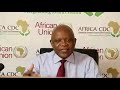
- Weekly COVID-19 Pandemic Briefing - Experience and Response in Africa
- Runtime
- 1:00:28
- Date posted
- 6 years ago
- Description
- As countries grapple with how best to tackle the COVID-19 pandemic and the reverberations it is sending through their societies and economies, understanding of how the virus is behaving, and what measures might best combat it, continues to advance.
The eleventh in a weekly series of interactive webinars on the coronavirus with Professor David Heymann and special guest, Dr John Nkengasong, helping us to understand the facts and make sense of the latest developments in the global crisis.
Why has Africa so far apparently been relatively spared the scale of outbreak seen elsewhere? What challenges and successes is the Africa CDC experiencing in supporting responses across the continent? What can other countries learn from approaches being taken in Africa? What will be the biggest challenges for responses in Africa over the next six months to a year?
Professor Heymann is a world-leading authority on infectious disease outbreaks. He led the World Healt...