Chatham House
War in Sudan: Perspectives and prospects for resolution

- Title
- War in Sudan: Perspectives and prospects for resolution
- Runtime
- 1:54:47
- Date posted
- 3 years ago
- Description
- This panel discussion explores perspectives on the war and discusses scenarios for its evolution and resolution.
The outbreak of conflict between the Sudanese Armed Forces (SAF) and the Rapid Support Forces (RSF) on 15 April has derailed Sudan’s fragile transition towards civilian rule, with deep implications for the country’s future governance trajectory and potentially damaging regional ramifications.
A month of fighting between Sudan’s two main military factions in Khartoum and elsewhere in the country has resulted in hundreds of deaths, thousands of injuries, and the displacement of over 900,000 people, internally and to neighbouring countries.
The current devastation follows more than three years where the leaders of SAF and RSF sought to stifle Sudan’s transition towards civilian rule – with a military coup in 2021 and escalating tensions between the two effectively blocking political efforts aimed at restoring a robust civ...

- Title
- Turkey election special: Where next for Turkish democracy?
- Runtime
- 34:51
- Date posted
- 3 years ago
- Description
- This week on podcast we look at the fallout from the first round of Turkey’s presidential and parliamentary elections. President Erdogan is just a hair's breadth away from securing the 50% of the vote needed to become president. With Turkey set to enter a presidential run-off on 28 May we ask what this means for Turkey’s fragile democracy? Has the opposition under Kilicdaroglu lost momentum? And what impact did issues such as identity politics, the economy, foreign policy, and the devastating earthquakes play in the election?
We also look more broadly to what the result means for Turkey’s place in the world. With Turkey potentially about to enter a third decade of rule under Erdogan, where will this place Ankara’s ties with Russia, Europe, and the United States? What does this mean for Sweden’s entry into NATO? And what does the election result mean for the future of Turkey’s fragile economy?
Joining Bronwen Maddox on the show this week is G...

- Title
- Will Russia put nuclear weapons in Belarus?
- Runtime
- 25:47
- Date posted
- 3 years ago
- Description
- This week on the podcast we look at the announcement by Vladimir Putin to move Russian nuclear weapons into Belarus and equipping Belarusian forces with dual-use equipment and technology. We discuss what the security implications are of this decision, how it fits into Russia’s wider nuclear doctrine and how concerned we should be.
We also dive into the internal dynamics of Belarus. It’s been three years since the 2020 presidential election. An election Aliaksandr Lukashenka was widely seen to have lost, sparking widespread pro-democracy protests. Since then, however, Lukashenka has crushed the opposition in Belarus, kidnapped journalists and been drawn into Russia’s invasion against Ukraine. Our experts discuss the sentiment in Belarus via polling data commissioned by Chatham House and ask how the West should engage with Europe’s last dictatorship?
Joining Bronwen Maddox on the show this week are colleagues from our Russia and Eurasia Program. Ke...
- Title
- Turkey at a crossroads
- Runtime
- 1:04:41
- Date posted
- 3 years ago
- Description
- What is at stake in the upcoming presidential and parliamentary elections?
Turkey is heading towards a fateful presidential and parliamentary elections in May 2023. These elections are taking place against the background of a deepening economic downturn and a devastating earthquake.
The elections will bear a major impact on the future of Turkish democracy, economy and foreign policy. At stake is the nature of Turkey’s political system, its geopolitical identity and the health of its democracy.
To unpack the significance and implications of this election, this event aims to address the following questions:
What kind of political visions do the main presidential candidates offer for the country?
How do they differ on the main domestic and foreign policy issues?
How do the presidential candidates feature in public surveys?
What does this election mean for Turkey’s foreign policy?
What is the likel...

- Title
- Stories of 1.5°C: Dead or alive?
- Runtime
- 1:26:14
- Date posted
- 3 years ago
- Description
- How can a rapid, equitable green transition navigate the increasingly difficult circumstances resulting from the deepening climate and ecological crisis?
High profile voices are arguing that the global goal of limiting climate change to 1.5° C is already lost. Yet limiting to 1.5°C is still physically possible and, according to the United Nations (UN), requires a ‘rapid and systemic transformation’ of societies globally.
The growing debate over the prospects for 1.5°C is partly about possibilities for transformation, how societies could handle the severe consequences of reaching and potentially breaching 1.5°C, and how policymaking should change going forward.
Debating this are those who think that the shock of losing 1.5°C could be a wake-up call to stimulate faster change. Or those who think that transformational change is clearly not possible and a different strategy is needed. Or those who think mainstream narratives on the possibili...

- Title
- Turkey elections: High stakes for democracy | Explainer | Chatham House
- Runtime
- 3:44
- Date posted
- 3 years ago
- Description
- Galip delves into how the upcoming election will influence Turkey’s domestic politics, the potential restoration of democratic processes, rule of law, and a possible shift from a presidential to a parliamentary system.
He also explores the likelihood of a coalition government which could foster a culture of compromise in Turkey’s political landscape.
The elections are also important in the global contest between democracy and authoritarianism, especially given Turkey’s position in the power competition involving Russia, China, and the West. The results could also signal potential changes in the country’s foreign policy.
Galip also discusses evolving Turkish-Western and Turkish-Russian relationships, and ongoing challenges surrounding the 2016 Turkey-Europe migration deal.
#TurkeyElections2023 #TurkishDemocracy #globalpolitics
Produced by Jon Wallace

- Title
- Trade Insights | Krystel's perspective | Chatham House
- Runtime
- 2:23
- Date posted
- 3 years ago
- Description
- Join Krystel Sil Sikana, a researcher based in Brussels, as she delves into the climate-conflict-migration nexus in the Sahel region and Central Africa. Discover the crucial role of local communities in driving sustainability, particularly in the agricultural sector. Learn about the importance of funding, training, and access to technology in empowering locals to transition towards sustainable practices. Watch now and gain insights into the challenges and opportunities for sustainable development. #ClimateConflict #migration #centralafricanrepublic #sustainableagriculture #funding #TechnologyAccess #sustainability

- Title
- Trade Insights | Gabrielle's perspective | Chatham House
- Runtime
- 3:44
- Date posted
- 3 years ago
- Description
- Gabrielle Pero, Executive Director of the National Support Centre for Development and Popular Participation in the Democratic Republic of Congo, discusses the roles of states, communities, and the private sector in achieving fair and sustainable trade. Gabrielle believes that these three main actors should work together, ensuring that policies and actions take into account the needs of local communities. Challenges include the difficulty of accessing funding and the exclusion of communities in favour of big businesses. Gabrielle suggests alleviating access conditions for communities, supporting cooperative efforts, and urging states to consider community needs in policymaking. #FairTrade #SustainableTrade #Collaboration

- Title
- Trade Insights | Adamou's perspective | Chatham House
- Runtime
- 3:46
- Date posted
- 3 years ago
- Description
- Join us in this Trade Insights episode as Adamou, president of Mbororo Social and Cultural Development Association in Cameroon, discusses the challenges his pastoralist community faces due to climate change. Learn about the conflicts, food security issues, and the need for global solutions involving these communities in environmental restoration. #TradeInsights #ClimateChange #PastoralistCommunities

- Title
- Trade Insights | Issa's perspective | Chatham House
- Runtime
- 3:52
- Date posted
- 3 years ago
- Description
- Issa Lingbelu, a civil society member and development actor from the Democratic Republic of Congo, highlights the importance of community involvement for fair and sustainable trade. As a part of a local NGO focused on technology transfer, he emphasizes the need for training and coaching young people. Learn about the barriers to sustainable trade in developing countries and the need for better organization and consultation with communities. #TradeInsights #SustainableTrade #CommunityInvolvement
- Title
- Trade Insights | Alexandre's perspective | Chatham House
- Runtime
- 3:37
- Date posted
- 3 years ago
- Description
- Meet Alexander Kasterine from the International Trade Center, who works as a senior adviser on trade and environment. Learn about the two broad levels of sustainable transition: policymaking and consumer behavior. Policymakers must set incentives for industries to adopt low-carbon practices, while consumers need to shift to more ethical consumption patterns. Discover the challenges of carbon pricing, such as the need for redistribution and social safety nets to avoid unfairly burdening the poorest. Watch now and understand the complexities of transitioning to a just and sustainable future. #SustainableTransition #Policymaking #consumerbehavior #EthicalConsumption #CarbonPricing #climatechange

- Title
- Trade Insights | Harold's perspective | Chatham House
- Runtime
- 2:30
- Date posted
- 3 years ago
- Description
- In this Trade Insights episode, Harald Tollan from the Ministry of Foreign Affairs of Norway shares his thoughts on the importance of transparency, fair trade regulations, and international standards. Discover why consumers, companies, and governments all have a role to play in creating a more ethical global trade system. #TradeInsights #Transparency #FairTrade
- Title
- Trade Insights | Olafur's perspective | Chatham House
- Runtime
- 1:53
- Date posted
- 3 years ago
- Description
- Olafur Guðnason, head of communications at Carbfix, shares insights on how creating a just trade relies on bottom-up pressure from consumers and NGOs. In this Trade Insights video, he emphasizes the crucial role of education, awareness, and creating pressure in driving change towards sustainability and justice in global trade.

- Title
- Trade Insights | Faizal's perspective | Chatham House
- Runtime
- 2:40
- Date posted
- 3 years ago
- Description
- Faizal Parish, the director of the Global Environment Center, shares his thoughts on creating just and sustainable trade. He emphasizes the need for standards to judge sustainable production and fair price mechanisms for equitable distribution of benefits. Parish also discusses the challenges faced at the local level, such as building understanding among smallholder communities to develop sustainable practices. Furthermore, he calls for enforcement and verification to ensure that those who claim sustainable production are actually adhering to the standards. #SustainableTrade #FairTrade #GlobalEnvironmentCenterNarubia

- Title
- Trade Insights | Tim's perspective | Chatham House
- Runtime
- 2:40
- Date posted
- 3 years ago
- Description
- Prof. Tim Benton shares his perspective on the role of powerful countries in shaping global trade policies and the need for a shift towards sustainable and just practices. Learn how prioritizing quality over cheap production can transform the world economy and reduce inequality and environmental impacts.

- Title
- Trade Insights | Hassan's perspective | Chatham House
- Runtime
- 4:16
- Date posted
- 3 years ago
- Description
- Hassan Ongala, the National Coordinator for the REDD+ process in the Democratic Republic of Congo, discusses the importance of sustainable practices in trade and agriculture. He emphasizes the need for decarbonized agriculture, fair pricing, and the removal of trade barriers. Hassan also addresses challenges related to climate imbalance and suggests nature-based solutions to promote sustainability. #SustainableTrade #ClimateBalance

- Title
- Trade Insights | Narulina's perspective | Chatham House
- Runtime
- 9:04
- Date posted
- 3 years ago
- Description
- Discover the powerful insights of Narubia Werreria, President of the Indigenous Institute of Tocantins, as she shares her wisdom on the urgent need for a global economic transition, respecting all forms of life, and the role of indigenous people as true climate authorities. #TradeInsight #IndigenousWisdom #EconomicTransition

- Title
- Trade Insights | Bruno's perspective | Chatham House
- Runtime
- 2:28
- Date posted
- 3 years ago
- Description
- Bruno, a member of the Earth Child Institute in Brazil, discusses the importance of involving children and youth in discussions and negotiations about climate change. He stresses the need for adults to listen and provide opportunities for the younger generation to participate in finding solutions for a sustainable planet. Discover the challenges of climate justice and the role of vulnerable countries. #TradeInsights #ClimateChange #YouthInvolvement

- Title
- Trade Insights | Hilyatuz's perspective | Chatham House
- Runtime
- 6:00
- Date posted
- 3 years ago
- Description
- Meet Hilyatuz from the Climate Reality Project who discusses the key agents for change in achieving a sustainable and just transition. Explore the barriers to sustainable trade, including policy gaps, capacity building for smallholders, and information accessibility. Watch now and understand the importance of collaboration for a more sustainable and just global trading environment. #ClimateRealityProject #SustainableTransition #SmallholderFarmers #GovernmentSupport #PrivateSector #ConsumerBehavior #GlobalTrade #PolicyGaps #CapacityBuilding #InformationAccessibility

- Title
- Trade Insights | Ozawa's perspective | Chatham House
- Runtime
- 5:26
- Date posted
- 3 years ago
- Description
- Explore the Trade Insights series as Ozawa Bineshi Albert, Co-Director of Climate Justice Alliance, discusses the urgent need for climate solutions that prioritize frontline communities. Learn about human rights, reparations, and the challenges faced by these communities in their fight for a just and sustainable future. Watch now and be part of the conversation around equitable climate policy. #climatejustice #FrontlineCommunities #humanrights #climatepolicy #TradeInsights

- Title
- Trade Insights | Jean Pierre's perspective | Chatham House
- Runtime
- 14:11
- Date posted
- 3 years ago
- Description
- Learn about sustainable trade and its impact on climate change in this interview with Jean-Pierre Imele, an organic farmer and president of the REASERV network. He emphasizes the importance of looking at the entire production and transformation system, and ensuring fair remuneration for all actors involved in the value chain. He also stresses the role of consumers in creating sustainability benchmarks and promoting traceability of products. Join the discussion on creating a more just and sustainable global trade system.

- Title
- Trade Insights | Juliana's perspective | Chatham House
- Runtime
- 2:46
- Date posted
- 3 years ago
- Description
- Juliana Falcão, manager at Confederação Nacional da Indústria (CNI) in Brazil, talks about the organization's low carbon economy strategy and the importance of collaboration between the private sector, government, and civil society. Learn about the challenges Brazil faces and the measures they're taking to address climate change. #TradeInsights #LowCarbonEconomy #Brazil

- Title
- Trade Insight | Series Introduction
- Runtime
- 1:42
- Date posted
- 3 years ago
- Description
- Welcome to Trade Insights, a video series exploring just and sustainable trade in our global economy. In this introductory video, policy researcher Thiago sets the stage for an engaging journey through expert perspectives from around the world. Uncover the challenges we face and the solutions needed to build a better future for all. All episodes are now available in the playlist, so dive in and start discovering today! #TradeInsights #globaleconomy

- Title
- Japan's new security era
- Runtime
- 29:18
- Date posted
- 3 years ago
- Description
- This week on the show we look at Japan, and the historic changes underway in its foreign and security policy. In March, prime minister Fumio Kishida visited Kyiv, marking the first time a Japanese leader has visited an active war zone since WWII. This comes amid successive changes to how Japan approaches national security concerns. We ask whether Tokyo is moving away from its pacifist constitution? What role has the rise of China and the invasion of Ukraine played? And is this the culmination of former prime minister Abe Shinzo’s vision of Japan as a ‘normal country’?
We look more widely to Tokyo’s tumultuous relations with its neighbours, not just with China but also importantly South Korea. With Fumio Kishida expected to visit Seoul in the next few days, we look at why two democracies, both of which are US allies, find themselves continually at odds.
Joining Bronwen Maddox in the studio this week is Robert Ward, the Japan Chair and Senior Fello...

- Title
- Turkey at a crossroads
- Runtime
- 1:11:06
- Date posted
- 3 years ago
- Description
- What is at stake in the upcoming presidential and parliamentary elections?
Turkey is heading towards a fateful presidential and parliamentary elections in May 2023. These elections are taking place against the background of a deepening economic downturn and a devastating earthquake.
The elections will bear a major impact on the future of Turkish democracy, economy and foreign policy. At stake is the nature of Turkey’s political system, its geopolitical identity and the health of its democracy.
To unpack the significance and implications of this election, this event aims to address the following questions:
What kind of political visions do the main presidential candidates offer for the country?
How do they differ on the main domestic and foreign policy issues?
How do the presidential candidates feature in public surveys?
What does this election mean for Turkey’s foreign policy?
What is the likel...

- Title
- Can diplomacy advance human rights?
- Runtime
- 1:00:57
- Date posted
- 3 years ago
- Description
- How is diplomacy contributing to advancing human rights through the multilateral system?
The international human rights system has come under significant pressure in recent years. Russia’s invasion of Ukraine and the US-China rivalry have created difficult political pressures, while major global challenges including climate change and global inequality demand answers.
Effective diplomacy on human rights has become increasingly difficult, with incentives stacked against bold action.
The relationship between diplomacy and human rights is an uneasy one. Diplomacy is an art of negotiation, persuasion and compromise. Human rights are tightly defined and universal. The relationship between the two may seem paradoxical, but in the context of an unstable world order, it has never been more important.
In the 75th anniversary year of the Universal Declaration of Human Rights, this discussion will explore the critical role of diplomacy in adv...

- Title
- Can rhetoric match reality? Britain’s international development future
- Runtime
- 1:14:40
- Date posted
- 3 years ago
- Description
- In conversation with Andrew Mitchell, minister of state, UK Foreign, Commonwealth and Development Office.
Last month’s updated Integrated Review positioned international development as a key pillar of British foreign policy which sets out the importance of the UK’s efforts to shape the ‘global strategic environment’.
Focusing heavily on Africa and the Indo-Pacific, international development will be central to the ambition of a ‘Global Britain’.
The Integrated Review outlines seven priority areas to revitalize the drive to meet the Global Goals, with a climate security strategy at its heart, while seeking to go beyond official development assistance (ODA).
However, there are major challenges ahead. Since 2021, the UK’s ODA has been cut from 0.7 per cent to 0.5 per cent gross national income (GNI). Some are concerned that since being subsumed by the UK Foreign Office, the UK Foreign, Commonwealth and Development O...

- Title
- Sudan on the brink
- Runtime
- 37:21
- Date posted
- 3 years ago
- Description
- This week on the podcast we look at the crisis overtaking Sudan. Since fighting broke out in Khartoum twelve days ago, the country appears to be descending into outright civil war, with intense fighting between the Sudanese military and the Rapid Support Forces. We discuss how Sudan’s military bifurcated into two opposing camps, who leads and supports the two factions, and what if anything can be done to stem the fighting now underway.
We also look more widely to the Horn of Africa and what the crisis in Sudan means for a region already wracked by conflicts in Ethiopia, Somalia and beyond. With international forces evacuating Sudan and US-backed ceasefires failing, could Sudan destabilise the Horn, and plunge Ethiopia, Eritrea, and South Sudan back into instability?
Joining Bronwen Maddox on the show this week is Rosalind Marsden, the former EU Special Representative for Sudan, as well as the former British ambassador and now an Associate Fellow with ...

- Title
- Improving access to healthcare: Effective partnerships with industry
- Runtime
- 1:44:45
- Date posted
- 3 years ago
- Description
- This event explores how more effective partnerships can improve access to healthcare.
Global health partnerships involving the biopharmaceutical industry are increasing in number, and importance, within the ongoing effort to achieve universal health coverage in low- and middle-income countries.
These partnerships employ a variety of strategies to improve access to health. Over the past five years, the industry has started to adopt standard approaches to measuring and reporting on their partnerships including through the Access Observatory.
However, key challenges in this area remain, including harmonizing standards with key global health stakeholders to expand the use of collected data and to improve transparency and accountability.
Furthermore, increased investment in measuring and understanding how partnerships work, such as in the science of access, have the potential to catalyze much needed innovation in the design of future acce...
- Title
- Rethinking Western policy towards Belarus | Explainer | Chatham House
- Runtime
- 1:41
- Date posted
- 3 years ago
- Description
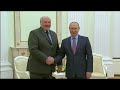
- Short explainer on how Western policymaking must become more active to achieve democratization and remove Belarus from Russia’s influence.
The autocratic Belarusian ruler Aliaksandr Lukashenka has been able to consolidate his hold on power by mass repression of Belarus’s pro-democracy movement, allowing the country to become a vassal state of Russia.
This is shown by the country’s involvement in Russia’s war against Ukraine and, since the invasion, the West’s agenda on Belarus has become narrow in scope.
But Western policymaking towards the Lukashenka regime has lacked coherence and sent ambiguous signals about its credibility since the 2020 presidential election.
Although Belarusian society remains the principal catalyst for democratic change in the country, Ryhor Astapenia proposes viable routes for the development by Western governments of cohesive and effective policies on Belarus.
Ryhor leads the Belarus I...

- Title
- Trouble for Emmanuel Macron at home and abroad
- Runtime
- 29:05
- Date posted
- 3 years ago
- Description
- This week on the podcast we focus on France and the domestic and foreign policy travails of the fifth republic and its president, Emmanuel Macron. At home, President Macron faces a wave of popular discontent, amid his plans to raise France’s pension age. We discuss how Macron’s decision to bypass the French parliament has impacted his ability to govern, as well as look at his wider standing within the country. Has this opened the door for the far-right in the next presidential election, and can France be governed?
We also look to the Indo-Pacific and discuss the reverberations of Marcon’s recent visit to China with EU chief Ursula von der Leyen. We discuss the comments he made around the question of Taiwan, and what he was trying to achieve by saying them. The panel also discuss the widespread criticism Macron received and what they say about France’s wider foreign policy.
Joining Bronwen Maddox on the podcast this week are Simon Kuper, a writer ...

- Title
- Young people in conflict: New ideas for protection and peacebuilding
- Runtime
- 1:01:46
- Date posted
- 3 years ago
- Description
- War and violent conflict are dominating the news cycle, from Russia’s invasion of Ukraine to the ongoing violence in Tigray. The United Nations estimates that almost two billion people are living in a conflict-affected area. Whether it be insurgencies, terrorism, organised crime or war, young people are particularly impacted by violence. They find their education disrupted, homes displaced, and their lives threatened as either combatants or civilians. In the face of these challenges, how can young people be involved in finding solutions?
Throughout the first months of 2023, Common Futures Conversations members from Africa and Europe discussed these issues and their ideas for how their communities, cities and countries can protect and support young people.
In this event, two young people presented and discussed their ideas with a panel of experts.
Panellists:
Chido Cleopatra Mpemba, African Union Envoy on Youth
Alison Griffin, Head...

- Title
- Building equitable partnerships for sustainable development | Explainer | Chatham House
- Runtime
- 5:27
- Date posted
- 3 years ago
- Description
- Animation showcasing how a collaborative approach between policy institutes in the Global South and Global North can improve forestry policy decisions.
CEBRAP in Brazil, CTSS with IPB in Indonesia, CEPAS in the DRC and Chatham House in the UK worked together to explore the influence of international forest policies in tropical regions.
They examined how the international community can promote equity and effectiveness in international cooperation by adopting a 'glocal' approach to policymaking.
The concept of 'glocalization' addresses imbalances in the relationship between global and local perspectives in international cooperation, as well as improving research collaboration between policy institutes in the North and South.
Partnerships for sustainable development must redress power dynamics, and so equality, diversity, and inclusion (EDI) frameworks should inform the design of collaborations within and between countries.

- Title
- Russias aggression and a crisis for multilateralism
- Runtime
- 1:54:34
- Date posted
- 3 years ago
- Description
- In conversation with Dmytro Kuleba, minister of foreign affairs of Ukraine, about how multilateral organizations struggle to respond adequately to Russia’s full-scale invasion of Ukraine.

- Title
- Supply chains, land contestation and conflict in the Horn of Africa | Explainer | Chatham House
- Runtime
- 2:16
- Date posted
- 3 years ago
- Description
- Sesame is an important cash crop for local and regional economies in Eastern Africa, accounting for $286 million of Ethiopia’s export earnings and $488 million of Sudan’s export earnings.
Yet conflict and contestation since the onset of war in northern Ethiopia and conquest of disputed farmlands in Al Fashaga by the Sudanese army in 2020 has disrupted agricultural value chains across the region - with a range of interlinked impacts for livelihood security, conflict dynamics, and coping mechanisms.
This animated explainer video on sesame supply chains and cross-border conflict was produced with support from the Cross-Border Conflict Evidence, Policy and Trends (XCEPT) project, funded by UK Aid from the UK government.

- Title
- Russia’s aggression and a crisis for multilateralism
- Runtime
- 1:02:26
- Date posted
- 3 years ago
- Description
- In conversation with Dmytro Kuleba, minister of foreign affairs of Ukraine, about how multilateral organizations struggle to respond adequately to Russia’s full-scale invasion of Ukraine.
As a permanent member of the UN Security Council, Russia pursues this war in defiance of the umbrella organization’s multiple resolutions condemning the invasion, along with its war crimes, annexation of territory, deliberate targeting of civilian nuclear infrastructure, cultural extermination, and global disinformation campaign.
This event explores the following questions:
How should the response of the UN to Russian aggression be assessed?
What can be done to uphold the guiding principles of the UN Charter?
Is there a ‘UN problem’ or a ‘Russia problem’?
How can trust and the legitimacy of multilateral cooperation be restored in times of strategic rivalry and rising global tensions?
Who can drive such an effort?...

- Title
- Israel-UAE normalization: Shaping the new Middle East
- Runtime
- 1:00:01
- Date posted
- 3 years ago
- Description
- Authors and experts discuss the findings of a new research paper on Israeli-Emirati normalization and its implications for regional security and integration.
The Abraham Accords normalization agreements between Israel and the United Arab Emirates are heralding greater political, economic and regional security integration in the Middle East.
The Accords have given way to high-level diplomatic engagement, commercial opportunities, technology transfers and dialogue on regional security. Normalization has paved the way for increased levels of regional engagement seen through an array of initiatives.
Despite the gains, Israeli–Emirati relations are beset by an array of political, cultural, and regional challenges that will require time, engagement and diplomatic attention to address.
Research by Sanam Vakil and Neil Quilliam provides a comprehensive examination of the history, drivers, and dynamics of Israeli–Emirati normalization an...
- Title
- Iraq's 20-year statebuilding struggle (English version)
- Runtime
- 1:14:24
- Date posted
- 3 years ago
- Description
- Watch an Arabic translation here
https://www.youtube.com/watch?v=G-5WddOgikQ
A panel of Iraqi and international officials and experts discuss the legacy of the 2003 invasion.
The US-led invasion in March 2003 was heralded by many inside and outside Iraq as a new dawn for the country – a chance to build a prosperous, democratic future, free from the dictatorial rule of Saddam Hussein. The reality of the past two decades has been a far cry from this hoped-for ideal.
On paper, Iraq has all the trappings of a functioning democracy, with six elections and subsequent transfers of power since 2005.
In reality, most Iraqis view elections as a mechanism for reinforcing the same corrupt class of political elites who extract billions of dollars each year from state funds, enriching themselves instead of funding essential services like electricity or water, leading to low and declining voter turnout.
When Iraqis have taken...

- Title
- Will Finland join NATO without Sweden?
- Runtime
- 23:54
- Date posted
- 3 years ago
- Description
- This week on the podcast we look at the latest developments relating to Sweden and Finland’s accession to NATO. This week the Hungarian parliament finally ratified Finland’s membership to the alliance, two weeks after President Erdogan in Turkey gave his seal of approval following a meeting with the Finnish president. Sweden however remains trapped in limbo, with both Turkey and Hungary delaying Stockholm’s membership and Erdogan in particular asking for more concessions. We discuss why Turkey and Hungary took issue with Sweden and Finland, what the strategic situation in the Baltic looks like now with only Finland in NATO, and the challenges facing Sweden amid fraught ties with President Erdogan?
We also look ahead to Turkey’s presidential election in May. Recent opinion polls point to a neck-and-neck race with some polls even showing President Erdogan falling behind the opposition. Turkish voters cast their votes on 14 May, so we discuss what the sentiment is ...

- Title
- Expert-led debrief: Russia’s aggression and a crisis for multilateralism
- Runtime
- 1:00:21
- Date posted
- 3 years ago
- Description
- A 60-minute debrief with leading experts on Ukraine. Chaired by Orysia Lutsevych, attendees in London and Kyiv have the opportunity to share insight and examine further questions with each other and the experts.
Panellists in Ukraine:
• Emine Dzhaparova, First Deputy Foreign Minister of Ukraine
• Sergiy Kyslytsya, Ambassador, Permanent Representative of Ukraine to the United Nations
• Alexander Khara, Deputy Chair of the Black Sea Institute of Strategic Studies United Kingdom
• Maria Mezentseva, Member of Parliament of Ukraine
Panellists in London:
• Orysia Lutsevych, Research Fellow, Russia and Eurasia Programme; Head of the Ukraine Forum, Chatham House
• Dr Devika Hovell, Associate Professor of Law, LSE Law School
• Professor Rick Fawn, School of International Relations, University of St Andrews

- Title
- Ukraine’s recovery: What is the role of civil society and local communities? (Ukrainian version)
- Runtime
- 1:37:20
- Date posted
- 3 years ago
- Description
- Watch the English version of this video
https://www.youtube.com/watch?v=7nl1f3AKGQo

- Title
- Ukraine’s recovery: What is the role of civil society and local communities? (English version)
- Runtime
- 1:37:20
- Date posted
- 3 years ago
- Description
- What should community-based rebuilding mean?
Russia’s invasion of Ukraine is causing terrible destruction to the country’s most essential support systems – housing, bridges, roads, and business facilities.
To date, the Kremlin has launched over 5,000 various missiles targeting Ukrainian cities, energy infrastructure, and reducing civilian ecosystems to rubble. After the first year of war, preliminary damage to infrastructure estimated at $130 billion.
Ukraine’s recovery will encompass a wide-ranging effort beyond ‘mere’ physical rebuilding. It will need an unprecedented modernization project encompassing transformation of state institutions, the recovery of human capital, environmental restoration, new urban planning, and connectivity.
Along the way, civil society contribution will be key. But how can it be effective and provide added value?
This research roundtable focuses on how civil society could be e...

- Title
- In conversation with Ehud Barak
- Runtime
- 1:08:41
- Date posted
- 3 years ago
- Description
- The former prime minister of Israel discusses his country’s political outlook and foreign policy priorities.
On the eve of its 75th independence anniversary, Israel is at a critical crossroads. Weeks of long, intense protests surrounding judicial reforms pursued by the current government have widened the debate over the role played by the, so far independent, judiciary, notably the Supreme Court.
Supporters on both sides of the argument are fighting over different visions of Israel – a true liberal-democracy, or a much-reduced version of a democratic system. Whichever side of the argument people fall, the debate symbolizes tension in Israel’s society and decline in trust of its political and constitutional institutions.
Abroad, the situation remains intricate. Israel-Iran relations remain on a knife edge while the Abraham Accords normalized relations with parts of the Gulf. Then there are the continual issues surrounding relations with...

- Title
- In conversation with Edi Rama, prime minister of Albania
- Runtime
- 1:08:41
- Date posted
- 3 years ago
- Description
- From migration to Russia and China, how is Albania responding to the geopolitical challenges of today?
In late 2022, the UK government made a pointed remark that many of the illegal migrants attempting to get into the country were from Albania. In response, Albania prime minister Edi Rama replied that targeting Albanians as the cause of Britain’s crime and border problems ‘makes for easy rhetoric but ignores hard fact’.
This nuanced response demonstrated the challenges and complexities that Albania faces, the same as many other countries. As well as being embroiled in the major challenge of international migration, Albania has suffered from a serious cyber-attack in July 2022 from Iran. Government networks were compromised for a month with Tirana removing the Iranian embassy in the capital.
Then there is the ongoing threat from Russia and China. Nestled in the already volatile Balkans, Albania has been at the heart of international af...

- Title
- Iraq special: The invasion twenty years on - with Clare Short
- Runtime
- 28:44
- Date posted
- 3 years ago
- Description
- This week on the podcast we mark twenty years since the start of the invasion of Iraq led by the US. Launched amid fears that Saddam Hussein was acquiring weapons of mass destruction, the war changed the Middle East and inflicted huge damage on Iraq and many civilian casualties, with effects that persist today. We discuss the invasion with those who were in power here in London when the decision was made to commit UK forces to the invasion, and with those in Iraq who lived with the consequences.
Joining Bronwen Maddox on the podcast is Clare Short, the former Secretary of State for International Development, who served in Tony Blair’s cabinet and resigned after the invasion began, becoming one of the best-known critics of Prime Minister Blair’s approach to the war. Joining her is Dr Patricia Lewis, the Director of our International Security programm; Dr Lina Khatib, the Director of our Middle East, and North Africa Programme; Dr Renad Mansour is a Senior Research...

- Title
- Elite bargains alone cannot end Middle East violence | Explainer | Chatham House
- Runtime
- 2:16
- Date posted
- 3 years ago
- Description
- Short animation explaining why international policymakers must develop strategies to transform elite bargains into accountable political systems.
International peacebuilding policies have often used political settlements among elites in a conflict as an incentive to them to lay down arms and govern together.
But these settlements do not guarantee stopping the violence.
The societies of Libya, Iraq, and Lebanon all demonstrate that, in addition to tackling direct violence, it is actually structural violence, such as the harm caused to people because of corruption. which can be a bigger issue to deal with.

- Title
- Can international institutions deliver justice ?
- Runtime
- 1:00:23
- Date posted
- 3 years ago
- Description
- Our international order, and the institutions that make it up, are being challenged today by claims of justice. In the face of institutional unfairness, these calls for justice are coming from diverse groups, across different scales, and intersecting in complex ways.
Drawing on three articles from the special section in International Affairs January 2023 issue which investigates polymorphic and institutional injustices, this webinar will explore how we can classify and address calls for justice today.
Experts explain why justice today must be understood as 'polymorphic', and dive into two case studies, including the challenge of institutional legitimacy in a world of transnational governance actors, and the global institutional injustices that persist as legacies of European colonialism.
The speakers in this event drew on the following research:
Polymorphic justice and the crisis of international order by Christian Reus-Smit and Ayşe Zara...

- Title
- Contentious politics in MENA: Cracking the status quo: Lebanon as a case study
- Runtime
- 1:22:31
- Date posted
- 3 years ago
- Description
- Lebanon has been witnessing cycles of contention for almost two decades as citizens mobilize calling for reform, with demands escalating to reform and change of the political system.
The ruling elite in Lebanon have been adept at keeping the political system in place, but there have been significant gains made by nascent independent political parties and civil society.
This panel sheds light on these gains through reflections on the individual experiences of the speakers to show how pro-reform advocates are challenging the political status quo in Lebanon.
Speakers
Laury Haytayan, Middle East and North Africa Director, Natural Resource Governance Institute (via Zoom)
Michel Helou, Secretary General, Lebanese National Bloc
Diana Moukalled, Journalist; Co-founder and Executive Director of Daraj Media
Nizar Saghieh, Executive Director, The Legal Agenda
Chair: Farea Al-Muslimi, Research Fellow, Middle East and North Afri...

- Title
- Contentious politics in MENA: Culture and contention
- Runtime
- 1:16:41
- Date posted
- 3 years ago
- Description
- The art and culture domains have been important avenues for political expression since before the
Arab uprisings.
This panel reflects on artistic and cultural production in the MENA region as social and political commentary and as a tool of contention interrogating the status quo.
Speakers
Mohammad Al Attar, Playwright, Theatre Maker and Essayist
Sultan Sooud Al Qassemi, Founder, Barjeel Art Foundation, Lecturer, Bard College Berlin;
Fellow, Institute for Advanced Study Berlin
Jasmina Metwaly, Visual Artist and Filmmaker
Leila Sansour, Filmmaker; Founder, Open Bethlehem (via Zoom)
Chair: Lina Khatib, Director, Middle East and North Africa Programme, Chatham House

- Title
- Contentious politics in MENA: The resilience of informal politics
- Runtime
- 1:18:12
- Date posted
- 3 years ago
- Description
- Political mobilization continues in the MENA region as people take to the streets and utilize other
informal political means to call for reform and political change. Violent crackdowns, attempts at cooptation, and other means of suppression exercised by ruling regimes have not dented this
mobilization.
The panel draws on the experiences of the speakers to reflect on what is keeping
mobilization going as a tool of public expression of dissent against all odds, lessons learned from
national and regional contexts, and the link between formal and informal political engagement.
Speakers
Hayder Al-Shakeri, Research Associate, Middle East and North Africa Programme, Chatham House
Chaima Bouhlel, Associate Fellow, Middle East and North Africa Programme, Chatham House
Asma Khalifa, Research Fellow and PhD Candidate, German Institute for Global and Area Studies
Shadi Sadr, Co-founder and Executive Director, Justice for Ir...