WQPT QUAD CITIES PBS
WQPT | City of Moline | Autism Society of the Quad Cities

- Title
- WQPT | City of Moline | Autism Society of the Quad Cities
- Runtime
- 28:30
- Date posted
- 10 years ago
- Description
- Jim Mertens sit down and talks to Moline Mayoral Candidates Stephanie Acri and Mayoral Scott Raes. Learn More about the Autism Society of the Quad Cities with Gary Rowe.

- Title
- The Cities | Gov. Terry Branstad | Xstream Cleanup
- Runtime
- 29:00
- Date posted
- 10 years ago
- Description
- The Cities with Jim Mertens - Jim sits down to talk with Gov. Terry Branstad about the financial situation in Iowa and his nomination as Ambassador to China. Also, Kurt Liske of Waste Commission of Scott County discusses a new kind of Xstream Cleanup and how you can get involved. Episode 716 – Original air date: March 16, 2017

- Title
- The Cities | City of East Moline | Race Relations | WQPT
- Runtime
- 27:15
- Date posted
- 10 years ago
- Description
- The Cities with Jim Mertens - Jim sits down to talk with Reggie Freeman, East Moline Mayor-Elect and his plans for the city he will now lead, and Rev. P. Wonder Harris, The Village of a Thousand Elders and Det. Scott Williams of the Moline Police Dept. who talk about the on-going mission to improve race relations in the cities, and to limit racial bias by police while encouraging personal responsibility among all citizens. Episode 715 – Original air date: March 9, 2017

- Title
- The Cities | Women in Government | Daytrotters | WQPT
- Runtime
- 29:00
- Date posted
- 10 years ago
- Description
- The Cities with Jim Mertens -Jim talks with former State Senator Maggie Tinsman. (5050in2020.org) about getting more women involved in government and Ben Crabb and Johnnie Cluney of Daytrotters kick of a weekend of music. Episode 714 – Original air date: March 2, 2017

- Title
- The Cities | Davenport Schools | Vibrant Neighborhoods | WQPT
- Runtime
- 28:45
- Date posted
- 10 years ago
- Description
- Jim sits down to talk with Dr. Art Tate, Superintendent of Davenport Schools to talk about his fight with the State to get more money for Davenport students. Plus, Tar Macias, Vibrant Neighborhoods Coordinator for WQPT discusses the new initiative, which begins with the Floreciente Neighborhood. – Episode 713 – Original air date: February 23, 2017

- Title
- The Cities | Rock Island Farm Bureau| Career Cruising Quad Cities
- Runtime
- 28:30
- Date posted
- 10 years ago
- Description
- The Cities with Jim Mertens – Jim sits down with DeAnne Bloomberg,
Rock Island County Farm Bureau Manager and Jeff Kirwan, Illinois Farm Bureau Board Member to talk about new trade deals and how that might impact the American farmer. Plus, Kirk Marske of Career Cruising Quad Cities discusses the grant and scholarship opportunities available to area students, if they know where to look. Episode 712 – Original air date: February 16, 2017

- Title
- The Cities | Islamic Center of the Quad Cities | WQPT
- Runtime
- 27:52
- Date posted
- 10 years ago
- Description
- Jim talks with Imam Saad Baig of the Islamic Center of the Quad Cities about the Muslim faith, the current political climate and how we can all work together for better understanding.

- Title
- The Cities | Suspect Conviction| Midwest Writing Center | WQPT
- Runtime
- 29:16
- Date posted
- 10 years ago
- Description
- The Cities with Jim Mertens - Jim talks with Scott Reeder "Suspect Convictions" Journalist and Lacy Scarmana "Suspect Convictions" Producer about their podcast dealing with the murder case of Jennifer Lewis. Also, Ryan Collins of the Midwest Writing Center talks about Iowa's plan to cut more than 100M from the budget and how that will affect the arts in Iowa. Episode 710 – Original air date: February 2, 2017

- Title
- The Cities| Iowa House | CommUniversity | WQPT
- Runtime
- 29:46
- Date posted
- 10 years ago
- Description
- The Cities with Jim Mertens – Jim talks with the two candidates up for Rep. Jim Lykams seat. Monica Kurth (D) and Mike Gonzales (R) Iowa House Candidates for the Iowa 89-TH HOUSE SEAT discuss the issues. Plus, Alan Campbell of CommUniversity encourages you take advantage of the courses offered during the month of February as they kick off their 37th year. Episode 709 – Original air date: January 26, 2017

- Title
- I-74 Bridge Snapshot
- Runtime
- 6:30
- Date posted
- 10 years ago
- Description
- One of the oldest and most used bridges in the Midwest, the I-74 bridge. This landmark connects Iowa and Illinois and expands over the mighty Mississippi river. Find out how this bridge has made an impact on the lives of many over the years in this Snapshot.
Visit us at https://wqpt.org/
Follow us!
Facebook: https://facebook.com/wqptpbs/
Twitter: https://twitter.com/wqpt
Instagram: https://www.instagram.com/wqptpbs/

- Title
- JP Irvine Snapshot
- Runtime
- 2:48
- Date posted
- 10 years ago
- Description
- The Quad Cities area is filled with rich and interesting history. One man who made quite the impact on the area was JP Irvine. Watch this Snapshot to find out how he did it!

- Title
- Dred Scott Snapshot
- Runtime
- 4:01
- Date posted
- 10 years ago
- Description
- The Quad Cities is full of history and one notable man who had a stay in the community is Dred Scott. Watch this Snapshot to learn more about this courageous man's journey.
Visit us at https://wqpt.org/
Follow us!
Facebook: https://facebook.com/wqptpbs/
Twitter: https://twitter.com/wqpt
Instagram: https://www.instagram.com/wqptpbs/

- Title
- The Cities | GAS Feed and Seed Festival | Black Box Theatre | WQPT
- Runtime
- 28:30
- Date posted
- 10 years ago
- Description
- The Cities with Jim Mertens – Jim sits down with Sean Moeller about the upcoming
GAS Feed and Seed Festival, a three day music fest coming to the Village of East Davenport. Plus, Lora Adams, co-founder of the new Black Box Theatre in downtown Moline talks about the upcoming season. Episode 708 – Original air date: January 19, 2017

- Title
- The Cities| Illinois budget | Western Illinois University | Two Rivers YMCA | WQPT
- Runtime
- 28:30
- Date posted
- 10 years ago
- Description
- The Cities with Jim Mertens – Jim discusses the Illinois budget crisis with Dr. Jack Thomas of Western Illinois University President and how it affects educational institutions and Raschel Biagioli from Two Rivers YMCA provides insight into how you can keep those New Year’s resolutions for better health. Episode 707 – Original air date: January 12, 2017

- Title
- The Cities| Human Trafficking| State of Illinois | WQPT
- Runtime
- 28:00
- Date posted
- 10 years ago
- Description
- The Cities with Jim Mertens – Jim talks with Chief Phil Redington of the Bettendorf Police Dept. about human trafficking here in the Quad Cities and Rep.-Elect Tony McCombie (R) Savanna, Illinois and Rep.-Elect Mike Halpin (D) Moline, Illinois talk about their plans as they prepare to represent the QCA in Springfield.
Episode 706 – Original air date: January 5, 2017

- Title
- Let's Explore with Mr. Scott | WQPT | Adopt a Tree
- Runtime
- 1:01
- Date posted
- 10 years ago
- Description
- Trees are amazing and many of them change with the seasons! Choose a tree that you can visit throughout the year and observe what happens. Do the leaves change colors? Do different animals visit tree? Does the tree get bigger? Document the changes with a camera or sketch them in a notebook. Visit the tree often and get to know the changes that occur as the weather changes.
- Title
- Let's Explore with Mr. Scott | Socks & Seeds
- Runtime
- 1:01
- Date posted
- 10 years ago
- Description
- Some plants need help to spread their seeds and continue to grow. Many seeds are designed to hitch a ride onto anything that walks by. Let’s help the plants on Credit Island spread their seeds! Take a walk through the park without your shoes and see what seeds hitch a ride on your socks!

- Title
- Let's Explore with Mr. Scott | Nest Building
- Runtime
- 1:01
- Date posted
- 10 years ago
- Description
- Many different animals build nests, but first they have to find the materials. On Credit Island there are many different materials that can be used to build a nest. So start collecting and build your own nest!

- Title
- Let's Explore with Mr. Scott | Treasure Hunt
- Runtime
- 1:01
- Date posted
- 10 years ago
- Description
- Treasure is different for everyone. Walking along the Ben Butterworth Parkway in Moline, Illinois is a great place to search for treasure. See what you can find on your walk!

- Title
- Let's Explore with Mr. Scott | Rainy Days
- Runtime
- 1:01
- Date posted
- 10 years ago
- Description
- Rainy days can be a lot of fun. Especially in your own back yard! Learn how to make mud into building blocks that can be used over and over again!

- Title
- Let's Explore with Mr. Scott | Color Search
- Runtime
- 1:01
- Date posted
- 10 years ago
- Description
- The Stampe Lilac Garden in Davenport, Iowa is filled with many different flowers. Using your sense of sight, search the garden for different colors. You may even find your favorite color!

- Title
- Let's Explore with Mr. Scott | How High Can You Count?
- Runtime
- 1:01
- Date posted
- 10 years ago
- Description
- You can find numbers in many different places as you are out walking. Make it a game! Start with 1 and see how many numbers you can identify. How high can you count on your next walk?

- Title
- Arsenal History Minutes | Palomares Incident | WQPT
- Runtime
- 1:01
- Date posted
- 11 years ago
- Description
- On January 16, 1966, a B-52 bomber collided with a KC-135 Tanker while attempting to refuel 30,000 feet above Spain’s Mediterranean coast. The fuel in the tanker exploded immediately, and then explosions rocked the B52. To make matters worse, the B-52 was carrying four unarmed hydrogen bombs that were released as the aircraft broke up.
Three of the bombs came down near the hamlet of Palomares. The conventional explosives on two of the bombs detonated on impact, which burned the plutonium core resulting in the release of radioactive material.
The parachute on the fourth bomb deployed and the weapon drifted out over the ocean and sank. After a nearly three-month search, with Soviet spy ships lurking nearby, the bomb was located, and then recovered, in nearly 3,000 feet of water.
While the hydrogen bombs never exploded, radiation was released and contaminated many farms. The US and Spain worked for years to clean up the area, but as recently as last October more ...

- Title
- Arsenal History Minutes | Pennsylvania Line Mutiny | WQPT
- Runtime
- 1:01
- Date posted
- 11 years ago
- Description
- During the winter of 1780–81 the Pennsylvania Line, a unit of about 2,400 men, was encamped at Jockey Hollow, New Jersey. Their living conditions were deplorable. To make matters worse, many of the solders hadn’t been paid in nearly a year.
At the time, soldiers often served enlistments “for three years or the duration of the war.” Many soldiers thought that meant three years or less. Authorities, however, interpreted the enlistment terms to mean that soldiers were bound to serve for the duration of the war even if it lasted more than three years. At the time most of the Pennsylvania Line had served three years already and felt they had fulfilled their commitment.
The Pennsylvania Line mutiny started January 1, 1781, when soldiers armed themselves with the intent to march to Philadelphia to seek a resolution to their grievances.
The uprising peacefully ended with a negotiated settlement on January 8, when authorities agreed to discharge those who had alread...

- Title
- Arsenal History Minutes | Battle of the Bulge Dec 1944 | WQPT
- Runtime
- 1:01
- Date posted
- 11 years ago
- Description
- On 16 December 1944, more than 200,000 German troops, supported by nearly 1,000 tanks, launched a major offensive against the Western Allies through the dense Ardennes Forest in Belgium and Luxembourg. As they attacked a winter storm led to significant snow and bone chilling temperatures.
The Allied forces, caught completely off guard, were pushed back, creating a “bulge” in their lines, in what became known as The Battle of the Bulge. United States forces bore the brunt of the onslaught. Some new units collapsed completely while others stood firm. As the Americans regrouped they were able to stop the Germans here and there disrupting the timeline. As units were thrown into the fight there emerged stories of heroism and resolve in places like Bastogne and St Vith and dozens of other locales. Unfortunately, some German units committed war crimes. In places like Malmedy and Wereth American prisoners were executed and left on the frozen ground.
The battle that rage...

- Title
- Arsenal History Minutes | Sherman’s March to the Sea | WQPT
- Runtime
- 1:01
- Date posted
- 11 years ago
- Description
- After capturing Atlanta in September 1864, a victory that all but assured the reelection of Abraham Lincoln, Gen. William Tecumseh Sherman, Union commander in the west, turned his efforts on the heart of the Confederacy.
Regarding the “scorched earth” campaign that would become known as his March to the Sea, Sherman said, “I am going into the very bowels of the Confederacy, and will leave a trail that will be recognized fifty years hence.” He recognized the harshness of his plan. As he told the mayor of Atlanta in September, “War is cruelty and you cannot refine it.” Sherman also offered all needed assistance once the Confederates surrendered.
During the 285 mile march to the sea, Sherman's 60,000 men cut a swath through Georgia and South Carolina, destroying crops, killing livestock, and burning barns and factories.
The devastation culminated on December 22, when Sherman's army marched into Savannah, Georgia, a day after the Confederate garrison deser...

- Title
- Arsenal History Minutes | The Battle of the Meuse-Argonne | WQPT
- Runtime
- 1:01
- Date posted
- 11 years ago
- Description
- In late September 1918, American forces amassed along the western front in France to participate in a set of simultaneous Allied offensives against the weary German Army. The goal was to break the Hindenburg line. In the American sector General John J. Pershing commanded the attack-- the largest American-run offensive of World War I. In order to reach their objective, the Americans had to fight through the dense Argonne Forest. The confused battle in the Argonne led to the famed “lost battalion.” The Lost Battalion became separated and surround by German forces for 6 days before being rescued. In that week almost 200 men were killed and another 200 missing or taken prisoner out of a starting force of 554. This battle also witnessed the heroic actions of Corporal Alvin York who captured 132 Germans. The Americans finally cleared the Argonne forest by 31 October and then would advance nearly more 20 miles before the signing of the Armistice on 11 November. The Battle of the Meu...

- Title
- Arsenal History Minutes | First American Tank produced at Rock Island Arsenal | WQPT
- Runtime
- 1:01
- Date posted
- 11 years ago
- Description
- During World War I a new type of weaponry- the tank- made its mark on the battlefield. Even though they had not been decisive during the war, most nations realized tanks were a significant new weapon. This recognition resulted in British-American Joint endeavor to produce the improved Mark VIII tank also known as the “Liberty” or “International” tank. The Mark VIII design had several innovations over its predecessors, particularly a separate engine compartment that vastly improved Soldier conditions and safety. In the spring of 1919, the Rock Island Arsenal received its largest order to date the production of 100 Mark VIII tanks. In this joint effort Britain produced the armor, and the United States concentrated on the engine and other mechanical parts. The United States decided to utilize the namesake V12 “Liberty” engine. The role of the Rock Island Arsenal was mainly assembly; however many of the British parts had to be modified or completely recast to properly fit...

- Title
- Let's Explore with Mr. Scott | Leaf Sounds
- Runtime
- 1:01
- Date posted
- 11 years ago
- Description
- Leaf Sounds Episode
Black Hawk State Historic Site, Rock Island
Leaves come in all shapes and sizes, but do they make sounds? In this episode, Mr. Scott encourages you to explore the leaves around you and make grass whistle while you visit places like Black Hawk State Historic Site in Rock Island

- Title
- Let's Explore with Mr. Scott | Nature Bracelet
- Runtime
- 1:01
- Date posted
- 11 years ago
- Description
- Nature Bracelet Episode
Black Hawk State Historic Site, Rock Island
It doesn’t take much to create a beautiful nature bracelet when you visit places like the Black Hawk State Historic Site! In this episode, Mr. Scott shows how you can turn a simple piece of tape into an amazing nature bracelet with things you can find all around you.

- Title
- Let's Explore with Mr. Scott | Ground Exploration
- Runtime
- 1:01
- Date posted
- 11 years ago
- Description
- Ground Exploration Episode
Gildea’s Pocket Park, Davenport
There are so many exciting things you can find on the ground when you’re at a park like Gildea’s Pocket Park in Davenport! In this episode, Mr. Scott finds all sorts of interesting things in just a handful of pea gravel! Use the sorting tray in your exploration kit to sort all the amazing treasures you find!
- Title
- Let's Explore with Mr. Scott | Insect Count
- Runtime
- 1:01
- Date posted
- 11 years ago
- Description
- Insect Count Episode
Vander Veer Botanical Park, Davenport
Insects are everywhere you look, but there are way to many for just one person to count - unless you choose a single plant and count the insects that land on it. In this episode, Mr. Scott visits Vander Veer Botanical Park and counts the number of butterflies and other insects that land on a plant.

- Title
- Let's Explore with Mr. Scott | Non-Traditional Measurement
- Runtime
- 1:01
- Date posted
- 11 years ago
- Description
- Non-Traditional Measurement Episode
Vander Veer Botanical Park, Davenport
In this episode, Mr. Scott shows how you can use traditional measuring tools (like a tape measure) or non-traditional items (like cicada shells, your hands, and even your own feet) to measure all sorts of things while you’re at places like Vander Veer Botanical Park in Davenport. You could use anything in your exploration kit as a unit of measure!
- Title
- Arsenal History Minutes | First American Tank Attack September 1918 | WQPT
- Runtime
- 1:01
- Date posted
- 11 years ago
- Description
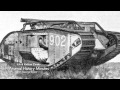
- September 1918 the United States Army Expeditionary Forces in France began their first independent campaign against the Germans. Almost a year earlier the AEF commander, General John J. Pershing had been so impressed with the British use of tanks at the Battle of Cambrai that he had directed the creation of an American tank corps to support the A-E-F.
In November, 1917, newly-promoted Major George S. Patton Jr. established a tank school at Langres, France, where two tank battalions were formed and trained on French light tanks and the much larger British Mark V. On 12 September, 1918, as part of the A-E-F’s St Mihiel campaign, these battalions began the first-ever American tank battle.
Although the reviews were somewhat mixed because of the number of tanks that bogged down or suffered mechanical breakdowns, the unsupported, and unexpected, "cavalry-style" attack caught the Germans by surprise and allowed the Americans to gain the initiative. The attack demonstrated t...

- Title
- Arsenal History Minutes | Geronimo’s Final Surrender | WQPT
- Runtime
- 1:01
- Date posted
- 11 years ago
- Description
- On September 4, 1886, after 30 years of intermittent warfare, Apache Chief Geronimo surrendered to General Nelson Miles at Skeleton Canyon, Arizona.
Geronimo had surrendered and escaped twice before, most recently March 27, 1886 in Sonora, Mexico, after surrendering to General George Crook. While being led to Fort Bowie, Arizona, Geronimo and a small band of followers escaped into the Sierra Madras Mountains.
Following the March escape, Nelson replaced Crook, and with his force of 5,000 Soldiers and 500 Apache scouts, relentlessly tracked the holdouts. By September Geronimo was leading a depleted band of 38 exhausted Apaches who had been forced to cover up to 80 miles a day to evade their pursuers.
Upon surrendering to Nelson, Geronimo was assured that, after an indefinite exile in Florida, they would be allowed to return to Arizona. The promise was never kept. Instead they were sent Florida then Alabama. Eventually, in 1894, those remaining were transferred to Fort ...

- Title
- Arsenal History Minutes | Battle of Bad Axe/BlackHawk | WQPT
- Runtime
- 1:01
- Date posted
- 11 years ago
- Description
- On the first and second of August 1832 the battle of Bad Axe was fought between American forces and Black Hawk’s band of Sauk and Fox followers. On 1 August, Blackhawk and his group were attempting to cross the Mississippi river from Wisconsin to Iowa. As they were preparing canoes for the crossing the steamboat Warrior arrived. Black Hawk attempted to surrender, but Soldiers on Warrior opened fire. This engagement left some 23 dead Sauk. During the night, Blackhawk proposed moving north, but most of his followers disagreed and opted to again try to cross the Mississippi. Black Hawk and some 20 warriors turned north, leaving the main band. On 2 August, the American ground forces came upon the remaining band and engaged them. Warrior also returned to the battle. The Americans shot at anything that moved- women, children and the elderly included. In the end, over 250 Indians died at the scene and over 150 more the next several days. Black Hawk surrendered a few weeks later. Mo...

- Title
- Arsenal History Minutes | Invasion of Sicily-Operation Husky| WQPT
- Runtime
- 1:01
- Date posted
- 11 years ago
- Description
- On 9 July 1943, a joint force of British, Canadian, and US soldiers began the invasion of Sicily, also known as Operation Husky. Taking Sicily was a required step before the September invasion of Italy. The Germans were fooled as to the Sicily invasion, in large part due to a deception plan where false documents were placed on a dead man dressed as a British Officer and dumped along the coast of Spain. The false plan was found and forwarded to the Germans. Operation Husky consisted of 150,000 soldiers, 3,000 ships and 4,000 aircraft. Italian Army resistance folded quickly after Mussolini’s arrest on 24 July, but Nazi forces fell back into the interior and fought fiercely in the mountains. While British Commander Bernard Montgomery pushed slowly up the eastern coast towards Messina, George Patton’s American forces raced northwest to Palermo and then back east to Messina beating the British by a few hours on 16 August. Meanwhile the Germans managed to evacuate over 100,000 tro...

- Title
- Arsenal History Minutes | Guantanamo Bay Cuba | WQPT
- Runtime
- 1:01
- Date posted
- 11 years ago
- Description
- The US base at Guantanamo Bay is often in the news these days, raising the question: Why is there an American base in Cuba? During the Spanish-American War in 1898, a battalion of U.S. Marines w Cuban guerilla allies occupied the strategically important bay. In 1903, as part of the Cuban-American Treaty it was agreed that the United States would lease a 45 Sq. mile naval station for $2000 a year. While the U.S. still writes a check every year for $4,085, Cuba has not cashed the check since the Castro regime took over in 1959. The Cuban government continues to protest the American presence. Guantanamo was at times a player in the Cold War. In February 1964 Castro decided to cut off water and supplies to the naval base, which forced the base to become self-sufficient. The border between Cuba and the base is named the “Cactus Curtain” and once was the second largest minefield in the world. Guantanamo fulfilled an important role in the early 1990s processing over 80,000 Cuban a...

- Title
- Arsenal History Minutes | First American WWII Bombing | WQPT
- Runtime
- 1:01
- Date posted
- 11 years ago
- Description
- June 12, 1942 marked the first American bombing against Nazi occupied Europe. On that day 12 US B-24 Bombers attacked oil refineries at Ploesti, Romania. Ploesti was a main oil production hub supplying Germany and continued to be a target until almost the end of the war. The unit that conducted the raid flew from Egypt. The unit was originally en route to China with the mission of bombing Japan. However, the Soviet Union asked the U.S. and Great Brittan for help in disrupting the German 1942 attacks into Russia. The mission did not result in a large destructive impact on the refineries due to inexperienced crew, the small number of aircraft involved and bomb delivery methods. This raid showed a need for more bombers and improved targeting. Also, the raid was an indicator of the losses the Army Air Corps bombers would take for the rest of the war. Of the 12 aircraft, only 7 arrived back safely. From June 1942 until June 1945 over 40,000 crew members were killed or captured and over...

- Title
- Arsenal History Minutes | Reagan’s Berlin Wall speech 1987 | WQPT
- Runtime
- 1:01
- Date posted
- 11 years ago
- Description
- “Mr Gorbachev.. open this gate…” On June 12, 1987, in an effort to have General Secretary Mikhail Gorbachev move forward in negotiations about reducing nuclear arsenals, President Ronald Reagan publically challenged Gorbachev in a speech in front of the Brandenburg Gate and Berlin Wall separating East and West Berlin. Negotiations to reduce nuclear arsenals had started in November 1985. No agreement was made, but they two sides continued to negotiate. In September 1986, after negotiations had stalled, Gorbachev asked to personally meet with Reagan to try and reach an agreement. When they met in October 1986 discussion again faltered over Russian concerns about the Strategic Defense Initiative. Eight months later, Reagan made his famous plea for peace and nuclear arms reduction in front of the Berlin wall. “Mr Gorbachev, tear down this wall!” Just six months later in December 1987, Gorbachev and Reagan signed an agreement for both sides to eliminate all their intermediate...

- Title
- Arsenal History Minutes | The M20 “Superbazooka” | WQPT
- Runtime
- 1:01
- Date posted
- 11 years ago
- Description
- On 30 June 1950 President Harry S. Truman ordered U.S. troops to South Korea after North Korea invaded over the 38th parallel. The North Korean Army; supplied with Soviet T-34 tanks, had early success against U.S. anti-tank efforts. U.S. WWII era bazookas were nearly useless against the T-34’s thick armor. The Rock Island Arsenal was producing the new M20 3.5-inch “superbazooka” when the war started. While not quite yet done, Rock island Arsenal responded and sent its first shipment of M20’s just 13 days after the start of the conflict. Rock Island Arsenal produced 750 “superbazookas” over the next year. The M20 was superior to its predecessor in several respects: the improved warhead could penetrate double the armor of the WWII model; it was easier to handle in the field due to a two-piece assembly; and an improved sight increased accuracy and range. The efforts of Rock Island Arsenal once again gave American soldiers a critical edge in order to complete their mission...

- Title
- Arsenal History Minute | The Lewis and Clark expedition | WQPT
- Runtime
- 1:01
- Date posted
- 12 years ago
- Description
- The purchase of the Louisiana Territory from France in July 1803 acquired land west of the Mississippi for the young United States. The new land was uncharted so President Jefferson sent Meriweather Lewis and William Clark to discover a water route to the Pacific. Lewis and Clark led a group of 33 volunteers during the expedition. Their task included documenting wildlife and fauna, cartography, and to learn about the Native Americans living along the route. The expedition began near modern St. Charles, Missouri in May 1804. Lewis and Clark reached the Pacific Ocean in November 1805 and returned as heroes to St. Louis in September 1806. The only death enroute was Sgt. Charles Floyd who passed from appendicitis, near Sioux City in August 1804. In January 1805 while wintering with the Mandan Indians near modern Bismarck ND Lewis and Clark hired a trapper named Toussaint Charbonneau to guide them further west. More importantly Charbonneau’s wife, Sacagawea of the Shoshone tribe, co...

- Title
- Arsenal History Minute | Telodynamic Power system of RIA Arsenal | WQPT
- Runtime
- 1:01
- Date posted
- 12 years ago
- Description
- The Rock Island Arsenal has always needed energy to utilize shops to their full potential. However, in the 1870’s electrical power was not an option and another technique had to be implemented. Hydropower from the Mississippi River would be the answer. The 3rd Commander of the Arsenal Major Daniel Flagler built a system that had not previously been used in the United States. The Telodynamic System transported mechanical power over distances by using water to rotate turbines. The power from the turbines are transferred through gears to a 15 foot drive wheel, from this large wheel a continuous cable extended north to towers behind the shops. Wheels on these towers then transmitted the energy to the shops with wires that turned an overhead drive shaft. The overhead shaft powered individual machines with a clutch-drive system. The shops utilized the Telodynamic power for the first time in February 1879. The system was replaced by electricity after 1900. Learn more about the history...

- Title
- Arsenal History Minutes | First .30 caliber machine gun | WQPT
- Runtime
- 1:00
- Date posted
- 12 years ago
- Description
- In 1936 the Army assigned Rock Island Arsenal the mission to develop and produce an air cooled .30 Caliber machine gun based on John Browning designs. This had initially been a mission of the Springfield Armory but Rock Island had better facilities. The arsenal had a massive stock of water cooled .30 cal machine guns from the First World War, and had already been improving that model. The Arsenal immediately began developing prototypes and experimenting with designs on how to produce a reliable, long lasting air cooled machine gun. In early Fall 1941, the Army approved the Rock Island produced M1919A4. The new .30 cal could be used both by infantry and cavalry units with flexible and fixed models. The M1919A4 eventually became the most popular .30 caliber machine gun in the War. The Rock Island Arsenal produced roughly 85,000 .30 caliber machine guns by the end of the war, with most of the work being accomplished by women ordnance workers. Nearly 193 million belt links for the ammu...
- Title
- Arsenal History Minutes | 1776 Continental Navy captures 1st British warship | WQPT
- Runtime
- 1:00
- Date posted
- 12 years ago
- Description
- On 7 April 1776, a year after the shots heard around the world were fired at Lexington to begin the Revolutionary War and months before the Declaration of Independence, the USS Lexington, an 86 foot ship named after that first battle, slipped past the British Blockade on the Delaware River. The Lexington, commanded by Captain John Barry, soon encountered the British Sloop Edward and engaged in a fierce fight that lasted more than an hour. The Lexington inflicted so much damage on the Edward the British ship was forced to “strike her colors” and surrender. In this action the Continental Navy had captured its first British warship and the Lexington gave the Americans a sorely needed morale boost. By the end of the war the Lexington, under several different Captains, captured 14 more British ships. Her most famous Captain, John Barry, would go on to have a prolific military career. In February 1797 President George Washington promoted him to Commodore, which made him the first comm...

- Title
- Arsenal History Minutes | The Iraq War | WQPT
- Runtime
- 1:01
- Date posted
- 12 years ago
- Description
- On 24 February 1991 coalition forces began the ground portion of Operation Desert Storm against Saddam Hussein’s Iraqi Army. The ground offensive was preceded by a month-long air campaign in which over 100,000 sorties eliminated the Iraqi command. On the first day of the offensive U.S. led coalition forces raced towards Kuwait City capturing thousands of Iraqi Soldiers. On the 2nd day of battle the Coalition kept pushing through Iraqi forces forcing a massive retreat. The Iraqis struck back with SCUD missile attacks that hit an American barracks killing 28 soldiers. As the Iraqi Army retreated, they conducted a scorched earth policy and burned over 700 oil wells. On the third day, the large tank battle of 73 Easting occurred resulting in a dramatic U.S. victory over Iraqi armor units. Later in the day, allied air forces destroyed over 2000 vehicles. Ground combat lasted approximately 100 hours before President George H.W. Bush declared a ceasefire on 28 Feb 1991.
WQPT is a Publ...

- Title
- Arsenal History Minutes | Gettysburg Address | WQPT
- Runtime
- 1:01
- Date posted
- 12 years ago
- Description
- “Four score and seven years ago our fathers brought forth on this continent a new nation conceived in liberty…” On November 19th 1863, President Abraham Lincoln delivered The Gettysburg Address, one of the greatest speeches in American history. The address took less than two minutes to convey, but it was a poignant and integral part of identifying the importance of the battle for the preservation of the Union. The address also looked to the future where the human loss would help create and era of greater human equality. The Battle of Gettysburg that occurred July 1st through 3rd, 1863 still ranks as the deadliest battle on American soil with over 7,000 deaths and over 44,000 wounded or missing between the Union and Confederate forces. For Lincoln it was imperative to convey to the Northern public that the lives of these soldiers were not wasted and the people must remain vigilant in maintaining the union and human rights. “we here highly resolve that these dead shall not h...

- Title
- Arsenal History Minutes | Birth of the Marines | WQPT
- Runtime
- 1:01
- Date posted
- 12 years ago
- Description
- On the tenth of November 1775, in the early stages of the American Revolutionary War, the 2nd Continental Congress sanctioned 2 battalions of Marines to serve in conjunction with the newly formed Continental Navy. The intended function of the marines, were to be proficient in naval combat, maritime skills, as well as standard land combat. The first amphibious landing took place on March 2nd 1776 when 234 Marines captured Fort Montague and Fort Nassau. The initial success of the Battle of Nassau by the marines was indicative of the success to follow. In 1798, the Marine uniform changed to dark blue to symbolize the relationship with the navy and with large leather collars, prompting the common nickname of leathernecks, this is still tradition today with the dress blues. After a brief dissolution of the Corps in 1783, the Marines were recommissioned in 1794. In 1805 during the First Barbary War Marines took the city of Derne, in Tripoli. That kind of mission success continued into the ...

- Title
- Arsenal History Minutes | U.S. Troops in Somalia | WQPT
- Runtime
- 1:01
- Date posted
- 12 years ago
- Description
- In the early 1990’s, East Africa endured one of the worst droughts of the 20th century. In Somalia the drought coincided with extensive clan-based fighting after longtime leader Mohammed Siad Barre was deposed. This led to economic instability and mass starvation. After international humanitarian groups began to ship food to Somalia, the different clans stole food and also worked to prevent distribution to rival clans. The U.N began peacekeeping missions in August 1992 but were unable to calm the situation enough to allow distribution of food. On 4 December 1992 President George H.W. Bush ordered 28,000 troops in. By May 1993 food was being routinely distributed and most US forces were withdrawn in early June. However, just a week later other UN peacekeepers were ambushed and massacred. The US returned with Special Operations and began to hunt down the rival warlords. The end result was failure. After the Blackhawk Down incident in October, all US forces were removed. Soma...

- Title
- Arsenal History Minutes | RIA-Confederate POW Camp | WQPT
- Runtime
- 1:01
- Date posted
- 12 years ago
- Description
- In the summer of 1863 the US government decided to build a prisoner of war camp on Rock Island. On 3 December the first shipment of 488 Confederate POWs arrived at the Rock Island Prison Barracks. These Confederate soldiers had been captured at the battle of Lookout Mountain in Chattanooga 8 days prior. The arrival of the rebels caused a stir in surrounding communities with hundreds gathering in -25 degree temperatures to get a glimpse of the enemy soldiers. The earliest months posed the greatest risks for the POW’s facing extreme cold with little winter gear, and contagious diseases. Almost 100 POWs were found to be infected with small pox when they arrived. By spring over 700 POWs and 17 guards were dead, primarily from disease. In February 1864 the Army Surgeon General investigated and then built quarantine areas and a prison hospital. By the time the camp closed in July 1865 over 12,000 POWs moved through the camp with over 1,800 prisoner deaths. The white marble graves...