The Cosmos News
Perfect Explosion: Merger of Neutron Stars Creates Perfect Sphere in Deep Space @TheCosmosNews

- Title
- Perfect Explosion: Merger of Neutron Stars Creates Perfect Sphere in Deep Space @TheCosmosNews
- Runtime
- 0:12
- Date posted
- 4 years ago
- Description
- #thecosmosnews Full video link is here: https://youtu.be/6mguKXs-w_U
#kilonova #supernova

- Title
- Colliding Neutron Stars Created a Kilonova Sphere So Perfect It's Shocked Physicists@TheCosmosNews
- Runtime
- 5:42
- Date posted
- 4 years ago
- Description
- #thecosmosnews Perfect Explosion’: Merger of Neutron Stars Creates Spherical Cosmic Blast
When neutron stars collide they produce an explosion that, contrary to what was believed until recently, is shaped like a perfect sphere. Although how this is possible is still a mystery, the discovery may provide a new key to fundamental physics and to measuring the age of the Universe. The discovery was made by astrophysicists from the University of Copenhagen and has just been published in the journal Nature.
Kilonovae—the giant explosions that occur when two neutron stars orbit each other and finally collide—are responsible for creating both great and small things in the universe, from black holes to the atoms in the gold ring on your finger and the iodine in our bodies. They give rise to the most extreme physical conditions in the Universe, and it is under these extreme conditions that the Universe creates the heaviest elements of the periodic table, such as gold, pla...

- Title
- Leonardo Da Vinci's Forgotten Sketches Almost Decoded Gravity Centuries Ago@TheCosmosNews
- Runtime
- 6:20
- Date posted
- 4 years ago
- Description
- #thecosmosnews 500-Year-Old Leonardo Da Vinci Sketches Show Him Grappling With Gravity
Da Vinci fiddled with gravity as a type of acceleration and got close to calculating the gravitational constant.
Da Vinci's Forgotten Experiments Almost Decoded Gravity Centuries Ago
Before Galileo, Newton and Einstein, there was a man named Leonardo da Vinci.In 1907, Albert Einstein presented the world with a startling truth about our universe. Gravity, he realized, isn't quite as strange and mysterious as it feels.
Rather, it's kind of the same thing as acceleration -- a force we're very used to thinking about on the regular. He called it the equivalence principle, and soon, this eye-opening concept would blossom into the mind-bending theory of general relativity. The rest, as they say, is history.
On Monday, however, engineers with the California Institute of Technology revealed a fascinating new plot point to the story of humanity's gravitational musin...

- Title
- Mysterious Spokes Moving Along Saturn's Rings Captured by Hubble: What Makes Them?@TheCosmosNews
- Runtime
- 4:17
- Date posted
- 4 years ago
- Description
- #thecosmosnews NASA Spots Mysterious Spokes Moving Along Saturn's Rings NASA and ESA's Hubble Space Telescope is investigating a "fascinating magic trick of nature."
There's something unusual happening in a new Hubble Space Telescope image of scenic ringed planet Saturn. The view is spectacular on its own, but zoom in on the left side of its rings and look for a couple of dark, shadowy spots. Those are "spokes."
The enigmatic spokes appear and disappear seasonally. Saturn experiences four seasons, but it takes a long time to work through them, with each season lasting about seven years. The planet is crawling toward autumnal equinox in its northern hemisphere in early 2025, but it's already entered into what NASA calls "spoke season." It's prime time for Hubble observations to investigate the spokes.
Hubble is a joint project from NASA and the European Space Agency. NASA released a video to go along with the new Hubble image. It includes footage showing...

- Title
- Huge Asteroid Rushing Towards Earth On Valentine's Day At 12341kmph@TheCosmosNews
- Runtime
- 3:39
- Date posted
- 4 years ago
- Description
- #thecosmosnews
On February 14, which is widely celebrated as Valentine's Day, a huge asteroid will come very close to Earth. US space agency, NASA, which keeps an eye on the asteroids coming close to the Earth, confirmed that a giant asteroid will be making a very close approach to Earth. This huge space rock named Asteroid 2023 CP will rocket past Earth at a distance of just 4.09 million miles, NASA has calculated the approximate size of the asteroid at around 110 feet, almost as big as an airplane. Though this may seem quite far away, the distance is not that much in terms of the vastness of space, hence NASA has flagged it as a 'close approach'.
Danger of asteroid on Valentine's Day
The near-Earth asteroid 2023 CP was discovered on February 08, 2023, and belongs to the Amor group. With an orbital period of 624 days, it makes one complete orbit around the Sun. The asteroid's aphelion, which is its farthest point from the Sun, lies at a distance of 275...

- Title
- A Part Of Sun Breaks Off, Forms A Strange Vortex; Baffles Scientists@TheCosmosNews
- Runtime
- 5:08
- Date posted
- 4 years ago
- Description
- #thecosmosnews The sun’s surface material breaking off and creating a tornado-like whirl around its northern pole has perplexed scientists.
Something Strange Is Happening on the Sun, and We've Never Seen It Before
Dr Tamitha Skov, a space weather forecaster, tweeted about the phenomenon that was captured by NASA using the James Webb Space Telescope.
“Talk about Polar Vortex!” she wrote last week. “Material from a northern prominence just broke away from the main filament & is now circulating in a massive polar vortex around the north pole of our Star. Implications for understanding the Sun’s atmospheric dynamics above 55° here cannot be overstated!”
Unusual activity typically occurs at the sun’s 55 degree latitudes once every 11-year solar cycle, according to experts, but this incident is stumping researchers.
According to specialists, unusual activity usually occurs near the sun’s 55 degree latitudes during per 11-yea...

- Title
- Dwarf Planet With An Impossible Ring Found And Scientists Unsure How It Exists@TheCosmosNews
- Runtime
- 4:23
- Date posted
- 4 years ago
- Description
- #thecosmosnews There’s a Ring Around This Dwarf Planet. It Shouldn’t Be There.
Quaoar, which orbits the sun in the distant Kuiper belt, is the latest small object shown to have a ring like the ones around Saturn.
A small icy world far beyond Neptune possesses a ring like the ones around Saturn. Perplexingly, the ring is at a distance where simple gravitational calculations suggest there should be none.
“That’s very strange,” said Bruno Morgado, a professor at the Federal University of Rio de Janeiro in Brazil. Dr. Morgado is the lead author of a paper published in the journal Nature on Wednesday that describes the ring that encircles Quaoar, a planetary body about 700 miles in diameter that orbits the sun at a distance of about four billion miles.
Quaoar (pronounced KWA-wahr, the name of the creator god for the Indigenous Tongva people who live around Los Angeles) is a little less than half the diameter of Pluto and about a third o...

- Title
- Scientists Find Strange, Unidentified Structure Hidden Under Earth’s Tectonic Plates@TheCosmosNews
- Runtime
- 5:30
- Date posted
- 4 years ago
- Description
- #theccosmosnews The new Layer found hidden under the earth’s crust could shed light on tectonic plate movement, according to the researchers.
A long-running controversy over how tectonic plates move may finally be resolved thanks to the discovery by scientists of a new layer of partially molten rock under the Earth’s crust.
Patches of melt have previously been found by researchers at a comparable depth. However, a recent research headed by The University of Texas at Austin showed the layer’s global size and role in plate tectonics for the first time.
The findings were published in the journal Nature Geoscience today.
The asthenosphere, which lies in the upper mantle under the Earth’s tectonic plates, contains the molten layer, which is roughly 100 miles from the surface. As a relatively supple border that permits tectonic plates to migrate through the mantle, the asthenosphere is crucial for plate tectonics.
Howev...

- Title
- Green Comet ZTF Set for 'Cosmic Meeting' With Mars in Sky This Week@TheCosmosNews
- Runtime
- 0:16
- Date posted
- 4 years ago
- Description
- Full Video Link Is Here: https://youtu.be/7QMiNY0akG0
#greencomet #cometztf #mars #comet #nakedeyecomet #comet2023

- Title
- Green Comet ZTF Set for 'Cosmic Meeting' With Mars in Sky This Week @TheCosmosNews
- Runtime
- 4:05
- Date posted
- 4 years ago
- Description
- #thecosmosnews The green comet C/2022 E3 (ZTF) is set for a "cosmic meeting" with Mars in the sky this week—and here's how you can watch the celestial event live from the comfort of your own home.
The comet was discovered by the Zwicky Transient Facility (ZTF)—an astronomical survey conducted by the Palomar Observatory, near San Diego in California—on March 2, 2022.
Comets are astronomical objects made up of frozen gases, dust and rock that orbit the sun. Sometimes referred to as "cosmic snowballs," these objects are blasted with increasing amounts of radiation as they approach our star, releasing gases and debris.
This process forms a glowing atmosphere around the comet's nucleus, known as a coma—which, in the case of C/2022 E3 (ZTF), appears green. There are also two vast tails of gas and dust.
The cosmic snowball has already made its closest approach to both the sun and Earth—on January 12 and February 1, 2023, respectively. It is now ...

- Title
- Neanderthals Hunted Massive Elephants @TheCosmosNews
- Runtime
- 0:16
- Date posted
- 4 years ago
- Description
- #thecosmosnews
Full Video Link: https://youtu.be/09R-Dy3Yub4
Some 125,000 years ago, enormous elephants that weighed as much as eight cars each roamed in what’s now northern Europe.
Scientifically known as Palaeoloxodon antiquus, the towering animals were the largest land mammals of the Pleistocene, standing more than 13 feet (4 meters) high. Despite this imposing size, the now-extinct straight-tusked elephants were routinely hunted and systematically butchered for their meat by Neanderthals, according to a new study of the remains of 70 of the animals found at a site in central Germany known as Neumark-Nord, near the city of Halle. #antropology #neanderthal

- Title
- Neanderthals Hunted Massive Elephants That Once Roamed Northern Europe@TheCosmosNews
- Runtime
- 5:35
- Date posted
- 4 years ago
- Description
- #thecosmosnews Some 125,000 years ago, enormous elephants that weighed as much as eight cars each roamed in what’s now northern Europe.
Scientifically known as Palaeoloxodon antiquus, the towering animals were the largest land mammals of the Pleistocene, standing more than 13 feet (4 meters) high. Despite this imposing size, the now-extinct straight-tusked elephants were routinely hunted and systematically butchered for their meat by Neanderthals, according to a new study of the remains of 70 of the animals found at a site in central Germany known as Neumark-Nord, near the city of Halle.
The discovery is shaking up what we know about how the extinct hominins, who existed for more than 300,000 years before disappearing about 40,000 years ago, organized their lives. Neanderthals were extremely skilled hunters, knew how to preserve meat and lived a more settled existence in groups that were larger than many scholars had envisaged, the research has suggested.

- Title
- Incredible Video Shows Exoplanets Circling a Star 133 Light-Years Away@TheCosmosNews
- Runtime
- 3:41
- Date posted
- 4 years ago
- Description
- #thecosmosnews Scientist Releases Amazing Video of Exoplanets Orbiting Distant Star
In 2008, HR8799 was the first extrasolar planetary system ever directly imaged. Now, the famed system stars in its very own video.
Using observations collected over the past 12 years, Northwestern University astrophysicist Jason Wang has assembled a stunning time lapse video of the family of four planets — each more massive than Jupiter — orbiting their star. The video gives viewers an unprecedented glimpse into planetary motion.
“It’s usually difficult to see planets in orbit,” Wang said. “For example, it isn’t apparent that Jupiter or Mars orbit our sun because we live in the same system and don’t have a top-down view. Astronomical events either happen too quickly or too slowly to capture in a movie. But this video shows planets moving on a human time scale. I hope it enables people to enjoy something wondrous.”
An expert in exoplanet ima...

- Title
- Mars Bear? ‘Bear face’ discovered on the surface of Mars in the new satellite photo@TheCosmosNews
- Runtime
- 2:54
- Date posted
- 4 years ago
- Description
- #thecosmosnews Astronomers Just Discovered a 'Bear' on Mars Facial pareidolia is the human tendency or illusion of seeing facial structures in everyday objects – such as seeing the "man in the Moon," or the face of Jesus on a piece of toast.
But here's a newly found crater on Mars that might be a case of 'bear-adoilia.'
There's no denying, the crater looks like a bear's face. We've seen some crazy craters on Mars over the years from the Mars Reconnaissance Orbiter's High Resolution Imaging Science Experiment camera (HiRISE) – like the famous smiley face, or an elephant and a bird.
But what could possibly create the weird feature in the middle of the crater that is shaped like a bear's snout?
"There's a hill with a V-shaped collapse structure (the nose), two craters (the eyes), and a circular fracture pattern (the head)," said HiRISE principal investigator Alfred McEwen. "The circular fracture pattern might be due to the settling o...

- Title
- Earth’s Inner Core Just Stopped Spinning And Then Flipped Its Direction@TheCosmosNews
- Runtime
- 5:18
- Date posted
- 4 years ago
- Description
- #thecosmosnews Deep in the center of the Earth is the inner core, which spans roughly 746 miles and is composed of primarily pure, solid iron, NASA explains. Though we’ve long believed – and research has shown – that the inner core rotates, a new study suggests it may have “paused” its spin and could even have reversed.
The liquid outer core that surrounds the inner core causes Earth’s magnetic field. According to NASA, as the molten iron and nickel in the outer core move, they create electrical currents that result in a magnetic field. The outer core also allows the inner core to spin on its own, Nature explains.
Though scientists can’t track the core directly, they can analyze seismic waves caused by earthquakes – and Cold War-era nuclear weapon tests – as they reach the core. That’s what study co-authors Yi Yang and Xiaodong Song, seismologists at Peking University in Beijing, did for their new research, which was published in the Natur...

- Title
- Gigantic Undersea Volcano Near Santorini Island Reawaken 'Poses Serious Threat'@TheCosmosNews
- Runtime
- 4:03
- Date posted
- 4 years ago
- Description
- #thecosmosnews
Santorini is at the center of a mystery: Why do earthquakes keep shaking the island? in 2025
2023 Magma Rising in Kolumbo Underwater Volcano Chamber Threatens Santorini
Surprise magma chamber found under Mediterranean Sea volcano near popular tourist destination
Magma chamber found beneath submarine Kolumbo volcano just miles from Santorini
A new study has uncovered a previously undetected magma chamber beneath Kolumbo, an active submarine volcano in the Mediterranean Sea near Santorini, Greece.
A group of international researchers used a novel imaging technique for volcanoes that produces high-resolution images of seismic wave properties, according to a Jan. 12 release from the American Geophysical Union (AGU).
The study was published in the AGU journal Geochemistry, Geophysics, Geosystems, and the authors noted that the presence of the chamber "poses a serious hazard as it could produce a highly exp...

- Title
- Best Bet For Alien Life:NASA’s TESS Discovers Planetary System’s Earth-Size World@TheCosmosNews
- Runtime
- 5:14
- Date posted
- 4 years ago
- Description
- #thecosmosnews Meet TOI-700’s exoplanets: Our best bet for alien life
Red dwarf stars were supposed to be inhospitable. But TOI-700, now with at least two potentially habitable worlds, is quite the exception.
Somewhere out there, likely right within the Milky Way lies the very first inhabited planet that humanity will discover. Although we don’t know which world it is or how long it will take us to find those critical, unambiguous biosignatures, we fully expect that progressively better and more suggestive observations will pave the road toward its discovery. After all, the ingredients for life are found all throughout the Universe, and each new stellar system that forms with rocky, terrestrial planets around it must be considered as a chance for something quite remarkable and unique to emerge.
Since 1990, we’ve discovered thousands of exoplanets: planets in orbit around other stars. Many are approximately Earth-sized; many orbit their parent stars at the...

- Title
- Russia Says It Shot Down a UFO @TheCosmosNews
- Runtime
- 4:49
- Date posted
- 4 years ago
- Description
- #thecosmosnews Russia Claims Shooting Down UFO; Not The 1st Time Extraterrestrial Activity Reported Over Rostov Oblast
On January 3, a mysterious object that multiple news sources called a “UFO” was taken down by the Russian anti-aircraft weapons in the Rostov region of southern Russia.
The UFO, which witnesses defined as a “small-size object in the shape of a ball,” was spotted flying over the village of Sultan Sala at a distance of roughly one and a half miles.
Vasily Golubev, the governor of Rostov Oblast, first announced the news on his Telegram channel.
Golubev posted on Telegram that a “small-size object in the shape of a ball” had been observed flying “in the wind” at an altitude of about one and a half miles. After spotting it, local air defenses targeted the object and shot it down.
“I urge everyone to remain calm. To ensure security, all forces and means are involved. The sky is covered with anti-air...

- Title
- Green Comet Last Seen By The Neanderthals 50.000 Years Ago Approaches Earth Again on February 2023
- Runtime
- 4:46
- Date posted
- 4 years ago
- Description
- @TheCosmosNews #thecosmosnews A Green comet last seen by the Neanderthals is approaching Earth and could be seen by the naked eye sometime at the end of January and the beginning of February 2023.
The green comet, dubbed “C/2022 E3 (ZTF)” was discovered by astronomers in February 2022. It is currently too dim to be seen without a telescope.
The comet is estimated to complete an orbit of the Sun once every 50,000 years, meaning the last time we saw the comet was in the Upper Paleolithic period when humans began to expand throughout Asia and Europe.
The comet is currently on its approach to perihelion (its closest approach to the Sun), which will occur on January 12. It will be closest to Earth – known as at perigee – on February 1.
It will safely pass the Earth at a distance of about 44 million kilometers (27 million miles).
Around this point, it may be visible to the naked eye, though Sky at Night points out it w...
- Title
- Happy New Year 2023:James Webb Space Telescope's Best 10 Images Of 2022@TheCosmosNews
- Runtime
- 12:07
- Date posted
- 4 years ago
- Description
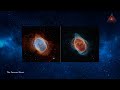
- #thecosmosnews It is no exaggeration to say the James Webb Space Telescope (JWST) represents a new era for modern astronomy.
Launched on December 25 last year and fully operational since July, the telescope offers glimpses of the universe that were inaccessible to us before. Like the Hubble Space Telescope, the JWST is in space, so it can take pictures with stunning detail free from the distortions of Earth’s atmosphere.
However, while Hubble is in orbit around Earth at an altitude of 335 miles (540 km), the JWST is 1 million miles (1.5 million kilometers) distant, far beyond the Moon. From this position, away from the interference of our planet’s reflected heat, it can collect light from across the universe far into the infrared portion of the electromagnetic spectrum.
This ability, when combined with the JWST’s larger mirror, state-of-the-art detectors, and many other technological advances, allows astronomers to look back to the universe’s ear...

- Title
- Using HAARP Scientists Hit An Asteroid With 9.6 Million Radio Waves @TheCosmosNews
- Runtime
- 5:26
- Date posted
- 4 years ago
- Description
- #thecosmosnews An Asteroid Is Passing Earth Today, so Scientists Are Shooting It With Radio Waves
Scientists plan to hit an asteroid with more than 9.6 million radio waves from HAARP
A 500-foot-wide asteroid called 2010 XC15 will pass by Earth on December 27. While it has no intention of hitting us, it’s us who will hit the asteroid with a radio pulse.
Scientists at the University of Alaska Fairbanks (UAF) and NASA want to examine the 2010 XC15 space rock to test their preparation against Apophis.
This dangerous asteroid might hit our planet in 2029. It is believed that on April 13, 2029, Apophis will be 10 times closer to Earth than the moon.
The researchers will use the HAARP (High-frequency Active Auroral Research Program) array to shoot 9.6 megahertz radio waves at the 2010 XC15 asteroid.
HAARP is a government-funded research program that generally studies the ionosphere (part of Earth’s atmosphere at 50 t...

- Title
- The Best Photos From Mars in 2022:Alien Doorway & Flying Spaghetti Monster@TheCosmosNews
- Runtime
- 8:38
- Date posted
- 4 years ago
- Description
- #thecosmosnews The Best Photos From Mars in 2022
The coolest images of (and on) the Red Planet taken in the last year show craters, funky rocks, and human trash.
The Red Planet is desolate, freezing, and has an atmosphere 1% as dense as our own. Its winds blow in great gusts that kick up global dust storms that make and break Mars missions that rely on solar energy for power.
Thankfully, spacecraft on and above Mars keep us Earthlings up-to-date on the Martian weather and the best sightseeing of Martian wanderlust. Whether through the zoomed-in oculus of Perseverance’s WATSON camera or the all-seeing eye of the Mars Reconnaissance Orbiter, these are the best images from Mars released this year.

- Title
- Hear The Sound Of Massive Martian Dust Devil That Hit Perseverance Rover @TheCosmosNews
- Runtime
- 2:57
- Date posted
- 4 years ago
- Description
- #thecosmosnews Massive Martian dust devil passed over the Perseverance rover, and it recorded the eerie sounds.
Scientists have seen plenty of dust devils on Mars, and now, for the first time, they’ve heard one. The vortex made a direct hit on NASA’s Perseverance rover, peppering the spacecraft with dust and whispering into a microphone that the team had smartly included in their package of instruments.
The trove of data coming from the encounter has thrilled scientists, who are keenly aware of the outsize influence Martian dust has on the planet’s climate. The fine-grained particles also can damage scientific instruments on Martian landers and rovers and potentially blanket solar panels to the point of uselessness. Studying the rover’s gritty recordings can provide insights into the way dust might affect ongoing Mars missions, and maybe even future human exploration.
The sound of the dust devil, published Tuesday to accompany a paper in the journal Nature Com...

- Title
- A Ghostly Glow of Light Surrounds The Solar System, And Nobody Can Explain It @TheCosmosNews
- Runtime
- 5:39
- Date posted
- 4 years ago
- Description
- #thecosmosnews Aside from a tapestry of glittering stars, and the glow of the waxing and waning Moon, the nighttime sky looks inky black to the casual observer. But how dark is dark?
To find out, astronomers decided to sort through 200,000 images from NASA's Hubble Space Telescope and made tens of thousands of measurements on these images to look for any residual background glow in the sky, in an ambitious project called SKYSURF. This would be any leftover light after subtracting the glow from planets, stars, galaxies, and from dust in the plane of our solar system (called zodiacal light).
When researchers completed this inventory, they found an exceedingly tiny excess of light, equivalent to the steady glow of 10 fireflies spread across the entire sky. That's like turning out all the lights in a shuttered room and still finding an eerie glow coming from the walls, ceiling, and floor.
- Title
- Scientists Created Mini Black Hole In Lab And It Started Radiating @TheCosmosNews
- Runtime
- 3:24
- Date posted
- 4 years ago
- Description
- #thecosmosnews Scientists ‘grow black hole in lab’ Scientists have created a black hole in a laboratory to test a decades-old Stephen Hawking theory.
In a new study, researchers were able to recreate the conditions of a black hole in a lab, The US Sun reported.
A black hole is an invisible place in space where gravity pulls so intensely that even light cannot escape it.
The gravity in a black hole is so strong due to the dense matter being contained in a tiny space – this happens when a star is dying.
In the study, a team of scientists used a single-file chain of atoms to simulate the event horizon of a black hole.
What came next is something known as ‘Hawking Radiation’ – a theory proposed by the late physicist Stephen Hawking.
Hawking radiation describes the hypothetical particles that arise outside a black hole’s boundaries because of relativistic quantum effects.

- Title
- 48,500 Year Old Zombie Virus Revived From Siberian Permafrost What Could Go Wrong?@TheCosmosNews
- Runtime
- 9:23
- Date posted
- 4 years ago
- Description
- #thecosmosnews 50000 years old Zombie Virus Resurrected In French Lab..As the world warms up, vast tranches of permafrost are melting, releasing material that's been trapped in its icy grip for years. This includes a slew of microbes that have lain dormant for hundreds of millennia in some cases.
To study the emerging microbes, scientists have now revived a number of these "zombie viruses" from Siberian permafrost, including one thought to be nearly 50,000 years old – a record age for a frozen virus returning to a state capable of infecting other organisms.
The team behind the work, led by microbiologist Jean-Marie Alempic from the French National Centre for Scientific Research, says these reanimating viruses are potentially a significant threat to public health, and further study needs to be done to assess the danger that these infectious agents could pose as they awake from their icy slumber.
"One quarter of the Northern Hemisphere is underlai...

- Title
- This Insane Video Will Make You Believe There's a Serpent Inside The Sun @TheCosmosNews
- Runtime
- 4:16
- Date posted
- 4 years ago
- Description
- #thecosmosnews A snake seeming to sinuously slink across the surface of the Sun has been captured in a new video by an observatory in close solar orbit.
However, the "serpent" spotted by the European Space Agency's Solar Orbiter is not a real stellar squamate but a newly observed solar phenomenon that may be linked to massive eruptions from a restless Sun.
The Orbiter observed the moving structure on 5 September as it moved in for its close approach – called a perihelion – planned for 12 October, the closest Solar Orbiter had been yet. The video from that encounter was just incredible, by the way.
As Solar Orbiter approached, it imaged a rippling line propagating a long path across the Sun. Solar scientists say this is a cooler tube of plasma in the surrounding hot plasma of the Sun's atmosphere, bound by solar magnetic fields.
The video shows the plasma snaking across the Sun from one side to the other, following a filament of the solar...

- Title
- Mars Meteor Impact Caused Quake, Revealed Surprise Water Ice@TheCosmosNews
- Runtime
- 4:03
- Date posted
- 4 years ago
- Description
- #thecosmosnews Meteoroid Impact on Mars Excavated Large Chunks of Water Ice, Planetary Scientists Say
NASA images show a meteor crashed into Mars, triggered a big quake, and kicked up surprise water ice
NASA’s InSight lander felt the ground shake during the impact while cameras aboard the Mars Reconnaissance Orbiter captured the cavernous new crater from space.
Last December 24, NASA’s InSight lander recorded a magnitude 4 marsquake. However, scientists only learned the cause of that quake later: a meteoroid impact estimated to be one of the biggest seen on Mars since NASA began exploring the cosmos. Furthermore, the meteoroid strike excavated boulder-size chunks of ice buried closer to the Martian equator than ever found before – a discovery with implications for NASA’s future plans to send astronaut explorers to the Red Planet.
Researchers determined the quake resulted from a meteoroid impact when they spotted a new, yawning crate...

- Title
- A total “BLOOD MOON”lunar eclipse is coming Nov. 8 @TheCosmosNews
- Runtime
- 3:05
- Date posted
- 4 years ago
- Description
- #thecosmosnews
A total lunar eclipse will occur across the country early on Tuesday, November 8, astronomers say. It's the first Election Day total lunar eclipse in U.S. history, according to EarthSky.org. And the next Election Day lunar eclipse won't occur for another 372 years, on Nov. 8, 2394.
A total lunar eclipse occurs when the moon and the sun are on exact opposite sides of Earth, according to NASA. When this happens, Earth blocks the sunlight that normally reaches the moon. Instead of that sunlight hitting the moon’s surface, Earth's shadow falls on it.
Where and when can you see the eclipse?
Lunar eclipses can be visible from everywhere on the night side of the Earth, if the sky is clear, TimeandDate.com said. "From some places the entire eclipse will be visible, while in other areas the moon will rise or set during the eclipse."
According to EarthSky's Bruce McClure, if you live in the U.S., or elsewhere in North ...

- Title
- A monster Black Hole Closest To Solar System Was Found Will It Ever Hit Earth?@TheCosmosNews
- Runtime
- 4:59
- Date posted
- 4 years ago
- Description
- #thecosmosnews @TheCosmosNews Black holes are among the most awesome and mysterious objects in the known Universe. These gravitational behemoths form when massive stars undergo gravitational collapse at the end of their lifespans and shed their outer layers in a massive explosion (a supernova). Meanwhile, the stellar remnant becomes so dense that the curvature of spacetime becomes infinite in its vicinity and its gravity so intense that nothing (not even light) can escape its surface. This makes them impossible to observe using conventional optical telescopes that study objects in visible light.
As a result, astronomers typically search for black holes in non-visible wavelengths or by observing their effect on objects in their vicinity. After consulting the Gaia Data Release 3 (DR3), a team of astronomers led by the University of Alabama Huntsville (UAH) recently observed a black hole in our cosmic backyard. As they describe in their study, this monster black hole is rough...

- Title
- Bizarre Blue Blobs Hover Over Earth's Atmosphere Captured By ISS Astronauts @TheCosmosNews
- Runtime
- 3:34
- Date posted
- 4 years ago
- Description
- #thecosmosnews Nasa's Earth Observatory re-posted the images after they were taken last year.
It previously explained: "An astronaut onboard the International Space Station (ISS) took this photograph while orbiting over Southeast Asia and looking toward Earth’s limb."
One blob can be seen at the bottom center of the image and one can be seen to the right.
The big alien-like blob in the center is actually lightning.
The one to the right is the Moon.
Lightning strikes are usually hard to see from the ISS but this huge one occurred through a perfectly timed gap in the clouds.
The surrounding clouds were lit up by the lightning and the strange looking blue blob was formed.
A trick of light also helps the Moon to look like an odd blue blob in the image.

- Title
- Astronomers Spotted Something That Appeared to Be Moving 7 Times the Speed of Light@TheCosmosNews
- Runtime
- 3:39
- Date posted
- 4 years ago
- Description
- #thecosmosnews An intense jet of energy in space appears to be traveling seven times faster than the speed of light—a feat that is considered physically impossible in our universe. Though this rapid pace is only an optical illusion, according to a new study, it still represents a blast of energy shooting towards us at very nearly the speed of light.
The Hubble Space Telescope (HST) has captured incredible views of the jet—which was ignited by an unprecedented collision between two hyperdense objects, called neutron stars—that led to one of the most important breakthroughs in astronomical history at the time it was discovered in 2017.
While the jet did not actually break the cosmic speed limit, it raced right up to the edge of this impassable threshold, reaching at least 99.97 percent of the speed of light, which translates to about 670 million miles per hour. Scientists led by Kunal Mooley, an astrophysicist at the California Institute of Technology, u...

- Title
- Sun Explodes With 200 000 Km Long Filament Toward Earth@TheCosmosNews
- Runtime
- 2:40
- Date posted
- 4 years ago
- Description
- #thecosmosnews Sun Throws 2,00,000 km-Long Fiery Filament Towards Earth; Its Remains Likely to Spark Geomagnetic Storm on October 7-8
The Sun has exploded and from it erupted 2,00,000 kilometers-long filament. Experts have said that the debris from the explosion could be headed toward Earth.
As per SOHO observatories, a Coronal Mass Ejection (CME) is emerging from the blast site and reports cited that data stream stopped before the full CME was visible.
Yesterday, Oct. 4th, a 200,000-km long filament of magnetism in the sun's southern hemisphere erupted. Snapping like a rubber band, it hurled part of itself into space, Spaceweather.com report said.
Debris from the blast might be heading for Earth. SOHO coronagraphs saw hints of a CME emerging from the blast site--but the data stream stopped before the full CME was visible. The missing data should arrive later today. Stay tuned for updates, it also added.
Coronal Mass Ejections (...

- Title
- Something Causes The Entire Milky Way Galaxy Is Rippling Like A Pond @TheCosmosNews
- Runtime
- 3:13
- Date posted
- 4 years ago
- Description
- #thecosmosnews Imagine the Milky Way's 100 billion stars as a flat, tranquil pool of water. Now, picture someone dropping a stone the size of 400 million suns into that water. The tranquility is shattered. Wave after wave of energy ripples across the galaxy's surface, jostling and bouncing its stars in a chaotic dance that takes eons to calm.
Astronomers suspect that something like this may have really happened — not just once, but several times over the past several billion years.
In a new paper published Sept. 15 in the Monthly Notices of the Royal Astronomical Society, researchers explain how a nearby mini-galaxy — the Sagittarius dwarf galaxy — appears to have crashed through the Milky Way on at least two separate occasions, causing stars all around the galaxy to mysteriously oscillate at different speeds.
Using data from the European Space Agency's Gaia space observatory, researchers compared the movements of more than 20 million stars...

- Title
- Jupiter Comes Its Closest To Earth In 70 Years @TheCosmosNews
- Runtime
- 2:20
- Date posted
- 4 years ago
- Description
- #thecosmosnews If you’re into astrophotography or just enjoy sky-gazing, there’s a real treat ahead. On 26 September, and a few days before and after that, beautiful Jupiter is going to be easy to spot and shoot. It will be so close to the Earth that a good pair of binoculars will be enough to see it. And it’s a truly unique opportunity as the planet will be the closest to us in 70 years.
“In early September, Jupiter is rising as true darkness falls,” EarthSky writes. You’re already seeing it as that very bright “star” that ascends in the east throughout the evening. The planet will be in opposition on 26 September, when it will be rising in the east at sunset.
“With good binoculars, the banding (at least the central band) and three or four of the Galilean satellites (moons) should be visible,” NASA researcher Adam Kobelski said. To be honest, this really makes me excited considering that I have a toy telescope and I’m sure I’ll be able...

- Title
- Neptune's Elusive Rings Captured by James Webb Telescope@TheCosmosNews
- Runtime
- 2:58
- Date posted
- 4 years ago
- Description
- #thecosmosnews NASA’s James Webb Space Telescope shows off its capabilities closer to home with its first image of Neptune. Not only has Webb captured the clearest view of this distant planet’s rings in more than 30 years, but its cameras reveal the ice giant in a whole new light.
Most striking in Webb’s new image is the crisp view of the planet’s rings – some of which have not been detected since NASA’s Voyager 2 became the first spacecraft to observe Neptune during its flyby in 1989. In addition to several bright, narrow rings, the Webb image clearly shows Neptune’s fainter dust bands.
“It has been three decades since we last saw these faint, dusty rings, and this is the first time we’ve seen them in the infrared,” notes Heidi Hammel, a Neptune system expert and interdisciplinary scientist for Webb. Webb’s extremely stable and precise image quality permits these very faint rings to be detected so close to Neptune.
eptune ha...

- Title
- NASA's InSight Mars Lander Recorded The Eerie Sound Of Meteor Crashing into Mars@TheCosmosNews
- Runtime
- 2:44
- Date posted
- 4 years ago
- Description
- #thecosmosnews NASA shared the sound of a meteor falling to Mars, with photos of the impact craters, on Monday.
The dwindling InSight lander has captured the acoustic and seismic noise of four meteor impacts.
Listen to the surprising "bloop" of a space rock falling through Mars's atmosphere and crashing.
Nobody had ever heard the sound of a meteor crashing into another planet until NASA's InSight lander recorded the seismic waves of a space rock striking Mars.
On September 5, 2021, a rock hurtling through space crossed the red planet's path. The meteor screamed towards the planet's dusty orange surface, sending a shock wave through the atmosphere.
Though it may have burned up from the friction and heat of plowing through Earth's atmosphere, the meteor survived the thin Martian air. It splintered into at least three pieces, which crashed into the planet's surface and made craters.
The InSight lander's seismometer, designed to meas...

- Title
- China Discovered A New Lunar Mineral That May Be A Future Energy Source @TheCosmosNews
- Runtime
- 2:51
- Date posted
- 4 years ago
- Description
- #thecosmosnews China is aiming to launch three unmanned missions to the moon after discovering a new lunar mineral that could be an energy source in the future.
The space race between China and the US is accelerating after Beijing's National Space Administration got the go-ahead to launch three orbiters to the moon over the next 10 years, it announced on Saturday. The news was first reported by Bloomberg.
It comes a day after China became the third country to discover a new lunar mineral, which it called Changesite-(Y), according to Chinese state-controlled newspaper the Global Times.
China's Chang'e-5 mission retrieved samples from the moon in 2020 and it has been described by Global Times as a "phosphate mineral in columnar crystal" found in lunar rock particles. The mineral contains helium-3, which could be a future source of energy.
The discovery may put more pressure on the US to ramp up its efforts after its Artemis I moon miss...

- Title
- JWST Captures "Giant Space Tarantula" In Stunning New Image@TheCosmosNews
- Runtime
- 3:41
- Date posted
- 4 years ago
- Description
- #thecosmosnews James Webb Space Telescope Captures "Giant Space Tarantula" In Stunning New Image
Resembling a burrowing tarantula's home line with its silk, the Tarantula Nebula houses the hottest and most massive stars known to astronomers, NASA explained.
A "giant space tarantula" has been caught by NASA's powerful James Webb Telescope. At 161,000 light years away from Earth in the Large Magellanic Cloud galaxy, the Tarantula Nebula is the nickname for 30 Doradus - the largest and brightest star-forming region in the Local Group, the galaxies nearest our Milky Way, according to NASA's Jet Propulsion Laboratory.
"Take a moment to stare into the thousands of never-before-seen young stars in the Tarantula Nebula. @NASAWebb reveals details of the structure and composition of the nebula, as well as dozens of background galaxies," the US space agency wrote on Instagram while sharing a mesmerising image of the "space tarantula".
Resembling a bu...

- Title
- JWST Captures First Direct Image Af A Planet Outside Our Solar System@TheCosmosNews
- Runtime
- 3:00
- Date posted
- 4 years ago
- Description
- #thecosmosnews NASA's James Webb releases first direct image of a planet outside our solar system
NASA'S James Web Telescope has released an image of the exoplanet HIP 65426 b using longer infrared wavelengths to reveal new details that ground-based telescopes couldn’t detect.
Astronomers have captured the first direct image of an exoplanet with the James Webb Space Telescope.
The exoplanet, or planet outside of our solar system, is a gas giant about six to 12 times the mass of Jupiter. The planet, called HIP 65426 b, is about 15 to 20 million years old -- just a baby planet when compared to cEarth, which is 4.5 billion years old.
It's located about 385 light-years away from Earth.
The planet can be seen in four different bands of infrared light as taken by Webb's different instruments. Webb sees the universe in infrared light, which is invisible to the human eye -- and makes it the perfect space observatory to reveal details about distant worlds....

- Title
- Extraordinary Phenomenon in Deep Space Captured by James Webb Space Telescope @TheCosmosNews
- Runtime
- 4:24
- Date posted
- 4 years ago
- Description
- #thecosmosnews The Universe, truly, is full of wonders, and the James Webb Space Telescope has just given us our best views of one of them yet.
The object in question is a star around 5,600 light-years away, and Webb's infrared eye has picked out an extraordinary detail: it's surrounded by what appear to be concentric rings of light radiating outward.
While Webb's characteristic diffraction spikes are not 'real', those concentric rings are – and there's a wonderful and fascinating explanation for them.
The star is actually a binary pair of rare stars in the constellation of Cygnus, and their interactions produce precise periodic eruptions of dust that are expanding out in shells into the space around the pair over time.
These shells of dust are glowing in infrared, which has allowed an instrument as sensitive as Webb's MIRI to resolve them in exquisite detail.
The star is what is known as a colliding wind binary, consis...

- Title
- Almost Perfect Einstein Ring Has Snapped By James Webb Space Telescope @TheCosmosNews
- Runtime
- 3:17
- Date posted
- 4 years ago
- Description
- #thecosmosnews Since the first James Webb Space Telescope images were released in July, our feeds have been flooded with mind-bogglingly gorgeous photos of space – from insanely detailed images of Jupiter to the most distant known star.
Now, Webb has done it again, this time capturing an almost perfect Einstein ring roughly 12 billion light-years away. And we can't stop staring.
You can see the colorized image, which was shared by astronomy grad student Spaceguy44 on Reddit, below.
As Spaceguy44 explains on Reddit, an Einstein ring occurs when a distant galaxy has been magnified and wrapped into an almost-perfect ring by a massive galaxy in front of it.
The galaxy in question is called SPT-S J041839-4751.8 and it's a whopping 12 billion light-years away.

- Title
- Carbon Dioxide Detected Around Alien World by JWST For First Time@TheCosmosNews
- Runtime
- 3:22
- Date posted
- 4 years ago
- Description
- #thecosmosnews Astronomers have found carbon dioxide (CO2) in the atmosphere of a Saturn-size planet 700 light-years away—the first unambiguous detection of the gas in a planet beyond the Solar System. The discovery, made by the James Webb Space Telescope, provides clues to how the planet formed. The result also shows just how quickly Webb may identify a spate of other gases, such as methane and ammonia, which could hint at a planet’s potential habitability for life.
Webb is “ushering in this new era of the atmospheric science of exoplanets,” says Nikku Madhusudhan of the University of Cambridge, who was not involved in the study.
The Webb telescope is sensitive to infrared wavelengths of light that are mostly blocked by Earth’s atmosphere. It has already dazzled astronomers with its ability to bring the universe’s most distant stars and galaxies into view.
But the infrared sensitivity is also critical for researchers studying worlds m...

- Title
- An Ocean Planet With The Possibility Of Life Found 100 Light-Years Away From Earth@TheCosmosNews
- Runtime
- 2:55
- Date posted
- 4 years ago
- Description
- #thecosmosnews The job of NASA's Transiting Exoplanet Survey Satellite is simply surreal. Imagine traveling a thousand years back in time, then explaining to someone how future scientists will have a machine that detects alien worlds floating at distances beyond the capacity of human comprehension.
That's TESS.
Since 2018, this space-borne instrument has literally found thousands of exoplanets. We have eyes on one shaped like a rugby ball, another that seems covered in lava oceans and even an orb that rains glass -- sideways.
On Wednesday, international scientists announced that one such foreign realm, dutifully hunted by TESS, may be covered in a blanket of life's elixir: water.
I'm not sure about you, but I'm getting flashbacks to that scene in Interstellar where Cooper lands on a world with waves the size of skyscrapers.
This possible "ocean world," according to the team's study, published this month in The Astronom...

- Title
- NASA Released The Sound Of A Black Hole And It's Creepy As Hell @TheCosmosNews
- Runtime
- 3:58
- Date posted
- 4 years ago
- Description
- #thecosmosnews
Ever wondered what it sounds like inside a black hole?
Over the weekend, NASA shared audio of sound waves that astronomers had extracted from the black hole at the center of the Perseus galaxy cluster. The sounds were then amplified and mixed with other data to create this track:
NASA clarified that it was not “intentionally made ominous, but the sound you hear is amplified a lot, and other sounds are interpreted from light data.”
“One of the motivations to create such data sonifications is the desire to share the science with more people,” the space agency added.
The black hole at the center of Perseus has been associated with sound since 2003 when astronomers discovered that pressure waves emitted from the black hole caused ripples in the cluster’s hot gas that could be translated into a note, NASA explained in May when it first released the audio. The note is too low for humans to hear,...

- Title
- Did James Webb Space Telescope Images Prove Big Bang Never Happened?@TheCosmosNews
- Runtime
- 4:45
- Date posted
- 4 years ago
- Description
- #thecosmosnews Has the Webb Telescope Disproved the Big Bang Theory?
To everyone who sees them, the new James Webb Space Telescope (JWST) images of the cosmos are beautifully awe-inspiring. But to most professional astronomers and cosmologists, they are also extremely surprising—not at all what was predicted by theory. In the flood of technical astronomical papers published online since July 12, the authors report again and again that the images show surprisingly many galaxies, galaxies that are surprisingly smooth, surprisingly small and surprisingly old. Lots of surprises, and not necessarily pleasant ones. One paper’s title begins with the candid exclamation: “Panic!”
Why do the JWST’s images inspire panic among cosmologists? And what theory’s predictions are they contradicting? The papers don’t actually say. The truth that these papers don’t report is that the hypothesis that the JWST’s images are blatantly and repeatedly contradicting is the Big Bang...

- Title
- 'Spanish Stonehenge: Drought Reveals 7000 Years Old The Dolmen of Guadalperal @TheCosmosNews
- Runtime
- 3:08
- Date posted
- 4 years ago
- Description
- #thecosmosnews As new imagery taken from NASA's Landsat 8 satellite shows, the reappearance of the ancient monument is owed to very low water levels in Spain's Valdecañas Reservoir following a summer of record heat and drought across Europe (and most of the rest of the planet.)
Sometimes labeled the "Spanish Stonehenge," the Dolmen of Guadalperal is a large circle of about 150 standing stones, some more than 6 feet (1.8 meters) tall, arranged around a central, open oval. Archaeologists speculate that the structure was built in the 4th or 5th millennium B.C. (possibly making it thousands of years older than Stonehenge in England). The mysterious megalith may once have supported a massive stone cap that enclosed the space for ritual uses.
One particularly large stone (a "menhir") seems to mark the entrance. This rocky threshold is engraved with a human figure on one side, and a squiggly symbol on the other side that could represent a snake or the nearby Tagus ...
- Title
- Supergiant Star Betelgeuse Had A Never Before Seen Massive Eruption@TheCosmosNews
- Runtime
- 2:46
- Date posted
- 4 years ago
- Description
- #thecosmosnews Monster Star Had Never-Seen-Before Titanic Eruption
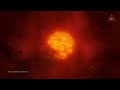
Betelgeuse, a red supergiant star, appears as a brilliant, ruby-red, twinkling spot of light in the upper right shoulder of the winter constellation Orion the Hunter. However, when viewed close up, astronomers know that it is a seething monster with a 400-day-long heartbeat of regular pulsations. This aging star is classified as a supergiant because it has swelled up to an astonishing diameter of approximately 1 billion miles. If placed at the center of our solar system it would reach out to the orbit of Jupiter.
The star’s ultimate fate is to explode as a supernova. When that eventually happens it will be briefly visible in the daytime sky from Earth. But there are a lot of fireworks going on now before the final detonation. Astronomers using Hubble and other telescopes have deduced that the star blew off a huge piece of its visible surface in 2019. This has never before been seen on a star....

- Title
- The Newly Discovered Langya Virus Infected 35 People In China@TheCosmosNews
- Runtime
- 2:49
- Date posted
- 4 years ago
- Description
- #thecosmosnews Another Zoonotic virus - Langya virus - has caught the attention of experts as 35 people are found to be infected with it in China. Authorities said, the patients did not have close contact with each other or common exposure history, suggesting that human infections might be sporadic. Meanwhile, Taiwan's Centers for Disease Control (CDC) are currently establishing a nucleic acid testing method to identify and check the spread of the virus.
Langya virus is a newly detected virus and therefore, Taiwan's laboratories will require a standardized nucleic acid testing method to identify the virus, so that human infections could be monitored, if needed, Taiwan's CDC Deputy Director-General Chuang Jen-hsiang said.
What is Langya henipavirus?
The Langya henipavirus, which has been found in China's Shandong and Henan provinces, can be transmitted from animals to humans.
Human-to-human transmission of the virus has not been repo...

- Title
- Our Sun Is Going Through A Highly Aggressive Phase on Solar Cycle 25 @TheCosmosNews
- Runtime
- 6:09
- Date posted
- 4 years ago
- Description
- #thecosmosnews Sun's Upcoming Peak of Sunspot and Solar Flare Activity Could Set Records Northern lights “Auras” Will Be Visible
New Sunspot Cycle could be one of the strongest on record
Solar activity refers to changes in the Sun’s magnetic field, which repeats over a cycle of about eleven years. The magnetic variations cause the number of sunspots to increase and decrease, which also affects the frequency of solar flares; powerful eruptions of radiation on the Sun’s surface that spread outwards through the Solar System and cause fluctuations in phenomena such as the aurora on Earth. The impact on the Earth and the surroundings of our planet caused by fluctuations in solar activity are referred to as “space weather”. In April this year, space weather became a hot topic when the Japanese Ministry of Internal Affairs and Communications estimated the potential cell phone outages, wide-spread power outages, and the reduced GPS accuracy that would occur if extreme ...