Harvard
Congratulations, Harvard Class of 2026!

- Title
- Congratulations, Harvard Class of 2026!
- Runtime
- 1:04
- Date posted
- 6 months ago
- Description
- We asked members of the Class of 2026 to send their congratulations and advice to their fellow graduating students.

- Title
- Harvard Class of 2026: Blake Lusty
- Runtime
- 7:14
- Date posted
- 6 months ago
- Description
- Blake Lusty spent more than a decade in the U.S. Navy, completing four combat deployments across 25 seas and four oceans and rising to the rank of Lieutenant Commander. What his military record doesn’t capture is that he did it all while navigating repeated cancer diagnoses and major health setbacks.
Diagnosed with late-stage cancer at 20 years old and given 12 months to live, Blake refused to let his diagnosis define his story. The cancer returned again years later, just as he had earned his dream assignment at sea. He later underwent open heart surgery and was forced to rethink what came next.
In 2024, he enrolled at Harvard Business School to begin a new chapter. Here, he reflects on service, resilience, family, and building a new chapter after the Navy.

- Title
- Harvard Class of 2026: Lael Ayala
- Runtime
- 2:10
- Date posted
- 6 months ago
- Description
- Lael Ayala has spent her time at Harvard balancing a busy schedule. A mechanical engineering concentrator, she is also an outfielder on the varsity softball team and a member of the Army ROTC. For her thesis project, she combined her love of softball and robotics to build a softball-collecting autonomous robot named "Softbot."
Originally from just outside of Atlanta, Georgia, Ayala has always been fascinated with how things work. She's also been a gifted athlete from a young age, eventually deciding to pursue softball at the Division I level. Ayala chose to attend Harvard in order to be able to pursue all her interests at once and to be part of a team that would support her growth.

- Title
- Why did a Harvard librarian cut up a book?
- Runtime
- 2:52
- Date posted
- 6 months ago
- Description
- Kelly Rene Bullard, Assistant Curator of Printing & Graphic Arts at Harvard's Houghton Library, tells the story of how one of Harvard's early curators helped catch a literary forger.
Flora Livingston was the curator for the Harry Elkins Widener Room at Harvard University from the mid-1920s to the mid-1940s. She was a well-respected librarian and bibliographer who helped shape Harvard's libraries. Her friendship with John Carter, a book detective and fellow researcher, led to her involvement in an investigation into Thomas J. Wise, a scholar and suspected forger.
John Carter and his partner Graham Pollard suspected that Wise was forging literary publications using the names of famous authors. One of the texts they suspected was fake was the 1986 "Sonnets" by Elizabeth Barrett Browning. Unable to get their hands on a copy in England, they wrote to Flora Livingston in the United States to see if she would be willing to investigate the copy of the "Sonnets" in t...

- Title
- Harvard Thinking: Breaking the regret cycle
- Runtime
- 29:41
- Date posted
- 6 months ago
- Description
- We all make mistakes. Sometimes we’re able to brush off these experiences, but other times we’re left with regrets. We regret that thing we said, how we handled that situation, or the choice we made. In this episode, host Samantha Laine Perfas, palliative care specialist Susan Block, neuroscientist Liz Phelps, and behavioral scientist Leslie John discuss how to make peace with the actions – or inactions – that still haunt us.

- Title
- Goat Yoga at HMS
- Runtime
- 0:17
- Date posted
- 6 months ago
- Description
- Baby goats joined the fun at yoga on the Harvard Medical School's quad.

- Title
- Unlocking Harvard's Ties to Slavery Through Descendant Research
- Runtime
- 8:44
- Date posted
- 6 months ago
- Description
- On his PBS series, Finding Your Roots, Henry Louis Gates, Jr. shows how we’re shaped by the ancestors on our family trees — ancestors known and unknown. In his day job, Gates is the Alphonse Fletcher University Professor at Harvard University and a member of the Advisory Council of the Harvard & the Legacy of Slavery Initiative — helping to guide the University’s efforts to uncover its historic ties to the institution of slavery.
Gates joins genealogist Lindsay Fulton, chief research officer at American Ancestors, and Sara Bleich, vice provost for special projects at Harvard and leader of the Harvard & the Legacy of Slavery Initiative, to explain how researchers uncover the names of individuals enslaved by Harvard leaders or who labored on Harvard’s campus between 1636 and 1865.
In 2022, Harvard researchers partnered with American Ancestors to undertake the complicated and painstaking task of poring through records like wills, journals, letters,...

- Title
- A New Nation: The Washington Elm
- Runtime
- 2:37
- Date posted
- 6 months ago
- Description
- Molly Schwartzburg, Philip Hofer Curator of Printing and Graphic Arts at Houghton Library, explores an unusual object in Harvard's collection: a "blook," a book-shaped object made from wood of the Washington Elm. The elm stood on Cambridge Common, just steps from Harvard Yard, and is believed to be the tree under which George Washington took command of the Continental Army on July 3, 1775. When the elm died in 1923, pieces were distributed across the country and around the world as symbolic remnants of that founding moment.
The Washington Elm is featured in War of Words, an exhibition opening at Houghton Library on May 18 exploring the printed materials that shaped the American Revolution. The exhibition is free and open to the public. Learn more at library.harvard.edu/exhibits/war-words.

- Title
- Harvard Thinking: Why we love dogs – and they love us
- Runtime
- 28:02
- Date posted
- 6 months ago
- Description
- Just under half of households in the U.S. own dogs and say they view their dogs as members of their family. The love goes both ways. Dogs depend on us for their survival, just as humans benefit from their presence. Research shows that having a furry companion is good for us physically, emotionally, some might even say spiritually. In this episode, host Samantha Laine Perfas talks with bestselling author Alice Hoffman, lifestyle medicine expert Beth Frates, and evolutionary biologist Erin Hecht about why we love dogs so much – and why they love us back.

- Title
- How a Harvard curator helped catch a forger
- Runtime
- 3:24
- Date posted
- 6 months ago
- Description
- Kelly Rene Bullard, Assistant Curator of Printing & Graphic Arts at Harvard's Houghton Library, tells the story of how one of Harvard's early curators helped catch a literary forger.
Flora Livingston was the curator for the Harry Elkins Widener Room at Harvard University from the mid-1920s to the mid-1940s. She was a well-respected librarian and bibliographer who helped shape Harvard's libraries. Her friendship with John Carter, a book detective and fellow researcher, led to her involvement in an investigation into Thomas J. Wise, a scholar and suspected forger.
John Carter and his partner Graham Pollard suspected that Wise was forging literary publications using the names of famous authors. One of the texts they suspected was fake was the 1986 "Sonnets" by Elizabeth Barrett Browning. Unable to get their hands on a copy in England, they wrote to Flora Livingston in the United States to see if she would be willing to investigate the copy of the "Sonnets" in t...

- Title
- A New Nation: The Declaration of Independence
- Runtime
- 1:25
- Date posted
- 6 months ago
- Description
- John Overholt, Curator of the Donald and Mary Hyde Collection of Dr. Samuel Johnson and Early Books and Manuscripts, explores one of the rare surviving copies of the Dunlap broadside, the first printed version of the Declaration of Independence. Held in Harvard's Houghton Library collection, this remarkable document offers a direct connection to the moment American independence was announced to the world.
The broadside is featured in War of Words, an exhibition opening at Houghton Library on May 18 exploring the printed materials that shaped the American Revolution. The exhibition is free and open to the public. Learn more at library.harvard.edu/exhibits/war-words.
- Title
- A New Nation: The Declaration of Independence
- Runtime
- 1:29
- Date posted
- 7 months ago
- Description
- John Overholt, Curator of the Donald and Mary Hyde Collection of Dr. Samuel Johnson and Early Books and Manuscripts, explores one of the rare surviving copies of the Dunlap broadside, the first printed version of the Declaration of Independence. Held in Harvard's Houghton Library collection, this remarkable document offers a direct connection to the moment American independence was announced to the world.
The broadside is featured in War of Words, an exhibition opening at Houghton Library on May 18 exploring the printed materials that shaped the American Revolution. The exhibition is free and open to the public. Learn more at library.harvard.edu/exhibits/war-words.

- Title
- Harvard Thinking: The secret lives of super-agers
- Runtime
- 30:13
- Date posted
- 7 months ago
- Description
- It’s common for our brains and bodies to atrophy with age. But some adults, those known as super-agers, have shown that we may be able to keep the sharpness of someone decades younger, even matching the cognitive abilities of a person in their 20s. In this episode, host Samantha Laine Perfas talks with biologist Will Mair, neurologist Alexandra Touroutoglou, and geriatric doctor Suzanne Salamon about what we've learned about super-agers and the secrets that may help us all extend and enrich our later years.
- Title
- Harvard Thinking: Priced out of the American dream
- Runtime
- 34:14
- Date posted
- 7 months ago
- Description
- Owning a home feels increasingly unattainable for many middle-class Americans. Last year, home prices surged to nearly five times the median income. Yet the pace of building new housing, which could create more affordability, remains slow. In this episode, host Samantha Laine Perfas talks with urban economist Ed Glaeser, former CEA chair Jason Furman, and innovative housing expert Amy Tomasso about how those hoping to buy can make sense of the current housing crisis.

- Title
- Dining at Harvard: Shaking beef with garlic noodles
- Runtime
- 1:00
- Date posted
- 8 months ago
- Description
- The 30 new menu items at Harvard University Dining Services (HUDS) focus on streets foods and comfort foods. Director of Culinary Operations Martin Breslin taste tests some of the new meals with Faculty Dean Kiran Gajwani and Dean of Students Thomas Dunne. Last in the series: Shaking beef with garlic noodles
- Title
- Harvard Thinking: The things we carry
- Runtime
- 33:17
- Date posted
- 8 months ago
- Description
- Different forms of adversity – like abuse, violence, and neglect – not only damage our physical and mental health but also change our cells. Scientific advances in the biology of adversity are showing us that in some cases, the harms of negative experiences run dangerously deep in our bodies and minds. In this episode, host Samantha Laine Perfas talks with children’s psychologist Kate McLaughlin, psychiatric epidemiologist Karestan Koenen, and cellular biologist Jason Buenrostro about what the future holds for protecting people from their worst experiences.

- Title
- Dining at Harvard: Pad Krapow
- Runtime
- 1:00
- Date posted
- 8 months ago
- Description
- The 30 new menu items at Harvard University Dining Services (HUDS) focus on streets foods and comfort foods. Director of Culinary Operations Martin Breslin taste tests some of the new meals with Faculty Dean Kiran Gajwani and Dean of Students Thomas Dunne. Second in the series: Pad krapow.

- Title
- Witch Hazel at the Arnold Arboretum
- Runtime
- 1:00
- Date posted
- 8 months ago
- Description
- What is in flower at the Arnold Arboretum in the middle of winter? Witch hazel, of course!
The red bloom flowers each winter and even serves as a natural thermometer. When the petals are outstretched and bright red, the temperature is above freezing. The petals curl up on days when the temperature drops to below 32 degrees.

- Title
- Dining at Harvard: Cacio e Pepe
- Runtime
- 1:05
- Date posted
- 8 months ago
- Description
- The 30 new menu items at Harvard University Dining Services (HUDS) focus on streets foods and comfort foods. Director of Culinary Operations Martin Breslin taste tests some of the new meals with Faculty Dean Kiran Gajwani and Dean of Students Thomas Dunne. First up: cacio e pepe.
- Title
- Harvard Thinking: Is marriage worth saving?
- Runtime
- 30:50
- Date posted
- 8 months ago
- Description
- Marriage has evolved a lot through the years – and so have the problems and rewards that come with it. Research suggests it benefits our physical and mental health, but it might not seem like it when conflict arises and couples struggle to co-manage a household. With greater social acceptance of a variety of lifestyle choices, many people – especially young women – are thinking twice before tying the knot. In this episode, host Samantha Laine Perfas talks with business professor Debora Spar, psychiatrist and family counselor Richard Schwartz, and bestselling author Eve Rodsky about the role of marriage in modern society.
- Title
- Harvard in Winter
- Runtime
- 0:28
- Date posted
- 8 months ago
- Description
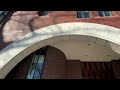
- It's snowy, it's cold, it's beautiful! Take a walk around Harvard in winter.
- Title
- Harvard Thinking: Preserving learning in the age of AI shortcuts
- Runtime
- 28:23
- Date posted
- 9 months ago
- Description
- Generative AI tools are here to stay. There’s a debate around whether or not they should be embraced in spaces of learning. Recent reports suggest that the risks of using these tools might outweigh the benefits, threatening cognitive development by doing the thinking for their users. This is forcing educators into a dilemma: how do they make the most of AI’s potential, while also protecting students’ ability to think for themselves? In this episode, host Samantha Laine Perfas talks with cognitive scientist Tina Grotzer, applied mathematics professor Michael Brenner, and educator Ying Xu about how to use AI tools to enhance learning, rather than replace it.

- Title
- Paper or Plastic: Brand Strategy at the Harvard Graduate School of Design
- Runtime
- 5:31
- Date posted
- 9 months ago
- Description
- How do you revive and reimagine a legacy brand? Lecturers and design experts Teman and Teran Evans created a class at the Harvard Graduate School of Design to answer that question. “Paper or Plastic: Redesigning Shelf Life in the Supermarket Landscape” teaches students how to use a blend of market research, empathy, and thoughtful design to reinvent everyday supermarket products. This year, four teams of students focused on Popsicle, Kleenex, Yoplait, and Clean & Clear.
Over the course of the semester, students learned how to present and pitch their ideas, with each week requiring all the teams to pitch for the class, followed by a critique period with the Evans brothers. At the end of the semester, the teams pitched to a group of design luminaries, who evaluated not only their designs but every aspect of their presentations.
Teman and Teran Evans are identical twins who grew up in Brooklyn, New York. Both attended the Harvard Graduate School of Design a...
- Title
- Harvard Yard Archaeology Project celebrates 20th anniversary
- Runtime
- 1:49
- Date posted
- 11 months ago
- Description
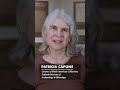
- What was life like for Harvard students in the 17th century? For the past 20 years, the Harvard Yard Archaeology Project has led excavations to discover more about the university's past. Undergraduate students like Kelsey Culbertson get on-site experience by digging for artifacts in Harvard Yard as part of their Anthropology class. The class is led by curators Diana Loren and Patricia Capone from the Peabody Museum of Archaeology & Ethnology. This year's dig focused on a site between Harvard Hall and Holden Chapel, which led to the discovery of the remnants of the original Harvard Hall, which burned down in 1764. Objects discovered during excavations become part of the Peabody Museum's collection and are on view in the "Digging Veritas" exhibition. The artifacts discovered over the past two decades give new insight into what student life at Harvard was like in the 17th and 18th centuries. The project is a collaboration between the Peabody Museum, the Department of Anthropology, and the...

- Title
- Harvard Yard Archaeology Project celebrates 20th anniversary
- Runtime
- 2:29
- Date posted
- 11 months ago
- Description
- What was life like for Harvard students in the 17th century? For the past 20 years, the Harvard Yard Archaeology Project has led excavations to discover more about the university's past. Undergraduate students like Kelsey Culbertson get on-site experience by digging for artifacts in Harvard Yard as part of their Anthropology class. The class is led by curators Diana Loren and Patricia Capone from the Peabody Museum of Archaeology & Ethnology. This year's dig focused on a site between Harvard Hall and Holden Chapel, which led to the discovery of the remnants of the original Harvard Hall, which burned down in 1764.
Objects discovered during excavations become part of the Peabody Museum's collection and are on view in the "Digging Veritas" exhibition. The artifacts discovered over the past two decades give new insight into what student life at Harvard was like in the 17th and 18th centuries.
The project is a collaboration between the Peabody Museum, the Department of Anthrop...

- Title
- Harvard's Pardis Sabeti on stopping pandemics before they start
- Runtime
- 2:29
- Date posted
- 11 months ago
- Description
- Pardis Sabeti, Professor of Organismic and Evolutionary Biology and core institute member at the Broad Institute of MIT and Harvard, is working to stop pandemics before they start. Her team at Sentinel has developed an early warning system for infectious diseases, built on locally-led pandemic prevention and co-created with partners across Africa.
After receiving a $100 million grant from the MacArthur Foundation's 100&Change competition, Sentinel is scaling tools that detect pathogens anywhere in the world, connect that information across populations, and empower frontline responders to act quickly.
Music courtesy of Extreme Music.

- Title
- Harvard's Pardis Sabeti on stopping pandemics before they start
- Runtime
- 2:32
- Date posted
- 11 months ago
- Description
- Pardis Sabeti, Professor of Organismic and Evolutionary Biology and core institute member at the Broad Institute of MIT and Harvard, is working to stop pandemics before they start. Her team at Sentinel has developed an early warning system for infectious diseases, built on locally-led pandemic prevention and co-created with partners across Africa.
After receiving a $100 million grant from the MacArthur Foundation's 100&Change competition, Sentinel is scaling tools that detect pathogens anywhere in the world, connect that information across populations, and empower frontline responders to act quickly.

- Title
- Harvard Thinking: The perils of perfectionism
- Runtime
- 28:58
- Date posted
- 11 months ago
- Description
- Many people hold themselves to extremely high standards, but when the scales tip to the pursuit of perfection, it can result in anxiety, depression, and other serious mental health issues. In this episode, host Samantha Laine Perfas talks with journalist Jennifer Breheny Wallace, psychologist Ellen Hendriksen, and public health expert Michaela Kerrissey about when we’ve gone too far in trying to achieve our best.
- Title
- Harvard Thinking: How does memory work (and not work)?
- Runtime
- 28:43
- Date posted
- 11 months ago
- Description
- We rely on our memories for so much. Memory is the foundation of our sense of self, ability to learn new information, and stay safe. But our memories are also highly suggestible, and we often misremember events or fabricate memories entirely. In this episode, host Samantha Laine Perfas talks with science researcher Dan Schacter, Alzheimer’s expert Margaret O’Connor, and neuroscientist Venki Murthy about the science of memory – and how we can remember better.

- Title
- The story behind Harvard and football's forward pass
- Runtime
- 1:21
- Date posted
- 12 months ago
- Description
- How did Harvard University influence the sport that eventually became modern American football? Zachary Nowak, a lecturer at the Harvard Extension School, tells the story of Harvard changed the game.

- Title
- Harvard Thinking: Why should you try the Mediterranean diet?
- Runtime
- 25:17
- Date posted
- 12 months ago
- Description
- Many diets claim to be good for you. But the Mediterranean diet rises to the top with its research-proven benefits: it’s been shown to increase life expectancy; decrease risk for dementia; improve mental health and cognitive function; and lower the risk of heart disease for nearly every demographic. What is it that makes the diet so great? In this episode, host Samantha Laine Perfas discuss the Mediterranean diet with nutritional psychiatrist Uma Naidoo and Mediterranean diet expert Miguel Ángel Martínez-González about how people can make nutritional changes that work for them day to day.

- Title
- How did Harvard influence the rules of American football?
- Runtime
- 0:53
- Date posted
- 12 months ago
- Description
- Zachary Nowak, a lecturer at the Harvard Extension School, tells the story of how a missed train changed the sport forever. Early American football was closer to soccer and rugby than the modern sport. Harvard University was influential in how the sport evolved into its current form.

- Title
- How Harvard influenced American football
- Runtime
- 2:30
- Date posted
- 12 months ago
- Description
- How did Harvard University influence the sport that eventually became modern American football? Zachary Nowak, a lecturer at the Harvard Extension School, tells the story of Harvard changed the game.
Early football at Harvard resembled rugby, while other schools played a game that was closer to soccer. Harvard's rules eventually spread outside of the Boston area, beginning the sport's evolution into its current form. The ball could be carried and dribbled, but not thrown, which meant early football games were violent and occasionally deadly.
By 1905, football had become so dangerous that players were dying on the field, leading to a national outcry. President Theodore Roosevelt, a Harvard alumnus, intervened to try to save the sport. Harvard was one of the schools summoned to the White House to find a way to change the game to protect players. The meeting eventually led to the legalization of the forward pass, creating the game we know today.
- Title
- Harvard Thinking: Are you getting enough sleep? Probably not.
- Runtime
- 31:22
- Date posted
- 1 year ago
- Description
- Sleep deprivation is a form of torture, yet we are depriving ourselves of quality sleep more than ever. Six out of 10 adults in the U.S. aren’t getting enough sleep, which leads to negative mood, low energy, poor cognitive function, and can even take years off your life. In this episode, host Samantha Laine Perfas talks with sleep scientist Rebecca Robbins, psychiatrist Tony Cunningham, and epidemiologist Matthew Weaver about why we should – and how to – get better sleep.

- Title
- The David Rubenstein Treehouse at Harvard
- Runtime
- 2:05
- Date posted
- 1 year ago
- Description
- At Harvard’s Enterprise Research Campus in Allston, Massachusetts, a bold new destination for convening has arrived. The David Rubenstein Treehouse brings together world-class architecture, sustainable design, and a mission to spark collaboration and innovation across disciplines.
Designed by Jeanne Gang, founding partner of Studio Gang and Kajima Professor in Practice of Architecture at the Harvard Graduate School of Design, the Treehouse features a soaring atrium, abundant natural light, and warm exposed mass timber that creates a welcoming sense of connection to nature. Every detail in the building reflects a commitment to healthy materials, climate-conscious construction, and a more resilient future.
As Harvard’s first university-wide conference center, this space offers a new hub for conversation, partnership, and shared purpose. From intimate gatherings to major academic convenings, the Treehouse is designed to inspire new ideas and bring people toge...

- Title
- Harvard Thinking: How to Tell a Story
- Runtime
- 33:06
- Date posted
- 1 year ago
- Description
- Storytelling is a huge part of the human experience. But how do you tell a good story? There are elements of craft to consider for sure, but for many authors, creativity comes from a place deep within themselves and looks different from writer to writer. In this episode, host Samantha Laine Perfas talks with literary critic James Wood, award-winning novelist Lauren Groff, short story writer Nick White, and playwright Sam Marks about their writing process.

- Title
- Harvard Thinking: Cancer is rising among younger people. Why?
- Runtime
- 30:50
- Date posted
- 1 year ago
- Description
- People under 50 are experiencing higher risk of some cancers. While overall cancer rates are declining, the incidence of 14 cancer types have increased in younger people. Why? It could be related to lifestyle choices, environmental factors, or an individual’s genetics. In this episode, host Samantha Laine Perfas speaks with global cancer trend expert Tim Rebbeck, oncologist Kimmie Ng, and epidemiologist Tomotaka Ugai about how people under 50 can best mitigate their cancer risk.

- Title
- Harvard Thinking: Why are U.S. literacy rates declining?
- Runtime
- 25:49
- Date posted
- 1 year ago
- Description
- Literacy rates in the U.S. have been in decline for a while now. Experts are combing the data for answers. Researchers are examining the role of curricula, teacher training, and classroom best practices to figure out: How do we help our kids read better?
In this episode, host Samantha Laine Perfas speaks with policy expert Martin West, teacher educator Pamela Mason, and reading researcher Phil Capin about how to best support our students.

- Title
- How do axolotls regrow limbs? Harvard’s Jessica Whited looks for answers
- Runtime
- 3:50
- Date posted
- 1 year ago
- Description
- Jessica Whited and her lab at the Harvard Stem Cell Institute study limb regeneration in axolotls. She hopes that one day, her research will be able to be transferred to humans.
Growing up, Jessica witnessed the effects of limb loss first-hand. Her grandfather suffered from peripheral artery disease, which causes reduced blood flow to the arms and legs. He experienced multiple amputations towards the end of his life. Watching his experience played a significant part in Jessica’s decision to pursue research in limb regeneration.
Axolotls, an aquatic salamander, can regenerate limbs throughout their life. Instead of forming scar tissue, the axolotl grows a blastema, where stem cells gather and eventually regrow into the missing limb.
Jessica hopes that someday, the axolotl’s unique healing and regeneration abilities will allow humans to regenerate their limbs.
Read more about Jessica and her research in the Harvard Gazette: https://news.harvard.edu/gaz...

- Title
- Bringing “Karma” Back to Life: Kenneth Noland’s Painting Restored at Harvard Art Museums
- Runtime
- 3:56
- Date posted
- 1 year ago
- Description
- In 1964, artist Kenneth Noland created Karma for the Venice Biennale, where he was one of eight painters representing new approaches to American art. Shortly after, Harvard’s Fogg Art Museum acquired the work and featured it in a 1965 exhibition.
In September 2024, conservators at the Harvard Art Museums’ Straus Center for Conservation and Technical Studies carried out a rare and highly controlled treatment. Using carbon-filtered water and measured ultraviolet light exposure from sunlight, they brightened and evened the large, unpainted cotton canvas in the composition.
This innovative procedure not only restored the painting’s visual impact but also advanced research on treating modern paintings with exposed cotton canvas.

- Title
- Harvard's Nancy Keating on the importance of healthcare access
- Runtime
- 1:25
- Date posted
- 1 year ago
- Description
- Nancy Keating, Professor of Health Care Policy at Harvard Medical School, researches the impact of access to healthcare on cancer patients. Using Medicare, Medicaid, and insurance information, her team's studies show that cancer treatment and care in the United States varies greatly depending on location and demographics. Research studies that document inconsistencies and gaps in care can lead to change that benefits patients.

- Title
- Harvard's Nancy Keating on studying the American healthcare system
- Runtime
- 1:39
- Date posted
- 1 year ago
- Description
- Nancy Keating, Professor of Health Care Policy at Harvard Medical School, researches the impact of access to healthcare on cancer patients. Using Medicare, Medicaid, and insurance information, her team's studies show that cancer treatment and care in the United States varies greatly depending on location and demographics. Research studies that document inconsistencies and gaps in care can lead to change that benefits patients.

- Title
- Harvard epidemiologist on the impact of HIV/AIDS research
- Runtime
- 1:25
- Date posted
- 1 year ago
- Description
- Jeff Imai-Eaton, Associate Professor of Epidemiology at the Harvard T.H. Chan School of Public Health, discusses the impact that funding cuts can have on HIV/AIDS transmission and treatment. Imai-Eaton's work focuses on tracking the spread of HIV/AIDS. His research allows scientists and medical expert to track successful treatments in order to become more effective. While the reduction in the spread of the disease was a major success story over the past couple of decades, that progress is now at risk. Interruptions in funding could lead to new infections and deaths, as well as a potential resurgence of the disease back to early-2000's levels.

- Title
- Harvard's Duane Wesemann on Why Medical Research Matters
- Runtime
- 1:27
- Date posted
- 1 year ago
- Description
- Duane Wesemann, Associate Professor of Medicine at Harvard Medical School, discusses the motivation behind his scientific work and the critical need for continued medical research. As both a doctor and scientist, he explains how patient interactions drive his research into immune system function and antibody production. Wesemann emphasizes that scientific understanding is essential for developing new treatments and helping patients, making a compelling case for the importance of sustained research funding in advancing human health.

- Title
- Harvard epidemiologist Jeff Imai-Eaton on the impact of HIV/AIDS funding uncertainty
- Runtime
- 1:32
- Date posted
- 1 year ago
- Description
- Jeff Imai-Eaton, Associate Professor of Epidemiology at the Harvard T.H. Chan School of Public Health, discusses the impact that funding cuts can have on HIV/AIDS transmission and treatment. Imai-Eaton's work focuses on tracking the spread of HIV/AIDS. His research allows scientists and medical expert to track successful treatments in order to become more effective. While the reduction in the spread of the disease was a major success story over the past couple of decades, that progress is now at risk. Interruptions in funding could lead to new infections and deaths, as well as a potential resurgence of the disease back to early-2000's levels.

- Title
- The importance of the Women's Health Initiative
- Runtime
- 1:31
- Date posted
- 1 year ago
- Description
- JoAnn Manson, Professor of Women's Health at Harvard Medical School, discusses the Women's Health Initiative and the importance of long-lasting research trials. The Women's Health Initiative was launched in the early 1990s to address the lack of research into the health of post-menopausal women. It was the first of its kind in the United States. The study continues today and has given researchers valuable data on a range of illnesses and treatments.
In April 2025, the NIH announced that it would be withdrawing funding from the Initiative. After a public outcry, support for the project was restored.
Learn more about Dr. Manson's work: https://news.harvard.edu/gazette/story/2025/05/tips-for-staying-alive-decades-in-the-making/
- Title
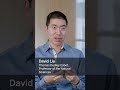
- Harvard's David Liu on the impact of publicly-funded research
- Runtime
- 1:27
- Date posted
- 1 year ago
- Description
- David Liu, Director of the Merkin Institute of Transformative Technologies in Healthcare, explains how his research has led to new treatments for genetic diseases that previously had no effective cure. Liu pioneered base editing and prime editing tools, which can correct misspellings in DNA. All of his lab's discoveries are shared publicly, allowing other researchers to use new tools to treat patients. Public funding has Liu and fellow scientists to pursue research that improves the lives of Americans.
Learn more about Liu's research and recent breakthroughs in the Harvard Gazette: https://news.harvard.edu/gazette/story/2025/06/science-that-gives-humans-more-say-over-their-destinies-crispr-baby-kj/

- Title
- Harvard Reads: Mort
- Runtime
- 1:36
- Date posted
- 1 year ago
- Description
- Debbie Ginsberg, the Faculty Resources Manager at the Harvard Law School Library, talks about her love for Terry Pratchett's Discworld series and explains why "Mort" is a good book for readers hoping to begin their journey into the fantasy world. The book tells the story of Mort, who becomes Death's apprentice and embarks on a series of adventures and misadventures.
"Harvard Reads" features book recommendations from the Harvard community. You can find more recommendations in the Harvard Gazette: https://news.harvard.edu/gazette/books/
- Title
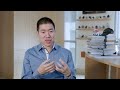
- Harvard's David Liu on why publicly-funded research matters
- Runtime
- 1:41
- Date posted
- 1 year ago
- Description
- David Liu, Director of the Merkin Institute of Transformative Technologies in Healthcare, explains how his research has led to new treatments for genetic diseases that previously had no effective cure. Liu pioneered base editing and prime editing tools, which can correct misspellings in DNA. All of his lab's discoveries are shared publicly, allowing other researchers to use new tools to treat patients. Public funding has Liu and fellow scientists to pursue research that improves the lives of Americans.
Learn more about Liu's research and recent breakthroughs in the Harvard Gazette: https://news.harvard.edu/gazette/story/2025/06/science-that-gives-humans-more-say-over-their-destinies-crispr-baby-kj/

- Title
- Harvard's David Corey on Gene Therapy Breakthrough for Childhood Deafness
- Runtime
- 1:31
- Date posted
- 1 year ago
- Description
- David Corey, Bertarelli Professor of Translational Medical Science at Harvard Medical School, discusses his team's development of gene therapies to treat hereditary deafness in children. After nearly 50 years studying inner ear cells, they're close to treating two types of genetic hearing loss: Usher syndrome type 1F and DFNB1. The therapy uses viruses to deliver normal gene copies into inner ear cells, replacing defective ones that cause deafness. Early treatment by age one or two is critical before brain hearing pathways fail to develop. With 3,000-4,000 children affected annually, this research represents a potential cure for genetic hearing loss.