The Economist
How did Kosovo become a country?
- Title
- How did Kosovo become a country?
- Runtime
- 7:53
- Date posted
- 8 years ago
- Description
- Kosovo, Europe's newest country, was formed 10 years ago this week. It is peaceful today, but the path to its creation lay in one of Europe's most brutal sectarian conflicts. Warning: this film contains graphic content.
Click here to subscribe to The Economist on YouTube: http://econ.st/2BZBGtD
In 2008, Kosovo became Europe’s newest country. This small, landlocked state of two million people emerged as a result of one of Europe’s most brutal sectarian conflicts since the second world war.
Today Kosovo is peaceful, but poor. Unemployment is high and the grey economy accounts for about 30% of the country’s economic activity. And Kosovans are the only citizens in Europe to not have visa free access to the rest of the continent.
The country is still divided along ethnic lines. 90% of its people are Albanian speakers and mostly Muslim. About 10% are ethnic Serbs, who are Orthodox Christians and live mostly in the north.

- Title
- Online dating and its global impact
- Runtime
- 3:49
- Date posted
- 8 years ago
- Description
- Online-dating apps Tinder and Bumble have generated 20bn matches around the world. On Valentine's day we examine the effect of the online-dating revolution.
Click here to subscribe to The Economist on YouTube: http://econ.st/2suT4Tc
Whether you’re after guys with bushy beards, a partner who has a passion for classical music or you want to find love for you and your pooch–there’s a dating app to meet your needs.
In 1995 match.com became the first major online-dating site. Today there are hundreds of sites and apps. It has gone from taboo to the thing to do.
But what impact is this having on society?
Whitney Wolfe could lay claim to being the 21st century’s most prolific cupid. As co-founder of dating app Tinder and CEO of Bumble, her digital-dating devices have generated 20bn matches.
Today around 295 million people use online-dating services all around the world. The Netherlands tops the list with 12...

- Title
- Winter sports are facing many challenges. Can they survive?
- Runtime
- 7:18
- Date posted
- 9 years ago
- Description
- The 2018 Winter Olympics will see athletes from a record-breaking 92 countries compete in Pyeongchang, South Korea. But winter sports face a double threat, from climate change and ageing populations
Click here to subscribe to The Economist on YouTube: http://econ.st/2ErUCSr
Winter sports are under threat. The multi-billion dollar industry – the livelihood for many mountain communities – faces a double problem. The popularity of skiing and snowboarding is declining in the rich world and resorts are having to cope with a warming climate.
This luxury hotel is the birthplace of winter sports. In the 19th-century, Switzerland was a popular summer destination for English tourists. The owner of the Kulm at the time, Johannes Badrutt, wanted to fill his hotel all year round. So in 1864 he made a whiskey-fuelled wager with some English guests.
The Englishmen returned for Christmas and became so hooked on snow pursuits that they stayed fo...
- Title
- Wooden skyscrapers could be the future for cities
- Runtime
- 6:26
- Date posted
- 9 years ago
- Description
- Wooden skyscrapers are an ambitious and innovative solution to the problems posed by urbanisation. Not only are they faster to build, they have smaller carbon footprints than high-rises made of concrete and steel.
Click here to subscribe to The Economist on YouTube: http://econ.st/2GCblkl
By 2050 the world’s population is expected to soar to almost 10 billion people and two-thirds of us will live in cities.
Space will be at a premium.
High-rise offers a solution. But concrete and steel – the materials we currently use to build high – have a large carbon footprint.
An answer might lie in a natural material we’ve used for millennia.
Throughout history buildings have been made of wood.
But it has one major drawback. It acts as kindling.
Fire destroyed large swathes of some of the world’s great cities.
But by the early twentieth century, the era of modern st...
- Title
- What is carnival: origins of the world’s biggest party
- Runtime
- 3:27
- Date posted
- 9 years ago
- Description
- Carnival started as a pagan festival in ancient Egypt and has grown to become one of the largest celebrations in the world. Today more than 50 countries celebrate the tradition, but where did the party start?
Click here to subscribe to The Economist on YouTube: http://econ.st/2rXzONA
From samba blocos in Brazil to masked balls in Italy, Carnival is a truly global phenomenon, celebrated in over 50 countries around the world.
Carnival originated as a pagan festival in ancient Egypt, to usher out winter and celebrate the beginning of spring. When Alexander the Great conquered Egypt, the Ancient Greeks adopted the festival.
The Romans assimilated the festival from the Greeks, and it was later overlaid with Christian meaning to become the festival of “Carne Vale”
The word, “carne” means “meat” in Latin and “vale”, means “farewell”.
In the Catholic calendar “carne vale” - farewell to meat, ...
- Title
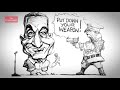
- Bassem Youssef: Why we should laugh at leaders
- Runtime
- 7:00
- Date posted
- 9 years ago
- Description
- Bassem Youssef has been called “the Jon Stewart of the Middle East”. On the seventh anniversary of Egypt’s Arab Spring he talks to The Economist’s award-winning cartoonist, KAL, about political satire and what it means for democracy.
Click here to subscribe to The Economist on YouTube: http://econ.st/2GgGB8d
Dr Bassem Yousef is a television comedian. He used satirical comedy to hold the authorities to account during the Egyptian revolution. Dr Bassem Yousef was a symbol of the promise of the Arab spring and of its ultimate failure. When demonstrations became in 2011, Dr Yousef quit his job as a heart surgeon to start a comedy show on YouTube.
Bassem Youssef's wit and satire poked fun at the hypocrisy of the state run media which tried to discredit the protests. And it quickly became a smash hit. Bassem Youssef was one man standing against the regime with no weapons but his jokes and it soon made him an enemy of the state.
Da...

- Title
- Trump in two minutes
- Runtime
- 2:48
- Date posted
- 9 years ago
- Description
- President Donald Trump has spent one year in office. But what exactly has he achieved? Here’s a two-minute snapshot of his presidency so far.
Click here to subscribe to The Economist on YouTube: http://econ.st/2D5Gxte
Since coming to power Mr Trump has tweeted over two thousand times. Often insulting people and bragging with a liberal use of exclamation marks.
He's played golf 88 times, held very long handshakes and created a new word "covfefe".
Daily Watch: mind-stretching short films throughout the working week.
For more from Economist Films visit: http://econ.st/2D5Gy0g
Check out The Economist’s full video catalogue: http://econ.st/20IehQk
Like The Economist on Facebook: http://econ.st/2D5FNUY
Follow The Economist on Twitter: http://econ.st/2D1WFMn
Follow us on Instagram: http://econ.st/2D5FPw4
Follow us on LINE: http://econ.st/1WXkOo6
Follow us on Medium: http://econ.st...

- Title
- How to bring down a dictator
- Runtime
- 4:19
- Date posted
- 9 years ago
- Description
- North Korea’s dictator Kim Jong Un celebrates his birthday today. How can he–and leaders like him–be brought down by non-violent action?
Click here to subscribe to The Economist on YouTube: http://econ.st/2CTZrn6
Daily Watch: mind-stretching short films throughout the working week.
For more from Economist Films visit: http://econ.st/2CTRKx8
Check out The Economist’s full video catalogue: http://econ.st/20IehQk
Like The Economist on Facebook: http://econ.st/2CTZteI
Follow The Economist on Twitter: http://econ.st/2CTRLBc
Follow us on Instagram: http://econ.st/2CTZuiM
Follow us on LINE: http://econ.st/1WXkOo6
Follow us on Medium: http://econ.st/2CTRMoK

- Title
- Should three-parent families be legally recognised?
- Runtime
- 5:50
- Date posted
- 9 years ago
- Description
- What does a modern family look like? The Economist’s Matt Steinglass travels to the Netherlands where multiple-parent families–with up to four parents–could be recognised by law.
Click here to subscribe to The Economist on YouTube: http://econ.st/2B3k8sA
What does a modern family look like? The Netherlands could become the first country in the world to allow a child to have more than two legal parents.
Families nowadays are complicated. Gay couples and infertile couples often have children with the help of surrogates or friends. Meaning three or more people may consider themselves the parents.
But does growing up in a non-traditional family have any impact on the well-being of children or their parents?
In 2013, California passed a law allowing more than two parents in some cases. A few provinces in Canada also allow it, but no country has adopted the practice nationwide.
Multiple studies have shown t...
- Title
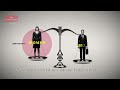
- Why are women paid less than men?
- Runtime
- 2:19
- Date posted
- 9 years ago
- Description
- The gender pay gap is not caused by women earning less than men for the same job. It is largely because women choose different careers and suffer a “motherhood penalty”’.
Click here to subscribe to The Economist on YouTube: http://econ.st/2Bnu9E9
Women who work full-time, still earn 15% less than men. But that's not because they are paid less for the same jobs. It's because they're in different jobs.
Women are in less senior jobs. In Britain, France and Germany, 80-90% of executive jobs are held by men. Women also tend to choose different occupations.
In America over 80% of teachers, nurses, secretaries, and health workers are female and these jobs tend to be lower paid. Primary school teachers in the West earn nearly 20% less than the average graduate job.
Nurses earn less than police officers. Cleaners less than caretakers.
Women are as ambitious as men. They earn the majority of university degree...

- Title
- Foreign aid: who gives the most, and where does it go?
- Runtime
- 2:01
- Date posted
- 9 years ago
- Description
- Rich countries are giving more in foreign aid than ever before. But which countries are the most generous?
Click here to subscribe to The Economist on YouTube: http://econ.st/2AAzFCG
Rich countries are giving away more in aid than at any other time on record. In 2016 more than $140bn was distributed around the world.
According to the latest breakdown in 2015 America gave the most money away - nearly $31bn to at least 40 countries and organisations such as the world bank. This included $770m to Pakistan and $250m to Mexico. This may sound generous but the United States has the largest economy in the world.
American foreign aid spending in 2015 was only 0.17% of the gross national income. Far less than other rich countries.
Sweden and Norway are the biggest givers, donating over 1% of their gross national income to foreign aid. The biggest receivers of aid in 2015 were Afghanistan, India, Vietnam, Ethiopia and Indonesia. ...

- Title
- Donald Trump’s big test in 2018
- Runtime
- 5:58
- Date posted
- 9 years ago
- Description
- Donald Trump will face his biggest test as president in November 2018. A bad result in the mid-term elections could lead to his impeachment. Can Mr Trump unite and rally Republican voters?
Click here to subscribe to The Economist on YouTube: http://econ.st/2zPS0MH
In November 2018 President Donald Trump will face his biggest political test yet - the mid term elections. The elections are a referendum on the president; his achievements, his ability to govern and the scandals engulfing him.
Donald Trump is possibly the most controversial American president of all time. He has antagonised world leaders and stoked racial tension at home and abroad. Mr Trump has redefined the term "public office".
What would once have been private White House discourse is now regularly broadcast to the world via his Twitter account.
Despite Republican control of Congress, he has failed to deliver on his promises. Mr Trump needs the support o...

- Title
- Can extreme poverty ever be eradicated?
- Runtime
- 3:20
- Date posted
- 9 years ago
- Description
- Poverty rates have fallen faster in the past 30 years than at any other time on record. The UN wants extreme poverty to disappear by 2030. We assess the data to see if this is achievable.
Click here to subscribe to The Economist on YouTube: http://econ.st/2AfBchr
It is estimated that somebody escapes extreme poverty every 1.2 seconds. According to the World Bank, anyone on less than $1.90 per day is living in extreme poverty unable to afford basic food, clothing, healthcare and shelter.
Absolute poverty rates have fallen faster in the past 30 years than in any other time on record. This is a remarkable achievement but the task of taking people put of the worst poverty remains a huge challenge. The impressive fall is the result of changes in just two countries, China and India.
In the 1980s the majority of people in both of these countries were living in extreme poverty. But now the share of the poorest has fallen to 21% in India, and...

- Title
- Are Americans trashing the English language?
- Runtime
- 5:45
- Date posted
- 9 years ago
- Description
- Britons often grumble that Americanisms are creeping into British English. Lane Greene, our language guru, asks where American words really come from—and whether they pose a threat to the Queen's English.
Click here to subscribe to The Economist on YouTube: http://econ.st/2AqhBvU
Are American's trashing the English language? The Economists language expert, Lane Greene, knows a thing or two about English. Lane is a fan of words, lots of words, and Lane is an American living in London. He's become accustomed to British English slang. But Lane often hears Britons complain that there are too many American words and expressions creeping into British English, these are called Americanisms.
British writer Matthew Engel can't stand Americanisms being used in Britain and even wrote a book about it. But are Americanisms trashing British English?
Daily Watch: mind-stretching short films throughout the working week.
For more from ...

- Title
- Welcome to the startup jungle
- Runtime
- 21:23
- Date posted
- 9 years ago
- Description
- Most new companies fail. What does it take for young entrepreneurs around the world to thrive in a startup hub? Film supported by @santanderuk
Click here to subscribe to The Economist on YouTube: http://econ.st/2A1ieeK
Over the past two decades start-ups have changed the world. Multi-billion dollar companies like Google, Facebook, and Uber have shown the transformative power of entrepreneurship.
Today, innovators dream of their idea becoming the next big thing. But the odds are stacked against them. In America alone, 80% of startups will fail. In startup hubs around the world young entrepreneurs are desperate to prove they have what it takes to succeed. But what does it really take to survive?
HoloMe is one of half a million companies to start up in Britain every year. The nations capital is a leading hub of innovation, inspiration, and creative energy. In London, and in cities world wide it's the age of the entrepreneur.

- Title
- Zimbabwe is free of Robert Mugabe, should the world celebrate?
- Runtime
- 5:46
- Date posted
- 9 years ago
- Description
- Zimbabwe may be free of Robert Mugabe, who has been deposed in an apparent military coup, but the celebrations occurring in the country's capital will be short-lived. Emmerson Mnangagwa, the man who may end up in charge, is every bit as nasty as his ex-boss, and the economic turmoil that the country is in will not be easily fixed.
Click here to subscribe to The Economist on YouTube: http://econ.st/2A8re1V
President Robert Mugabe has ruled Zimbabwe since 1980. At first he was lionised as the man who ended white minority rule. Then he sent his special forces to slaughter the Ndebele, an ethnic group that didn’t support him.
His 37-year reign has been marred by economic free fall, land seizures and violence against anyone who spoke up against the regime.
But the military has staged a coup and forced him from power. These were the scenes in Harare the day the tanks rolled in. Zimbabweans hope that with the tyrant gone, their lives wi...
- Title
- Brexit could end the age of "Cool Britannia"
- Runtime
- 5:45
- Date posted
- 9 years ago
- Description
- Brexit is not only a concern for Britain’s economic future, it’s also threatening the country’s “street cred”: 2018 could mark the end of “Cool Britannia”.
Click here to subscribe to The Economist on YouTube: http://econ.st/2zF0LIE
Could 2018 be the year Britain loses its cool? By autumn, the complex Brexit negotiations should be drawing to a close. Deal or no deal, what's decided before then will affect the future of Britain, and the continent, for decades to come.
As Brexit begins to bite, not only is Britain's economic future in play but the country could lose its "street cred".
20 years ago, Britain was riding on the crest of a wave of cool; Britpop ruled the airwaves, and the young, newly elected, Prime Minister Tony Blair, was pledging to build a new Britain.
20 years on from Blair’s iconic address, Theresa May took to the stage at her conservative party conference, to deliver a less successful...

- Title
- Returning ISIS fighters: How should governments deal with them?
- Runtime
- 7:35
- Date posted
- 9 years ago
- Description
- ISIS fighters are returning home to Europe. In Britain, half of the 850 citizens known to have joined ISIS have already come back. As France marks the two-year anniversary of the deadliest terrorist attack on its soil, governments have to decide what to do with returning foreign fighters.
Click here to subscribe to The Economist on YouTube: http://econ.st/2zC9F9M
Many Europeans have gone to fight for ISIS, close to 6000 of them and those are just the ones we know about. With the caliphate crumbling, many of these foreign fighters are heading home. But what should be done about them?
On November 13th, 2015, eight suicide bombers and a gunman attacked Paris, killing 130 people and injuring more than 400. The attackers were French and Belgian nationals, six of whom had returned from Syria where they had been fighting with ISIS, also known as ISIL or Islamic State
What to do when fighters return is a major concern for western governments...

- Title
- The struggles for independence and the impact of redrawing borders
- Runtime
- 4:36
- Date posted
- 9 years ago
- Description
- From Catalonia to Kurdistan and Quebec, many people are demanding independence. What does it take to transform a cultural identity into a nation-state? And what is the impact?
Click here to subscribe to The Economist on YouTube: http://econ.st/2zpWFnB
The number of countries in the United Nations has grown over the decades – from 51 states in 1945 to 193 today. Many more places want to become independent.
But national governments almost always oppose secession.
Catalonia’s parliament declared independence from Spain in October 2017 following a referendum deemed illegal by the central authorities in Madrid.
Spain dismissed the region’s government, and decreed that a fresh election should be held. Catalan politicians leading the independence movement could be jailed for decades if found guilty of rebellion and sedition.
The autonomous Kurdish region in Iraq also held a recent independence referendum. It outra...

- Title
- Space tourism will lift-off in 2018
- Runtime
- 5:45
- Date posted
- 9 years ago
- Description
- Space tourism will take-off in 2018. As the race between spaceflight companies Virgin Galactic and SpaceX heats up, those who can afford it will be able to travel to low Earth orbit and possibly even around the moon.
Click here to subscribe to The Economist on YouTube: http://econ.st/2he5ZAb
In late 2018, tourists will be heading into space and there is a race on to get them there. Virgin Galactic will at last take paying customers beyond the stratosphere. But their efforts might be eclipsed by SpaceX, a company planning to send two tourists around the Moon. Taking them farther into space than any human since 1972.
There is a new breed of would-be astronauts for whom the sky is no limit. But it is not in everyone's reach. Multi-millionaire entrepreneur, Per Wimmer will be one of the first tourists to go into space with private company, Virgin Galactic.
If it all goes to plan, in 2018, Virgin Galactic will launch Mr Wimmer to the edg...

- Title
- The Balfour Declaration's impact, 100 years on
- Runtime
- 8:03
- Date posted
- 9 years ago
- Description
- The Balfour Declaration was penned 100 years ago, but its legacy still resonates in the Middle East today. How did a letter, only 67-words long, ignite 100 years of conflict?
Click here to subscribe to The Economist on YouTube: http://econ.trib.al/rWl91R7
100 years ago this week Arthur Balfour, the British foreign secretary, penned a letter that would change the face of the Middle East. The letter published on November 2nd 1917 led to the creation of the State of Israel and would spark almost a century of conflict.
The American Colony Hotel has hosted guests in Jerusalem for over a century. This place has a unique perspective on the region's history because it's played a part in it. Presidents and peacemakers, spies and journalists, use this space, often in secret, to hatch plans and discuss the future.
The hotel sits close to the former border separating East from West Jerusalem. Today, the whole city is under Israeli rule but Jews ...

- Title
- Facial recognition technology will change the way we live
- Runtime
- 6:25
- Date posted
- 9 years ago
- Description
- Facial recognition technology will transform the way we live in 2018. Machines that can read and recognise our faces will go mainstream, opening up exciting possibilities and posing new dangers
Click here to subscribe to The Economist on YouTube: http://econ.trib.al/rWl91R7
In 2018 machines that can read your face will go mainstream, changing the way we live. Your face will become your password, unlocking smartphones and bank accounts, but the technology will also have the power to covertly track your movements.
It will even be able to guess your sexuality through facial features alone. In 2018 we'll be forced to face the future.
The human face has an astonishing variety of features which not only help us recognize others, but read and understand them through a constant flow of intentional and unintentional signals. It's one of the unique functions that separates man from machine, until now.
Pioneering facial recognition...

- Title
- Urbanisation and the rise of the megacity
- Runtime
- 1:05
- Date posted
- 9 years ago
- Description
- Urbanisation is happening faster today than at any time in history. By 2030 nearly 9% of the global population will live in so-called megacities—cities with more than 10m inhabitants.
Click here to subscribe to The Economist on YouTube: http://econ.trib.al/rWl91R7
In 1950 New York and Tokyo were the only so called megacities; cities with more than 10m inhabitants.
By 1980 these were joined by Mexico City, Sao Paulo and Osaka.
In 2010 there were over 20 megacities spanning almost every continent.
Today, there are 32 megacities.
Urbanisation is happening faster than at any time in human history. Asia accounts for over half of today's megacities. By 2030 nearly 9% of the world's population will live in 41 megacities. But it's in Africa where some of the most rapid urbanisation will take place in the future.
Daily Watch: mind-stretching short films throughout the working week.
For...

- Title
- Transforming cities with technology
- Runtime
- 18:59
- Date posted
- 9 years ago
- Description
- Cities are growing faster than at any time in history, straining services and infrastructure. Technology-driven advances are at the forefront of solving this age-old problem
Click here to subscribe to The Economist on YouTube: http://econ.trib.al/rWl91R7
By 2050, two thirds of the world’s population will live in cities. Urbanisation is happening faster than at any time in human history.
Globally, 900 million people are living in slums. Cities can’t add housing fast enough. Today, an estimated one billion vehicles are already bringing urban areas to a standstill. Cities consume three-quarters of the world’s energy each year and are responsible for around 50% of greenhouse gas emissions.
These are challenges our cities have been facing for decades.
But now some city leaders, businesses, and even citizens, are taking new approaches to tackling these old problems. They’re transforming their cities with t...

- Title
- The climate-change experiment
- Runtime
- 5:21
- Date posted
- 9 years ago
- Description
- Climate-change experts are researching ways to cool down the planet using geoengineering. How could spraying chemicals into the stratosphere help counteract global warming?
Click here to subscribe to The Economist on YouTube: http://econ.trib.al/rWl91R7
What if you discovered a way to cool down the planet? Extreme weather events are becoming more common and more ferocious. As the surface temperature of earth continues to rise, so too will the ferocity of natural disasters.
In 2018 scientists will take bold steps to explore a technology that could reverse the effects of climate-change. They’re looking at ways to reflect sunlight back into space and cool down the planet.
Insurers say the number of weather-related disasters has quadrupled since 1970. While world leaders are debating and disputing climate-change and the ways in which humans alter their behaviour on earth, some scientists discuss changes to the earth itself.

- Title
- Instagram playboy is also the vice-president of Equatorial Guinea
- Runtime
- 5:24
- Date posted
- 9 years ago
- Description
- Equatorial Guinea’s vice-president records his lavish lifestyle on Instagram, but it is unclear where his money comes from. He is currently being tried for embezzlement and money-laundering in France, where a verdict will be announced this week.
Click here to subscribe to The Economist on YouTube: http://econ.trib.al/rWl91R7
Meet one of Instagram's most famous playboys. He tours the world, driving fast cars and eating at the world's finest restaurants. He even gets hip-hop stars like Wyclef Jean to play at his lavish parties posting his exploits on his Instagram account. But this isn't your typical Instagram star.
He's the vice-president of a country, Equatorial Guinea. A small country in west Africa with a lot of oil.
Teodoro Nguema Obiang is the second-most-powerful man in the country. His father is the world's longest serving president, Teodoro Obiang Nguema. The Obiang family has amassed a fortune running into the hundreds of m...
- Title
- Electric cars will come of age in 2018
- Runtime
- 6:18
- Date posted
- 9 years ago
- Description
- Electric cars will come of age in 2018. For the first time they will compete in price and performance with petrol and diesel cars. But in the year ahead we will also be confronted with some uncomfortable truths about going electric.
Click here to subscribe to The Economist on YouTube: http://econ.trib.al/rWl91R7
2018 is set to be the year the world fully embraces the electric car. We’ll see a global tipping point for drivers as electric models start competing with petrol and diesel cars head-to-head.
But we’ll also be confronted with the uncomfortable truth about the impact of going electric.
They've long been vaunted as the vehicle of the future but from laughing stock in the mid-1980s to rising stock today electric cars have come of age.
Companies are clambering to take the lead with billions in investments and promises to make the switch, but it’s pressure from governments that's driving this push from the ind...

- Title
- Xi Jinping, China's president, is the world's most powerful man
- Runtime
- 3:35
- Date posted
- 9 years ago
- Description
- Is Xi Jinping the world's most powerful man? The world's balance of power is shifting. For the past five years president Xi Jinping, China's leader, has ruled with an iron fist and has been pursing a new model of great power relations.
Click here to subscribe to The Economist on YouTube: http://econ.trib.al/rWl91R7
Xi Jinping rules the most populous country, home to 1.4 billion people. Mr Xi is the most powerful Chinese leader since chairman Mao. He has purged the communist party and much of the army, rooting out corruption, replacing potential rivals with allies, and chocking any sign of dissent.
China is the world's second largest economy and an engine of global growth. It is the biggest trade partner of many other countries and the second biggest of both America and the EU.
China is building powerful armed forces constructing artificial islands in the South China Sea that look like military bases. Its ships have conducted milita...

- Title
- Hackers will pose a greater threat in 2018
- Runtime
- 4:51
- Date posted
- 9 years ago
- Description
- Hackers will affect our daily lives in 2018 like never before. As more elements of our daily lives are linked to the internet, hackers will have greater opportunity to scale up cybercrimes, leaving our homes and personal lives more vulnerable to attack
Click here to subscribe to The Economist on YouTube: http://econ.trib.al/rWl91R7
In 2018 cyber attacks will affect our lives like never before. Hackers have already compromised multi-national organisations, stealing the personal details of millions. Hackers have even been implicated in national elections.
On the golden shores of Hawaii lives one of the most prolific hackers on the planet. At the age of 22, Jeremiah Grossman hacked Yahoo – one of the biggest tech companies in the world. In response, they offered him a job – Yahoo’s Chief Hacker.
According to Jeremiah "There’s a vernacular in the industry, there is the white hat hackers and then there is the black hat hackers. ...

- Title
- Catalonia’s independence referendum explained
- Runtime
- 5:30
- Date posted
- 9 years ago
- Description
- Catalonia’s independence referendum is due to take place on October 1st, in clear defiance of the Spanish government. We outline why some Catalans want independence from Spain, and why only 41% are likely to vote yes
Click here to subscribe to The Economist on YouTube: http://econ.trib.al/rWl91R7
Tensions are rising in Catalonia. An independence referendum is planned for October 1st and if the majority vote Yes the Catalan government says it will declare independence from Spain.
Raul Romeva is a member of the Catalan parliament, which favours independence. A parliament set on a collision course with the Spanish government.
Xavier Albiol is the leader of the Catalan branch of Spain's ruling People's Party. His party fiercely opposes the referendum that has been deemed illegal by the Spanish constitutional court. Police have raided Catalan government offices, seized ballot papers, and arrested at least 12 officials in a bid to stop t...

- Title
- Driving was illegal for women in Saudi Arabia, but Manal Al Sharif did it anyway
- Runtime
- 4:03
- Date posted
- 9 years ago
- Description
- Driving was illegal for women in Saudi Arabia. Meet Manal Al Sharif, the woman who broke that law, went to prison for it and fled the country, all in the name of gender equality.
Click here to subscribe to The Economist on YouTube: http://econ.trib.al/rWl91R7
Saudi Arabia is the only country in the world where a woman can go to prison for driving a car. Manal Al Sharif dared to break the law, on camera.
The Kingdom of Saudi Arabia practices an extreme interpretation of Islam that imposes harsh curbs on women. Women must live under the supervision of a male guardian; they need their guardians permission to get married, divorced, or even set up a bank account.
And despite the country having very limited public transport, women are not allowed to drive. But Manal al-Sharif decided to take a stand. Miss al-Sharif worked for Saudi Arabia's largest oil company and in 2009 she was posted to America.
One of the first things s...
- Title
- Angela Merkel’s rise to power, in five steps
- Runtime
- 5:01
- Date posted
- 9 years ago
- Description
- Angela Merkel is one of Europe's most successful elected female politicians. Her biographer, Jacqueline Boysen, told us why she is a political force.
Click here to subscribe to The Economist on YouTube: http://econ.trib.al/rWl91R7
How do you survive in modern-day politics? You might want to follow the example of Angela Merkel. Jacqueline Boysen is a journalist and writer, who's covered German politics for the past two decades. She's known Angela Merkel since the 1990s and has written a biography on Germany's first female chancellor.
Here are the tips Jacqueline Boysen has learned from Angela Merkel.
Daily Watch: mind-stretching short films throughout the working week.
For more from Economist Films visit: http://films.economist.com/
Check out The Economist’s full video catalogue: http://econ.st/20IehQk
Like The Economist on Facebook: https://www.facebook.com/TheEconomist/
Follow The Economist on Tw...

- Title
- Elon Musk's hyperloop could revolutionise public transport
- Runtime
- 5:10
- Date posted
- 9 years ago
- Description
- Elon Musk's Hyperloop technology has the potential to revolutionise the way we travel. In a contest he held in Los Angeles, some of the world's brightest engineers gathered to find the best way to make this billionaire's pipe dream a reality.
Click here to subscribe to The Economist on YouTube: http://econ.trib.al/rWl91R7
Elon Musk, the billionaire behind Tesla Motors and SpaceX, wants to revolutionise public transport. In 2017 he held an event at SpaceX's California headquarters showcasing the latest technology for what he believes is the future of intercity travel. An entirely new transport system, called Hyperloop.
"What this is all about is advancing the state of transportation; trying new things that have never been done before that can make an incredible difference to peoples lives."
But is Hyperloop ready to usher in a new age of mass transit or is it just a billionaire's pipe dream?
In 1829 a competition was held...

- Title
- Myanmar’s persecuted Rohingya refugees
- Runtime
- 5:08
- Date posted
- 9 years ago
- Description
- Myanmar’s Rohingya Muslims have been described as the most persecuted minority on Earth. For years, Myanmar has not recognised them as citizens. Now the army is burning their villages, killing them and driving the survivors out of the country. Myanmar’s leader, Aung San Suu Kyi, ignores their plight. Does she deserve to keep her Nobel peace prize?
Since August 25th, 150,000 Rohingya refugees have fled their homes in Myanmar for the safety of Bangladesh, to avoid being slaughtered by their own country's soldiers. Aung San Suu Kyi, Myanmar's leader, doesn't even acknowledge their existence.
Click here to subscribe to The Economist on YouTube: http://econ.trib.al/rWl91R7
Does Aung San Suu Kyi still deserve her Nobel Peace Prize? Aung San Suu Kyi won the Nobel Peace Prize in 1991. At the time, she was the world's best known political prisoner. spending 15 years under house arrest for standing against a military dictatorship.
It was ...

- Title
- Religion, faith and the role they play today
- Runtime
- 2:39
- Date posted
- 9 years ago
- Description
- Religion and faith are an integral part of people’s lives worldwide. But in many countries the number of people who believe in God is in decline. We examine the changing role of religion around the world
Click here to subscribe to The Economist on YouTube: http://econ.trib.al/rWl91R7
The majority of Americans believe in God. But it’s a different story in Britain where, in 2009, people of no religion outnumbered Christian’s for the first time.
And it’s not the only country where religion is in decline.
In Israel, only 39% of the population consider themselves a religious person. In Norway it’s 30%, in Japan just 13%. But China surpasses them all.
Only 9% of Chinese people report themselves as being religious and the majority say they are committed atheists, making China the least religious country in the world.
But how reliable are the polls in China?
The communist government is off...

- Title
- Corruption in Brazil: the scam that put politicians behind bars
- Runtime
- 4:50
- Date posted
- 9 years ago
- Description
- Brazilian politicians and business leaders are heavily involved in what might be the world’s biggest corruption scandal. An investigation that started in a Brazilian car wash has spread to 16 countries, embroiled more than 100 politicians and business leaders and put billionaires behind bars. But there is a silver lining to the chaos
Click here to subscribe to The Economist on YouTube: http://econ.trib.al/rWl91R7
It’s been described as the world’s biggest corruption scandal, involving more than $5 billion worth of illegal payments that’s so far embroiled Brazil’s current and former presidents, several other South and Central American leaders and key members of Brazil’s business elite - many of whom are now making the adjustment from billionaire lifestyle to a life behind bars.
It’s gone hand-in-hand with Brazil’s worst recession in decades, but there has been a silver lining to all this chaos.
At the heart of the scan...

- Title
- Why is Mecca having an $80bn makeover?
- Runtime
- 2:06
- Date posted
- 9 years ago
- Description
- Saudi Arabia is investing billions of dollars remodeling Mecca, home of Islam’s holiest site—the Kaaba. Its plans include building the world’s largest hotel. The aim is to double Mecca's capacity to host worshippers, to nearly seven million, by 2040. The redevelopment has destroyed scores of old shrines.
Click here to subscribe to The Economist on YouTube: http://econ.trib.al/rWl91R7
Daily Watch: mind-stretching short films throughout the working week.
For more from Economist Films visit: http://films.economist.com/
Check out The Economist’s full video catalogue: http://econ.st/20IehQk
Like The Economist on Facebook: https://www.facebook.com/TheEconomist/
Follow The Economist on Twitter: https://twitter.com/theeconomist
Follow us on Instagram: https://www.instagram.com/theeconomist/
Follow us on LINE: http://econ.st/1WXkOo6
Follow us on Medium: https://medium.com/@the_economist
- Title
- Amber Heard: Why being called a "bitch" in Hollywood isn't all bad
- Runtime
- 2:29
- Date posted
- 9 years ago
- Description
- Amber Heard is one of Hollywood's brightest stars. Ahead of Women's Equality Day she talks about the dark secret of gender bias in Tinsel Town
Click here to subscribe to The Economist on YouTube: http://econ.trib.al/rWl91R7
Amber Heard is an actress with credits including "Magic Mike XXL", "The Danish Girl" and "Justice League". She is also an advocate for gender equality in Hollywood.
In Hollywood actresses earn, on average, 30% of the salary of their male counterparts. Women make up less than one-third of all speaking characters on screen, and less than one-quarter of the leading roles.
Daily Watch: mind-stretching short films throughout the working week.
For more from Economist Films visit: http://films.economist.com/
Check out The Economist’s full video catalogue: http://econ.st/20IehQk
Like The Economist on Facebook: https://www.facebook.com/TheEconomist/
Follow The Economist on Twitter: https...

- Title
- Rwanda's eternal president, Paul Kagame
- Runtime
- 4:33
- Date posted
- 9 years ago
- Description
- Under President Paul Kagame Rwanda has gone from carnage to calm. So why are his people terrified of him?
Click here to subscribe to The Economist on YouTube: http://econ.trib.al/rWl91R7
Daily Watch: mind-stretching short films throughout the working week.
For more from Economist Films visit: http://films.economist.com/
Check out The Economist’s full video catalogue: http://econ.st/20IehQk
Like The Economist on Facebook: https://www.facebook.com/TheEconomist/
Follow The Economist on Twitter: https://twitter.com/theeconomist
Follow us on Instagram: https://www.instagram.com/theeconomist/
Follow us on LINE: http://econ.st/1WXkOo6
Follow us on Medium: https://medium.com/@the_economist

- Title
- Why is sand in short supply?
- Runtime
- 2:28
- Date posted
- 9 years ago
- Description
- The world uses 40 billion tonnes of sand each year to build cities and towns, but global reserves are running low. We find out why.
Click here to subscribe to The Economist on YouTube: http://econ.trib.al/rWl91R7
Sand is crucial for construction. Much of the global economy relies on it. We use 40 billion tonnes of it each year to build our cities and towns. But global reserves are running low.
WHY IS SAND IN SHORT SUPPLY?
Industrial sand and gravel are the world’s most extracted materials. They are essential for the production of cement, concrete and asphalt. Global demand for sand has almost doubled since 2004.
And as the world becomes more populated and urbanised, demand will continue to rise. 70% of the world’s annual supply of sand goes to Asia.
China used more cement between 2011 and 2013 than America did during the entire 20th century. However, the biggest importers are countries covered in sand – the G...

- Title
- The Impact Investing Summit
- Runtime
- 39:06
- Date posted
- 9 years ago
- Description
- 4:40pm Oxford-style debate: This house believes that investors and bankers, not politicians or social movements, are the best hope for avoiding climate disaster.
Moderator:
Matthew Bishop, senior editor, The Economist Group
Speakers:
Lisa Ashford, chief executive officer, Ethex
Mark Campanale, founder, Carbon Tracker
Mark Goldring, chief executive officer, Oxfam
Lutfey Siddiqi, visiting professor-in-practice, Centre for International Studies, London School of Economics

- Title
- A potential cure for HIV
- Runtime
- 5:09
- Date posted
- 9 years ago
- Description
- Scientists have developed a therapeutic vaccine for HIV which has the potential to create a functional cure for the disease. Here's how it works.
Click here to subscribe to The Economist on YouTube: http://econ.trib.al/rWl91R7
Have doctors found a cure for HIV? Since 1981 the AIDS epidemic has killed around 35 million people. Up until now HIV antiretroviral drugs have been the only way to control the disease. But they create their own problems as antiretrovirals can cost around $10,000 a year.
Daily Watch: mind-stretching short films throughout the working week.
For more from Economist Films visit: http://films.economist.com/
Check out The Economist’s full video catalogue: http://econ.st/20IehQk
Like The Economist on Facebook: https://www.facebook.com/TheEconomist/
Follow The Economist on Twitter: https://twitter.com/theeconomist
Follow us on Instagram: https://www.instagram.com/theeconomist/
Foll...
- Title
- The deep ocean is the final frontier on planet Earth
- Runtime
- 14:49
- Date posted
- 9 years ago
- Description
- Watch the latest in the Ocean series - How to stop plastics getting into the ocean: https://youtu.be/D7EdgCxFZ8Q
The ocean covers 70% of our planet. The deep-sea floor is a realm that is largely unexplored, but cutting-edge technology is enabling a new generation of aquanauts to go deeper than ever before.
Click here to subscribe to The Economist on YouTube: http://econ.trib.al/rWl91R7
Beneath the waves is a mysterious world that takes up to 95% of Earth's living space. Only three people have ever reached the bottom of the deepest part of the ocean. The deep is a world without sunlight, of freezing temperatures, and immense pressure. It's remained largely unexplored until now.
Cutting-edge technology is enabling a new generation of aquanauts to explore deeper than ever before. They are opening up a whole new world of potential benefits to humanity. The risks are great, but the rewards could be greater. From a vast wealth of resources...

- Title
- Gene editing and the future of doping in sport
- Runtime
- 5:17
- Date posted
- 9 years ago
- Description
- What if you could hack your DNA to run faster, jump higher or become stronger? Gene doping is an advanced medical technology that could help athletes recover from injuries, but could also be used by drug cheats to beat the competition.
Click here to subscribe to The Economist on YouTube: http://econ.trib.al/rWl91R7
Daily Watch: mind-stretching short films every day of the working week.
For more from Economist Films visit: http://films.economist.com/
Check out The Economist’s full video catalogue: http://econ.st/20IehQk
Like The Economist on Facebook: https://www.facebook.com/TheEconomist/
Follow The Economist on Twitter: https://twitter.com/theeconomist
Follow us on Instagram: https://www.instagram.com/theeconomist/
Follow us on LINE: http://econ.st/1WXkOo6
Follow us on Medium: https://medium.com/@the_economist
- Title
- Ocean: A 360-degree tour of the mysterious, magical corals of Palau
- Runtime
- 5:52
- Date posted
- 9 years ago
- Description
- Palau's vibrant corals are thriving, despite some of the warmest and most acidic waters in the world. In this virtual reality experience, Lukas Isall from the Palau International Research Centre explains how unlocking the mystery of Palau's corals might help in the fight against climate change.
Click here to subscribe to The Economist on YouTube: http://econ.trib.al/rWl91R7
The world’s OCEANS cover 70% of our planet, are the frontline in the battle against climate change, and yet are relatively unknown. Dive down to their deepest depths to discover how scientists are using the latest technologies to uncover the vital mysteries that they have hidden.
Check out Economist Films: http://films.economist.com/
Check out The Economist’s full video catalogue: http://econ.st/20IehQk
Like The Economist on Facebook: https://www.facebook.com/TheEconomist/
Follow The Economist on Twitter: https://twitter.com/theeconomist
Follow ...

- Title
- Corals: the largest organism on the planet
- Runtime
- 3:30
- Date posted
- 9 years ago
- Description
- From providing much of the oxygen we breathe to hosting myriad forms of life, corals are a critical part of our planet's eco-system. But they are dying.
Click here to subscribe to The Economist on YouTube: http://econ.trib.al/rWl91R7
The world’s OCEANS cover 70% of our planet, are the frontline in the battle against climate change, and yet are relatively unknown. Dive down to their deepest depths to discover how scientists are using the latest technologies to uncover the vital mysteries that they have hidden.
Check out Economist Films: http://films.economist.com/
Check out The Economist’s full video catalogue: http://econ.st/20IehQk
Like The Economist on Facebook: https://www.facebook.com/TheEconomist/
Follow The Economist on Twitter: https://twitter.com/theeconomist
Follow us on Instagram: https://www.instagram.com/theeconomist/
Follow us on LINE: http://econ.st/1WXkOo6
Follow us on Medium: https://me...

- Title
- Corals: can they be saved from climate change?
- Runtime
- 17:09
- Date posted
- 9 years ago
- Description
- With the world's corals threatened with extinction, scientists are using cutting edge technology to help these planetary treasures make a comeback.
Click here to subscribe to The Economist on YouTube: http://econ.trib.al/rWl91R7
It covers more than 70% of the earths surface. The ocean is the planet's lifeblood but its being transformed by climate change. Colonies of tiny animals, corals host one in four of all marine species, but they're dying. Over half are gone already the rest facing extinction on a scale that could lead to devastating changes for the ocean, the planet, and everyone on it.
The Oceans series examines the cutting edge science and radical thinking at work in tackling the crisis facing the world’s seas. This series reflects the passion of those at the frontline of marine biology, and tells the story of the challenge now confronting us as we explore the world’s oceans.
Check out Economist Films: http://films.economi...

- Title
- The Agenda: Arianna Huffington on the media
- Runtime
- 5:41
- Date posted
- 10 years ago
- Description
- Arianna Huffington, founder of The Huffington Post, shares her views on the role of journalism in a political world transformed by populism.
Click here to subscribe to The Economist on YouTube: http://econ.trib.al/rWl91R7
In recent years the media has transformed politics. What role is there for journalism in this changing environment? Arianna Huffington founded The Huffington Post. Arianna ran The Huffington Post for eleven years, during which time it transformed online journalism.
THE AGENDA explores the defining questions of our time and seeks out the stories, solutions and the personalities who might just hold the answers. Discover the mould-breakers experimenting with new ways to approach some of the modern world's most fundamental issues; find out what happens when bold ideas and real life collide, and meet the leaders whose thoughts and actions are themselves helping to shape the agenda.
Series One of The Agenda: People Powe...

- Title
- The Agenda: Minouche Shafik discusses education and inequality
- Runtime
- 6:33
- Date posted
- 10 years ago
- Description
- Minouche Shafik, deputy governor of the Bank of England and the next director of the London School of Economics, discusses the role of education in a world coloured by populism.
Click here to subscribe to The Economist on YouTube: http://econ.trib.al/rWl91R7
At a time of political upheaval, many believe that jobs are under threat. In a world coloured by populism, what is the role for education? Minouche Shafik is the incoming Director of the London School of Economics.
Minouche has held top positions at the World Bank, the International Monetary Fund and the Bank of England.
THE AGENDA explores the defining questions of our time and seeks out the stories, solutions and the personalities who might just hold the answers. Discover the mould-breakers experimenting with new ways to approach some of the modern world's most fundamental issues; find out what happens when bold ideas and real life collide, and meet the leaders whose thoughts...

- Title
- Populism is reshaping our world
- Runtime
- 15:10
- Date posted
- 10 years ago
- Description
- From the streets of Turin to Silicon Valley, people power is taking the world by storm. With frustrations rising and the old order apparently crumbling, who really has the answers?
Click here to subscribe to The Economist on YouTube: http://econ.trib.al/rWl91R7
December 2016 Italy's populist opposition is shaking up the establishment. They're days away from a referendum that could spell the end for the Italian government and make it the latest domino in the toppling international order.
Around the world populist leaders are connecting with voters fed up with politics as usual and exploiting anger at an establishment out of touch with ordinary people. But giving voice to people's frustrations is one thing, offering them real answers is quite another.
Five Star's anti-establishment message is resonating with voters. It is now Italy's biggest opposition party. The country has been crippled by recession and stagnating wages. With rates o...