The Economist
Why is there still poverty in America?

- Title
- Why is there still poverty in America?
- Runtime
- 10:07
- Date posted
- 7 years ago
- Description
- In America almost 40m people—one eighth of its population—live in poverty. Why does the richest big country in the world still have so many people living in profound need? Find out more here: https://econ.st/2ofmd33
Click here to subscribe to The Economist on YouTube: https://econ.st/2xvTKdy
For more from Economist Films visit: http://films.economist.com/
Check out The Economist’s full video catalogue: http://econ.st/20IehQk
Like The Economist on Facebook: https://www.facebook.com/TheEconomist/
Follow The Economist on Twitter: https://twitter.com/theeconomist
Follow us on Instagram: https://www.instagram.com/theeconomist/
Follow us on Medium: https://medium.com/@the_economist

- Title
- Can you insure against climate change?
- Runtime
- 3:58
- Date posted
- 7 years ago
- Description
- Extreme weather events are becoming more frequent due to climate change. As the economic costs of disasters rise, can the insurance industry cope with the losses? Read more https://econ.st/2ndFMZ3
Click here to subscribe to The Economist on YouTube: https://econ.st/2xvTKdy
Extreme weather events like these are becoming more frequent. It’s not just causing untold human suffering but also ever-growing economic costs. As the losses pile up, will insurers be able to cope with the damage?
In 2017 Hurricane Harvey, mudslides in Sierra Leone, and monsoon floods in South Asia all contributed to the largest year on record for insurance losses - with payouts totalling $144bn.
In America for example between 1980 and 2015 you had about five events a year that each cost more than $1bn in damage. Since 2016 it’s been an average of 15 events like this a year.
This leaves the insurance industry uniquely exposed and having to pay out...

- Title
- How bad is the crisis in democracy?
- Runtime
- 27:29
- Date posted
- 7 years ago
- Description
- Around the world, democracies are getting weaker and most elected politicians are becoming more unpopular. Are they still serving the people or themselves? Film supported by Mishcon de Reya
Click here to subscribe to The Economist on YouTube: https://econ.st/2xvTKdy
For more from Economist Films visit: http://films.economist.com/
Check out The Economist’s full video catalogue: http://econ.st/20IehQk
Like The Economist on Facebook: https://www.facebook.com/TheEconomist/
Follow The Economist on Twitter: https://twitter.com/theeconomist
Follow us on Instagram: https://www.instagram.com/theeconomist/
Follow us on Medium: https://medium.com/@the_economist

- Title
- Climate Change: The Economist live Q&A
- Runtime
- 32:42
- Date posted
- 7 years ago
- Description
- Climate change is one of the biggest threats to humanity. What do you want to know about the consequences, action and policy surrounding it? Ask Oliver Morton, our senior editor who specialises in climate change and Sarah Collinson, the director of our film "Climate Change: can nature repair the planet?": https://youtu.be/WRgv4V1ZxN4
Click here to subscribe to The Economist on YouTube: https://econ.st/2xvTKdy
For more from Economist Films visit: http://films.economist.com/
Check out The Economist’s full video catalogue: http://econ.st/20IehQk
Like The Economist on Facebook: https://www.facebook.com/TheEconomist/
Follow The Economist on Twitter: https://twitter.com/theeconomist
Follow us on Instagram: https://www.instagram.com/theeconomist/
Follow us on Medium: https://medium.com/@the_economist

- Title
- Climate Change: can nature repair the planet?
- Runtime
- 11:25
- Date posted
- 7 years ago
- Description
- A closer look at one of the most familiar responses offered to the climate crisis. What is the real story behind trees and climate change? See our research here: https://econ.st/32HXvXY
Click here to subscribe to The Economist on YouTube: https://econ.st/2xvTKdy
For more from Economist Films visit: http://films.economist.com/
Check out The Economist’s full video catalogue: http://econ.st/20IehQk
Like The Economist on Facebook: https://www.facebook.com/TheEconomist/
Follow The Economist on Twitter: https://twitter.com/theeconomist
Follow us on Instagram: https://www.instagram.com/theeconomist/
Follow us on Medium: https://medium.com/@the_economist

- Title
- Climate change: the trouble with trees
- Runtime
- 9:45
- Date posted
- 7 years ago
- Description
- Tree-planting has been hailed as a solution to climate change. But how much can trees really do to tackle global warming? See our research here: https://econ.st/32HXvXY
Click here to subscribe to The Economist on YouTube: https://econ.st/2xvTKdy
Summer 2019 - More than 38,000 fires raged across the Amazon. Fires that were man-made. Over the past 50 years almost 17% of the world’s largest rainforest has been cleared. And globally deforestation has almost doubled in just five years.
Since the start of human civilisation it’s estimated that the number of trees around the world has fallen by almost half. Clearing forests increases carbon-dioxide levels but planting them could store away some of the carbon already in the atmosphere.
This woman runs safaris in England. Guests are not only here to see wild animals - they’re here to see wild trees.
Almost 20 years ago Isabella Tree—yes that is her real name-handed 1,400 ...

- Title
- Chester Williams: from racism to the Rugby World Cup final
- Runtime
- 3:01
- Date posted
- 7 years ago
- Description
- Chester Williams was the only black player in South Africa's 1995 World Cup winning side. He died on September 6th 2019. Earlier this year he spoke to The Economist about his experience playing for the Springboks and growing up and playing under Apartheid rule

- Title
- How lynching still affects American politics
- Runtime
- 5:50
- Date posted
- 7 years ago
- Description
- *This film contains disturbing images* Between 1877 and 1950 more than 4,000 African-Americans were lynched. Their deaths are still having an impact on voting patterns today. Read more here: https://econ.st/31cCxQq
Click here to subscribe to The Economist on YouTube: https://econ.st/2xvTKdy
Many people know about the terror of lynchings. But one of the reasons why blacks were lynched was to suppress the black vote which is still happening today.
I’m black. I’m from the South and so this means a lot to me because my ancestors were lynched. My research examines the extent to which historical lynchings are correlated with voter registration rates of blacks today.
And what I find is that blacks who currently reside in counties that were exposed to a higher number of lynchings are less likely to register to vote and they are less likely to indicate that they voted in a recent election compared to their white counterparts.
...

- Title
- Why we should talk to strangers, according to Malcolm Gladwell
- Runtime
- 16:46
- Date posted
- 7 years ago
- Description
- Malcolm Gladwell is a prolific author and thought leader. He talks to Anne McElvoy about his latest book “Talking to Strangers” and why we should adjust the way we interact with people we don't know. Click here for the full interview: https://econ.st/2ZYUkcM
Click here to subscribe to The Economist on YouTube: https://econ.st/2xvTKdy
00:09 - What is a stranger?
00:41 - What draws you to talking to strangers?
01:15 - Consequences of misunderstanding strangers and the Sandra Bland case
06:33 - What is the difference between default to truth and confirmation bias?
07:14 - The Amanda Knox case
10:23 - Changing world of data, privacy, social media, challenging the notion of a stranger
11:20 - The notion of AI
13:39 - Who in public life do you think popular conception has most misunderstood?
14:13 - Donald Trump and what a candidate for presidency should look like
15:30 - Do you think Trump is made for the ...

- Title
- The internet's second revolution
- Runtime
- 4:59
- Date posted
- 7 years ago
- Description
- The second half of humanity is joining the internet. People in countries like India will change the internet, and it will change them. Read more from The Economist here: https://econ.st/2zVWeQQ
Click here to subscribe to The Economist on YouTube: https://econ.st/2xvTKdy
L.O. Two simple letters that marked one of the biggest changes in human history. In 1969 programmers were trying to type “login”.
50 years later and half the world is now online. But that half is primarily from the rich world. How will the second half of humanity coming online change the internet and how will the internet change them?
India’s internet penetration was pretty low until very recently with the launch of a new mobile network called Reliance Jio, with incredibly cheap phones and incredibly cheap data prices. Reliance Jio launched aggressively in 2016 offering subsidised handsets and free data to hook people in. India went from being a relatively expen...

- Title
- Does egg freezing give false hope to prospective parents?
- Runtime
- 5:24
- Date posted
- 7 years ago
- Description
- The fertility business is booming—egg freezing is being sold to a generation of men and women increasingly interested in deferring parenthood. But is optimistic marketing giving false hope? Read more here: https://trib.al/7K9Lw4O
On July 25th, 1978, in Oldham, England, a baby girl named Louise was born. Unlike any baby before her, Louise was conceived in a Petri dish by a remarkable new procedure known as in-vitro fertilisation, or IVF.
Since then, millions of so-called ‘test-tube babies’ have been born. Today, 1 in 60 American births is thanks to IVF and other fertility treatments, which have spawned a booming new industry in many different countries.
But are fertility businesses making promises they can’t keep? Sacha Nauta can help answer that. She’s the public policy editor at The Economist.
IVF provides a valuable option for people who for whatever reason are unable to conceive. But there’s another emerging market.

- Title
- What does a cashless future mean?
- Runtime
- 5:22
- Date posted
- 7 years ago
- Description
- Many countries are going cashless at great speed. What are the advantages of ditching hard cash and what are the dangers? Read more about a cashless future here: https://econ.st/2Mwhipb
Click here to subscribe to The Economist on YouTube: https://econ.st/2xvTKdy
Somewhere in the near future physical money will become like these - Relics of a different age. And will only be found in places like this. In other words hard cash will disappear. It will become electronic - transferred by things like these.
So what’s the rush to get rid of cash? And what’s the cost?
Let’s face it money is cumbersome for consumers and banks. Operating in cash costs countries about 0.5% of their GDP every year. But cost isn’t the only incentive to move towards a cashless future. Digital payments aren’t just easy - they are neat. Having every single payment automatically recorded is efficient. But there’s a downside.
Electronic-money t...

- Title
- Hong Kong Protests: The Economist live Q&A
- Runtime
- 15:30
- Date posted
- 7 years ago
- Description
- Protests have been raging in Hong Kong for months. Robert Guest, our foreign editor, joins Anna Bucks, the producer/director of "Hong Kong protests: what's at stake for China" (https://econ.st/30kucKm) for a live discussion. If you want to find out more about the unfolding situation—and what might happen next—then submit your questions and we'll try and answer them.
Read more from The Economist here:
https://econ.st/2YKYdWV
Orderly marchers increase the pressure on Hong Kong's government: https://econ.st/2Ncm7Ud
Chinese troops must stay off the streets of Hong Kong: https://econ.st/2ZhgDOl
The rule of law in Hong Kong: https://econ.st/2P2Wms9
Click here to subscribe to The Economist on YouTube: https://econ.st/2xvTKdy
00:30 Why is the situation in Hong Kong such an important story?
02:16 What is the dilemma China faces?
04:02 What is the possibility that the protesters lose spirit and decide to call it a d...

- Title
- Does this line predict America’s next recession?
- Runtime
- 4:16
- Date posted
- 7 years ago
- Description
- The yield curve has predicted America's last eight recessions. In March this year it inverted again. So what does it mean for America? Read more about how the yield curve helps predict economic growth here: https://econ.st/2N3fT98
Click here to subscribe to The Economist on YouTube: https://econ.st/2xvTKdy
This graph makes a lot of people nervous. Why? It appears to predict that America is about to go into recession. It’s based on an economic indicator called the yield curve.
In fact only on one occasion in the last 70 years has there been a false alarm. And here’s the thing. So what is it about this curve that seems to make it such a good indicator of where the economy is heading?
The line illustrates the return, or yield investors get from investing in government bonds from short-term investments on the left to longer-term ones on the right. Usually the longer the time frame the higher the interest rate as investors demand a bi...

- Title
- Hong Kong protests: what's at stake for China?
- Runtime
- 8:52
- Date posted
- 7 years ago
- Description
- The Hong Kong protests are the most serious challenge to China's authority since the Tiananmen Square massacre. Read more about the Hong Kong protests here: https://econ.st/2YKYdWV
Click here to subscribe to The Economist on YouTube: https://econ.st/2xvTKdy
This protester calls himself “Bruce”. We’ve hidden his face and obscured his voice to protect his identity. He’s one of the millions of Hong Kongers taking to the streets.
What started as a protest against an extradition bill has become the most serious challenge to the Communist Party’s authority since the Tiananmen Square protest three decades ago. As the demonstrations enter a third month neither the government nor the protesters is willing to back down.
But it’s not enough to deter the demonstrators. So what happens now?
Hong Kong is one of the most important financial centres in the world. And it has a unique status. It’s a city in China but it’s not en...

- Title
- Why are music festivals so expensive?
- Runtime
- 8:21
- Date posted
- 7 years ago
- Description
- Today there are festivals in more parts of the world than ever before--and ticket prices are higher than ever before. Why are festivals so expensive? Read more about how big stars maximise their take from tours here: https://econ.st/30ktI6U
Click here to subscribe to The Economist on YouTube: https://econ.st/2xvTKdy
For more from Economist Films visit: http://films.economist.com/
Check out The Economist’s full video catalogue: http://econ.st/20IehQk
Like The Economist on Facebook: https://www.facebook.com/TheEconomist/
Follow The Economist on Twitter: https://twitter.com/theeconomist
Follow us on Instagram: https://www.instagram.com/theeconomist/
Follow us on Medium: https://medium.com/@the_economist

- Title
- How will quantum computing change the world?
- Runtime
- 3:57
- Date posted
- 7 years ago
- Description
- The potential for quantum computing to crack other countries’ encrypted networks has captured the attention of national governments. Which of the world's fundamental challenges could be solved by quantum computing?
Read more here: https://econ.st/2Zpildp
Click here to subscribe to The Economist on YouTube: https://econ.st/2xvTKdy
For more from Economist Films visit: http://films.economist.com/
Check out The Economist’s full video catalogue: http://econ.st/20IehQk
Like The Economist on Facebook: https://www.facebook.com/TheEconomist/
Follow The Economist on Twitter: https://twitter.com/theeconomist
Follow us on Instagram: https://www.instagram.com/theeconomist/
Follow us on Medium: https://medium.com/@the_economist

- Title
- How to save humankind (according to James Lovelock)
- Runtime
- 7:46
- Date posted
- 7 years ago
- Description
- James Lovelock, the renowned scientist, has died aged 103. In 2019, to mark his 100th birthday, The Economist interviewed him about why he thinks the human race is under threat of destruction—and his radical plan for saving it.
Read more here: https://econ.st/2LKroSQ
Click here to subscribe to The Economist on YouTube: https://econ.st/2xvTKdy
Is the human race under threat of destruction? This man thinks so and he has a plan for saving it. He’s a renowned scientist, inventor and most famously he is the man who came up with a revolutionary new idea of how the Earth works. He is James Lovelock and he has just turned 100 years old.
He believes artificial intelligence or so called “cyborgs” could take control, cool the planet and allow the human species to survive. James Lovelock’s work has changed the way scientists look at everything - from the common cold, to life on Mars. He invented a device that detected ozone-damaging CFCs in t...

- Title
- How donuts have benefitted America's immigrants
- Runtime
- 4:37
- Date posted
- 7 years ago
- Description
- Donuts are the all-American confectionery. They have also helped a group of immigrants from Cambodia pursue the American dream.
Read more here: https://econ.st/30Olhk6
Click here to subscribe to The Economist on YouTube: https://econ.st/2xvTKdy
America has the biggest immigration population in the world. The country has long attracted people in search of a better life. Among them are Cambodian migrants who fled war and genocide at home and have found an unlikely route to prosperity – donuts.
It’s 4.40am and most people in the city are still fast asleep. But when Los Angeles wakes up, Teresa Ngo needs to be ready. She’s the co-owner of Blinkie’s Donut Emporium. Teresa and her dad Hugh bought Blinkie’s in 2003.
Making donuts is a long way from where Hugh started out his life. But in a cruel twist of fate Teresa’s family were subjected to a violent attack. Arriving in the USA was another huge change for the Ngo family...

- Title
- Could solar geoengineering counter global warming?
- Runtime
- 4:51
- Date posted
- 7 years ago
- Description
- Global warming is probably the biggest threat facing humanity. If all else fails, could climate-controlling technology be the answer?
Read more here: https://econ.st/2JSpnRm
Click here to subscribe to The Economist on YouTube: https://econ.st/2xvTKdy
This was one of the biggest volcanic explosions in history. It happened on June 15th 1991 in the north-west of the Philippines. It was so powerful it produced a gas cloud that reached the stratosphere. The explosion caused a lot of damage locally but the cloud itself did something extraordinary - it lowered the Earth’s temperature for four years.
Sulphur dioxide in the cloud created particles which spread around the Earth. These then reflected some of the sun’s rays into space. Scientists are looking to mimic the effects of this phenomenon to counter global warming. It’s a highly controversial concept known as solar geoengineering. Climate change is probably the biggest problem humanity ...

- Title
- Who owns the Moon?
- Runtime
- 8:02
- Date posted
- 7 years ago
- Description
- 50 years after the first Moon landing, humanity is getting ready to go back. Countries and companies are planning dozens of lunar missions—for research, for resources and even for tourism, which begs the question: who, if anyone, owns the Moon?
Read more here: https://econ.st/2JK0A1O
Click here to subscribe to The Economist on YouTube: https://econ.st/2xvTKdy
Who owns this? Is it America — the country that planted a flag on it?
Or this man — who has been selling plots of it for almost 40 years?
Or is it us — and anyone else who bought one and has the certificate to prove it?
Today many believe the Moon could be the next frontier for tourism, space exploration or even the mining of precious natural resources. Which means this question might be about to become a lot more important.
In 1969 an estimated 650m people watched as Neil Armstrong took his first step on the surface of the Moon. Five more landings foll...

- Title
- What do Moon rocks reveal about the universe?
- Runtime
- 3:01
- Date posted
- 7 years ago
- Description
- Between 1969 and 1972 six Apollo missions returned to Earth with Moon rocks. It was hoped that they would unlock lunar secrets but they also ended up teaching scientists more about the creation of the Earth and the universe beyond.
Click here to subscribe to The Economist on YouTube: https://econ.st/2xvTKdy
These have been described as the most expensive rocks in the world. Until NASA’s Apollo moon missions they’d laid on the lunar surface for millions of years undisturbed by humans.
From 1969 to 1972 there were six Apollo missions which returned to Earth with samples. It was hoped they’d uncover secrets about the Moon - they ended up teaching scientists a lot about the Earth too.
Nine containers of lunar samples were brought back to Earth. Scientists studying the rocks learnt a great deal about the many impacts early in the Moon’s development. These created huge craters - some the size of large countries.
Ancie...

- Title
- How China is crushing the Uyghurs
- Runtime
- 8:45
- Date posted
- 7 years ago
- Description
- China's Muslim Uyghurs face systematic oppression from their own government. Their home province of Xinjiang has been turned into a police state—an estimated one million of them are detained in camps where they are brainwashed. How and why are China's leaders doing this?
Read more from the Economist here: https://econ.st/2JCDIBr
Click here to subscribe to The Economist on YouTube: https://econ.st/2xvTKdy
For more from Economist Films visit: http://films.economist.com/
Check out The Economist’s full video catalogue: http://econ.st/20IehQk
Like The Economist on Facebook: https://www.facebook.com/TheEconomist/
Follow The Economist on Twitter: https://twitter.com/theeconomist
Follow us on Instagram: https://www.instagram.com/theeconomist/
Follow us on Medium: https://medium.com/@the_economist

- Title
- Who is the real Boris Johnson?
- Runtime
- 3:53
- Date posted
- 7 years ago
- Description
- Boris Johnson is likely to become Britain's next prime minister. In today's ugly politics he would be a dangerous leader.
Read more here: https://econ.st/2JnZIzI
Click here to subscribe to The Economist on YouTube: https://econ.st/2xvTKdy
Boris Johnson—you can love him, you can hate him but who is he?
In some ways, he’s a very, very familiar figure
He’s a very colourful character
He has a very distinctive persona
And he’s a global superstar
My friends, we export French knickers to France
Everybody thinks they know him around the world but the more you look at him he’s really difficult to understand because there are at least two very distinctive Boris Johnsons
So let’s find out more about who these two Boris Johnsons are
One is of the globalist, open-minded person
A liberal who is in favour of open immigration
Iâ€...

- Title
- Who will challenge Donald Trump in 2020?
- Runtime
- 6:45
- Date posted
- 7 years ago
- Description
- The 2020 Democratic primary election is already one of the most hotly contested in history, with over 20 candidates vying to lead the party. John Prideaux, our US editor, takes a look at the front-runners.
Click here to subscribe to The Economist on YouTube: https://econ.st/2xvTKdy
Read more here: https://econ.st/2X2ZdzG
For more from Economist Films visit: http://films.economist.com/
Check out The Economist’s full video catalogue: http://econ.st/20IehQk
Like The Economist on Facebook: https://www.facebook.com/TheEconomist/
Follow The Economist on Twitter: https://twitter.com/theeconomist
Follow us on Instagram: https://www.instagram.com/theeconomist/
Follow us on Medium: https://medium.com/@the_economist

- Title
- Secrets of the deep ocean
- Runtime
- 6:28
- Date posted
- 7 years ago
- Description
- Parts of the ocean floor are being explored for the first time. Scientists are using technology to map the damage caused by humanity—and reveal clues about how the ocean can be better protected. Film supported by @blancpain
Click here to subscribe to The Economist on YouTube: https://econ.st/2xvTKdy
Deep beneath the ocean’s surface lie vast areas of seabed that have never before been explored by humankind. Now state-of-the-art technology is giving these scientists an unprecedented opportunity to conduct research that is vital to protecting the ocean. And to uncovering the true nature of damage being done to it.
This is the RV Investigator. The ship used by the Australian government and marine scientists to research the deep ocean.
Off the coast of Tasmania a team of scientists is on a remarkable mission to investigate marine life thousands of metres below the surface. To do this they are using advanced cameras attached to a sub...

- Title
- How to spot a child genius | Economist
- Runtime
- 3:10
- Date posted
- 7 years ago
- Description
- Gifted children around the world are going under the radar—their talents not recognised or nurtured. More should be done to spot these “lost Einsteins”
Click here to subscribe to The Economist on YouTube: https://econ.st/2xvTKdy
How do you spot a child genius? Gifted children tend to share three defining characteristics. First, they develop skills at a very young age. Mozart began composing music when he was just five years old. Second, they are self-starters. Srinivasa Ramanujan was constructing complex formulae and theories before he had even been taught basic mathematics. Third, gifted children can be near-obsessive in their interests. For William James Sidis, a writer, collecting hundreds of streetcar transfers was a sideline to learning eight languages by the time he was eight. He was accepted at Harvard University at the age of 11.
They would all have been good candidates for Mensa, an international society for people with the highes...
- Title
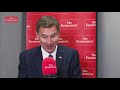
- Why Jeremy Hunt thinks he'll be Britain's next prime minister
- Runtime
- 20:36
- Date posted
- 7 years ago
- Description
- Jeremy Hunt, Britain's foreign secretary, is a front-runner to become prime minister. He spoke with The Economist about his chances of leading the Conservative Party, and relations with Donald Trump and with China.
Click here to subscribe to The Economist on YouTube: https://econ.st/2xvTKdy
Timecoded chapters listed below:
00:28 - Why should MPs back you? What makes you different from Michael Gove and Boris Johnson?
02:31 - Can you just absolutely clarify for us what is your position on no deal?
04:01 - Do you think no deal is as bad as the Economist has been pretty clear all along and we've done very deep dives on it form a number of perspectives that we think it's pretty catastrophic for the UK economy and not very good for Europe either do you share the depth of feeling that the Economist has?
05:07 - How high is the probability of a no deal in percentage terms?
05:57 - Are there any candidates that you would or wouldn't serve...

- Title
- How the D-Day landings shaped the world
- Runtime
- 4:22
- Date posted
- 7 years ago
- Description
- The D-Day landings were the biggest seaborne invasion ever seen. They not only helped to liberate Europe from the Nazis but were instrumental in changing the world order
Read more here: https://econ.st/2WfPSUP
Click here to subscribe to The Economist on YouTube: https://econ.st/2xvTKdy
On June 6th 1944 Allied troops staged the largest seaborne invasion the world has ever seen. D-Day helped liberate Europe from the Nazis but it was also pivotal in creating a new world order.
This was dominated at first by two superpowers and ultimately by America and her allies But this liberal Western order is now under threat. In 1941 after two years of fighting German armies were still advancing. Having taken Paris in 1940 they invaded Russia and were pushing back the British in North Africa. Later in the Pacific the Japanese bombed Pearl Harbour and took Singapore from the British. The world was at war, and the Allies were losing.
But from t...

- Title
- This could change the way cancer is treated
- Runtime
- 5:21
- Date posted
- 7 years ago
- Description
- A combination of drugs, including aspirin and statins, are being tested to treat cancer and other illnesses. There is mounting clinical evidence that the "repurposing" of existing drugs could offer effective new treatments.
Read more here: https://econ.st/2WgHlpz
Click here to subscribe to The Economist on YouTube: https://econ.st/2xvTKdy
Right now we’d like to take a few moments to tell you all about aspirin. Did you know that aspirin may help treat cancer as well as headaches. The pain’s gone, so tension’s gone. It’s not the only drug being used to treat an illness that it wasn’t originally intended for.
But for some people, using old drugs for new treatments or “repurposing” can be the difference between life and death. I still can’t find the appropriate words to describe how horrible it is to have to tell your own parents that you’ll be dead before them.
Melanie Kennedy, mother of two young boys was diagnosed with bre...

- Title
- America v China: a new kind of cold war
- Runtime
- 2:45
- Date posted
- 7 years ago
- Description
- America and China are fighting over far more than trade. If this growing rivalry is managed badly, everybody will lose.
Read more here: https://econ.st/2YTgtsH
Click here to subscribe to The Economist on YouTube: https://econ.st/2xvTKdy
The dispute between the United States and China is about much more than trade. For everything from blockbuster films to lunar exploration. From semiconductors to submarines.
In every domain, they’re now rivals. Superpower relations have soured. America thinks that China is stealing secrets, stealing its way to dominance. And then it looks at Chinese behaviour in the South China sea and bullying countries like Canada and Sweden and it thinks that China’s beginning to challenge global norms.
But it looks very different from Beijing. From its point of view America is trying to block its entirely justified rise.
For everyone else it seems like the beginnings of a new kind of cold ...
- Title
- How sea cucumbers can help the ocean
- Runtime
- 5:50
- Date posted
- 7 years ago
- Description
- Sea cucumbers are a prized aphrodisiac in China. But like many coastal species they have been chronically overfished. One remote community in Madagascar has started a pioneering coastal-farming project with astonishing results. Film supported by @blancpain
Click here to subscribe to The Economist on YouTube: https://econ.st/2xvTKdy
The ocean is facing environmental catastrophe. Overfishing is a ticking time bomb for both planet and people.
In one remote coastal village the locals appear to have found an unlikely solution. A strange little sea creature that’s a popular aphrodisiac and just possibly a fisherman’s salvation. In the first business of its kind in Madagascar, Dadiny has recently started farming these animals. Sea cucumbers.
Sea cucumbers are under threat. Growing them in designated and contained areas is helping to protect both this important species and other kinds of marine life here in the south-west of Madagascar....

- Title
- Why India’s election has stoked conflict
- Runtime
- 8:11
- Date posted
- 7 years ago
- Description
- India’s prime minister, Narendra Modi, has galvanised voters with an appeal to Hindu nationalism. But rising Hindu-Muslim violence is putting India’s historic secularism at risk.
Read more here: https://econ.st/2M3ApHC
Click here to subscribe to The Economist on YouTube: https://econ.st/2xvTKdy
India, the world’s biggest democracy. 29 states, seven territories, 900m voters and one age-old fault line – nationalism.
It’s pitting Hindus against Muslims and other minorities, and putting India’s long tradition of secularism under threat. Anamika is one of the 1bn Hindus living in India. She’s 23 and studying for a degree in physics. Today she’s leading a rally to get students to vote in the country’s upcoming general election. But Anamika doesn’t want these students to vote for just anyone. She’s actually the modern face of a vast Hindu nationalist group.
Anamika lives in Uttar Pradesh. It’s one of the most ...
- Title
- Why Europe's nationalist parties all sound alike
- Runtime
- 3:32
- Date posted
- 7 years ago
- Description
- Nationalist parties in the European Union are gaining momentum. At a time when the EU is increasingly fractured, they are united on many issues. What are they?
Read more here: https://econ.st/2M0LERr
Click here to subscribe to The Economist on YouTube: https://econ.st/2xvTKdy
Three European politicians. They speak different languages but they’re all singing the same tune.
And that’s weird because one belief that unites these nationalist populist European leaders is that the European Union should be less united. Since the euro crisis of 2009 and the migrant crisis of 2015 these right-wing populist movements have grown in strength and in number.
His campaign against Muslim refugees won his party two-thirds of the seats in Hungary’s general election in 2018. Poland’s ruling Law and Justice party doesn’t sound all that different.
Every European country has its own version. Tomio Okamura is a Czech-nationalist...

- Title
- Why is vanilla so expensive? | The Economist
- Runtime
- 5:20
- Date posted
- 7 years ago
- Description
- From ice cream to cakes and even perfume, vanilla is the go-to flavour the world over.
Natural vanilla has, at times, been worth more than silver by weight.
But for the farmers of Madagascar, who grow 80% of the world's supply, the riches are precarious.
Thieves are targeting crops, forcing some farmers to harvest beans before they're ripe - driving down quality and, ultimately, price.
With big buyers increasingly sourcing vanilla from Indonesia, Uganda and beyond, Madagascar's century-long near-monopoly on the world's most popular flavour may be coming to an end.
Register to subscribe and read for free.
Read more: https://econ.st/42zTHJc
Subscribe to The Economist: https://econ.st/3Mia0pz
Download The Economist app: https://econ.st/4qdVVaA
Follow us on X: https://x.com/TheEconomist
Follow us on Instagram: https://www.instagram.com/theeconomist
Follow us on Facebook: https...

- Title
- Why is Alzheimer's still a medical mystery?
- Runtime
- 2:43
- Date posted
- 7 years ago
- Description
- Decades of scientific research into Alzheimer’s have failed to find a cure. Little is known about the degenerative brain disease—but this may be about to change.
Click here to subscribe to The Economist on YouTube: https://econ.st/2xvTKdy
As populations have aged, dementia has soared to become the fifth leading cause of death worldwide. Alzheimer’s disease, a form of dementia, accounts for most of these cases. Tens of billions of dollars have been spent on Alzheimer’s research over the past several decades but still there is no cure.
All attempts to halt the progression of the disease have failed. Now many major drug companies have pulled out of research altogether. So why is Alzheimer’s disease still such a medical mystery?
One of the signs of Alzheimer’s in the brain is damage of connections and the loss of large numbers of neurons over time. It affects the hippocampus and its connected structures making it harder to fo...

- Title
- Why Vietnam's "Lady Gaga" lives in fear
- Runtime
- 5:14
- Date posted
- 7 years ago
- Description
- Despite sweeping reforms, Vietnam is still a repressive one-party state which spies on its people. Mai Khoi, one of the country's most celebrated singers, is fighting back.
Read more here: https://econ.st/2LuOLk0
Click here to subscribe to The Economist on YouTube: https://econ.st/2xvTKdy
Mai Khoi is one of Vietnam’s best-known musicians. A former darling of the country’s ruling Communist Party, her songwriting was nationally celebrated and she was the poster girl for Vietnam. Today she is an enemy of the state and lives in constant fear for her life.
Music has always been closely monitored by Vietnam’s communist regime. During the Vietnam war, music that did not promote communist ideals was banned. Today, the few songwriters who dare to directly challenge the authority of the regime face serious consequences.
Mai Khoi started to be monitored by the regime. Before the visit of the then US president, Barack Obama, in 2016...

- Title
- Are monarchies a thing of the past?
- Runtime
- 2:32
- Date posted
- 7 years ago
- Description
- Prince Harry and Meghan Markle are celebrating the birth of their baby boy. A new emperor has ascended to the throne in Japan. And Thailand is crowning its new king. Around the world monarchies are holding up surprisingly well. What is the secret to their success?
Read more here: https://econ.st/2LoxqcC
Click here to subscribe to The Economist on YouTube: https://econ.st/2xvTKdy
Around the world monarchies are holding up surprisingly well. Many are doing more than just surviving, they are thriving. 44 countries have a monarch as head of state.
Since the millennium, only two royal families have gone out of business. Those of Samoa and Nepal, where in 2001, a murderous Nepalese prince killed nine family members, and himself. In effect, ending the royal line.
In the 20th century revolutions and two world wars ended 110 monarchies.
How do you keep a monarchy alive? Queen Elizabeth II is perhaps the best-known monarch....

- Title
- How to detect the deadliest form of cancer
- Runtime
- 2:51
- Date posted
- 7 years ago
- Description
- Lung cancer is the deadliest of cancers. Screening could save thousands of lives, so why is it not the norm?
https://econ.st/2VAzFNX
Click here to subscribe to The Economist on YouTube: https://econ.st/2xvTKdy
Lung cancer kills more people than any other form of tumour.
About nine out of ten people die within five years of being diagnosed with the disease. If the cancer is caught very early most patients could be cured. But doctors struggle to diagnose early because there are no symptoms until the cancer is in its late stages and has spread to other organs.
Some experts think that doctors should screen people at high risk to find lung cancer before symptoms appear. The national lung-screening trial in America subjected 53,000 current and former heavy smokers to either X-ray or computed-tomography scans every year for three years. Its results, reported in 2011 found that screening with CT scans did save lives.
But ...

- Title
- Mandela's legacy: 25 years on
- Runtime
- 9:17
- Date posted
- 7 years ago
- Description
- Nelson Mandela is one of the great icons of the 20th century. Yet many of South Africa's "born free" generation—those born after the end of apartheid—are conflicted about his legacy.
https://econ.st/2GJ7OCX
Click here to subscribe to The Economist on YouTube: https://econ.st/2xvTKdy
For more from Economist Films visit: http://films.economist.com/
Check out The Economist’s full video catalogue: http://econ.st/20IehQk
Like The Economist on Facebook: https://www.facebook.com/TheEconomist/
Follow The Economist on Twitter: https://twitter.com/theeconomist
Follow us on Instagram: https://www.instagram.com/theeconomist/
Follow us on Medium: https://medium.com/@the_economist

- Title
- This is the most over-fished sea in the world
- Runtime
- 5:50
- Date posted
- 7 years ago
- Description
- The Mediterranean supports countries in Europe, the Middle East and North Africa—but its fish stocks are almost completely collapsed. Meet the man who is leading attempts to revive its marine habitats. Film supported by @blancpain
Click here to subscribe to The Economist on YouTube: https://econ.st/2xvTKdy
This is the extraordinary story of one man’s dream to save the most over-fished sea in the world. Zafer Kizilkaya has almost single handedly turned a ravaged bay in Turkey into one of the most effective and thriving marine conservation areas in the Mediterranean. His hope is to inspire others to bring marine life back to one of the most famous but damaged parts of the ocean.
It’s a chilly December morning on Turkey’s eastern-Mediterranean coast and Zafer Kizilkaya is a man on a mission. He’s dedicated to enforcing the no-fishing zones that he has helped create here in Gokova Bay.
Within just 20 minutes Zafer and one of h...

- Title
- How to defeat malaria
- Runtime
- 2:55
- Date posted
- 7 years ago
- Description
- Malaria still kills around 400,000 people a year. Efforts to eradicate the disease have stalled because of drug resistance—but pioneering gene-editing technology might offer a new solution
Read more here: https://econ.st/2XHVIiY
Click here to subscribe to The Economist on YouTube: https://econ.st/2xvTKdy
For more from Economist Films visit: http://films.economist.com/
Check out The Economist’s full video catalogue: http://econ.st/20IehQk
Like The Economist on Facebook: https://www.facebook.com/TheEconomist/
Follow The Economist on Twitter: https://twitter.com/theeconomist
Follow us on Instagram: https://www.instagram.com/theeconomist/
Follow us on Medium: https://medium.com/@the_economist

- Title
- Who will be Britain's next prime minister?
- Runtime
- 4:48
- Date posted
- 7 years ago
- Description
- The race is already on to replace Theresa May as Britain's prime minister. Adrian Wooldridge, our political editor, assesses the chances of five leading Conservative politicians hoping to take the top job.
To read more, click this link: https://econ.st/2GjzNYA
Click here to subscribe to The Economist on YouTube: https://econ.st/2xvTKdy
For more from Economist Films visit: http://films.economist.com/
Check out The Economist’s full video catalogue: http://econ.st/20IehQk
Like The Economist on Facebook: https://www.facebook.com/TheEconomist/
Follow The Economist on Twitter: https://twitter.com/theeconomist
Follow us on Instagram: https://www.instagram.com/theeconomist/
Follow us on Medium: https://medium.com/@the_economist

- Title
- Is private education good for society?
- Runtime
- 3:43
- Date posted
- 7 years ago
- Description
- Across the world private education is booming. Though private schools and tuition promote inequality, Emma Duncan, our social policy editor, explains why governments should embrace the private sector's rise
Read more here: https://econ.st/2X4ODsm
Click here to subscribe to The Economist on YouTube: https://econ.st/2xvTKdy
There is a big boom in private education all over the world. You see it in schooling numbers. The numbers of people going to private primary has gone up from 10 to 17 percent over the last 15 years. Secondaries gone up from 9 to 27 percent. Then if you look in particular countries you find for instance in China, there's a big increase in people going to elite private schools. But also huge business in terms of people getting online tuition. Parents are finding ways to spend money on the great competition to improve their children's brains.
The resurgence is happening for a few different reasons and one of them is th...

- Title
- How long will you live?
- Runtime
- 2:36
- Date posted
- 7 years ago
- Description
- In Japan people can expect to live beyond 84 years on average—yet in Lesotho life expectancy is just 53 years. The age at which people die still depends a lot on where they live.
Read more on longevity in rich countries: https://econ.st/2Ibf8ch
Click here to subscribe to The Economist on YouTube: https://econ.st/2xvTKdy
For more from Economist Films visit: http://films.economist.com/
Check out The Economist’s full video catalogue: http://econ.st/20IehQk
Like The Economist on Facebook: https://www.facebook.com/TheEconomist/
Follow The Economist on Twitter: https://twitter.com/theeconomist
Follow us on Instagram: https://www.instagram.com/theeconomist/
Follow us on Medium: https://medium.com/@the_economist

- Title
- The truth about lies
- Runtime
- 3:46
- Date posted
- 7 years ago
- Description
- From little fibs to big fat whoppers, lying is part of human nature. Lane Greene, our language guru, examines the difference between lies, falsehoods and plain nonsense.
To read more about why the press should call out politicians when they lie click here: https://econ.st/2FRdmJS
Click here to subscribe to The Economist on YouTube: https://econ.st/2xvTKdy
For more from Economist Films visit: http://films.economist.com/
Check out The Economist’s full video catalogue: http://econ.st/20IehQk
Like The Economist on Facebook: https://www.facebook.com/TheEconomist/
Follow The Economist on Twitter: https://twitter.com/theeconomist
Follow us on Instagram: https://www.instagram.com/theeconomist/
Follow us on Medium: https://medium.com/@the_economist

- Title
- The hunt for oceans in space
- Runtime
- 2:46
- Date posted
- 7 years ago
- Description
- Scientists believe there are oceans buried under thick crusts of ice on the moons of Saturn and Jupiter. Sampling them would raise hope of life beyond Earth
https://econ.st/2WDdEe5
Click here to subscribe to The Economist on YouTube: https://econ.st/2xvTKdy
For more from Economist Films visit: http://films.economist.com/
Check out The Economist’s full video catalogue: http://econ.st/20IehQk
Like The Economist on Facebook: https://www.facebook.com/TheEconomist/
Follow The Economist on Twitter: https://twitter.com/theeconomist
Follow us on Instagram: https://www.instagram.com/theeconomist/
Follow us on Medium: https://medium.com/@the_economist

- Title
- Trump's post-Mueller victory spin
- Runtime
- 2:26
- Date posted
- 7 years ago
- Description
- The summary of Robert Mueller's report appears to have cleared President Trump of collusion with Russia in the 2016 election campaign—though it did not exonerate him of obstructing justice. Kal, our cartoonist, contemplates "spinmeister" Trump's joyous vindication.
https://econ.st/2HNleQ8
Click here to subscribe to The Economist on YouTube: https://econ.st/2xvTKdy
For more from Economist Films visit: http://films.economist.com/
Check out The Economist’s full video catalogue: http://econ.st/20IehQk
Like The Economist on Facebook: https://www.facebook.com/TheEconomist/
Follow The Economist on Twitter: https://twitter.com/theeconomist
Follow us on Instagram: https://www.instagram.com/theeconomist/
Follow us on Medium: https://medium.com/@the_economist

- Title
- Why is chicken so cheap? | The Economist
- Runtime
- 6:24
- Date posted
- 7 years ago
- Description
- Chicken's are the most populous bird on the planet. People eat 65 billion of them every year. It is the fastest-growing meat product. Yet pound for pound the price of chicken has fallen sharply. How has this happened?
#chicken #meat #economics
00:00 - where did chickens come from?
00:43 - how has technology changed chicken farming?
02:23 - how have chickens changed?
04:04 - what are the risks for the chicken industry?
Read more about Chickenomics here: https://econ.st/2Wtp04o
Subscribe to The Economist: https://econ.st/3Mia0pz
Download The Economist app: https://econ.st/4qdVVaA
Follow us on X: https://x.com/TheEconomist
Follow us on Instagram: https://www.instagram.com/theeconomist
Follow us on Facebook: https://www.facebook.com/TheEconomist

- Title
- How happy is your country?
- Runtime
- 1:48
- Date posted
- 7 years ago
- Description
- Money doesn't buy happiness—or does it? In both India and China people have become richer in the past decade, but global data reveal that greater wealth does not necessarily lead to greater happiness
Economic growth does not guarantee rising happiness. Read more here: https://econ.st/2HIlxLT
Click here to subscribe to The Economist on YouTube: https://econ.st/2xvTKdy
The Beatles sang that money can't buy you love,but might it make you happier? A new study compared wealth and well-being around the world - each circle represents a country sized approximately by its population. The red circle show countries where happiness has moved in the opposite direction to GDP. The blue circle show countries where happiness and GDP have moved in the same direction. They go from richer to poorer - what about happiness?
On a scale from zero to ten where would you place your life satisfaction right now? That question was asked of thousands of people aroun...