Massachusetts Institute of Technology (MIT)
Women's Technology Program at MIT

- Title
- Women's Technology Program at MIT
- Runtime
- 5:34
- Date posted
- 11 years ago
- Description
- The MIT Women's Technology Program (WTP) is a rigorous four-week summer academic and residential experience where female high school students explore engineering through hands-on classes, labs, and team-based projects. (For more information on WTP: http://wtp.mit.edu)
Students attend WTP in either Electrical Engineering and Computer Science or Mechanical Engineering. WTP is designed for students who excel in and have a passion for math and science, but who have little or no experience. Students who are not yet certain about their future college majors are encouraged to apply.
Applications are available in late November and the application deadline is January 1.
Video: Melanie Gonick/MIT
Music sample from "Candlepower" by Chris Zabriskie
https://freemusicarchive.org/music/Chris_Zabriskie/Divider/02_-_Candlepower
http://creativecommons.org/licenses/by/4.0/
- Title
- Robot with human reflexes
- Runtime
- 2:41
- Date posted
- 11 years ago
- Description
- Researchers from MIT's Department of Mechanical Engineering have designed an interface that takes advantage of a human's split-second reflexes allowing a humanoid to maintain its balance and complete tasks. (Learn more: http://mitne.ws/1WyzOtq)
Video: Melanie Gonick/MIT
Additional footage courtesy of the researchers

- Title
- Improving robot dexterity
- Runtime
- 1:02
- Date posted
- 11 years ago
- Description
- MIT engineers have devised a way to give more dexterity to simple robotic grippers using the environment as a helping hand. Their model predicts the force with which a robotic gripper must push against surrounding fixtures in order to adjust its grasp. (Learn more about the system: http://mitne.ws/1ONlwzt)
Video produced and edited by Melanie Gonick/MIT
Robotic footage and additional editing courtesy of Nikhil Chavan-Dafle and Alberto Rodriguez

- Title
- Rocket into space with MIT professor and astronaut Jeff Hoffman
- Runtime
- 7:13
- Date posted
- 11 years ago
- Description
- Spaceflight is exciting, and you don’t have to be a “Rocket Scientist” to share in the excitement! 16.00x makes the basics of spaceflight accessible to everyone. Join MIT Professor Jeffrey Hoffman, a former NASA astronaut who made five spaceflights and was the first astronaut to log 1000 hours on the Space Shuttle, as he teaches you the core principles behind space travel and exploration in his first online course: Introduction to Aerospace Engineering: Astronautics and Human Spaceflight.
Free online courses from MIT: https://www.edx.org/school/mitx
Video: Melanie Gonick/MIT
Additional footage courtesy of MITx, New Horizons and NASA
Music sampled from "What Is Whispered In Your Ear Proclaim It From The Rooftops" by James Joshua Otto
http://freemusicarchive.org/music/James_Joshua_Otto/And_then_the_mountains_moved/What_Is_Whispered_In_Your_Ear_Proclaim_It_From_The_Rooftops
http://creativecommons.org/licenses/by-nc/4.0/

- Title
- LiquiGlide: Nonstick coatings leave zero waste behind
- Runtime
- 3:40
- Date posted
- 11 years ago
- Description
- The days of wasting condiments — and other products — that stick stubbornly to the sides of their bottles may be gone, thanks to MIT spinout LiquiGlide, which has licensed its nonstick coating to a major consumer-goods company. (Learn more about LiquiGlide: http://mitne.ws/1BTLIqK)
Developed in 2009 by MIT’s Kripa Varanasi and David Smith, LiquiGlide is a liquid-impregnated coating that acts as a slippery barrier between a surface and a viscous liquid. Applied inside a condiment bottle, for instance, the coating clings permanently to its sides, while allowing the condiment to glide off completely, with no residue. They can also design the coatings to be made entirely of food so it's edible and safe for consumer packaging of food-based products
Video: Melanie Gonick/MIT
Additional footage courtesy of LiquiGlide™
Music sampled from "Candlepower" by Chris Zabriskie
https://freemusicarchive.org/music/Chris_Zabriskie/Divider/02_-_...

- Title
- How air transportation connects the world
- Runtime
- 2:09
- Date posted
- 11 years ago
- Description
- Every time you’ve seen a plane take off or land at a hub airport, you’ve seen the world growing more connected, according to a new model developed by researchers at MIT. (Learn more about their model: http://mitne.ws/1fy6Bhl)
Video produced and edited by Melanie Gonick/MIT
Stock media provided by Pond5.com and iStock.com
Computer model simulations courtesy of the researchers.
Music sampled from "One Step Enough" by James Joshua Otto
http://freemusicarchive.org/music/Jam...
https://creativecommons.org/licenses/...
- Title
- Explained: Chemical Vapor Deposition (CVD)
- Runtime
- 1:18
- Date posted
- 11 years ago
- Description
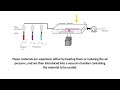
- The process of chemical vapor deposition, or CVD, is explained.
Video produced and edited by Melanie Gonick/MIT
Computer graphics courtesy of Karen Gleason
Music sampled from "Nesting" by Blue Dot Sessions
https://freemusicarchive.org/music/Blue_Dot_Sessions/Origami_1726/Nesting_1044
https://creativecommons.org/licenses/by-nc/4.0/

- Title
- Robot Origami: Robot self-folds, walks, and completes tasks
- Runtime
- 2:44
- Date posted
- 11 years ago
- Description
- A team of MIT researchers have developed a printable origami robot that folds itself up from a flat sheet of plastic when heated and measures about a centimeter from front to back. (Learn more: http://mitne.ws/1HwBZro)
Weighing only a third of a gram, the robot can swim, climb an incline, traverse rough terrain, and carry a load twice its weight.
Video: Melanie Gonick/MIT
Additional footage: Shuhei Miyashita
Music sampled from "Master" by Blue Dot Sessions
http://freemusicarchive.org/music/Blue_Dot_Sessions/Modul_Kalimba/Master_1659
https://creativecommons.org/licenses/by-nc/4.0/

- Title
- Vanishing friction
- Runtime
- 1:36
- Date posted
- 11 years ago
- Description
- Physicists at MIT have developed an experimental technique to simulate friction at the nanoscale. (Learn more about this technique: http://mitne.ws/1SYO90t)
Using their technique, the researchers are able to directly observe individual atoms at the interface of two surfaces and manipulate their arrangement, tuning the amount of friction between the surfaces. By changing the spacing of atoms on one surface, they observed a point at which friction disappears.
Video produced and edited by Melanie Gonick/MIT
Computer simulations courtesy of Alexei Bylinkskii
Music sampled from "Insatiable Toad" by Blue Dot Sessions
http://freemusicarchive.org/music/Blue_Dot_Sessions/Origami_1726/Insatiable_Toad
https://creativecommons.org/licenses/by-nc/4.0/

- Title
- Thank you MIT: Members of The Class of 2015 say goodbye
- Runtime
- 7:28
- Date posted
- 11 years ago
- Description
- Over the 2013-14 academic year, MIT News profiled several graduating seniors. Here, watch as four of them discuss their time at MIT and what they look forward to in the future.
Read the full profiles:
Anisha Gururaj: http://newsoffice.mit.edu/2014/student-profile-anisha-gururaj-1218
Sheldon Trotman: http://newsoffice.mit.edu/2015/student-profile-sheldon-trotman-0227
Sofia Essayan-Perez: http://newsoffice.mit.edu/2014/student-profile-sofia-essayan-perez-0925
Walter Menendez: http://newsoffice.mit.edu/2015/student-profile-walter-menendez-0424
Video: Melanie Gonick/MIT
- Title
- The Costume Shop at MIT
- Runtime
- 3:32
- Date posted
- 11 years ago
- Description
- The MIT Costume Shop is where creativity flourishes at the Institute. Courses in both costume design and figure drawing are only a couple of the examples of what is offered. The Costume Shop also designs, constructs and assists in all theater art productions on campus often creating all the costumes in house.
This video shows how students can take a simple medium like paper and transform them into incredible, and functional garments.
Video: Melanie Gonick/MIT
Music sampled from "Keep the Car Running" by Alex Fitch
http://freemusicarchive.org/music/Alex_Fitch/Eola/Keep_The_Car_Running
http://creativecommons.org/licenses/by-nc/3.0/

- Title
- MIT cheetah robot lands the running jump
- Runtime
- 1:48
- Date posted
- 11 years ago
- Description
- In a leap for robotic development, the MIT researchers who built a robotic cheetah have now trained it to see and jump over hurdles as it runs — making this the first four-legged robot to run and jump over obstacles autonomously. (Learn more: http://bit.ly/1JYy1bD)
Watch the MIT cheetah run outside: http://youtu.be/XMKQbqnXXhQ
Video: Haewon Park, Patrick Wensing and Sangbae Kim
- Title
- MIT.nano: Education
- Runtime
- 3:51
- Date posted
- 11 years ago
- Description
- MIT.nano will be a 200,000-square-foot research facility for nanoscale research constructed at the very heart of the MIT campus. (Learn more about MIT.nano: http://bit.ly/1mZ8CUV)
The building will house state-of-the-art cleanroom, imaging, and prototyping facilities supporting research with nanoscale materials and processes — in fields including energy, health, life sciences, quantum sciences, electronics, and manufacturing.

- Title
- MIT.nano: An Overview
- Runtime
- 4:21
- Date posted
- 11 years ago
- Description
- MIT.nano will be a 200,000-square-foot research facility for nanoscale research constructed at the very heart of the MIT campus. (Learn more about MIT.nano: http://bit.ly/1mZ8CUV)
The building will house state-of-the-art cleanroom, imaging, and prototyping facilities supporting research with nanoscale materials and processes — in fields including energy, health, life sciences, quantum sciences, electronics, and manufacturing.

- Title
- Observe@MIT: Observing the sky at MIT
- Runtime
- 4:17
- Date posted
- 12 years ago
- Description
- Observe@MIT is a series of astronomical observation sessions led by astronomer and planetary science lecturer Amanda Bosh. Members of the MIT community are encouraged to come and observe the sky above and learn about space and what there is to see on that particular day or night. Everyone is welcome to participate by looking through one of the telescopes and having a conversation with peers and astronomy enthusiasts alike up on the roof of building 37, on MIT's campus in Cambridge, MA.
To be alerted when there is an Observe session, join their mailing list: http://mailman.mit.edu/mailman/listin...
Special thanks to the Alumni Class Funds for their contribution to Observe@MIT.
Video: Melanie Gonick/MIT
Images in order of appearance: MIT Wallace Astrophysical Observatory, Ryuga Hatano, Amanda Bosh and Amanda Bosh
Notebook sketches in order of appearance: Sophia Tigges, Nilu Zhao, Nilu Zhao, Yuqi Song and Jesse Thornburg
Stoc...

- Title
- How bombardier beetles bomb
- Runtime
- 1:58
- Date posted
- 12 years ago
- Description
- For as long as researchers have been studying the bombardier beetle they have been baffled by their ability to produce an internal explosion in their abdomen and then expel a jet of boiling, irritating liquid towards their attackers while avoiding any physical damage. Now a team of researchers at MIT, the University of Arizona, and Brookhaven Laboratory have solved the conundrum. (Learn more: http://bit.ly/1GJygo0)
Using high-speed synchrotron X-ray imaging the researchers were able to "see" the inside of the abdomens of living bombardier beetles during explosions.
Video: Melanie Gonick/MIT
X-ray imagery: Ortiz Lab
External high-speed footage: "Bombardier Beetles," ©2012 MIT Harold E. Edgerton Collection, Courtesy of MIT Museum
Still image: Charles Hedgcock and Wendy Moore
Stock media provided by Pond5.com
Music sampled from "Union Hall Melody" by Blue Dot Sessions
http://freemusicarchive.org/music/Blu...
http:...

- Title
- Magnifying motion
- Runtime
- 1:29
- Date posted
- 12 years ago
- Description
- MIT researchers have now developed a technique to "see" vibrations that would otherwise be invisible to the naked eye, combining high-speed video with computer vision techniques. (Learn more about the technique: http://bit.ly/1K8t4en)
Video produced and edited: Melanie Gonick/MIT
Crane footage: Wadhwa, Rubinstein, Durand, and Freeman
Pipe and column footage: Justin Chen
Music sampled from "Zero" by Steve Combs
http://freemusicarchive.org/music/Steve_Combs/Steve_Combs_1437/20_Zero
http://creativecommons.org/licenses/by/4.0/

- Title
- NailO: A thumbnail-mounted wireless trackpad
- Runtime
- 2:09
- Date posted
- 12 years ago
- Description
- Researchers at the MIT Media Lab are developing a new, wearable device that turns the user's thumbnail into a miniature, wireless track pad. NailO was inspired by the colorful stickers that people apply to their nails as a form of self-expression and style. The researchers envision the device could be extremely personable and therefore feel more like an extension of your body. Learn more: http://mitne.ws/1Jb57SE
Video: Melanie Gonick/MIT
Additional footage and images courtesy of Cindy Hsin-Liu Kao and Artem Dementyev
Music: "Red City Theme" by Blue Dot Sessions
http://freemusicarchive.org/music/Blue_Dot_Sessions/none_given_2132/Red_City_Theme
http://creativecommons.org/licenses/by-nc/4.0/

- Title
- Detecting rare cancer cells with sound waves
- Runtime
- 1:41
- Date posted
- 12 years ago
- Description
- A team of engineers from MIT, Penn State University, and Carnegie Mellon University is developing a novel way to isolate rare circulating tumor cells using sound waves to separate them from blood cells. (Learn more: http://bit.ly/19Z5eoq)
Video produced and edited by Melanie Gonick/MIT
Additional imagery courtesy of the researchers
Music: Sampled from "Music for Manatees" by Kevin MacLeod
http://creativecommons.org/licenses/by/3.0/
- Title
- Parkinson's diagnosis by typing on a keyboard
- Runtime
- 2:20
- Date posted
- 12 years ago
- Description
- In a new study from MIT, researchers show how analyzing people's keystrokes as they type can reveal a great deal of information about the state of their motor function. (Learn more: http://bit.ly/1Inaj5u)
Using the researchers' algorithm for analyzing keystroke patterns could lead to the diagnosis of diseases that impair motor function, such as Parkinson's disease, much earlier than is now possible.
Video: Melanie Gonick/MIT
Stock media provided by Pond5.com
Music sampled from "Air Hockey Season" by Chris Zabriskie
http://freemusicarchive.org/music/Chr...
http://creativecommons.org/licenses/b...

- Title
- Wireless brain stimulation
- Runtime
- 0:41
- Date posted
- 12 years ago
- Description
- Calcium-dependent fluorescence recording of neurons that have not (left) or have been (right) heat-sensitized with the capsaicin receptor TRPV1. (Learn more: http://bit.ly/19eVoPY)
When neurons are excited with an alternating magnetic field ('ON'), evoked activity captured by fluorescence spiking in the video is observed. As neural activity diminishes between 'ON' cycles, another magnetic field pulse is applied for re-excitation. Movie is 5.4 times faster than real-time.
Clip provided by the researchers.

- Title
- Mega Menger: Building a Menger Sponge at MIT
- Runtime
- 5:22
- Date posted
- 12 years ago
- Description
- MIT's origami club, OrigaMIT, led the effort to build a Level 3 Menger Sponge out of folded business cards. This was part of a larger, global project sponsored by Queen Mary University of London.
A Menger Sponge is a three-dimensional fractal, which can be made by taking a cube and cutting out a square section through the center in each of the three directions; then each of the resulting smaller cubes is cut out in the same way, and so on until you've removed infinitely many pieces. The Mega Menger Project aimed to construct the largest Menger Sponge ever built using only business cards.
Mega Menger: http://www.megamenger.com/
OrigaMIT: http://origamit.scripts.mit.edu/
Video: Melanie Gonick/MIT
Music sampled from "Anders" by Blue Dot Sessions
http://freemusicarchive.org/music/Blue_Dot_Sessions/Macrame/Anders
http://creativecommons.org/licenses/by-nc/4.0/
- Title
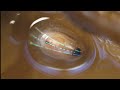
- Marine shells may help develop responsive, transparent displays
- Runtime
- 2:12
- Date posted
- 12 years ago
- Description
- Scientists at MIT and Harvard University have identified two optical structures within the blue-rayed limpet's shell that give its blue-striped appearance. Such natural optical structures may serve as a design guid for engineering color-selective, controllable, transparent displays. (Learn more: http://bit.ly/181DKNV)
Video produced and edited by Melanie Gonick
Additional footage and imagery courtesy of the researchers
Music sampled from "Hallon" by Christian Bjoerklund
http://freemusicarchive.org/music/Christian_Bjoerklund/Skapmat/christian_bjoerklund_-_skpmat_ep_-_01_-_hallon
http://creativecommons.org/licenses/by-nc-sa/3.0/

- Title
- A simple way to make and reconfigure complex emulsions
- Runtime
- 3:36
- Date posted
- 12 years ago
- Description
- MIT researchers have devised a new way to make complex liquid mixtures, known as emulsions, that could have many applications in drug delivery, sensing, cleaning up pollutants, and performing chemical reactions. (Learn more about these complex emulsions: http://bit.ly/1akhMHC)
Video: Melanie Gonick/MIT
Additional imagery courtesy of Lauren Zarzar/Vishnu Sresht/Nature
Music sampled from "Treppe 3" by Rod Hamilton
http://freemusicarchive.org/music/Rod_Hamilton/Atitlan/Rod_Hamilton_-_Atitlan_-_01_Treppe_3
http://creativecommons.org/licenses/by-nd/4.0/

- Title
- In the Snow: MIT Winter 2015
- Runtime
- 4:22
- Date posted
- 12 years ago
- Description
- It's been an historic winter here in Boston/Cambridge, with record snowfalls and freezing cold temperatures. Watch MIT's Norm Magnuson discusses the challenges him and his crew face during such weather and how they've been able to keep the campus up and running.
Video: Melanie Gonick, MIT News
Additional images: Dominick Reuter
Music sampled from "Backed Vibes Clean"
http://freemusicarchive.org/music/kevin_macleod/jazz_sampler/backed_vibes_clean_1973
http://creativecommons.org/licenses/by/3.0/
- Title
- Raindrops splash down on leaves, spread pathogens among plants
- Runtime
- 3:47
- Date posted
- 12 years ago
- Description
- A team of researchers from MIT and the University of Liege, in Belgium, have shown through high-speed images of raindrops splashing down on leaves that raindrops can act as a dispersing agent of contaminated droplets from one plant to another. (More on this research at: http://bit.ly/1DdF2lB and http://lbourouiba.mit.edu)
Historical weather records suggest that rainfall may scatter rust and other pathogens throughout a plant population, the mechanism by which this occurs has not be explored, until now.
Video: Melanie Gonick/MIT
High-speed splash images: Tristan Gilet and Lydia Bourouiba
- Title
- Forces Frozen: Structures made from frozen fabrics
- Runtime
- 3:21
- Date posted
- 12 years ago
- Description
- Through the power of shape and curvature, very thin shells can achieve impressive strength and stiffness, even when they are made only from frozen water-soaked fabric. This workshop, aptly titled "Forces Frozen" seeks to push the boundaries of ice shells through design, experimentation and fabrication. (Learn more about Forces Frozen: http://forcesfrozen.tumblr.com/)
This MIT IAP workshop was sponsored by the MIT-SUTD Collaboration. (http://sutd.mit.edu/)
Video: Melanie Gonick/MIT
Still images of Heinz Isler courtesy of Safety third (https://safetythird.wordpress.com/2011/04/18/heinz-isler-ice-structures/)
Music from "Aqua 1" by Rod Hamilton
http://freemusicarchive.org/music/Rod_Hamilton/Atitlan/Rod_Hamilton_-_Atitlan_-_02_Aqua_1
http://creativecommons.org/licenses/by-nd/4.0/

- Title
- Predicting behavior of sickle cells
- Runtime
- 2:51
- Date posted
- 12 years ago
- Description
- Patients with sickle cell disease often suffer from painful attacks known as vaso-occlusive crises, during which their sickle-shaped blood cells get stuck in tiny capillaries, depriving tissues of needed oxygen. Now, researchers from MIT, CMU and UPitt have developed a tiny microfluidic device that can analyze the behavior of blood from sickle cell patients. (Learn more: http://bit.ly/1DY0lbU)
Video Produced and Edited by Melanie Gonick/MIT
Additional footage courtesy of Ming Dao

- Title
- Multifunctional fibers communicate with the brain
- Runtime
- 2:52
- Date posted
- 12 years ago
- Description
- By producing complex multifunctional fibers that could be less than the width of a hair, MIT researchers have created a system that could deliver optical signals and drugs directly into the brain, along with a simultaneous electrical readout to continuously monitor the effects of the various inputs. (Learn more about the technology: http://bit.ly/1AGZo1l)
Video: Melanie Gonick/MIT
Animation and computer render courtesy of McGovern Institute for Brain Research at MIT/Sputnik Animation and Andres Canales
Music sampled from "The Dream" by Project5am
http://freemusicarchive.org/music/Project_5am/5am_Wabi_Sabi/05_project_5am_-_the_dream
http://creativecommons.org/licenses/by-nc-sa/4.0/

- Title
- Rainfall can release aerosols, high-speed video shows
- Runtime
- 1:30
- Date posted
- 12 years ago
- Description
- Using high-speed cameras, MIT researchers observed that when a raindrop hits a surface, it traps tiny air bubbles at the point of contact. As in a glass of champagne, the bubbles then shoot upward, ultimately bursting from the drop in a fizz of aerosols. (Learn more: http://bit.ly/1wZYXy5)
The researchers suspect that in natural environments, aerosols may carry aromatic elements, along with bacteria and viruses stored in soil. These aerosols may be released during light or moderate rainfall, and then spread via gusts of wind.
Video produced and edited by Melanie Gonick/MIT
High-speed droplet footage by Youngsoo Joung
Rain falling and bubbles in glass footage: Pond5.com
Music sampled from "Running Waters" by Jason Shaw
http://freemusicarchive.org/music/Jason_Shaw/Audionautix_Acoustic/RUNNING_WATERS______________2-46
http://creativecommons.org/licenses/by/3.0/us/

- Title
- Club Chem(istry) at MIT
- Runtime
- 3:53
- Date posted
- 12 years ago
- Description
- Within the Chemistry department at MIT a group of students, who call themselves Club Chem are ready to get you excited about science! (Learn more about Club Chem: http://web.mit.edu/clubchem/www/about.html)
Club Chem is extremely grateful to Mr. James K. Littwitz SB'42 and his wife Jane, who established an endowed fund to promote undergraduate activities within the chemistry department at MIT.
Special thanks to the Office of Engineering Outreach Programs' STEM Mentoring Program for connecting Club Chem with local middle school students excited about science and engineering. (Learn more about the STEM program: http://mit.edu/stem)
Video: Melanie Gonick/MIT
- Title
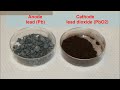
- Recycling old batteries into solar cells
- Runtime
- 3:14
- Date posted
- 12 years ago
- Description
- A system proposed by researchers at MIT would recycle materials from discarded car batteries — a potential source of lead pollution — into new, long-lasting solar panels that provide emissions-free power. (Learn more: http://bit.ly/VzcyA8)
Video courtesy of the researchers

- Title
- Detecting gases wirelessly with a smartphone
- Runtime
- 1:37
- Date posted
- 12 years ago
- Description
- MIT chemists have devised a new way to wirelessly detect hazardous gases and environmental pollutants, using a simple sensor that can be read by a smartphone. (Learn more about the sensor: http://bit.ly/1IuHPsp)
Video: Melanie Gonick/MIT
Additional footage provided by: ImagesFX Post, LLC
- Title
- Splash! at MIT
- Runtime
- 3:26
- Date posted
- 12 years ago
- Description
- For one weekend each November, thousands of High School students flood MIT's campus to take classes taught by MIT students on anything and everything. (Learn more about Splash!: http://bit.ly/1Auycoj)
Video: Melanie Gonick/MIT
Music sampled from "Divider" by Chris Zabriskie
http://freemusicarchive.org/music/Chris_Zabriskie/Divider/

- Title
- Complex 3-D DNA structures
- Runtime
- 2:10
- Date posted
- 12 years ago
- Description
- MIT biological engineers have created a new computer model that allows them to design the most complex three-dimensional DNA shapes ever produced, including rings, bowls, and geometric structures such as icosahedrons that resemble viral particles. (Learn more: http://mitne.ws/1yOHBaZ)
Video produced and edited by Melanie Gonick, MIT News
Computer renderings courtesy of Dr. Keyao Pan (LCBB)/Nature Communications
3D structural predictions were generated using CanDo by Dr. Stavros Gaitanaros (LCBB) based on sequence designs provided by Fei Zhang (Hao Tan Lab at Arizona State University).

- Title
- Reading robots' minds
- Runtime
- 3:30
- Date posted
- 12 years ago
- Description
- A new visualization system developed by MIT researchers, combines ceiling-mounted projectors with motion-capture technology and animation software to project a robot's intentions in real time. (Learn more about the system: http://bit.ly/1thQBSQ)
The researchers say the system may help speed up the development of self-driving cars, package-delivering drones, and other autonomous, route-planning vehicles.
Video: Melanie Gonick, MIT News
Additional footage and computer animations: Shayegan Omidshafiei

- Title
- MIT Admissions Blogs
- Runtime
- 5:48
- Date posted
- 12 years ago
- Description
- For the past decade, the MIT Admissions Blogs have been a leader in student blogging. The blogs are written by MIT students and are completely uncensored.
MIT bloggers offer thoughts on anything from something that might interest a prospective student to how to handle the Institute's intense workload to much quirkier topics like how many cats live in dorms at one time or how to set a world record in the game of Mattress Dominos.
MIT Admissions: http://mitadmissions.org
Video: Melanie Gonick, MIT News
Music sampled from "Raro Bueno" by Chuzausen
http://freemusicarchive.org/music/Chuzausen/Awesome_Is_Grey/06_chuzausen_-_raro_bueno
http://creativecommons.org/licenses/by-nc-sa/3.0/

- Title
- Controllable nanoparticles
- Runtime
- 2:01
- Date posted
- 12 years ago
- Description
- New technology developed by MIT and several other institutions could make it possible to track the position of nano particles as they move within the body or inside a cell. (Learn more about this technology: http://bit.ly/1rj5AHI)
At the same time, the nano particles could be manipulated precisely by applying a magnetic field to pull them along and control where they go.
Video produced and edited by Melanie Gonick/MIT News
Video clips courtesy of Ou Chen and Hendrik Herrman
Music sampled from "Amalgam" by BlacKisS

- Title
- Untangling coiled cables
- Runtime
- 3:03
- Date posted
- 12 years ago
- Description
- Engineers at MIT, along with computer scientists at Columbia University, have developed a method that predicts the pattern of coils and tangles that a cable may form when deployed onto a rigid surface. (Learn more about the method: http://bit.ly/1BDn5sh)
The research combined laboratory experiments with custom-designed cables, computer-graphics technology used to animate hair in movies, and theoretical analyses.
Video: Melanie Gonick, MIT News
Coiling experiment videos: Jawed, Da, Grinspun & Reis
Animated hair simulation: Weta Digital
Music sampled from "Casual Graphic Designer" by Bacalao
http://freemusicarchive.org/music/Bacalao/Casual_Graphic_Designer/1_Bacalao-CasualGraphicDesigner
http://creativecommons.org/licenses/by-nc-sa/3.0/us/

- Title
- New drug-delivery capsule may replace injections
- Runtime
- 1:36
- Date posted
- 12 years ago
- Description
- Researchers at MIT and Massachusetts General Hospital have devised a novel drug capsule coated with tiny needles that can inject drugs directly into the lining of the stomach after the capsule is swallowed. (Learn more about the capsule: http://mitsha.re/1qV6JVM)
Video: Carl Magnus Schoellhammer and Gio Traverso

- Title
- MIT Haystack Observatory
- Runtime
- 6:01
- Date posted
- 12 years ago
- Description
- MIT Haystack Observatory has existed for more than 50 years and conducts ground-breaking research in atmospheric science, astronomy, geodesy and related fields. (Learn more: http://www.haystack.mit.edu/)
Haystack scientists use radio waves to remotely observe everything from the upper atmosphere to the outer reaches of the universe.
Video: Melanie Gonick/MIT
Additional footage courtesy of NASA

- Title
- GelSight sensor gives robots touch
- Runtime
- 1:45
- Date posted
- 12 years ago
- Description
- Researchers at MIT and Northeastern University have equipped a robot with a novel tactile sensor that lets it grasp a USB cable and insert it into a USB port. (Learn more about the sensor: http://bit.ly/1uNmcft)
Video: Melanie Gonick, MIT News
Computer renderings courtesy of Rui Li
- Title
- Synthetic squid skin
- Runtime
- 1:42
- Date posted
- 12 years ago
- Description
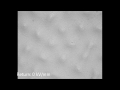
- Cephalopods, which include octopuses, squid, and cuttlefish, are among nature’s most skillful camouflage artists, able to change both the color and texture of their skin within seconds to blend into their surroundings — a capability that engineers have long struggled to duplicate in synthetic materials. (Learn more: http://mitsha.re/1o3Ensl)
Now, a team of researchers has come closer than ever to achieving that goal, creating a flexible material that can change its color or fluorescence and its texture at the same time, on demand, under remote control.
Video: Melanie Gonick, MIT News
Synthetic skin simulations courtesy of the researchers

- Title
- MIT Robotic Cheetah
- Runtime
- 2:34
- Date posted
- 12 years ago
- Description
- MIT researchers have developed an algorithm for bounding that they've successfully implemented in a robotic cheetah. (Learn more: http://mitsha.re/YCipV)
The MIT Cheetah 2 contains the custom electric motor designed by Jeffrey Lang, the Vitesse Professor of Electrical Engineering at MIT and the amplifier designed by David Otten, a principal research engineer in MIT’s Research Laboratory of Electronics.
This work was supported by the Defense Advanced Research Projects Agency.
Video: Melanie Gonick/MIT
Additional footage: Hae-Won Park and José-Luis Olivares
Stock media provided by Pond5.com
Music sampled from "Spooky" by Alastair Cameron
http://freemusicarchive.org/music/Ala...
http://creativecommons.org/licenses/b...

- Title
- Wrinkles in time
- Runtime
- 0:33
- Date posted
- 12 years ago
- Description
- MIT researchers have identified a mechanism by which tiny, millimeter-wide wrinkles embedded within ancient rocks may have formed. (Learn more about the mechanism:http://bit.ly/1wIwMaQ)
In this controlled experiment, you can see the formation of ridges. Wave conditions were kept constant during the experiment, and the view is centered in the middle of the tank where orbital amplitudes are about 10 mm. Microbial mat fragments were added to the tank approximately half an hour into the experiment. Note that sediments do not move in the absence of mat fragments, and that ridges form in about 1 hour.
Video courtesy of the researchers.

- Title
- Grabbing space debris
- Runtime
- 2:12
- Date posted
- 12 years ago
- Description
- MIT researchers tested an algorithm for gauging the rotation of objects in zero gravity using only visual information, aboard the International Space Station (Learn more about the experiment: http://bit.ly/1osvusc)
Understanding how objects are spinning in space, where their centers of mass are, and how their mass is distributed is crucial to any space mission. From cleaning up debris to landing a demolition crew on a comet.
Here we see the tracked features and dense reconstructed model for three tests on the ISS where the object is spinning about the major, minor and intermediate axes respectively.
Video courtesy of the researchers.

- Title
- Corals as engineers
- Runtime
- 1:44
- Date posted
- 12 years ago
- Description
- Scientists at MIT and the Weizmann Institute of Science (WIS) in Israel have found that corals, long believed to be passive organisms relying entirely on ocean currents to deliver nutrients, are actually quite active, engineering their environment producing strong swirls of water that draw nutrients toward the coral, while driving potentially toxic waste products away. (Learn more: http://bit.ly/1ufbfTB)
Video produced and edited by Melanie Gonick, MIT News
Video clips in order of appearance: "Vortical ciliary flows actively enhance mass transport in reef corals",Orr H. Shapiro, Vicente I. Fernandez, Melissa S. Garren, Jeffrey S. Guasto, François P. Debaillon-Vesque, Esti Kramarski-Winter, Assaf Vardi, Roman Stocker, PNAS, 2014; DOI number 10.1073/pnas.1323094111
"Coral cilia", Orr Shapiro, Assaf Vardi, Weizmann Institute of Science, Israel; Vicente Fernandez, Roman Stocker, MIT, USA.
"Vortical ciliary flows actively enhance mass tra...

- Title
- Sorting cells with sound waves
- Runtime
- 1:48
- Date posted
- 12 years ago
- Description
- Researchers from MIT, Pennsylvania State University, and Carnegie Mellon University have devised a new way to separate cells by exposing them to sound waves as they flow through a tiny channel. (Learn more about the device: http://bit.ly/1wwDlxV)
Their device, about the size of a dime, could be used to detect the extremely rare tumor cells that circulate in cancer patients’ blood, helping doctors predict whether a tumor is going to spread.
Video produced and edited by Melanie Gonick, MIT News
Video clips provided by Ming Dao

- Title
- ALS Ice Bucket Challenge: MIT President L. Rafael Reif
- Runtime
- 5:11
- Date posted
- 12 years ago
- Description
- This morning, MIT President L. Rafael Reif accepted a double #IceBucketChallenge from Harvard President Drew Faust and the MIT Edgerton Center. The ice bucket challenge is raising funds to help scientists research the causes of and potential treatments for ALS, also known as Lou Gehrig's disease.
President Reif invited the MIT community to participate, and he dedicated the event to Karolina Fraczkowska '01, whose husband recently died of the disease.
Reif now challenges Shruti Sharma, president of the MIT Undergraduate Association; Kendall Nowocin, president of the MIT Graduate Student Council; Thomas Rosenbaum, president of the California Institute of Technology; Christina Paxson, president of Brown University; and Nicholas Dirks, chancellor of UC Berkeley.

- Title
- LLRISE: Building radars at Lincoln Laboratory
- Runtime
- 4:21
- Date posted
- 12 years ago
- Description
- The Lincoln Laboratory Radar Introduction for Student Engineers (LLRISE) program is a summer workshop teaching students how to build small radar systems. (Learn more about LLRISE and Lincoln Laboratory: http://goo.gl/Q52pGc)
This summer STEM program is a two-week residential project-based enrichment program for outstanding students going into their senior year of high school.
Throughout LLRISE students will be challenged to build a Doppler and range radar by using creative problem-solving strategies. This hands-on program allows students to work in a state-of-the-art laboratory with scientists and engineers who are experts in their field.
Video: Melanie Gonick, MIT News
Additional footage: Trevor Chamberlain, Lincoln Laboratory