Veritasium
Why Do You Make People Look Stupid?

- Title
- Why Do You Make People Look Stupid?
- Runtime
- 3:21
- Date posted
- 15 years ago
- Description
- Raw interviews: http://www.youtube.com/watch?v=8dcw98B2Nzg
The question has arisen often enough that I thought I'd answer it. If you hold views that are consistent with the majority of the population, does that make you stupid? I don't think so. Science has uncovered a lot of counterintuitive things about the universe, so it's unsurprising that non-scientists hold beliefs inconsistent with science. But when we teach, we must take into account what the learners know, including their incorrect knowledge. That is the reason a lot of Veritasium videos start with the misconceptions.
Want to read my PhD? You can download the full text here: http://www.physics.usyd.edu.au/pdfs/research/super/PhD(Muller).pdf

- Title
- Where Do Trees Get Their Mass?
- Runtime
- 4:10
- Date posted
- 15 years ago
- Description
- Complete unedited interviews: http://www.youtube.com/watch?v=8dcw98B2Nzg
Trees can weigh hundreds or even thousands of tons, but where do they get this mass from? A few common answers are: the soil, water, and sunlight. But the truth is the vast majority of a dry tree's mass comes from the air - it originated as carbon dioxide

- Title
- Spinning Tube Trick Answer
- Runtime
- 0:48
- Date posted
- 15 years ago
- Description
- The solution to the question posed in the spinning tube trick video, that is - what would you see if looking at the spinning tube from below a glass table. The explanation of why only the X or O is visible will be the subject of the next video.

- Title
- Spool Trick
- Runtime
- 1:18
- Date posted
- 15 years ago
- Description
- Right: https://www.youtube.com/watch?v=AS9OXzSRBMQ
Left: http://www.youtube.com/watch?v=FWQ-HJ4oGKQ
It Depends: https://www.youtube.com/watch?v=R3GHiMOHEy8
What happens when nylon rope is wound around a spool and pulled horizontally to the right? Will the spool go to the right, to the left, or does it depend on how the rope is pulled?

- Title
- Spinning Tube Trick Explained
- Runtime
- 3:40
- Date posted
- 15 years ago
- Description
- When a tube spins with an X and an O labelled at either end, why do we see only one letter during the rotation?

- Title
- Spinning Tube Trick
- Runtime
- 3:20
- Date posted
- 15 years ago
- Description
- To see what this looks like from under a glass table, see http://www.youtube.com/watch?v=E9WUaBGH7_I

- Title
- Are You Lightest In The Morning?
- Runtime
- 7:54
- Date posted
- 15 years ago
- Description
- Are you heaviest at night before you go to bed and lightest in the morning? I tried to tease out the factors to figure out what really causes weight gain and loss during the day, and what causes daily weight fluctuations.

- Title
- World's Longest Straw
- Runtime
- 7:21
- Date posted
- 15 years ago
- Description
- What is the longest drinking straw that you can actually drink out of? Well in this video, we put the theory to the test. We started off with a one metre long straw made out of drinking straws taped together. We moved on to two pieces of plastic tubing, each 6 metres in length with different diameters. Then we tried a 10.5 metre tube over a cliff's edge. The maximum we achieved was about 7 metres though theoretically up to 10.3 metres is possible if a perfect vacuum is created.

- Title
- The Science of Curveballs
- Runtime
- 4:07
- Date posted
- 15 years ago
- Description
- For more info, please see http://www.physics.usyd.edu.au/~cross
In baseball and cricket the best pitchers and bowlers know how to make the ball move due to the effects of aerodynamics. If one side of the ball is rough, the ball swings towards that side because turbulent air 'clings' to that side of the ball and is deflected. Although baseballs and cricketballs appear symmetric, they can be made to fly through the air with a smooth or rough side by judicious angling of the seams combined with the axis of rotation.

- Title
- Koala Encounters
- Runtime
- 2:15
- Date posted
- 15 years ago
- Description
- I saw my first wild koalas while driving on the great ocean road. Generally their days are not very exciting. They spend most of their time sleeping and the rest of the time eating eucalyptus leaves. The eucalyptus leaves are tough to digest which explains their consumate napping. Plus they require bacteria in their gut to help them break down their food. This bacteria must be passed down from mother to child through the mother's poo. It's a tough start to life for koalas!

- Title
- What Is The Coastline Paradox?
- Runtime
- 2:16
- Date posted
- 15 years ago
- Description
- How long is the coastline of Australia? One estimate is that it's about 12,500 km long. However the CIA world factbook puts the figure at more than double this, at over 25,700 km. How can there exist such different estimates for the same length of coastline? Well this is called the coastline paradox. Your estimate of how long the coastline is depends on the length of your measuring stick - the shorter the measuring stick the more detail you can capture and therefore the longer the coastline will be.

- Title
- Candle Trick
- Runtime
- 1:35
- Date posted
- 15 years ago
- Description
- How to light a candle without touching a flame to the wick. A common misconception is that a candle burns by burning the wick. What is actually burning is wax vapour which is drawn up through the wick. When you blow a candle out, wax vapour continues to rise off the candle so you can light this vapour which burns back down to the wick, relighting the candle.

- Title
- How To Make Graphene
- Runtime
- 3:41
- Date posted
- 15 years ago
- Description
- My entry to the techNyou Science Ambassadors competition, visit www.facebook.com/talkingtechnology and www.youtube.com/technyouvids to find out more about these guys.

- Title
- What Causes The Phases Of The Moon?
- Runtime
- 4:33
- Date posted
- 15 years ago
- Description
- What causes the phases of the moon? The common incorrect answer is the shadow of the Earth. The phases of the moon are actually just a result of our perception of the moon's half-illuminated surface. When the moon does pass through Earth's shadow the result is a lunar eclipse. This can be spectacular as the moon turns a deep shade of red.
Images courtesy of NASAimages.org and Geoff Wyatt, Senior Astronomy Educator Powerhouse Museum

- Title
- A Human Being Is A Part Of The Whole
- Runtime
- 1:57
- Date posted
- 15 years ago
- Description
- A quote by Einstein: A human being is a part of the whole, called by us "Universe", a part limited in time and space. He experiences himself, his thoughts and feelings as something separated from the rest — a kind of optical delusion of his consciousness. This delusion is a kind of prison for us, restricting us to our personal desires and to affection for a few persons nearest to us. Our task must be to free ourselves from this prison by widening our circle of compassion to embrace all living creatures and the whole of nature in its beauty. Nobody is able to achieve this completely, but the striving for such achievement is in itself a part of the liberation and a foundation for inner security.

- Title
- What Is The Magnus Force?
- Runtime
- 3:47
- Date posted
- 15 years ago
- Description
- Whenever an object spins through the air it experiences a 'Magnus Force' due to friction between the air and the object's surface. This force was originally identified while studying the trajectories of cannon balls (though earlier observations of this effect exist). The Magnus force is essential in most ball sports including golf, cricket, tennis, and baseball.
At the end the ball demonstrations were conducted with a 100 mm diam polystyrene ball and the launcher was made by bending a long, thin, aluminum rod and bolting the ends to a block of wood as a handle.
Music was provided by Kevin McLeod (incompetech.com) Scissors and a stock clip from FCP.
- Title
- Atomic Rant
- Runtime
- 2:58
- Date posted
- 15 years ago
- Description
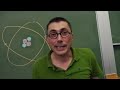
- How should we depict an atom? Like a solar system with electrons orbiting the nucleus on hula hoop orbits? That idea is so last century! Bosi takes us into the quantum world, where an electron's position and velocity aren't well defined - all we can calculate are the probabilities e.g. of finding an electron at different points in space. When we do that, we find electrons do not neccessarily occupy circles or spheres in space. Rather their probability densities make all sorts of interesting shapes from the dumbell to the peanut with the donut around it.

- Title
- Can You Go the Speed of Light?
- Runtime
- 4:13
- Date posted
- 15 years ago
- Description
- Einstein's classic thought experiment involves sitting on a train travelling at the speed of light. If you hold a mirror in front of your face, will you see your reflection in a mirror? How could light from your face reach the mirror if the mirror is travelling away from you? But it would be a pretty spooky train if you couldn't see your reflection so Einstein felt this solution wasn't realistic. On the other hand if you could see your reflection, it would mean light was travelling at the speed of light inside the train. But that meant the same light observed from outside the train would be going twice the speed of light. This again seems inconsistent. So Einstein resolved that you must see your reflection but that light must travel at the same speed inside and outside the train. The only way this is possible is if space and time are perceived differently by observers inside and outside the train.

- Title
- Physics Nobel Prize 2011 - Brian Schmidt
- Runtime
- 7:13
- Date posted
- 15 years ago
- Description
- The Nobel Prize for physics in 2011 was awarded to Brian Schmidt, Adam Riess, and Saul Perlmutter for discovering that the universe is expanding at an accelerating rate. This finding was completely unexpected because it was thought that gravity should slow the expansion of the cosmos. The best current explanation of why the universe is accelerating is that there is some energy tied to empty space which pushes matter apart. This 'Dark Energy' makes up 73% of the universe but is very difficult to detect. Images courtesy of NASA/NASAimages.org and Maritza A. Lara-Lopez

- Title
- Nobel Prize Winner Brian Schmidt - Physics 2011
- Runtime
- 2:40
- Date posted
- 15 years ago
- Description
- The Nobel Prize for physics in 2011 was awarded to Brian Schmidt, Adam Riess, and Saul Perlmutter for discovering that the universe is expanding at an accelerating rate. This finding was completely unexpected because it was thought that gravity should slow the expansion of the cosmos. The best current explanation of why the universe is accelerating is that there is some energy tied to empty space which pushes matter apart. This 'Dark Energy' makes up 73% of the universe but is very difficult to detect. Hopefully a better understanding of it will lead to a unification of our theories of gravitation and quantum mechanics.
Images courtesy of NASA - NASAimages.org

- Title
- Supersized Slow-Mo Slinky Drop
- Runtime
- 3:03
- Date posted
- 15 years ago
- Description
- What happens when a super long slinky is dropped?

- Title
- Make Plasma With Grapes In The Microwave!
- Runtime
- 5:31
- Date posted
- 15 years ago
- Description
- When a grape is cut nearly in half and placed in a microwave, plasma is produced. Please use caution if attempting this experiment: don't leave the microwave on for too long, make sure the area is well ventilated, and stand back. Remember the contents will be very hot afterwards.

- Title
- Slinky Drop
- Runtime
- 0:57
- Date posted
- 15 years ago
- Description
- What happens when a slinky that has been extended under its own weight is released? How does it fall to the ground? Answer link: http://www.youtube.com/watch?v=eCMmmEEyOO0

- Title
- Slinky Drop Answer
- Runtime
- 3:31
- Date posted
- 15 years ago
- Description
- Want more awesome HD slow-mo? http://www.youtube.com/watch?v=uiyMuHuCFo4
Slinky not long enough? Click here: http://www.youtube.com/watch?v=JsytnJ_pSf8
How does a slinky fall when extended by its own weight and then released? We discover the surprising answer using a slow motion camera that records 300 frames per second. Answer link: http://www.youtube.com/watch?v=oKb2tCtpvNU
For a great explanation, check out Rhett Allain's analysis here: http://www.wired.com/wiredscience/2011/09/modeling-a-falling-slinky/

- Title
- Slinky Drop Extended
- Runtime
- 1:58
- Date posted
- 15 years ago
- Description
- The answer to the question - what happens to a tennis ball tied to the bottom of a slinky after the top of the slinky is let go?
For a great explanation, check out Rhett Allain's analysis here: http://www.wired.com/wiredscience/2011/09/modeling-a-falling-slinky/

- Title
- States of Matter
- Runtime
- 4:53
- Date posted
- 15 years ago
- Description
- Everyone is familiar with liquid water, ice and water vapour, but what are the differences between these three states of matter? Solids, liquids and vapours of the same substance differ in the motion of the molecules and the distance between them.
Animations courtesy of VisChem (Trade Mark), Copyright 1995, Roy Tasker. Thanks for all your help!

- Title
- Imploding Drum
- Runtime
- 5:01
- Date posted
- 15 years ago
- Description
- The atmosphere applies a pressure of about 100 000 N to every square metre on Earth's surface. We take this pressure for granted because we have the same amount of pressure pushing out. But what happens when the pressure of the atmosphere is applied to an object with no outward pressure? It implodes. In spectacular fashion.

- Title
- What Colour Is Most Attractive?
- Runtime
- 2:40
- Date posted
- 15 years ago
- Description
- Scientific research has shown that heterosexual males and females find members of the opposite sex more attractive when they wear the colour red. This is a subconscious preference that seems to have some evolutionary basis. We attempted to replicate these findings in Sydney but our methods were much less controlled and the results achieved were not statistically significant.

- Title
- Chain Drop Answer 2
- Runtime
- 2:42
- Date posted
- 15 years ago
- Description
- Which weight hits the ground first - the free weight or the weight attached to the chain?

- Title
- Chain Drop Experiment
- Runtime
- 0:38
- Date posted
- 15 years ago
- Description
- On a mobile device? Click here: http://www.youtube.com/watch?v=X-QFAB0gEtE for the answer
Two 1.5kg masses are released simultaneously from the top of a 10m high wall. One is attached to a chain while the other is free. Which one will hit the ground first?

- Title
- Impress Her With Nanodiamonds
- Runtime
- 1:28
- Date posted
- 15 years ago
- Description
- Scientists have recently discovered nanodiamonds in the flames of ordinary candles. They are produced at a rate of about 1.5 million per second. Unfortunately they are also burned up at this rate and released into the atmosphere as carbon dioxide. Still this finding may prove useful in the ongoing search for economical ways to produce diamonds.

- Title
- What Is Water Made Of?
- Runtime
- 1:07
- Date posted
- 15 years ago
- Description
- It's the most abundant liquid on the planet and by weight we are about 60% water. But do we know what it is made of?

- Title
- What Is Chemistry?
- Runtime
- 1:32
- Date posted
- 15 years ago
- Description
- 2011 is the international year of Chemistry. But what do Australians know about it?

- Title
- Ice Cutting Experiment
- Runtime
- 1:18
- Date posted
- 15 years ago
- Description
- On mobile, click here for the answer: http://www.youtube.com/watch?v=qQCVnjGUv24
When ice is put under pressure, its melting point decreases. When that pressure is removed it goes back to being solid. This process is known as 'regelation'. In this experiment regelation of ice is attempted with copper wire and fishing line of the same diameter. Which will pass through the ice first?

- Title
- Ice Cutting Experiment
- Runtime
- 2:52
- Date posted
- 15 years ago
- Description
- What passes through a block of ice more quickly, copper wire or fishing line?

- Title
- Does Pressure Melt Ice?
- Runtime
- 1:38
- Date posted
- 15 years ago
- Description
- When pressure is applied to ice, its melting point is reduced so it turns to water. When the pressure is removed, however, it turns back into ice. This process is called 'regelation.' Big thanks to Art of Ice Sculptures www.icesculpture.com.au who donated the beautiful block of ice.

- Title
- Why Is Ice Slippery?
- Runtime
- 2:54
- Date posted
- 15 years ago
- Description
- In Sydney, ice melts because it is warm out in the middle of the day (even in winter). This creates a layer of water on top that certainly makes it slippery. But should it be slippery at night or in a cold northern climate where the air temperature is below zero? Yes, because the pressure your skates apply to the ice actually lowers its melting point allowing you to glide along a thin layer of water.
Animation in this video is courtesy of VisChem (TM), Copyright 1995, Roy Tasker
For a more complete picture of the mechanisms involved in making ice slippery, check out this great article: http://lptms.u-psud.fr/membres/trizac/Ens/L3FIP/Ice.pdf

- Title
- How Does The Earth Spin?
- Runtime
- 4:42
- Date posted
- 15 years ago
- Description
- One of the most common physics misconceptions is that an unbalanced force causes constant motion. In truth, an unbalanced force leads to changes in motion - accelerations.

- Title
- Why Does The Earth Spin?
- Runtime
- 2:52
- Date posted
- 15 years ago
- Description
- The Earth spins on its axis, completing a full revolution every day. By why does it do this? One of the most common misconceptions in physics is the belief that constant motion requires a constant force. So many people believe there must be some force in the Earth (e.g. gravity, centrifugal force) that keeps it spinning. In truth, no force is required because a fundamental property of mass is that it maintains its state of motion in the absence of external forces. This property is called inertia.

- Title
- Persistence Of Vision
- Runtime
- 2:49
- Date posted
- 15 years ago
- Description
- Everything is not as it first appears. This simple plastic ball looks purple until you swing it in a circle and reveal its true nature. Inside are three light emitting diodes (LEDs), which are red, green and blue. They turn on and off in sequence very quickly. When still, the ball appears purple because your eyes and brain don't 'refresh' quickly enough to perceive the changing colours. However, when swung in a circle, the ball changes colours at different locations so the colours don't merge with each other and the ball's true nature is revealed. Now let's not think too carefully about how this illusion is conveyed through video (because the camera doesn't refresh quickly enough to perceive the colours changing either - so you have no hope of seeing it on YouTube even frame by frame).

- Title
- Fire Syringe
- Runtime
- 3:19
- Date posted
- 15 years ago
- Description
- When air is compressed very quickly, it can reach high temperatures. In this demonstration we show how cotton wool can reach the point of auto-ignition by quick compression of air in the fire syringe.

- Title
- Misconceptions About Heat
- Runtime
- 5:11
- Date posted
- 15 years ago
- Description
- When we touch something that is hot or cold, what are we actually sensing? Is it the temperature of the object, or the rate at which heat flows between the object and our hand?

- Title
- Can You Solve This Shadow Illusion?
- Runtime
- 3:32
- Date posted
- 16 years ago
- Description
- When sunlight shines through a small hole, it casts a circular image on the wall regardless of the shape of the hole. The size of the hole also doesn't affect the size of the image.
This counterintuitive demonstration shows that the hole is acting like a pinhole camera, producing an image of the sun on the wall. Therefore the size and shape of the hole have no effect on the size and shape of the image.

- Title
- Can You Perceive Acceleration?
- Runtime
- 3:34
- Date posted
- 16 years ago
- Description
- How do our eyes scan across a landscape? Contrary to popular belief, they don't scan smoothly across a scene, they observe a series of images. The eye is capable of panning smoothly however. If something moves in your field of view, your eyes track it smoothly. This has an important effect on our perception of motion. It makes it more difficult to see when objects are accelerating since the eye tracks all motion quite smoothly.

- Title
- Option E - Acceleration of a Bungy Jump
- Runtime
- 0:35
- Date posted
- 16 years ago
- Description
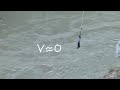
- On the rebound, the acceleration varies. The jumper is accelerating up but as the bungy recoils, the jumper starts accelerating down again due to the pull of gravity. This does not mean that he's moving down, however, only that his velocity upwards is decreasing.
- Title
- Option D - Acceleration of a Bungy Jump
- Runtime
- 1:02
- Date posted
- 16 years ago
- Description
- Congratulations, the acceleration of the bungy jump is greatest at the jumper's lowest point. This is because the bungy is now stretched to its maximum, meaning if applies a force up on the jumper more than twice his weight. This means he accelerates up at a greater rate than the acceleration down when he left the platform.

- Title
- Option C - Acceleration of a Bungy Jump
- Runtime
- 0:45
- Date posted
- 16 years ago
- Description
- At the jumper's fastest point, the acceleration is by definition zero. That is because the jumper is going from speeding up to slowing down. At this instant then there is no change in the jumper's velocity. This is counter-intuitive for a lot of people because it's easy to confuse velocity with acceleration. Velocity is how fast something goes while acceleration is the rate at which velocity changes.

- Title
- Option B - Acceleration of a Bungy Jump
- Runtime
- 0:24
- Date posted
- 16 years ago
- Description
- When the rope becomes taut, the force on the jumper is mainly his weight downwards, plus a bit of air resistance up. Therefore his speed is increasing nearly as much as it did when he leapt off the platform. So this is not the greatest acceleration of the jump.

- Title
- Option A - Acceleration of a Bungy Jump
- Runtime
- 0:32
- Date posted
- 16 years ago
- Description
- Right after leaving the platform, the only significant force acting on the bungy jumper is his weight. This causes him to speed up from rest. His speed increases every second by nearly 10 m/s. This is not the maximum acceleration experienced by a bungy jumper, however.

- Title
- When Is A Bungee Jumper's Acceleration Max?
- Runtime
- 1:06
- Date posted
- 16 years ago
- Description
- When is the acceleration (rate of speeding up or slowing down) greatest during a bungy jump?